
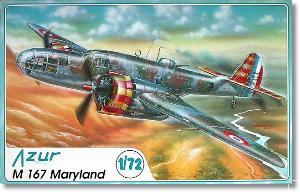
De un vistazo – Quick look
MATERIAL Y PIEZAS
MEDIA & PARTS:
- Plástico inyectado (43 piezas), plástico transparente (6 piezas), resina (19 piezas).
- Injected plastic (43 parts), clear plastic (6 parts), resin (19 parts).
CALCAS – DECALS:
- Impresas por Propagteam. Insignias y marcas de cola francesas y británicas más algunos estarcidos. Aspecto fino y brillante, registro correcto y colores saturados. Sin demasiado soporte. Bien impresas.
- Printed by Propagteam. British and French roundels and tail markings plius some stencils. Thin and glossy finish, in register and colour-saturated. No excess of carrier film. Well printed.
OPCIONES – OPTIONS:
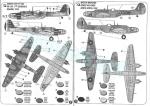
- Martin 167F. Aparato N.º 265. Fuerza Aérea de Vichy. Grupo de Bombardeo I/63. 1ª Escuadrilla. Bamako (Mali), 1942.
- Martin Maryland. Fuerzas de la Francia Libre. Fuerza Aerea del Desierto. Norte de África, 1942.
- Martin 167F. Aircraft No. 265. Vichy Air Force. I/63 Bombardment Group. 1st Squadron. Bamako (Mali), 1942.
- Martin Maryland. Free French Forces. Desert Air Force. North Africa, 1942.
INSTRUCCIONES – INSTRUCTIONS:
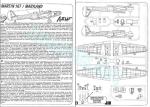
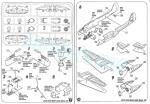
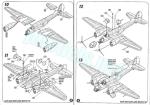
- Folleto A5 de 8 páginas en blanco y negro. Contiene un sumario histórico sobre el avión, un plano numerado de piezas, 13 capítulos de montaje, 2 páginas de perfiles y una lista de colores genéricos.
- 8-page A5 booklet printed in black and white. It contains a historical summary about the aircraft, a numbered parts plan, 13 assembly chapters, 2 pages of profiles and a list of generic colors.
LO MEJOR – THE BEST:
- Detalle bastante adecuado en la carlinga. Relativa sencillez de montaje para una edición limitada.
- Nice cockpit detail. Relative ease of assembly for a short-run kit.
LO PEOR – THE WORST:
- Despiece de ruedas y hélices. Motores. Pozos.
- Wheels and propellers breakup. Engines. Wheel wells.
VALORACIÓN – CONCLUSION:
- Aunque no aparenta ser un hueso demasiado duro de roer para su categoría y tiene un interior por encima de la media, necesitas claras mejoras, en su gran mayoría factibles para el modelista con cierta experiencia.
- Though apparently not the hardest bone to tackle for a short run and having a nice cockpit above the average, it needs some improvement, most of it workable for the modeller with some experience.

La maqueta
El Maryland, como su pariente el Baltimore, anda bastante olvidado por las marcas que comercializan esta escala. Muchas décadas atrás hubo un molde de Frog que fue copiado por otros fabricantes hasta llegar a a manos de Ark Models, que lo volvió a lanzar en 2017. Azur produjo un nuevo Maryland a inicios de este siglo y lo reeditó con calcas diferentes tan sólo en una ocasión. Después, vino el silencio hasta hoy.
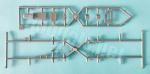
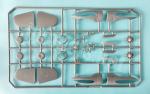
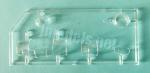
La caja contiene tres bastidores de piezas, un bastidor transparente, cuatro bebederos de piezas de resina, la hoja de calcas y las instrucciones. Al molde se le conoce al instante la similitud con los de MPM de hace dos décadas. Las piezas están bien moldeadas y no tienen rebabas. De las marcas de eyector tampoco hay que preocuparse, puesto que las dos únicas a cada lado del interior del fuselaje no afectan al detalle. Una de ellas podría entorpecer la instalación del panel trasero de la carlinga, pero no lo he comprobado.
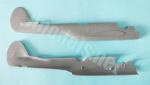
El detalle grabado en el fuselaje y las alas es adecuado en finura y profundidad. Las líneas muestran limpieza y poseen una anchura conveniente para representar los timones.
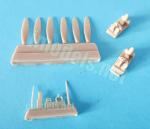
Al tratarse de una edición de serie limitada el número de piezas de plástico no es alto y se complementa con piezas de resina, aunque en este caso no demasiadas ni todas acertadas. Como es de esperar, el montaje no será sencillo a menos que se tenga cierta pericia con este tipo de ediciones.
Las instrucciones no ofrecen alternativas de montaje, pero los acabados sí muestran variedad y proponen colores para un aparato de la Francia de Vichy y otro avión de la Francia Libre en colores británicos.
Carlinga
El detalle interno sólo cuenta con algunos paneles reproducidos en relieve a cada lado de la carlinga de pilotaje. Sobre ellos hay que colocar varios instrumentos de plástico y resina.
El suelo consiste en dos piezas superpuestas y a dos niveles para reproducir los dos puestos de los tripulantes. Ambos están detallados con líneas en relieve y los pedales sólo del piloto moldeados en su pieza. Los controles dobles son de plástico con los mandos en finas piezas de resina. Los asientos están diferenciados y tienen buena factura. El panel de instrumentos está limpiamente grabado y va pegado, como de costumbre, a uno de los lados del fuselaje. El espacio delantero lo cierra un mamparo con líneas en relieve.
El acristalamiento del morro está separado en tres partes que poseen un fino relieve en los montantes de la estructura. Los tres elementos tienen un grosor conveniente para la escala. Lo mismo ocurre con la cubierta del piloto, que viene de una sola pieza, pero en principio no puede mostrarse abierta.
Fuselaje
Las mitades del fuselaje lo reproducen con el timón vertical y las raíces de alas y estabilizadores. Las piezas están bien grabadas, aunque creo que las compuertas de la bodega de bombas deberían tener más nitidez y las de acceso del bombardero, situadas en la parte inferior tras el morro, no están marcadas.
La torreta dorsal comprende un anillo, el asiento del artillero pegado por debajo y la ametralladora sostenida por un pequeño resalte del anillo, ya que no se le puede llamar propiamente afuste. El arma la veo bastante birriosa. Ni se parece a la MAC 34 francesa que llevaría un avión de Vichy ni tampoco a una posible Vickers K de un Maryland integrado en la RAF. Además, la cubierta transparente es defectuosa porque Azur la proporciona cerrada, sin posibilidad de instalar el armamento. La propia marca reparó tarde en esto, pero al menos adjuntó una hojita suplementaria en las instrucciones advirtiendo que a la pieza hay que cortarle una cuña de un cuarto de superficie para dejarla abierta por detrás, como se aprecia en fotos de este avión. Esta operación quirúrgica no es sencilla si no se tiene el tiento (y la suerte) para que no quiebre. Una vez pegadas las mitades del fuselaje, la torre se introduce en este desde el exterior.
La parte superior del fuselaje muestra una antena de bucle y un mástil de antena de resina. El bucle no es fácil de sacar de su bebedero al no tener espacio para cortar la pieza. Casi todas las fotos del Martin 167F francés que he podido ver lo muestran con la antena de bucle solamente, mientras que el mástil posterior es propio de un Maryland Mk I británico o bien de un 167F integrado en la RAF.
Finalmente, el escalón ventral posterior del fuselaje posee un hueco que tapa un fino acristalamiento detallado en relieve.
Alas, motores y cola
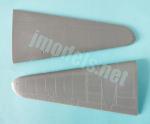
Las alas y estabilizadores está separados en mitades. Para estos últimos tal vez resulte excesivo y los haga demasiado gruesos. El detalle grabado en estas superficies es convincente en general, con los alerones bien marcados en anchura, dotados de las bisagras y el detalle de las superficies bien reproducido. Las puntas llevan las luces de navegación por ambas caras. Sin embargo, los bordes de ataque carecen de las troneras del armamento y las luces de aterrizaje únicamente tienen marcados los paneles. El tubo Pitot que se proporciona de resina es incorrecto y carece de la forma de L en la punta.
Las góndolas de los motores vienen completas, pero cortadas inusualmente en vertical con un hueco para encajarlas en las alas. Si el ajuste es correcto, podría resultar más sencillo tapar las líneas de unión. El lado negativo está en la profundidad de los pozos de las ruedas. El anillo exterior viene separado y muestra las tomas bien marcadas aunque cerradas. Los escapes laterales son de resina.
Los motores son decepcionantes y podrían haberse proporcionado de resina, al menos la corona externa. Aunque la caja de engranajes es aceptable, los cilindros están mal definidos y superpuestos de mala manera, de modo que no se aprecian con claridad las siete unidades que tenían los Twin Wasp en la corona exterior.
Las palas de las hélices y los bujes son piezas de resina que vienen por separado. Los bujes no están mal, aunque hay que añadirles un eje, pero a las palas, que tienen una base un tanto ancha, les falta algo de torsión, con un aspecto plano y acaso un poco corto.
La deriva y el timón vertical están bien grabados. El timón está adecuadamente marcado, aunque las bisagras deberían ser más nítidas en la separación con la deriva.
Tren de aterrizaje
Debido a la forma de unir las góndolas con las alas, los pozos quedan en gran parte tapados por las superficies de las alas y carecen de detalle interno. Solamente tenemos una marca para situar las patas de las ruedas. Lo mejor sin duda son las compuertas, finas y moldeadas con el perfil correcto.
Las patas son pasables, aunque sin mucho detalle y las ruedas están seccionadas en mitades. Poseen una buena definición en los bujes y llantas sin dibujo en los neumáticos.
La rueda de cola, que debe añadirse antes de cerrar el fuselaje, está unida a la pata. Esta viene con una horquilla que en realidad no tenía y la rueda carece de la tapa en el lado derecho.
Calcas
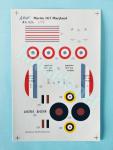
La impresión corrió a cargo de Propagteam, que proporciona insignias y marcas de cola francesas y británicas más algunos estarcidos. El estarcido del timón de cola con el fabricante y el número de serie del aparato está impreso sobre las marcas tricolores y también aparte, por si el modelista desee pintar él mismo las bandas.
Los motivos están bien impresos y muestran una apariencia fina y brillante, registro correcto y colores saturados. No tienen soporte sobrante.
Instrucciones
Un folleto A5 de ocho páginas impreso en blanco y negro contiene un sumario histórico sobre el avión, un plano numerado de piezas, 13 capítulos de montaje, dos páginas de perfiles y una lista de colores genéricos. Los colores para pintar la carlinga, los pozos y algunos otros elementos se muestran por sus nombres en lugar de con un código.
Los perfiles que guían la pintura de la maqueta nos muestran un aparato de la Francia de Vichy con las habituales bandas rojas y amarillas en los capós y la cola, más otro avión de la Francia Libre con marcas británicas y colores empleados en el Mediterráneo y norte de África.
Valoración
En general, este Maryland de Azur, el último por ahora en la escala 1/72, no está del todo mal. Dispone de una carlinga más que decente, no debe ser lo más dificultoso de armar que el modelista ducho en este tipo de maquetas haya hecho nunca, y no cuenta con demasiadas piezas de resina para quienes no sientan precisamente querencia por este material. A esto se debe añadir la variedad que ofrecen las dos terminaciones propuestas en las instrucciones.
Sin embargo, el despiece de las ruedas y hélices, la ausencia de detalle en los pozos, la arriesgada modificación de la pieza transparente de la torreta, además de unos motores y ametralladora mediocres rebajan un tanto las expectativas de completarla sin esfuerzo adicional que el modelista pueda tener.
En conclusión, esta edición tiene los altibajos que cabe esperar en una maqueta de estas características y de un par de décadas atrás. Está claro que quienes deseen tener este Maryland en la vitrina por su atractivo o rareza, dadas las escasas maquetas en esta escala, tendrá ocasión de mostrar sus habilidades.◊

The kit
The Maryland, like its relative the Baltimore, has been largely forgotten by the companies that market this scale. Many decades ago, an original Frog tool was copied by other manufacturers until it reached Ark Models, which they reboxed last in 2017. Azur produced this new Maryland at the beginning of this century and reissued it with different decals only once. After that, no new kit of the aircraft has been heard of.
The box contains three sprues of parts, a clear sprue, 19 resin parts, the decal sheet, and the instructions. At first glance it is easy to realize the tool’s similarity to MPM kits from two decades ago. Parts are well moulded and free from flash. Ejector marks are also nothing to worry about, as the only two on each side of the cockpit walls don’t affect detail. One of them could hinder the installation of the rear cockpit bulkhed, but I haven’t checked this.
Engraved detail on the fuselage and wings is adequate in both thinness and depth. The lines are clean and have a suitable width to represent the rudders.
As this is a limited edition, the number of plastic parts is low and complemented by resin parts, although in this case some of them are not all the good we could imagine. As expected, assembly will not be very straightforward unless you have some experience with short runs.
The instructions do not offer assembly choices, but paint finishes do show some variety and suggest camo schemes for a Vichy French bomber and a Free French aircraft in RAF colors.
Cockpit
Interior detail only includes a few raised panels on each side. Several plastic and resin instruments are attached on top of these.
The floor consists of two superimposed pieces on two levels to render the two crew front stations. Both are detailed with raised lines and the pilot’s pedals moulded in place. The dual controls are plastic with thin resin half wheels. The seats are distinct and well-made. The instrument panel is cleanly engraved and is glued as usual to one fuselage side. The cockpit is closed by a bulkhead moulded with some raised lines.
The nose glazing is divided into three parts with thin raised detail on the frame. All three elements have a suitable thickness for the scale. The same applies to the pilot’s canopy, which comes in a single piece but cannot be shown open.
Fuselage
The fuselage halves include the vertical rudder and wing and stabilizer roots. Parts are well engraved, but I think the bomb bay doors could have been more clearly defined, and the bomber access doors, located the nose, are not engraved.
The dorsal turret comprises a ring, the gunner’s seat glued underneath, and the machine gun attached to a small tab on the ring, as it cannot properly be called a mount. The weapon seems rather shabby. It neither resembles the French MAC 34 that a Vichy aircraft would have carried, nor a possible Vickers K from a RAF Model 167. Furthermore, the clear cover is defective because Azur provides it closed, with no possibility of installing the armament. The manufacturer itself was slow to notice this, but at least included a supplementary sheet in the instructions warning that a quarter-sized wedge must be cut from the part to leave it open at the rear, as can be seen in photos of this aircraft. This surgical task is not easy unless you have the skill (and luck) to prevent the part from breaking. Once the fuselage halves are glued together, the turret is inserted from the outside.
The upper fuselage shows a loop antenna and a resin antenna mast. The loop is not easy to remove from the gate as there is no room to cut the part. Almost all the photos of the French Martin 167F I have seen show it with only the loop antenna, while the mast is typical of a British Maryland Mk I or a 167F used by the RAF.
Finally, the fuselage rear ventral step has a gap to attach a thin clear piece representing a framed glazing without armament.
Wings, engines and tail
The wings and stabilizers are separated into halves. Stabilizers may look a bit thick when the halves are put together. The engraved detail on these surfaces is generally convincing, with the ailerons well marked in width, hinged, and having well-reproduced surface detail. The tips feature navigation lights on both sides. However, the leading edges lack the armament ports, and the landing lights only have engraved panels without clear pieces. The resin pitot tube is incorrect and lacks the L-shape at the tip.
The engine nacelles are separate and unusually moulded vertically with a recess to fit them into the wings. If the fit is correct, filling the seam lines will be easier. The downside is the shallow depth the nacelles leave inside the wheel wells. The outer ring is separated and shows well-marked, but closed, intakes. The side exhausts are resin pieces.
The engines are disappointing and could have been made of resin, at least the outer row. Although the gearbox is acceptable, the cylinders are poorly defined and wrongly rendered, so the seven units that the Twin Wasp had on the outer row are not clearly visible.
The propeller blades and hubs are resin parts that come separately. The hubs are not bad, although they need a shaft, but the blades, which have a somewhat wide base, lack some torque, looking flat and perhaps a bit short.
The vertical tail surfaces are well engraved. The rudder looks smooth but the hinges could be sharper where they match the fin.
Undercarriage
Due to the way the nacelles are joined to the wings, the wells are largely hidden by the wing surfaces and lack internal detail. We only have a mark to attach each wheel strut. The best pieces are clearly the doors, thin and moulded with the correct wavy shape.
The legs are passable, although not very detailed, and the wheels are provided in halves. They have good definition in the hubs and rims with no tread pattern on the tires.
The tailwheel, which is added before closing the fuselage, comes with the leg. It shows with a fork that it didn’t actually have, and the wheel lacks the hubcap on the right side.
Decals
They are printed by Propagteam, which provides French and British roundels and tail markings, plus some stencils. The rudder stencil with the aircraft’s manufacturer and serial number is printed on the tricolor markings and also separately, in case the modeler wishes to paint the stripes.
The items are well printed and show a thin, glossy look, correct registration, and saturated colors. There is no excess support.
Instructions
They come in an 8-page A5 booklet printed in black and white containing historical information about the aircraft, a numbered parts drawing, 13 assembly chapters, two pages of profiles, and a list of generic colors. The colors for painting the cockpit, wells, and some other elements are shown by name rather than by code.
The profiles that guide the painting of the kit show a Vichy French aircraft with the usual red and yellow stripes on the cowlings and tail, plus another Free French aircraft with British markings and colors used in the Mediterranean and North Africa.
Conclusion
Overall, this Maryland from Azur, the latest in 1/72 scale, should not be overlooked by the modeller interested in early WWII aircraft. It has a detailed cockpit, shouldn’t be too difficult to put together by an experienced modeller, and it doesn’t include too many resin parts for those not particularly fond of this material. In addition to this, there is some variety in the two paint finishes offered in the instructions.
However, wheels and propellers breakup, the lack of detail in the wells, the risky modification of the clear turret part, and the mediocre engines and machine gun somewhat lower the expectations of completing it without spending extra time.
In conclusion, this release has the ups and downs one would expect from a kit of these characteristics and from a couple of decades ago. It’s clear that those who want to have this Maryland on their shelves because of its appeal or rarity, given the few Maryland 1/72 kits we can find, will have the opportunity to show off their skills.◊
Publicado – Published: 5 / 2025
©www.jmodels.net
 jmodels.net
Debe estar conectado para enviar un comentario.