

De un vistazo – Quick look
MATERIAL Y PIEZAS
MEDIA & PARTS:
- Plástico inyectado (81 piezas), plástico transparente (4 piezas), resina (6 piezas), acetato (1 pieza), fotograbado (27 piezas).
- Injected plastic (81 parts), clear plastic (4 parts), resin (6 parts), acetate (1 part), photoetched (27 parts).
CALCAS – DECALS:
- Insignias finlandesas de dos tipos, marcas del fuselaje, matrículas, emblemas de unidad y numerosos estarcidos. Aspecto brillante y fino. Impresas con buen registro y sin exceso de soporte.
- Two types of Finnish markings, fuselage markings, registers, unit emblems and plenty of stencils. Thin and glossy appearance. Printed with good register and no excess of carrier.
OPCIONES – OPTIONS:
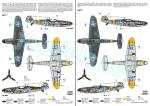
- Messerchsmitt Bf 109G-6/R6. MT-451. Cero blanco. 1/HleLv 24. Taipalsaari (Finlandia). Junio de 1944. Aparato pilotado por el luutnantti (Tte.) Ilmani Juutilainen, el as finlandés con más derribos (94 victorias confirmadas).
- Messerchsmitt Bf 109G-6. MT-437. 9 amarillo. 3/HleLv 24. Lappeenranta (Finlandia), Junio de 1944. Aparato pilotado por el Ylikersantti (Sargento) Leo Aholas.
- Messerchsmitt Bf 109G-6. MT-508. 5 amarillo. HleLv 31. Utti (Finlandia), junio de 1950. Aparato pilotado por el luutnantti (Tte.) Arvo Karima.
- Messerchsmitt Bf 109G-6/R6. MT-451. White 0. 1/HleLv 24. Taipalsaari (Finlandi. June 1944. Aircraft flown by Iuutnantti (Lt.) Ilmani Juutilainen, Finland’s highest scoring fighter pilot (94 confirmed victories).
- Messerchsmitt Bf 109G-6. MT-437. Yellow 9. 3/HleLv 24. Lappeenranta (Finland), June 1944. Aircraft flown by Ylikersantti (Sargeant) Leo Aholas.
- Messerchsmitt Bf 109G-6. MT-508. Yellow 5. HleLv 31. Utti (Finland), June 1950. Aircraft flown by luutnantti (Lt.) Arvo Karima.
INSTRUCCIONES – INSTRUCTIONS:
- Folleto de tamaño A5 de 12 páginas impresas en color. Contiene un sumario histórico sobre el avión, un plano numerado de piezas, una lista de colores con equivalencias de pinturas de Gunze Sangyo, 23 secuencias de montaje y 4 páginas de perfiles.
- 12-page A5 booklet printed in color. It shows a historical summary about the aircraft, a numbered parts plan, a list of colors with Gunze Sangyo paint matches, 23 assembly chapters and 4 pages of profiles.
LO MEJOR – THE BEST:
- Molde muy limpio. Excelente detalle interno y externo.
- Very clean tooling. Excellent internal and external detail.
LO PEOR – THE WORST:
- Cubierta de la carlinga de una pieza.
- One-piece canopy.
VALORACIÓN – CONCLUSION:
- Reedición con mejoras y nuevas calcas del buen molde de Azmodel. Special Hobby ha mejorado una maqueta ya de por sí notable, con el único borrón de la cubierta transparente, que no deja mostrar una carlinga excelente. Para modelistas con experiencia.
- Reissue with photo-etched and resin pieces of a very good Azmodel tool. Special Hobby have still improved the original kit with the only drawback of the one-piece canopy that partly hides the excellent cockpit.

La maqueta
Esta maqueta no es propia de Special Hobby (SH) sino que procede de un notable molde de Azmodel, cuya primera caja también incluía Bf 109G-6 finlandeses, curiosamente. Azmodel lanzó una larga serie de reediciones retratando las diversas variantes del modelo G, sin embargo para SH es la primera edición, y hasta ahora la única. Básicamente, este lanzamiento es una reedición con mejoras y unas instrucciones bastante más apropiadas.
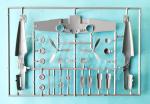
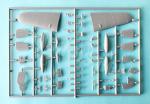
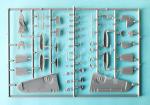
La caja contiene dos bastidores de piezas grises, dos pequeños bastidores transparentes, varios bebederos de resina, una plancha de fotograbados, las calcas y las instrucciones. El plástico de SH posee un aspecto brillante, característica no usual en las de Azmodel.
Las piezas presentan un aspecto limpio y cuidado, sin marcas visibles, rebabas ni cilindros de eyector. Como el molde de Azmodel es compartido por varias versiones del Bf 109G, de las 81 piezas que contiene esta maqueta, alrededor de 40 van a ir directamente a la caja de sobras, ya que merece realmente la pena conservarlas.
La caja presenta tres aparatos finlandeses, uno de ellos de posguerra, a los que SH ha intentado dar algo de diferencia, bien en las piezas o bien en las libreas, que suelen ser de las más atractivas de cuantos países emplearon este avión, sin contar la propia Alemania.
Revisión
La carlinga es una de las mejores que he visto en esta escala. Los lados del fuselaje tienen diversos instrumentos moldeados con nitidez. El suelo está unido al mamparo trasero, que también contiene el panel del compartimento de equipaje con su tapa grabada así como el respaldo del asiento. El suelo tiene varios instrumentos y los reposapiés moldeados encima, además de los pedales de fotograbado, que incluyen las cintas de sujeción a los pies, y la manivela de emergencia de retracción del tren, también compuesta de fotograbados.
El mamparo delantero está separado y contiene la base del panel de instrumentos más la cubierta del cierre del cañón Mauser aparte. Este consiste en dos piezas de fotograbado y una de acetato con los indicadores en la parte posterior. La mira Revi es una pieza transparente separada. Finalmente, también tenemos una palanca de control definida y la base del asiento. Los arneses son de fotograbado.
La cubierta de la carlinga se proporciona en los modelos inicial y final, desgraciadamente en ambos casos de una pieza, pero al menos el panel blindado está bien simulado.
Las superficies externas del fuselaje tienen un detalle muy bueno. El grabado de los paneles y accesos es fino, limpio y nítido. Algunos de los accesos muestran pequeños remaches. Los escapes son de resina y se pegan desde el interior. La toma de aire del carburador puede instalarse con o sin el filtro, dependiendo del avión específico que se construya. Tras la carlinga hay que instalar el mástil del cable de la antena y la antena de bucle, que puede reemplazarse por un bucle de fotograbado según el aparato.
La cubierta del motor viene separada, mostrando tanto las salidas de las ametralladoras como las troneras con acierto. Tras pegarla, se añaden los dos abultamientos laterales del armamento, tan característicos del modelo G. La toma de aire del refrigerador bajo el morro consta de dos rejillas internas de fotograbado y la cubierta. La hélice tiene las palas finas y limpias. El buje, con excelente detalle en la salida del cañón, y su placa trasera vienen aparte.
Las alas están separadas en tres piezas, encajando la pieza inferior en las superiores. El panelado es excelente, realizado con gran finura. Las superficies superiores muestran los abultamientos de las ruedas, los alerones y flaps más sus aletas estabilizadoras moldeados por ambas caras en ellas y las luces de navegación marcadas en los extremos. Las puntas no están separadas para lograr más delgadez. Las caras inferiores contienen cierto detalle en el fondo de los pozos.
La pieza inferior de las alas añade al buen detalle anterior, pequeñas hileras de remaches en los paneles, accesos grabados con finura, las cubiertas de los radiadores, detallados con rejillas interiores de fotograbado y las aletas por separado, y la rejilla del expulsor de vainas del cañón. Los pozos éstán bien reproducidos y tienen una profundidad realista.
Además del tubo pitot y un receptor de antena sólo en el aparato de posguerra, podemos añadir dos cañones subalares en otro de los aviones, que sólo los llevó temporalmente, de acuerdo con las instrucciones. Hay también dos modelos de depósitos auxiliares, pero no se emplea ninguno de ellos en la maqueta.
La aleta vertical aparece separada en dos piezas a la altura de los estabilizadores. El timón viene aparte, con las superficies bien reproducidas. Los estabilizadores van insertados en el fuselaje con lengüetas y poseen los timones correctamente grabados.
Las patas del tren principal incluyen los brazos de torsión, pero se pueden afinas aún más sustituyéndolos por fotograbados, aunque no es imprescindible. El detalle de la amortiguación es nítido. Las tapas son de fotograbado. La maqueta incluye ruedas de plástico y de resina, pero, dado el buen detalle de las de plástico incluso en los neumáticos, tampoco parece necesario sustituir unas por otras. Las llantas tienen un detalle excelente en ambos casos y reproducen también la válvula de llenado.
La rueda de cola posee dos opciones, una de ellas con el soporte más largo empleada en el avión de posguerra. Ambas piezas están bien representadas.
La hoja de calcas lleva impresas insignias finlandesas de dos tipos, marcas del fuselaje, matrículas, emblemas de unidad y numerosos estarcidos. Los motivos poseen aspecto brillante y fino, buen registro y mínimo soporte.
Las instrucciones están impresas en color en el habitual folleto de formato A5 y constan de 12 páginas. Contienen un sumario histórico sobre el avión, un plano numerado de piezas, una lista de colores con equivalencias de pinturas de Gunze Sangyo, 23 secuencias de montaje y cuatro páginas de perfiles, la última de ellas mostrando la posición de los estarcidos.
Los dos primeros aviones presentados en los perfiles tomaron parte en la guerra mundial y muestran idéntico camuflaje, si bien el primero, que pilotó Ilmani Juutilainen, el as finlandés con más victorias, temporalmente llevó cañones bajo las alas. La última opción es un 109G-6 participante en un festival aéreo en 1950 que luce un bizarro camuflaje ajedrezado de calca sólo en el lado izquierdo del fuselaje así como prominentes marcas en su ala del mismo lado. Una auténtica rareza para la vitrina.
Valoración
Para el modelista con experiencia, trae más cuenta hacer esta maqueta que la original de Azmodel, ya que va a encontrar el mismo buen detalle con mejoras añadidas y unas instrucciones sin tacha, bastante más cuidadas que las del primer fabricante. La única desventaja que le encuentro a esta edición es que SH también ha copiado la cubierta de la carlinga de una pieza, lo que impide lucir todo el amplio detalle interno.
Con todo, esta es una maqueta muy recomendable y acaso uno de las mejores representaciones de este avión en la escala 1/72, junto con el reciente lanzamiento de Eduard. Con la calidad de este molde, no sería extraño que SH siguiese lanzando más variantes del modelo G en el futuro.◊





The kit
This kit is based on a very nice Az model tooling. Curiously, AZ initial release also included Finnish Bf 109G-6s. Azmodel have a long series of boxings depicting the sundry variants of the G model, however, for SH, this is the first, and so far, only, boxing. Basically, this release is a reissue with resins, PE parts and much better instructions.
The box contains two sprues of gray parts, two small clear sprues, several resin gates, a photo-etched fret, the decals, and the instructions. SH plastic has a glossy appearance, an unusual feature in Az model kits.
Parts have a clean and neat appearance, with no visible marks, flash, or ejector pips. Since the Az model tool is shared by several Bf 109G versions, of the 81 parts included in the kit, around 40 will go directly into the spares box, as they are really worth keeping.
The instructions offer three Finnish aircraft, one of them post-war, to which SH have tried to give some distinction, either in the parts or in the liveries, which tend to be among the most attractive of all the countries that used this aircraft, not counting Germany itself.
Review
The cockpit is one of the best I’ve seen in this scale. The fuselage sides show clearly molded instruments. The floor is attached to the rear bulkhead, which contains the luggage compartment panel with the engraved lid, as well as the seat backrest. The floor has various instruments and the footrests molded on it, as well as photo-etched pedals, including the foot straps, and the tail trim handwheel, also in photo-etched parts.
The forward bulkhead is separate and contains the base of the instrument panel plus a separate Mauser cannon breech cover. This consists of two photo-etched parts and one acetate part with the gauges. The Revi sight is a separate clear part. Finally, we also have a defined control stick and the seat base. The harnesses are photo-etched.
The cockpit canopy is provided in both the early and late models, unfortunately in both cases as a single piece, but at least the windshield armored panel is well simulated.
The external fuselage surfaces have very good detail. The engraving of the panels and accesses is fine, clean, and sharp. Some of the accesses show small rivets. The exhausts are resin and glued from the inside. The carburetor air intake can be installed with or without the filter, depending on the specific aircraft you build. Behind the cockpit there is the antenna cable mast and the loop antenna, which can be replaced with a photo-etched loop depending on the aircraft.
The engine deck is separate, showing both the machine gun muzzles and troughs accurately. After gluing this piece, the two side bulges, so characteristic of the G model, are added. The cooler air intake under the nose consists of two internal photo-etched grilles and the cover. The propeller has thin, clean blades. The hub, with excellent detail in the cannon muzzle, and the back plate are provided separately.
The wings are separated into three pieces, the lower piece fitting into the upper ones. Paneling is excellent, engraved with finesse. The upper surfaces show the wheel bulges, the ailerons and flaps, plus their fixed trim tabs molded on both sides and the navigation lights engraved on the wing tips. The tips are not separated for better thinness. The undersides contain some detail on the wells.
The lower wing piece add to the previous fine detail small rows of rivets on the panels, finely engraved accesses, the radiator covers, detailed with photo-etched interior grilles and the flaps, and the grille for the ammo chute. The wells are well reproduced and have a realistic depth.
In addition to the pitot tube and an antenna receiver for to the post-war aircraft, we can add two underwing cannons to another aircraft, which only carried them temporarily, according to the instructions. There are also two types of auxiliary tanks, but neither is used in the kit.
The vertical fin is separated into two pieces at the stabilizers. The rudder is supplied separately and has well-reproduced surfaces. The stabilizers are inserted into the fuselage with tabs. The surfaces show correctly engraved rudders.
The main landing gear legs include the torsion bars, but they can be further refined by replacing them with photo-etched parts, although this is not essential. Detail on the oleo legs is sharp. The covers are photo-etched. The kit includes both plastic and resin wheels, but given the good detail of the plastic ones, even in the tires, it doesn’t seem necessary to replace them. The rims have excellent detail in both cases and also reproduce the filling valve.
The tailwheel has two options, one with the longer leg used on post-war aircraft. Both alternative pieces are well represented.
The decal sheet features two types of Finnish roundels, fuselage markings, registers, unit badges, and numerous stencils. Decals have a glossy, thin appearance, good registration, and minimal carrier.
The instructions are printed in color in an A5-format booklet and consist of 12 pages. They contain a historical summary of the aircraft, a numbered parts plan, a color list with Gunze Sangyo paint equivalents, 23 assembly sequences, and four pages of profiles, the last of them showing the position of the stencils.
The first two aircraft shown in the profiles took part in the World War and display identical camouflage, although the first, flown by Ilmani Juutilainen, the most successful Finnish ace, temporarily carried cannons under the wings. The last option is a 109G-6 that took part in an air show in 1950, sporting a bizarre checkered camouflage pattern, fortunately provided in a decal, only on the left fuselage side, as well as prominent markings on the left wing. A true rarity for the shelf.
Conclusion
For the experienced modeler, this kit is more worthwhile than the original Azmodel one, as he will find the same fine detail with improved parts and better instructions. The only drawback I find with this release is that SH have also copied the one-piece canopy, which prevents to show the extensive internal detail.
All in all, this is a highly recommended kit and perhaps one of the best representations of this aircraft in the 1/72 scale, along with the recent Eduard releases. Given the quality of this tool, it wouldn’t be surprising if SH continued to release more variants of the G model in the future.◊
Publicado – Published: 8 / 2025
©www.jmodels.net
 jmodels.net
Debe estar conectado para enviar un comentario.