
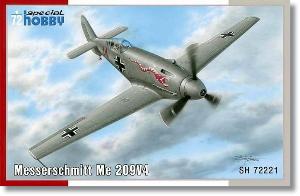
De un vistazo – Quick look
MATERIAL Y PIEZAS
MEDIA & PARTS:
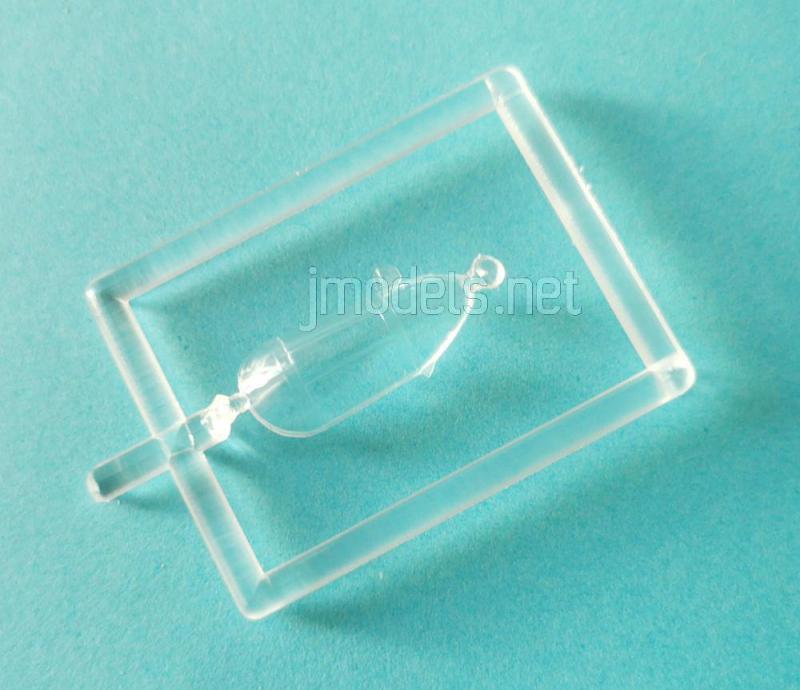
- Plástico inyectado (58 piezas), plástico transparente (1 pieza).
- Injected plastic (58 parts), clear plastic (1 part).
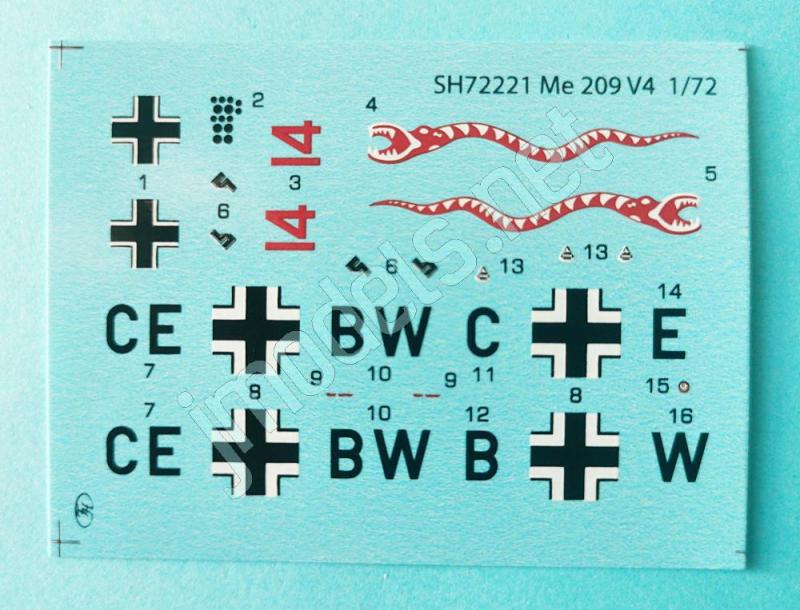
CALCAS – DECALS:
- Cruces alemanas, esvásticas, panel de instrumentos, matrículas, numerales y algunos estarcidos. Apariencia fina y brillante. Buena saturación de color y registro. Mínimo exceso de soporte.
- German crosses and swastikas, instrument panel, registrations and numbers and a few stencils. Thin and glossy finish. Good saturation and register. Minimal surplus carrier film.
OPCIONES – OPTIONS:
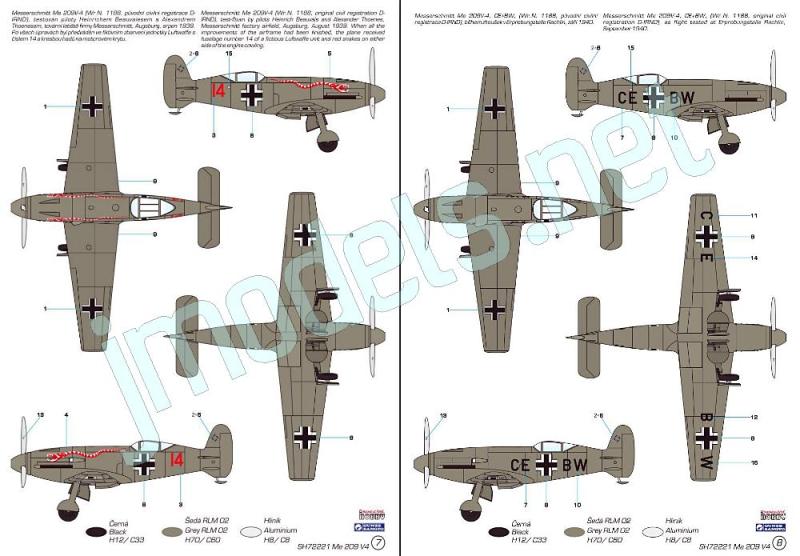
- Messerschmitt Me 209V-4 (Wr.N. 1188). Augsburg. August 1939.
- Messerschmitt Me 209V-4. CE+BW (Wr.N. 1188). Erprobungstelle Rechlin. September 1940.
INSTRUCCIONES – INSTRUCTIONS:
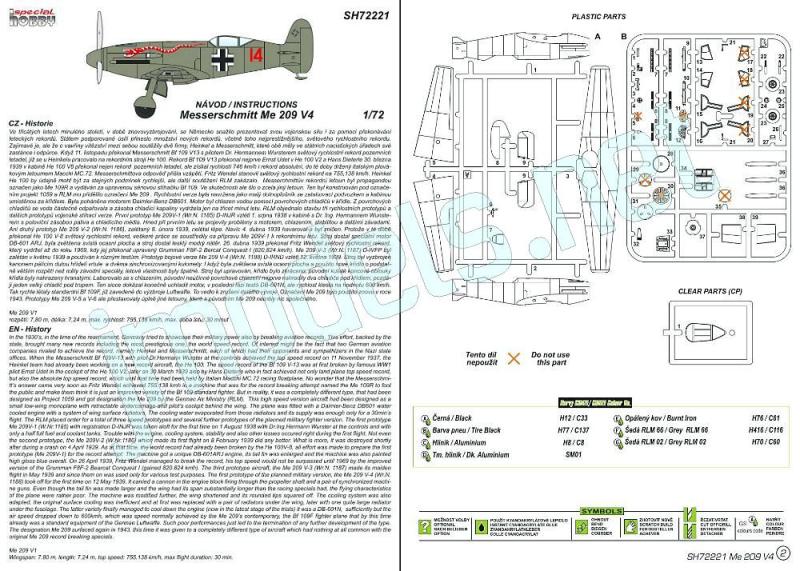
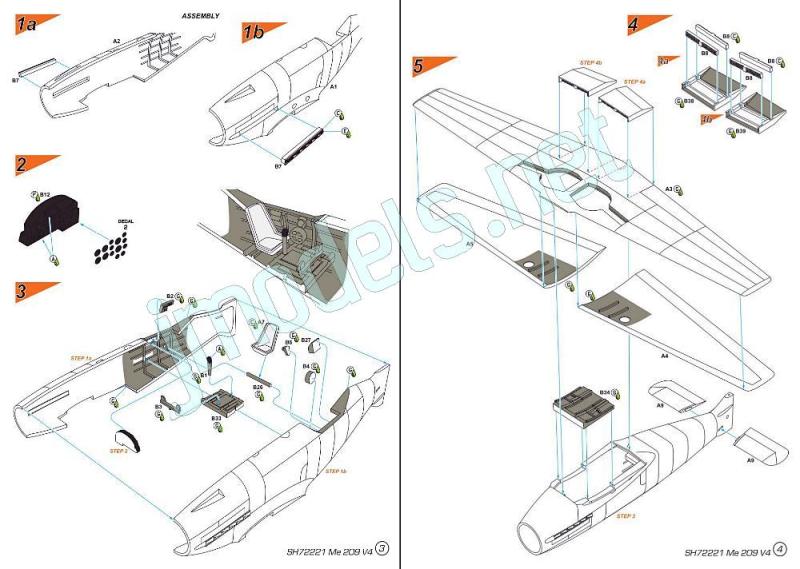
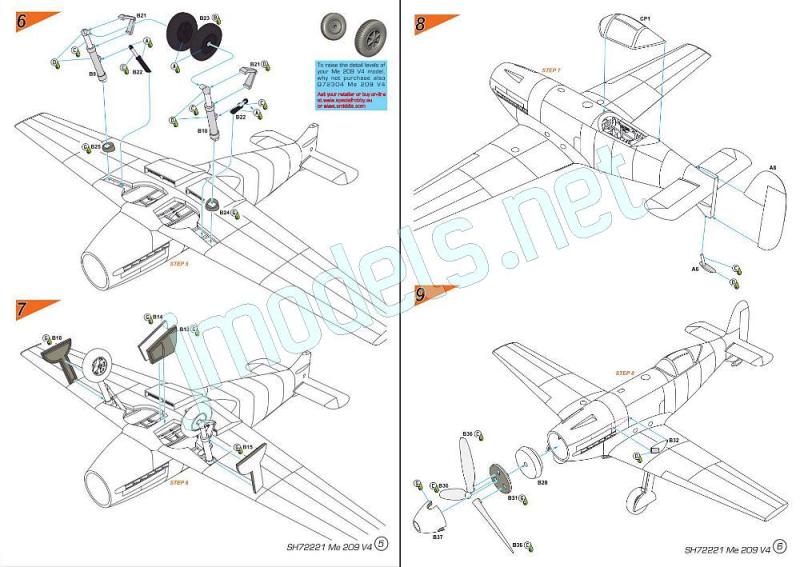
- Folleto A5 de 8 páginas impreso en color. Contiene un sumario histórico sobre el avión, un plano numerado de piezas, 9 etapas de montaje y 2 páginas de perfiles con referencias de pintura de Gunze Sangyo.
- 8-page A5 booklet printed in color. It contains a historical summary about the aircraft, a numbered parts plan, 9 assembly chapters and 2 pages of profiles with Gunze Sangyo paint references.
LO MEJOR – THE BEST:
- Montaje sencillo. Buen detalle general. Carlinga bien provista.
- Ease of assembly. Nice overall detail and cockpit.
LO PEOR – THE WORST:
- Cubierta transparente de una pieza.
- One-piece canopy.
VALORACIÓN – CONCLUSION:
- Special Hobby ha retratado bastante bien este avión tan singular en una maqueta bien detallada y con un montaje asequible incluso para modelistas con menos experiencia.
- Special Hobby has portrayed this unique aircraft quite well in a nicely detailed kit which has an assembly suitable even for the less experienced modelers.

La maqueta
El Me 209 es de esos aviones que la historia y el modelismo no han olvidado porque marcaron un hito en la aeronáutica. En concreto este avión se hizo famoso por establecer una marca de velocidad de 756 km/h pocos meses antes del inicio de la Segunda Guerra Mundial que no superaría otro aeroplano con motor de pistón hasta 30 años después.
Maquetas del Me 209 ha habido en varias escalas al menos desde hace 40 años, tanto de plástico como de resina. Por el momento, las dos de Special Hobby son las más recientes aparecidas en la escala 1/72. Sensatamente, la marca checa, como otros fabricantes antes y después, han dedicado dos maquetas a este veloz enano volador: una para plasmar el primer prototipo V1 en su primer vuelo y en su participación en el récord de velocidad, y otra para el V4, que se probó como posible caza sustituto del Me 109 y que la propaganda alemana difundió como tal. Esta caja representa este segundo avión.
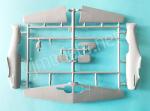
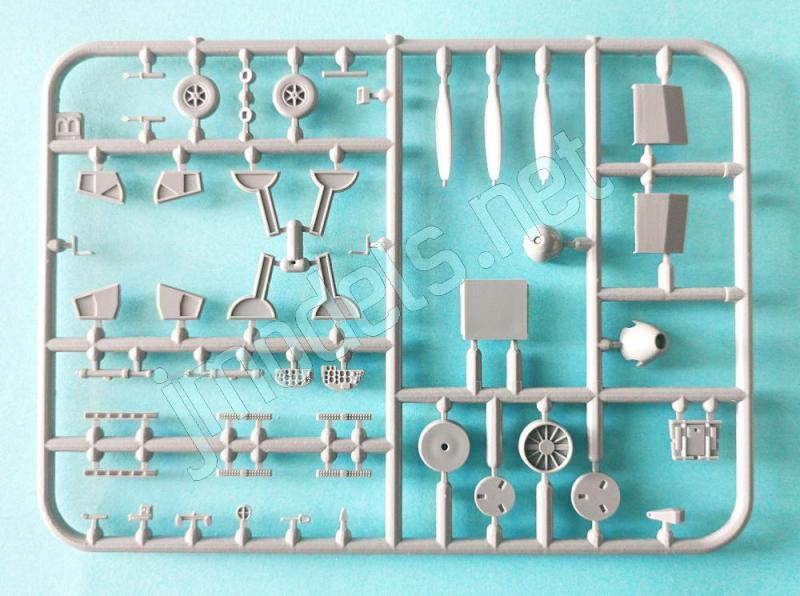
Dentro de la caja encontramos dos bastidores pequeños con 58 piezas, un bastidor transparente con la cubierta transparente, una hoja de calcas y el libreto de instrucciones. En los bastidores hay nueve piezas específicas del V1 que no emplearemos en este prototipo, como las tapas de las ruedas, el panel de instrumentos o el buje de la hélice, entre otras.
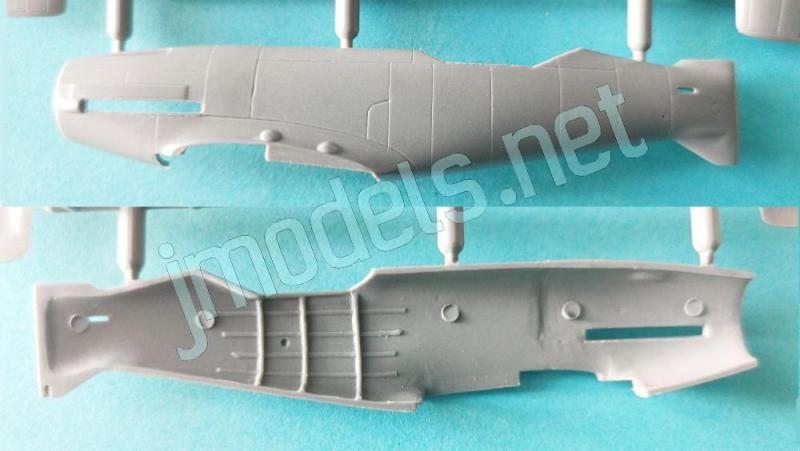
La calidad del moldeado y su limpieza es ya conocida en esta marca. Las piezas no presentan defectos ni rebabas y sólo pocas marcas de eyector en torno a los pozos requieren atención. Las líneas de panel grabadas son finas y están representadas con más anchura en las superficies móviles como corresponde.
La construcción de la maqueta aparenta tal sencillez que me parece factible incluso para modelistas no expertos.
Reseña
Considerando la escala y el tamaño reducido de este avión, la carlinga está bien detallada a falta de unos arneses para el asiento. Los lados del fuselaje poseen la estructura en relieve bien reproducida, además de algunos instrumentos separados a cada banda. El suelo está bien definido y lleva el asiento pegado a una barra transversal exenta, la palanca, los pedales y un estupendo panel de instrumentos con los indicadores bien grabados y representados con calcas.
Desgraciadamente, Special Hobby ha dejado la cubierta transparente de una pieza, con lo que en gran parte el buen detalle interno será menos evidente. El grosor de la pieza me parece razonable y no tiene gran distorsión.
Las mitades del fuselaje incorporan el encastre de las superficies verticales de cola. Muestran un fino panelado y las raíces de las alas moldeadas en estas piezas. Los escapes vienen separados en hilera a cada lado. Pese a su tamaño, están bien definidos. Las troneras del armamento del morro están correctamente representadas, aunque no vienen ahuecadas. Esto es relativamente admisible si pensamos que acaso este V4 no llegó a probarse con armamento instalado y sólo fueron un detalle más propagandístico que otra cosa.
La hélice consta de un buje, las palas separadas y pegadas a una placa redonda, y esta a su vez unida a la placa base. Pegar las palas en su posición adecuada es fácil, porque cada una lleva un diminuto vástago que se inserta en la placa posterior.
Las alas constan de tres piezas. Los paneles tienen un grabado fino y algo más ancho en los alerones y flaps. Antes de pegar las alas al fuselaje hay que añadir un panel central entre los pozos con el detalle del cableado y estructura simulado en fino relieve. El fondo de los pozos, que esta pieza parece no cubrir por completo, tiene un par de marcas próximas al perfil del hueco de las ruedas y podrían ser visibles. Las tomas de refrigeración, parecidas a las del Me 109, son finas y contienen sus rejillas de entrada y salida bien reproducidas pese a su tamaño diminuto.
La cola está resuelta también en tres piezas: los estabilizadores insertados en el fuselaje con lengüetas y las superficies verticales unidas en otra pieza. Bajo ellas aparece un pequeño patín.
Las ruedas son muy buenas y en especial el detalle externo de la llanta tiene un factura excelente. Las patas van pegadas sobre dos pequeñas bases y poseen los brazos de torsión amortiguadores y los brazos auxiliares separados. Las tapas son desiguales. Las externas que cubren las ruedas tienen un grosor más realista que las internas.
La hoja de calcas proporciona cruces alemanas, esvásticas, el panel de instrumentos, matrículas, numerales y algunos estarcidos de apariencia fina y brillante, con buena saturación de color y registro. El exceso de soporte alrededor de las calcas es mínimo.
El folleto de instrucciones está impreso en color en formato A5 y consta de 8 páginas. Contiene un sumario histórico sobre el avión, un plano numerado de piezas, nueve etapas de montaje y dos páginas de perfiles con referencias de pintura de Gunze Sangyo.
Las dos opciones de acabado sólo se diferencian en las calcas, ya que ambas están pintadas de RLM 02. La primera muestra el V4 con el numeral 14 rojo y la serpiente pintada en el morro como atestigua una de sus imágenes conservadas. La segunda muestra el mismo aparato ya con una matrícula militar estándar y el aspecto que tuvo durante las pruebas realizadas en Rechlin en 1940.
Valoración
Special Hobby ha tenido buen ojo al traernos este avión poco conocido, pero interesante para los seguidores de la historia aeronáutica, en una maqueta de montaje asequible y bien detallada, no obstante su sencillez. Tal vez sea la mejor que se ha hecho hasta ahora del Me 209 en la escala 1/72.◊

The kit
The Me 209 is one of those aircraft that history and modeling haven’t forgotten because it marked a milestone in aeronautics. Specifically, this aircraft became famous for setting a speed record of 756 km/h (469 mph) just a few months before the start of WWII, a record that wouldn’t be surpassed by another piston-engined airplane for another 30 years.
Model kits of the Me 209 have been available in various scales for at least 40 years, both in plastic and resin. Currently, the two kits from Special Hobby are the latest to appear in the 1/72 scale. The Czech brand, like other manufacturers before and since, has wisely dedicated two kits to this swift flying dwarf: one depicting the first prototype, the V1, during its maiden flight and participation in the speed record flight, and another for the V4, which was tested as a possible replacement fighter for the Me 109 and which German propaganda promoted as such. This kit represents the latter aircraft.
Inside the box, we find two small sprues with 58 parts, a clear sprue with a clear canopy, a decal sheet, and the instruction booklet. The sprues contain nine specific parts for the V1 that we won’t use in this prototype, such as the wheel covers, the instrument panel, and the spinner, among others.
The standard of molding and its cleanliness are well-known from this brand. Parts are free from blemishes and flash, and only a few ejector pin marks around the wheel wells need attention. The engraved panel lines are fine and are wider on control surfaces, as expected.
Construction has no options and looks so simple that I think it’s feasible even for non-expert modelers.
Review
Considering the scale and small size of this aircraft, the cockpit is well-detailed, lacking only the seat harnesses. The fuselage sides show a nice raised structural detail along with some separate instruments on each side. The floor is well-defined and includes the seat attached to a separate crossbar, the control stick, pedals, and an excellent panel with well-engraved instruments represented by decals.
Unfortunately, Special Hobby provides the canopy in a single piece, which means that much of the good internal detail will be less apparent. The thickness of the part seems reasonable and it doesn’t have much distortion.
The fuselage halves are molded with part of the vertical tail surfaces. They show fine engraved panels and the wing roots molded on. The exhausts are separate, arranged in a row on each side. Despite their size, they are well-defined. The nose gun troughs are correctly represented, although they are not hollowed out. This is relatively acceptable if we consider that this V4 was perhaps never tested with armament installed and that these details were merely for propaganda purposes.
The propeller consists of a spinner; the blades separated and glued to a round plate; and this in turn attached to the base plate. Attaching the blades in their correct position is easy, because each one has a tiny stem that is inserted into the back plate.
The wings consist of three pieces. The panels have a fine engraving, which is slightly wider on the ailerons and flaps. Before attaching the wings to the fuselage, a centre panel is added between the wheel wells, showing the wiring and structure details. The bottom of the wheel wells, which this piece doesn’t seem to completely cover, has a couple of marks near the wells opening and could be visible. The cooling intakes, similar to those of the Me 109, are thin and contain nice inlet and outlet grilles despite their tiny size.
The tail is also made of three pieces: the stabilizers are inserted into the fuselage with tabs, and the vertical surfaces are provided in just one piece. A small skid is attached beneath them.
The wheels are really good and external detail on the rim in particular is excellent, in my opinion. The landing gear is glued onto two small bases and has separate torsion and auxiliary arms. The wheel covers are uneven. The outer wheel covers looks thinner and more realistic.
The decal sheet provides German crosses, swastikas, the instrument panel, registration numbers, numerals, and some stencils with a fine, glossy appearance, good color saturation, and registration. Excess carrier around the decals is minimal.
The instruction booklet is printed in color in A5 format and consists of eight pages. It contains a historical summary of the aircraft, a numbered parts diagram, nine assembly steps, and two pages of profiles with paint references from Gunze Sangyo.
The two finish options differ only in the decals, as both are painted in RLM 02. The first shows the V4 with the red number 14 and the snake painted on the nose, as evidenced by one of its surviving photographs. The second shows the same aircraft with a standard military registration and the appearance it possibly had during the tests at Rechlin in 1940.
Conclusion
Special Hobby has hit the nail in bringing us this little-known but interesting aircraft for aviation history enthusiasts in an easy and well-detailed kit, despite its simplicity. It may well be the best 1/72 scale Me 209 kit produced to date.◊
Publicado – Published: 6 / 2026
©www.jmodels.net


Debe estar conectado para enviar un comentario.