

De un vistazo – Quick look
MATERIAL Y PIEZAS
MEDIA & PARTS:
- Plástico inyectado (34 piezas), plástico transparente (1 pieza).
- Injected plastic (34 parts), clear plastic (1 part).
CALCAS – DECALS:
- Escarapelas francesas, insignias de unidad, marcas de cola, numerales y matrículas. Aspecto fino y mate. Buen registro y saturación de color. Motivos nítidos sin exceso de película de soporte.
- French roundels, unit badges and markings, tail codes, numbers and registers. Thin and matte finish. Good register and color saturation. Sharp with no surplus carrier film.
OPCIONES – OPTIONS:
- Nieuport-Delage NiD 622. Armée de l’Air. 6éme Escadrille. 34éme Régiment d’Aviation d’Observation. 1931-1932.
- Nieuport-Delage NiD 622. Armée de l’Air. 4éme Escadrille. 32éme Régiment d’Aviation d’Observation. 1931-1932.
INSTRUCCIONES – INSTRUCTIONS:
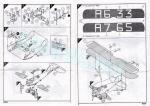
- Una hoja separada y un folleto de 4 páginas ambos de formato A4 impresos en blanco y negro. La hoja contiene un sumario histórico sobre el avión en varios idiomas. El folleto 7 etapas de montaje y 2 páginas de perfiles con códigos de pintura de Humbrol.
- A separate sheet and a 4-page leaflet both in A4 format and printed in black and white. The sheet contains a historical summary about the aircraft in several languages and the leaflet shows 7 assembly steps and 2 pages of profiles with paint codes from the Humbrol range.
LO MEJOR – THE BEST:
- Sencillez de montaje. Detalle superficial en las alas y el fuselaje.
- Ease of assembly. Surface detail on fuselage and wings.
LO PEOR – THE WORST:
- Carlinga algo pobre y mal detallada. Marcas de eyector en el tren de aterrizaje. Sin variedad en las libreas.
- Poorly detailed cockpit. Undercarriage pin marks. Lack of variety in paint finishes.
VALORACIÓN – CONCLUSION:
- Se le notan los años, pero aún puede ser una buena opción para el modelista de habilidades básicas y quienes tengan interés por detallarla. Especialmente indicada para aficionados a los aviones de entreguerras.
- The kit shows its age but still can be a good choice for the modeler with basic skills and scratchbuilding lovers. An interesting topic for interwar aircraft fans.

La maqueta
Es poco lo que hay de este avión en cualquier escala y lo mismo ocurre con otros modelos del Nieuport-Delage de numeración diferente (29, 42, 52, 72). Curiosamente, todos están en la escala 1/72 y realmente es una pena porque cualquiera de ellos, en manos certeras, debe quedar muy lucido en escalas mayores.
La maqueta de Heller es muy antigua y hasta el momento sólo ha tenido una reedición y una copia de Směr (referencia 0851), ambas de los años 90. Por fortuna en este caso tenemos dónde elegir, ya que Azur también cuenta con un NiD 622 (A083) y un NiD 62 (A049) lanzados en 2008. Ambas maquetas son de serie limitada con piezas de resina y fotograbado.
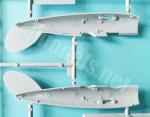
La caja de la maqueta de Heller contiene tres bastidores de piezas y un bastidor transparente, una amplia hoja de calcas y las instrucciones. El moldeado de las piezas es bueno y para la vejez del molde no hay que destacar defectos abundantes ni demasiado importantes, excepto marcas de eyector en algunas piezas y líneas de molde que señalaré más abajo.
Salvo en la alineación de los soportes de ruedas y alas, la construcción del modelo no aparenta dificultad y el escaso número de piezas previsiblemente va a permitir terminarlo en tiempo razonable. Los acabados de pintura, ambos del Armée de l’Air únicamente difieren en las calcas.
El NiD 622 surgió en 1930 como modificación del caza NiD 62 para solucionar varios problemas en su diseño. El 622 tenía una ala de menor cuerda y superficie además de cambios en el diseño de sus alerones. Por lo demás era idéntico al 62. De este modelo se fabricaron unos 320 aviones destinados tanto al Armée de l’Air como a la Marina francesa. El avión llegó a ver el inicio de la Segunda Guerra Mundial todavía en servicio, aunque al parecer debido a su obsolescencia ninguno llegó a ser empleado en el conflicto.
Revisión
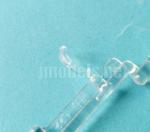
La carlinga tiene en general un detalle deficiente, aunque Heller ha intentado reproducir algunos instrumentos en ambos lados del fuselaje, alguno de ellos separado. Las superficies no tienen marcas. El suelo no es recto sino doblado en ligera pendiente hacia detrás, como se puede observar por las marcas para situarlo en los lados del fuselaje. Además de una palanca muy fina, hay un asiento, que más parece un sofá, con el respaldo unido al mamparo trasero de la carlinga. El panel de instrumentos viene vacío y sin calca, aunque poco se va a ver de ellos una vez cerrado el fuselaje. El parabrisas no es del todo malo y tiene un grosor más adecuado de lo que en principio podría suponerse.
Quienes deseen mejorar esta carlinga y no cuenten con referencias para su propósito, pueden guiarse por las instrucciones de la maqueta de Azur descargables en la web de Scalemates.
Las mitades del fuselaje incluyen las superficies verticales de cola y carecen de la cubierta del motor y de su frontal. El detalle delantero sobre los lados del motor es bastante decente y se aprecian las salidas de los escapes con buena definición. Las superficies del resto del fuselaje están punteadas por líneas de diminutos remaches que son correctas y que no deberían eliminarse, ya que Heller las ha reproducido muy bien para la escala. Me ha llevado mi tiempo discernir si estas líneas son reales o cosa del fabricante porque cuesta apreciarlas en la mayoría de fotos del NiD 622, pero están ahí.
La cubierta del motor muestra las carenas de los cilindros y, en medio de la pieza, las ametralladoras y sus troneras moldeadas in situ más dos ranuras situadas tras ellas para pegar los soportes centrales de las alas, que son de una pieza. El detalle del armamento es un tanto simplón, pero quien no deseen remozarlo, al menos ahí lo tiene. El frontal del motor es de una pieza que muestra el frontal de las carenas de los cilindros y una pequeña toma de aire sin ahuecar entre ambas. La hélice de una pieza va pegada entre el buje y la placa trasera, que tal vez haya que refinar. Las palas son finas y parecen bien torsionadas. El detallado del fuselaje se completa con la adición del estribo de acceso en el lado izquierdo.
Las pequeñas alas inferiores son de una pieza y se insertan con lengüetas en el fuselaje. Ambas son finas y el relieve estructural me parece bien logrado. Las superficies muestran los huecos para pasar los puntales de las alas.
El plano superior tiene ambas caras separadas y los flaps y alerones están unidos a la mitad superior. El relieve de la estructura es bastante bueno y consistente. Las superficies de control están bien marcadas y sus bordes de salida ondulados bien reproducidos. La parte central del borde de ataque cuenta con una pieza que podría ser la cámara de las ametralladoras y la superficie inferior tiene dos actuadores aparte para los timones. Los soportes de las alas están bien de formas pero las piezas traen líneas de molde importantes que limpiar y algunas marcas de eyector pequeñas y muy leves sobre uno de los lados. A las alas les faltan al menos las luces de navegación y el retrovisor del piloto.
La cola tiene las superficies verticales unidas al fuselaje, como he indicado antes, y las horizontales en una pieza algo gruesa en su centro pero bien afinada en los bordes. Unas y otras son completamente lisas con los timones separados por una línea grabada.
El tren de aterrizaje comprende el eje carenado de las ruedas, dos soportes en forma de N, las ruedas y los curiosos radiadores de este avión separados en mitades y pegados sobre los soportes. La cara delantera parece tener una pequeña marca de eyector. La carena del eje tiene una definición decente en el detalle de la estructura y no es muy gruesa, pero la cara superior tiene un par de marcas pequeñas que afectan al detalle. Las ruedas son de una pieza. Muestran leves líneas de molde sobre los neumáticos, que están bien grabados. Las llantas son lisas y cuentan con una pequeña marca simulando la válvula de llenado. El patín de cola viene separado del fuselaje.
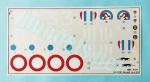
La hoja de calcas es extensa y lleva impresas escarapelas francesas con el círculo interior separado, insignias de unidad, marcas de cola, numerales y matrículas. Todas las calcas poseen un aspecto fino y mate. Tanto su registro como la saturación de color es correcta y los motivos muestran nitidez con ausencia de película de soporte.
Lo único reprochable en esta hoja es la reproducción del orgulloso gallo cantarín de la 6ª Escuadrilla, que en la caja aparece bien retratado, pero en la hoja semeja un pingüino o gorrión crestado con pose bastante menos gallarda.
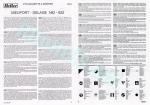
Las instrucciones son un tanto extrañas porque están separadas en dos partes. Por un lado, una hoja A4 impresa en blanco y negro contiene un sumario histórico sobre el avión en varios idiomas. Por el otro, se ha incluido un folleto de cuatro páginas del mismo formato e impresión que contiene siete capítulos de montaje y dos páginas de perfiles donde los códigos de color pertenecen a esmaltes de Humbrol. Los pasos de armado no tienen dificultades de comprensión, pero las libreas de los acabados son idénticas. Lástima que Heller no incluyese al menos una de la Aéronavale para variar.
Valoración
Hace mucho que Heller no ha vuelto a reeditar esta maqueta y no debería olvidarla, ya que resulta más apta para quienes no les importe tanto la definición y finura del detalle, como la sencillez de construcción y la práctica de habilidades básicas.
A los modelistas avanzados les convendrá más la maqueta de Azur porque proporciona muchas piezas que no son del todo buenas o faltan en esta maqueta, y además se van a ahorrar hacerlas.◊





The kit
There are not many kits of this aircraft in any scale, and the same goes for other Nieuport-Delage fighters with different numbers (29, 42, 52, 72). Curiously, all these kits were released in the 1/72 scale, which is a real shame because any of them could be turned into a very nice model in larger scales.
Heller kit is very old and so far there has been only one reissue and a rebox from Směr (reference 0851), both from the 1990s. Fortunately, in this case we have something to choose from, as Azur also has a NiD 622 (A083) and a NiD 62 (A049), launched in 2008. Both are limited runs with resin and photo-etched parts.
The box contains three sprues of parts and a clear sprue, a large decal sheet, and the instructions. The molding of parts is good, and considering the age of the tool, there are no blemishes to be noted but for a few pin marks on some parts and seam lines to clean up in others. I will refer to them later.
Except for the alignment of the wheel and wing struts, construction does not seem difficult and the small parts count will likely allow the kit to be completed in a reasonable time. Paint finishes, both from the Armée de l’Air, only differ in the decals.
The NiD 622 emerged in 1930 as a modification of the NiD 62 fighter to solve several problems in its design. The 622 had a wing with a smaller chord and area, as well as changes in the design of the ailerons. Otherwise, it was identical to the NiD 62. About 320 aircraft of this variant were manufactured for both the Armée de l’Air and the French Navy. The aircraft was still in service at the beginning of World War II, but due to its obsolescence, none were used in the conflict.
Review
The cockpit is generally poorly detailed, although Heller tried to reproduce some instruments on both fuselage sides. The sides are clean from marks. The floor is not straight but slopes slightly downward as the lines engraved on the fuselage walls show. In addition to a very thin lever, there is a seat, but it really looks like an armchair, with the backrest attached to the rear bulkhead. The instrument panel comes flat and has no decal for the instruments, but little will be visible once the fuselage is closed. The windscreen is not too thick and is usable.
The modeler wishing to enhance this cockpit but having no visual reference to do it can resort to the Azur kit instructions, which are downloadable from the Scalemates website.
The fuselage halves are molded with the vertical tail surfaces and lack the engine deck and the front nose. Front detail on the engine sides is quite decent, and the exhausts are neatly defined. The surfaces of the rest of the fuselage are dotted with lines of tiny rivets, which are correct and shouldn’t be removed, as Heller reproduced them very well for the scale. It took me a while to discern whether these lines were real or just added by the manufacturer because they’re hard to see in most photos of the NiD 622, but they were there.
The engine deck shows the cylinder fairings plus the gun muzzles and troughs molded in the middle of the piece with two slots behind them for attaching the one-piece cabane struts. The guns are quite simple, but at least are present for those who don’t wish to rework them. The engine front is also molded with the engine fairings and a small air intake between them. The one-piece propeller is glued between the hub and the back plate, which may need to be refined. The blades are thin and the twist looks correct. The fuselage is provided with a small mounting step on the left side.
The lower wings are one-piece inserted into the fuselage with tabs. Both are thin, and the raised structural detail looks fine. The surfaces show the gaps to build the wing struts.
The upper plane has both sides apart with the flaps and ailerons molded on the upper piece. Structural detail is quite good and consistent. The control surfaces are well engraved, and their wire trailing edges nicely rendered. The mid wing leading edge has a piece resembling the machine gun camera, and the lower surface has two separate control horns for the rudders. The wing struts have a flat profile, but the parts have significant seam lines that need to be cleaned up plus some small and shallow pin marks on one side. The navigation lights and the pilot’s rearview mirror are missing.
The vertical stabiliser and rudder are joined to the fuselage halves, as mentioned, and the tailplanes are provided in a single piece, somewhat thick in the middle but very thin around the edges. All the tail surfaces are smooth, with the rudders defined by an engraved line.
The landing gear comprises the axle fairing structure, two N-struts, the wheels, and the unusual radiators of this aircraft, separated in halves and glued on the struts. The radiators front side seem to have a vey small pin mark. The axle fairing is not very thick and has decent structural detail, but the upper side has a couple of small marks affecting detail. The wheels are one-piece with the tires correctly engraved and slight seam lines on the tread. The rims are smooth and have a small hole simulating the filler valve. The tail skid is separated from the fuselage.
The decal sheet has the same size as the box and features French roundels with a separated inner circle, unit badges, tail markings, numbers, and registration numbers. All decals have a thin, matte appearance. Both registration and color saturation are correct, with a sharp finish and no surplus carrier film.
The only objectionable aspect of this sheet is the reproduction of the proud crowing rooster of the 6th Squadron, which appears well portrayed on the box, but on the sheet it looks like a crested penguin or sparrow with a rather less gallant pose.
The instructions are somewhat odd because they are separated into two parts. On one side, an A4 sheet printed in black and white contains a historical summary of the aircraft in several languages. On the other, a four-page booklet of the same format and colors shows seven assembly steps and two pages of profiles with color codes belonging to Humbrol enamels. Assembly stages are not difficult to understand, but the paint finishes are identical. It’s a shame that Heller didn’t include at least one Aéronavale livery for a change.
Conclusion
Heller hasn’t reissued this kit for a long time and doesn’t really deserve to be forgotten, as it is quite suitable for those who are less concerned with definition and fineness of detail and look for ease of construction and the practice of modeling skills.
Advanced modelers will be better off with the Azur kit because it provides many parts that are not good or are missing from this kit, and they will also avoid to make them.◊
Publicado – Published: 9 / 2025
©www.jmodels.net
 jmodels.net
Debe estar conectado para enviar un comentario.