
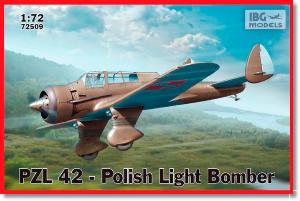
De un vistazo – Quick look
MATERIAL Y PIEZAS
MEDIA & PARTS:
- Plástico inyectado (52 piezas), plástico transparente (12 piezas), fotograbado (15 piezas).
- Injected plastic (52 parts), clear plastic (12 parts), PE (15 parts).
CALCAS – DECALS:
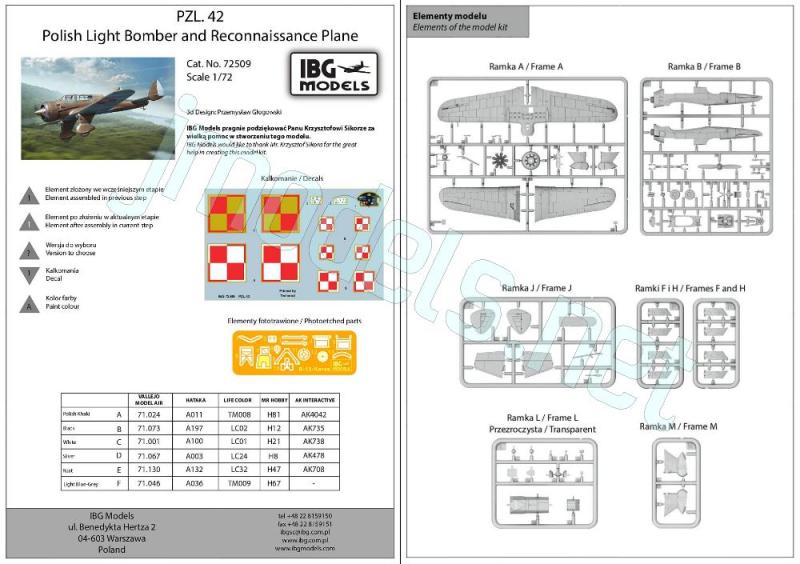
- Impresas por Techmod. Insignias nacionales y paneles de instrumentos. Apariencia brillante y fina. Buena saturación de color y nitidez. Sin exceso de soporte.
- Printed by Techmod. National insignia and instrument panels. Thin and glossy finish. Good color saturation and sharpness. No excess carrier.
OPCIONES – OPTIONS:
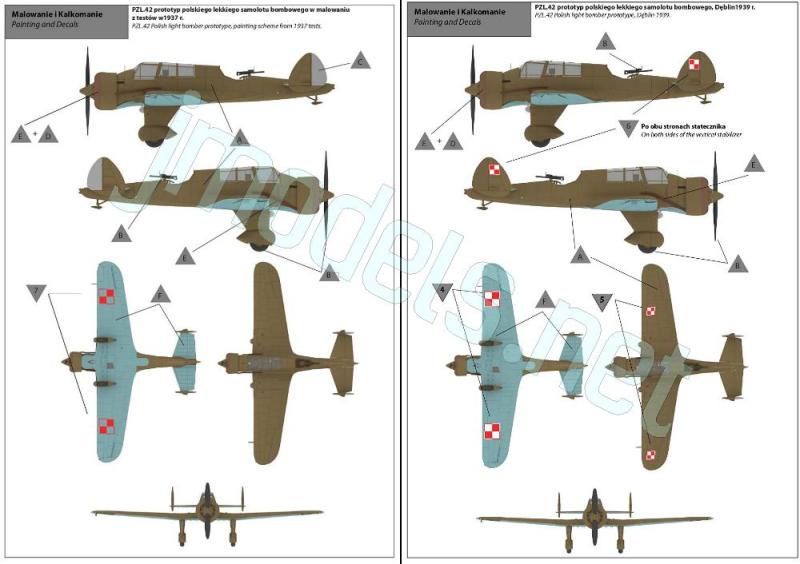
- PZL.42. Polish Light Bomber prototype. Paint scheme from 1937 tests.
- PZL.42. Polish Light Bomber prototype. Dęblin (Poland), 1939.
INSTRUCCIONES – INSTRUCTIONS:
- Folleto A4 de 8 páginas impreso en color sobre papel satinado. Contiene una tabla de colores con equivalencias de varias marcas de pintura, un plano de piezas sin numerar, 11 capítulos de montaje, una vista del modelo terminado y 2 páginas de perfiles.
- 8-page A4 booklet printed in color on satin paper. Contains a color chart with paint matches form several brands, an unnumbered parts diagram, 11 assembly steps, a view of the finished model and 2 pages of profiles.
LO MEJOR – THE BEST:
- Molde limpio y de buena factura. Detalle interno y externo.
- Clean, well-molded tooling. Detail inside and outside.
LO PEOR – THE WORST:
- Delicado montaje de la carlinga.
- Delicate cockpit assembly.
VALORACIÓN – CONCLUSION:
- Por su gran similitud, esta maqueta es una continuación de las que IBG ha lanzado del PZL P.23. Sin concesiones al detalle, pese a ser un avión único. Montaje de la carlinga poco apto para inexpertos.
- Due to its strong resemblance, this kit is a continuation of the PZL P.23 kits released by IBG. It makes no concessions to detail, despite being a unique aircraft. Cockpit assembly is not suitable for inexperienced modelers.

La maqueta
Este avión recuerda mucho al más conocido PZL P.23 Karaś y con razón, ya que su construcción se hizo modificando un P.23B para probar en 1936 el nuevo diseño que debía conducir al PZL.46 Sum, un bombadero ligero y avión de reconocimiento que debía sustituir al Karaś. Tanto el PZL.42 como el 46 no pasaron de los prototipos debido a la invasión de Polonia en 1939.
Siendo un avión polaco tan inusual, no es extraño que solamente las marcas del país lo hayan tenido de protagonista de algunas de sus maquetas. En la escala 1/48 hay una de Mirage Hobby y en la 1/72 otra de resina de Accura, además de la que describo en esta revisión, y la cuenta queda completa. Curiosamente, o tal vez no, del PZL.46 hay bastantes más opciones, tanto de resina y vacuforme como en plástico e impresión 3D. A IBG Models sin duda le falta este avión para redondear su amplio catálogo del PZL P.23 y modelos allegados.
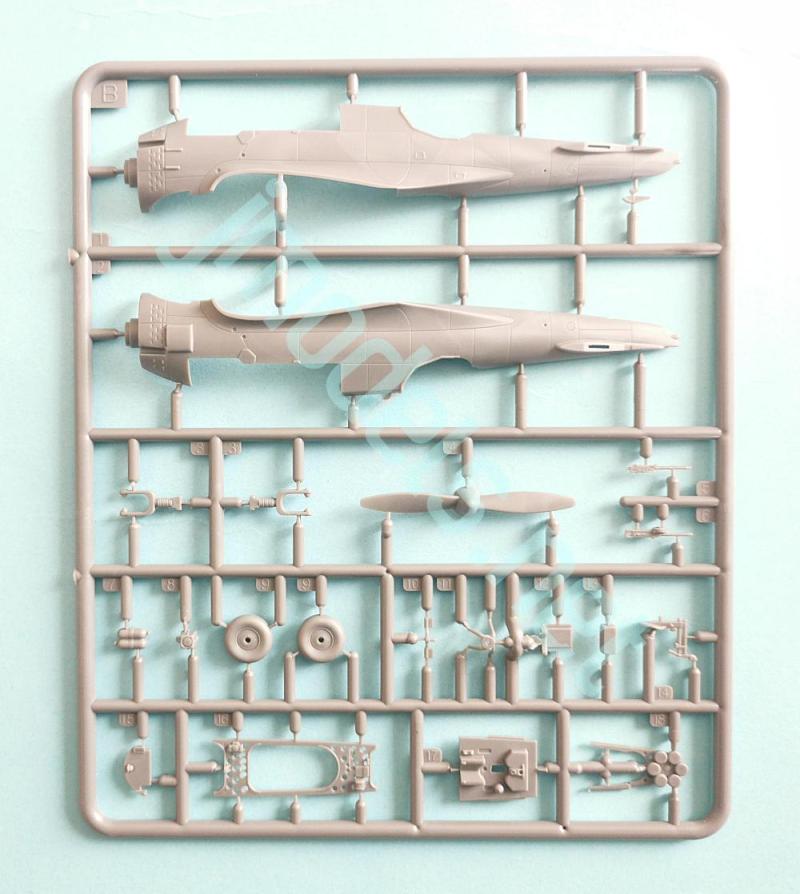
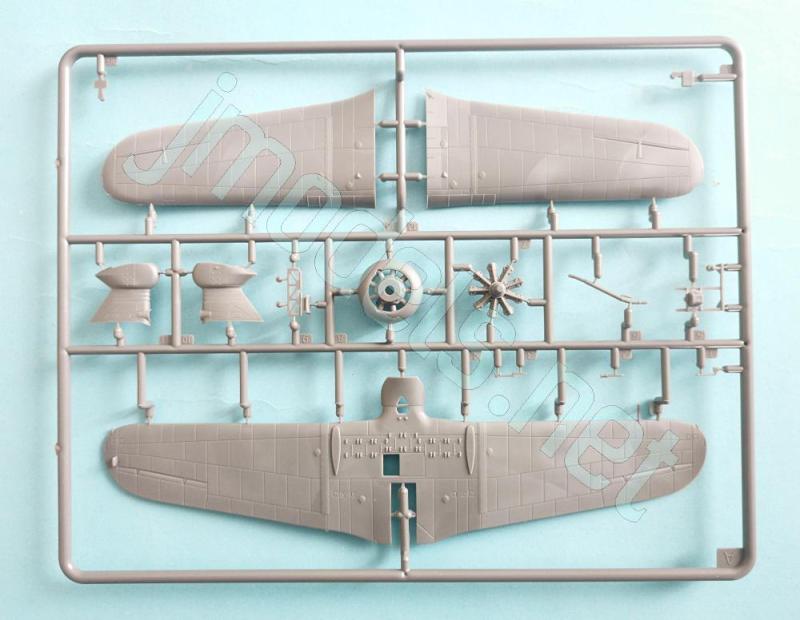
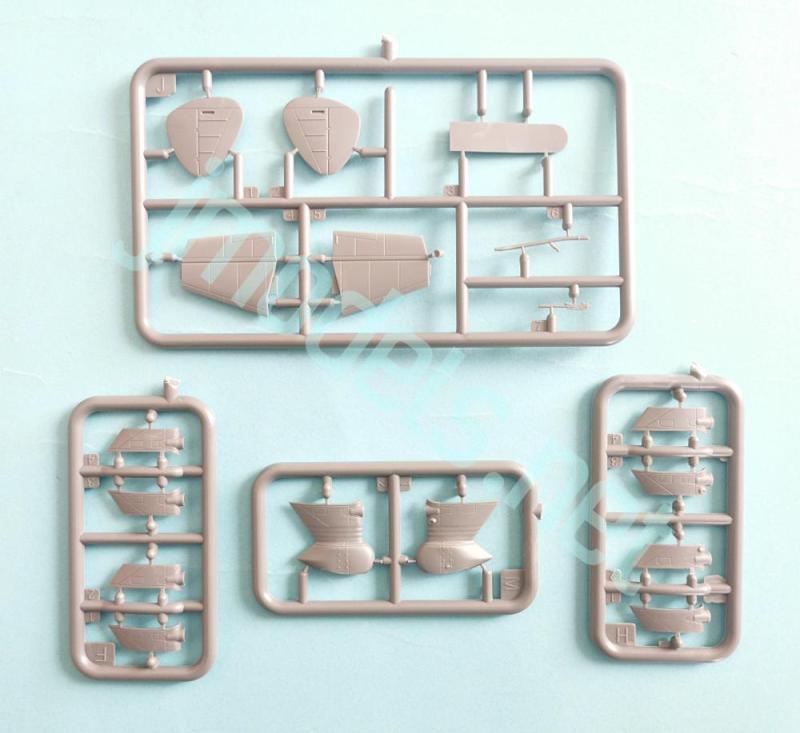
El contenido de la caja tiene el aseado aspecto habitual, con las piezas contenidas en bolsas con solapas selladas, y comprende siete bastidores de piezas, contando las transparentes, una plancha de fotograbados, la hoja de calcas y el folleto de instrucciones. Los bastidores son idénticos a los de las maquetas del PZL P.23 (referencia 72505, referencia 72506), salvo el bastidor J, que contiene las nuevas piezas de la cola, una ametralladora y un escape alargado.
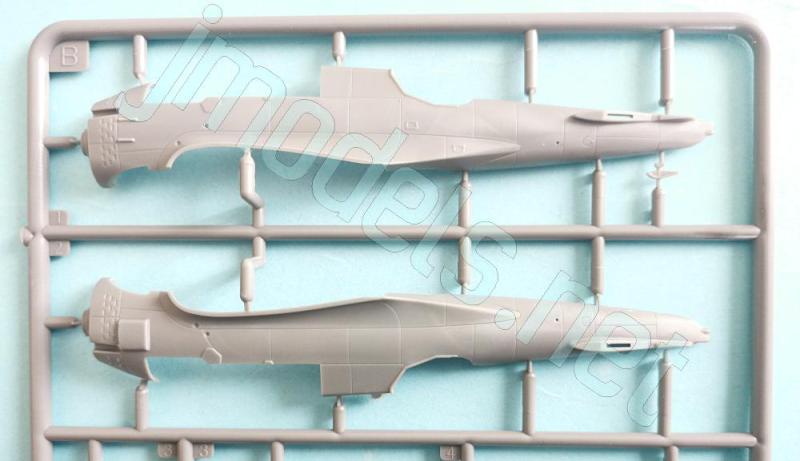
El molde no trae defectos ni he encontrado marcas de eyector. Sólo hay mínimas rebabas en una pieza del fuselaje y en la punta de un ala, ambas sencillas de eliminar. Los nódulos de eyector son también muy pocos y sobre todo se encuentran en las piezas transparentes.
Con la experiencia previa de la buena maqueta del P.23, IBG Models no podía fallar con esta, con la que comparte sus buenas hechuras en el detalle externo e interno. Las líneas de la estructura de las alas y el fuselaje tienen un grabado excelente y el aspecto justo que deberían tener a esta escala, a mi juicio.
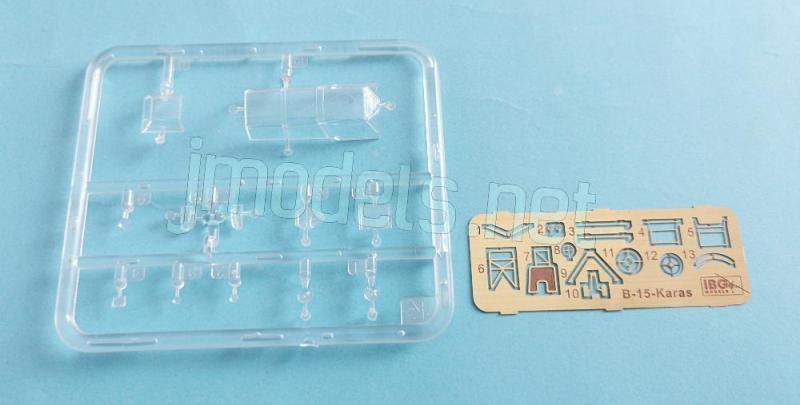
La maqueta no parece muy indicada para modelistas con poca experiencia por el número de pequeños fotograbados que hay que colocar, en especial en la carlinga, que es precisamente la zona a la que hay que prestar más atención durante la construcción del modelo.
Reseña
La disposición de la carlinga es la misma que la de las maquetas del PZL P.23, con la diferencia en la góndola ventral, que no está representada y en su lugar tenemos un panel que cubre su hueco en el fuselaje cuyo lado externo está remachado en relieve con finura. Los lados internos del fuselaje muestran también el mismo detalle nítido tanto en la estructura como en los instrumentos que se han reproducido sobre ella.
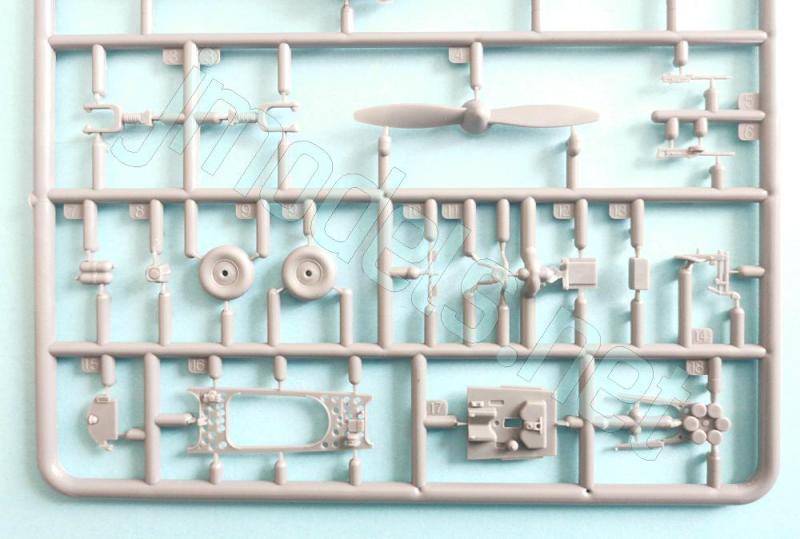
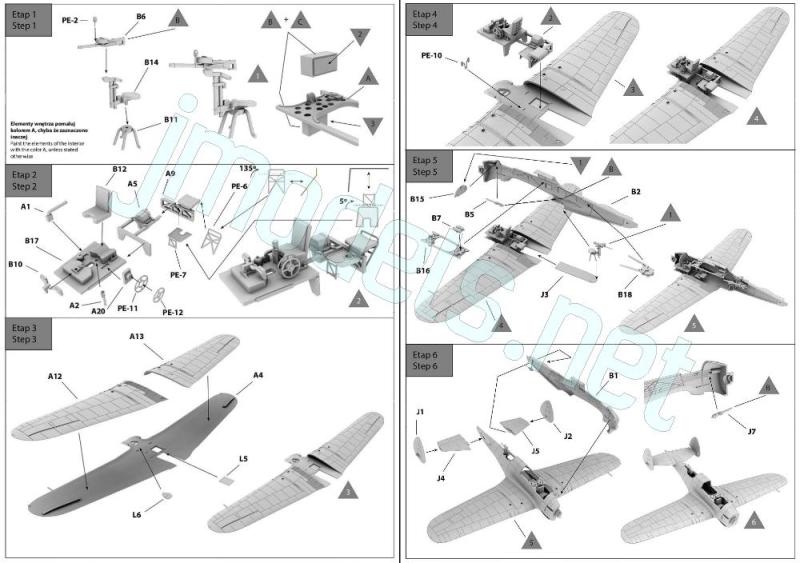
El puesto de pilotaje incluye el suelo con los elementos habituales (asiento, pedales, panel de instrumentos con calca, palanca de control, etc.) y otros detalles de fotograbado, como el volante de compensación del timón de profundidad. Por detras tenemos el puesto del bombardero/observador con el asiento, varios instrumentos, como la radio y el asistente de bombardeo, también con calcas, y la misma cámara de reconocimiento de otras maquetas con su panel acristalado por debajo del fuselaje. La estructura de este puesto contiene varios soportes en finas piezas de fotograbado y los pedales, ya que este puesto tenía controles dobles para entrenar tripulantes. El puesto trasero va colocado sobre el panel que cubre la góndola del P.23 y cuenta con idéntica ametralladora y afuste unido al asiento, más una pieza en V con lo que parece un dispensador giratorio de tambores de munición.
Antes de cerrar la mitades del fuselaje hay que pegar el panel de instrumentos, dos ametralladoras proeles (en lugar de una en el P.23) introducidas en huecos frontales del fuselaje y un panel de refuerzo que rodea el puesto central provisto de dos cilindros de oxígeno.
Las alas están separadas en dos mitades superiores y una inferior, sobre la que va colocada la carlinga tras pegar dos paneles acristalados, uno en la parte delantera, que le ayudaba al piloto en los aterrizajes, y otro bajo la cámara, como he mencionado.
Las mitades del fuselaje muestran un detalle externo muy bueno y una de ellas incluye un frágil patín de cola detallado con un fino refuerzo de fotograbado. La cubierta de la carlinga es bastante fina y el bastidor posee buena definición. En su interior está el receptor de radio con dos soportes de fotograbado pegados al techo de la carlinga. Por delante del parabrisas se añade el punto de mira del piloto de fotograbado.
IBG no ha hecho concesiones con el motor y lo ha resuelto en una pieza bastante buena, además detallada por ambas caras pese a que no se va a apreciar. El capó es de una pieza e incluye la cubierta de la caja de engranajes de la hélice. Esta última está moldeada con el cono y sus palas son finas. Tras el capó hay dos largos tubos de escape separados.
Las alas poseen un grabado notable, aunque hay que hacer una mención especial de la reproducción de las superficies de control. También están representados las luces de las puntas, las tomas de combustible y los puntos de anclaje de los soportes de las bombas, más el tubo Pitot moldeado in situ. Las nuevas piezas de las superficies de la cola son finas y sus bordes se han afinado con suavidad. Los timones están correctamente grabados.
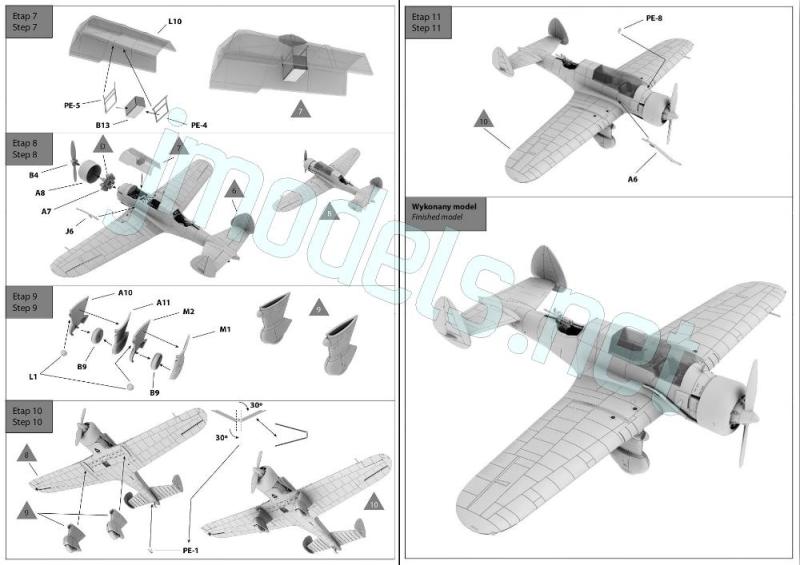
El capítulo 9 de mis instrucciones tiene un error porque no aparecen las piezas identificadas en él, sino una vista del modelo terminado. Afortunadamente, con la numeración de las piezas podemos adivinar que en este paso se trata del montaje del tren de aterrizaje y del añadido de uno de los tubos de escape. Las patas están separadas en mitades con las ruedas, moldeadas de una pieza, alojadas entre ellas. Los faros de aterrizaje son transparentes. Al parecer no todas las instrucciones de esta maqueta tienen fallo descrito.
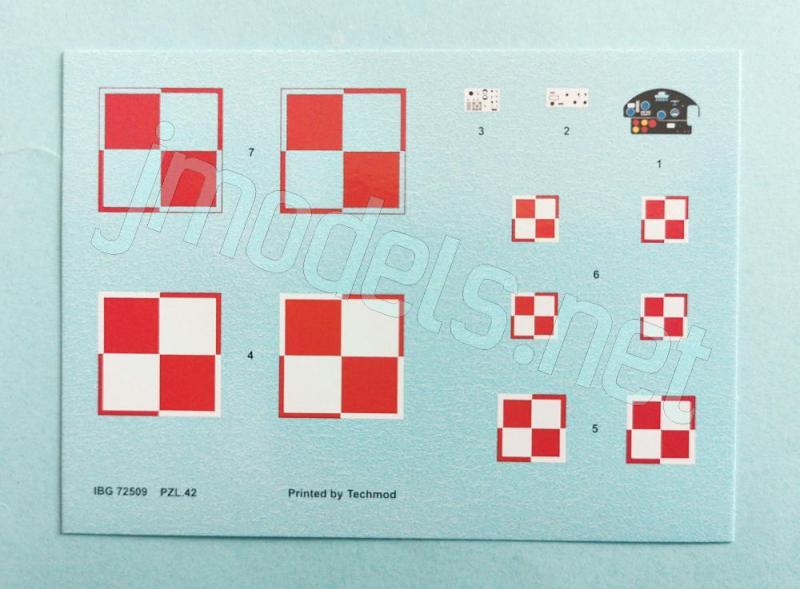
Las calcas están muy bien impresas por Techmod. Sólo contiene insignias nacionales de dos tipos y los paneles de instrumentos del piloto y el bombardero. Los motivos poseen apariencia brillante y fina, buena saturación de color y nitidez. El soporte no sobresale de la calca por estar perfectamente cortado a su alrededor.
El manual de instrucciones está impreso en formato A4 y consta de ocho páginas impresas en color sobre papel satinado. Contiene una tabla de colores con equivalencias de Vallejo Model Air, Hataka, Life Color, Mr Hobby y AK Interactive, un plano de piezas sin numerar, once capítulos de montaje, una vista del modelo terminado y dos páginas de perfiles. Las secuencias del montaje está diseñadas en 3D y son claras por lo general, salvando el capítulo 9 ya mencionado.
El avión no tiene otras alternativas de pintura que la del único prototipo construido con el aspecto que tuvo durante las pruebas de 1937 (insignias nacionales sólo bajo las alas y timones de dirección blancos), o durante su estancia en Dęblin en 1939, donde llevaba las insignias sobre y bajo las alas además de la cola. La librea de ambas versiones es idéntica a la de la aviación polaca del momento, compuesta de verde oscuro sobre azul claro.
Valoración
Aunque IBG tenía ya el trabajo en gran parte hecho gracias a las maquetas anteriores del PZL P.23, un avión muy parecido a este, tampoco ha hecho concesiones al detalle por fuera y dentro. Al montaje de la carlinga hay que prestarle algo más de atención por las pequeñas piezas de fotograbado, pero el resto no debería dar muchos problemas. Quienes gusten de los aviones raros o únicos, aqui tiene uno bastante desconocido que probar.
Ahora sólo falta que IBG lance algún día la secuela de este en forma de PZL.46 Sum. Si no lo ha hecho ya, seguramente es porque no es tan afín al Karaś.◊

The kit
This aircraft is very reminiscent of the more well-known PZL P.23 Karaś, and with good reason, as it was built by modifying a P.23B to test in 1936 the new design that would lead to the PZL.46 Sum, a light bomber and reconnaissance aircraft intended to replace the Karaś. Both the P.42 and the P.46 never went beyond the prototype stage due to the invasion of Poland in 1939.
Being such an unusual Polish aircraft, it’s not surprising that only Polish modeling brands have kitted it. There’s a 1/48 scale kit from Mirage Hobby and a 1/72 scale resin offer from Accura, in addition to the one I deal with in this review, and that completes the list. Curiously, or perhaps not so much, there are many more choices for the PZL.46, both in resin and vacform, as well as in plastic and 3D printed kits. IBG Models is undoubtedly missing this aircraft to round out their extensive catalog of the PZL P.23 and related models.
The box has the usual neat appearance, with parts protected in self-sealing bags, and contains seven sprues of parts, including a clear sprue, a photo-etched fret, the decal sheet, and the instruction booklet. The sprues are identical to those of the PZL P.23 kits (reference 72505, reference 72506), except for sprue J, which contains the new tail parts, a machine gun, and an extended exhaust.
The mold has no blemishes, and I haven’t found any ejector marks. There is only minimal flash on one fuselage half and on a wingtip, both easy to remove. Plastic nodules are also very few and mainly found on the clear parts.
With the previous success of the excellent P.23 kits, IBG Models couldn’t disappoint with this one, sharing its high-quality molding and attention to detail both inside and out. The lines of the wing and fuselage structure are superbly engraved and, in my opinion, look exactly as they should at this scale.
The kit doesn’t seem very suitable for inexperienced modelers due to the number of small photo-etched parts, especially inside the cockpit, which is the area that needs the most attention during assembly.
Review
The cockpit layout is the same as in the PZL P.23 kits, with the difference being the ventral gondola, which is not represented. Instead, there’s a panel covering the gap in the fuselage, with fine raised rivets molded around the outer edge. The fuselage sidewalls also display the same crisp detail, both in the structure and in the instruments reproduced on them.
The pilot’s cockpit includes the floor with the usual elements (seat, pedals, instrument panel with decals, control stick) and other photo-etched bits, such as the elevator trim handwheel. Behind it is the bombardier/observer’s position with the seat, several instruments, such as the radio and the bomb-aimer’s automatic device, also with decals, and the same reconnaissance camera found in the P.23 kits with its glazed panel below the fuselage. The structure includes several supports in thin photo-etched parts and the pedals, as this position had dual controls for crew training. The gunner’s station is set on the panel covering the P.23’s gondola and features an identical machine gun and mount attached to the seat, plus a V-shaped piece with what seems to be a rotating ammo drum dispenser.
Before closing the fuselage halves, you need to attach the instrument panel, two forward machine guns (instead of one in the P.23) in the front of the fuselage, and a panel surrounding the central cockpit, which is provided with two oxygen cylinders.
The wings are separated into two upper and a lower half, onto which the cockpit is attached after gluing two glazed panels: one at the front, which aided the pilot during landings, and another below the camera, as mentioned.
The fuselage halves show excellent external detail, and one of them includes a brittle tail skid detailed with a fine photo-etched V-strut. The cockpit canopy is quite thin, and the frame has good definition. Inside is the radio receiver with two photo-etched mounts glued to the cockpit roof. A photo-etched crosshair is added in front of the windshield.
IBG haven’t compromised on the engine, resulting in a very nice piece detailed on both sides even though it won’t be seen inside the cowling. The cowling is a single piece and includes the propeller gearbox cover. The propeller is molded with the spinner, and the blades are thin. Behind the cowling are two long, separate exhausts.
The wings feature remarkable engraving, though the reproduction of the control surfaces deserves special mention. Also included are the wingtip lights, fuel filler caps, and bomb carriers, plus the Pitot tube molded in place. The new tail surfaces are thin and their edges have been smoothly refined. The rudders are correctly engraved.
Chapter 9 of my instructions contains a mistake because it doesn’t show the identified parts, but rather a view of the finished model. Fortunately, the part numbers allow us to deduce that this step involves assembling the landing gear spats and adding one of the exhausts to the fuselage side. The spats are separated in halves with the one-piece wheels attached between them. The landing lights are provided as clear parts. It seems the mistake in assembly step 9 is not present in all the P.42 kits.
The decals are very well printed by Techmod. They only include two types of national insignia plus the pilot and bomber instrument panels. The decals have a glossy, fine appearance, good color saturation, and sharpness. The carrier film is neatly cut around the decals.
The instruction manual has A4 format and consists of eight pages printed in color on glossy paper. It contains a color chart with paint matches from Vallejo Model Air, Hataka, Life Color, Mr. Hobby, and AK Interactive, an unnumbered parts diagram, eleven assembly chapters, a view of the finished model, and two pages of profiles. Assembly sequences are designed in 3D and are generally clear, with the exception of the said Chapter 9.
The aircraft has no paint options other than that of the single prototype built as it appeared during the 1937 tests (national markings only under the wings and white rudders), or during its stay at Dęblin in 1939, where it sported markings above and below the wings as well as on the tail. The livery is the same and identical to that of the Polish Air Force at the time, consisting of dark green over light blue.
Conclusion
Although IBG had already done much of the work thanks to their previous kits of the PZL P.23, a very similar aircraft, they haven’t skimped on detail, either inside or out. Cockpit assembly requires a bit more attention due to the small photo-etched parts, but the rest shouldn’t pose too many problems. Those who enjoy rare or unique aircraft will find a rather unknown piece to try in this one.
It seems about time for IBG to release a sequel to this in the form of the PZL.46 Sum. If they haven’t done so already, maybe it’s because the aircraft isn’t as similar to the Karaś.◊
Publicado – Published: 8 / 2026
©www.jmodels.net


Debe estar conectado para enviar un comentario.