
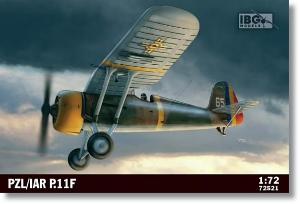
De un vistazo – Quick look
MATERIAL Y PIEZAS
MEDIA & PARTS:
- Plástico inyectado (49 piezas), plástico transparente (8 piezas), fotograbado (68 piezas), acetato (4 piezas).
- Injected plastic (49 parts), clear plastic (8 parts), photo-etched (68 parts), acetate (4 parts).
CALCAS – DECALS:
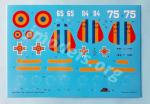
- Impresas por Techmod. Insignias rumanas de dos tipos, marcas de cola, bandas del fuselaje, panel de instrumentos y algunos estarcidos. Aspecto fino y brillante. Buena saturación de color. Sin exceso de soporte.
- Printed by Techmod. Romanian crosses and roundels, tail markings, fuselage bands, instrument panel and some stencils. Thin and glossy finish. Good colour saturation. No excess of carrier film.
OPCIONES – OPTIONS:
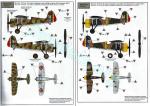
- PZL./I.A.R. P.11F No. 75. Flotila 1 Vânătoare. Pilot Elev T. R. Nicolae Rotaru. December 1939.
- PZL./I.A.R. P.11F No. 114. Flotila 2 Vânătoare. Pilot Adj. Sgt. Av. Marian Voica. June 1940.
- PZL./I.A.R. P.11F No. 65. Grupul 3 Vânătoare. Pilot Adj. Sgt. Av. Ioan Bosânceanu. June 1941.
INSTRUCCIONES – INSTRUCTIONS:
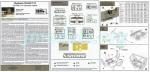
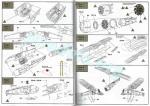
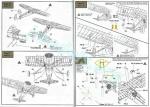
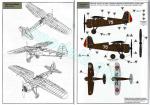
- Folleto de tamaño A4 y 12 páginas impreso en color sobre papel satinado. Contiene una introducción histórica sobre el avión, un plano de piezas sin numerar, una tabla de colores con códigos de varias marcas de pintura, 13 capítulos de montaje, una página con vistas del modelo terminado y tres páginas de perfiles. Claras y bien presentadas.
- A4 12-page brochure printed in colour on satin paper. It shows a historical introduction about the aircraft, a parts plan, a chart of colours with matches of several paint brands, 13 assembly stages, a page of views of the finished model and three pages of profiles. Clear and well printed.
LO MEJOR – THE BEST:
- Detalle muy notable en general. Variedad en los acabados.
- Very nice overall detail. Good range of paint finishes.
LO PEOR – THE WORST:
- Minúsculos fotograbados difíciles de manipular. Parabrisas de plástico algo grueso.
- Tiny PE pieces difficult to handle. A bit thick plastic windshield.
VALORACIÓN – CONCLUSION:
- Con pocas salvedades, es una destacable réplica de este avión, complementada con acabados variados y unas calcas de calidad. Para modelistas de nivel medio en adelante.
- With only a couple of exceptions, it is a nice replica of this fighter, coupled with varied paint choices and a fine decal sheet. For modellers with average modelling skills and above.

La maqueta
En un relativo corto espacio de tiempo el PZL P.11 de IBG tuvo varias reediciones que abarcan todos los modelos de este caza (a-g), incluido el denominado Kobuz, que sólo voló como prototipo. De esta versión rumana existe otra edición posterior con esquíes (IBG Models 72522) y también ha aparecido recientemente otra más que incluye así mismo un PZL P.23A Karaś en colores rumanos (IBG 72530). Anteriormente, IBG había sacado el modelo b con versiones rumanas (IBG Models 72518). En este caso se trata del modelo importado primeramente por Rumanía y no el fabricado en el país.
Como otras de la casa polaca, la maqueta pertenece a las actuales de serie limitada, en las que ya no es imprescindible que el modelista tenga que pagar el peaje de un montaje complicado por la baja calidad del molde a cambio de unos fotograbados y resinas (si los hay) como en décadas anteriores.
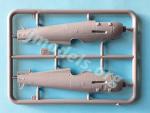
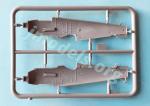
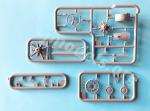
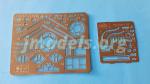
La caja trae nueve pequeños bastidores de piezas, un bastidor transparente, dos planchas de fotograbado, una lámina de acetato, las calcas y las instrucciones. La calidad del molde es muy notable, las piezas carecen de defectos visibles y están moldeadas con gran finura. Lo único que se le puede achacar en este aspecto es que las piezas transparentes, al menos en mi caso, muestran una apariencia un tanto traslúcida, aunque poseen brillantez en las superficies.
Las alternativas de construcción solamente muestran el cambio en el buje de la hélice por detalles de fotograbado, un parabrisas de fotograbado y acetato en lugar de otro de plástico transparente, y la opción de colocar dos bombas bajo cada ala.
La maqueta representa el modelo f, que viene a ser la versión rumana del PZL P.11 y cuyas 95 unidades fueron producidas con licencia por I.A.R., lo mismo que sus motores Gnome-Rhône 9K Mistral.
Carlinga
El detalle interno es profuso y está bien reproducido, salvo por el panel, que IBG sigue proporcionando de calca y bien podría haber ofrecido la alternativa de pintarlo con instrumentos en relieve. El suelo está bien detallado y, además del asiento y la palanca, hay piezas de fotograbado para los pedales, algunos instrumentos laterales y los arneses. La estructura interna no sólo esta representada en los lados del fuselaje, sino igualmente en las tres piezas que limitan el suelo por sus lados anteriores. El panel y el reposacabezas vienen separados.
Como he dicho, el parabrisas ofrece dos alternativas. En este caso hay que elegir entre una pieza transparente algo gruesa y poco realista o bien un parabrisas más parecido al auténtico con el marco de fotograbado y los paneles acristalados de acetato, que no debe ser muy fácil de fabricar debido al tamaño. En ambos casos hay que añadir igualmente un diminuto retrovisor de fotograbado y la pequeña mira por delante del parabrisas.
Las ametralladoras laterales muestran buena definición y hay que colocarlas a los lados del suelo antes de cerrar el fuselaje.
Fuselaje y motor
Las superficies exteriores presentan un buen panelado, con líneas limpias y finas. También destacan el estribo de acceso, el patín de cola, las salidas de ventilación del motor, aunque vienen cegadas, y los huecos laterales para enfriar las ametralladoras, que están ahuecados en los extremos. La toma lateral del radiador y las asas por fuera de la carlinga están separadas, lo mismo que el panel ventral bajo la carlinga, que muestra un acceso redondo bien remachado, que servía para instalar el extraño depósito auxiliar en forma de cubo, y lo que parece una pequeña salida del motor que también viene horadada.
El capó se ha moldeado separado y de una pieza. Está bien grabado con finura y no es grueso en la parte trasera, lo que debe hacer que el motor encaje correctamente. Las salidas de las ametralladoras están taladradas en la pieza y detalladas con pequeños fotograbados.
IBG ha incluido dos motores en la maqueta de apariencia un tanto diferente, especialmente en las válvulas de los cilindros y la caja de engranajes frontal. El de la maqueta viene limpio de rebabas y posee excelente detalle en los cilindros. Está complementado por una corona frontal de fotograbado y un colector trasero con el escape horadado.
La hélice es de una pieza con palas finas y perfiladas sin rebabas. El buje puede detallarse opcionalmente con pequeños fotograbados.
Alas y cola
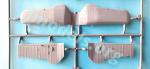
Las alas están separadas en dos piezas. Las superficies inferiores van encastradas en las superiores . IBG ha logrado darles gran finura a ambas y la unión debería tener un buen ajuste, pese al perfil de gaviota. El detalle superficial es muy destacable por su finura. Los alerones vienen en piezas aparte, son finos y también muestran la estructura detallada. Las bisagras están bien definidas, lo que permite mayor realismo al colocar los alerones en cualquier posición.
Los bordes de ataque muestran los dos tubos del armamento con las salidas de los casquillos por separado. La cara inferior lleva el tubo Pitot y opcionalmente pueden instalarse dos soportes y dos bombas a cada lado.
La cola la forman el timón vertical, los estabilizadores, sus dos soportes y los timones separados. Las superficies están detalladas con finura.
Tren de aterrizaje
Los soportes de las ruedas son de una pieza y muestran un perfil delgado con el disco de freno en su extremo. Los tensores son finas piezas de fotograbado situadas por debajo de los soportes. Las ruedas son de una pieza y las llantas son correctas, aunque les falta el orificio de la válvula de los neumáticos.
Calcas
La hoja está impresa por Techmod. Contiene insignias rumanas de dos tipos, marcas de cola, bandas del fuselaje, el panel de instrumentos y algunos estarcidos, incluso para los neumáticos. Su aspecto es fino y brillante con buena saturación de color.
Instrucciones
El folleto tiene tamaño A4 y doce páginas impresas en color sobre papel satinado. Contiene una introducción histórica sobre el avión, un plano de piezas sin numerar, una tabla de colores con códigos de varias marcas de pintura, trece capítulos de montaje, una página con vistas del modelo terminado y tres páginas de perfiles. Los capítulos de construcción son claros.
Los acabados tienen diversidad y permiten elegir un avión con librea monocolor en las superficies superiores de alas y fuselaje, otro con un camuflaje tricolor y el último de dos colores.
Valoración
Salvo por la colocación de varias diminutas piezas de fotograbado, la maqueta no debería ser difícil de montar y es en su mayor parte una buena réplica de este conocido caza polaco. El nivel de detalle en la carlinga es muy bueno, con la salvedad del parabrisas de plástico y el panel de instrumentos, donde se podría haber ofrecido al menos otro con los instrumentos en relieve, además de una simple calca.
La maqueta está bien redondeada con unos acabados variados e interesantes, además de las buenas calcas de Techmod. La recomiendo a cualquier aficionado de nivel medio en adelante.◊


The kit
In a relatively short time, IBG released several kits of the PZL P.11 covering all the variants of this Polish fighter (a-g), including the so-called Kobuz, which only flew as a prototype. There was another later kit of a Romanian version with skis (IBG Models 72522) and the last one so far is a recent combo edition with a PZL P.23A Karaś bomber (IBG 72530). Previously, IBG had released the b model in Romanian colours (IBG Models 72518). In this case the b was the variant first imported by Romania and not the license-built aircraft.
Like other kits from the Polish company, this belongs to those new short-runs where the modeller does not need to pay the toll of a complicated assembly in exchange for photo-etched parts and resins (if any) to improve detail as in many kits released time ago. The box contains nine small grey sprues, a clear sprue, two photo-etched frets, an acetate sheet, the decals and the instructions. The standard of moulding is quite good and parts have no blemishes or flash. The only downside is that the clear parts, at least in my kit, have a somewhat translucent appearance, although they have a shiny surface.
Construction alternatives only show the change in the propeller hub for photo-etched bits, a photo-etched and acetate windscreen instead of a clear plastic one as well as the option of placing two bombs under each wing.
The kit represents the Romanian version of the PZL P.11. The 95 aircraft produced and their Gnome-Rhône 9K Mistral engines were built under licence by I.A.R.
Cockpit
The internal detail is profuse and well reproduced, except for the instrument panel, which IBG continue to provide as a decal and could well have offered an alternative piece with raised instruments. The floor is well detailed and, in addition to the seat and the lever, there are photo-etched parts for the pedals, some side instruments and the harnesses. The internal structure is not only represented on the fuselage sides but also on the three pieces around the front floor piece. The panel and the headrest come separate.
As said, the windscreen offers two alternatives. In this case you can choose between a clear piece that is somewhat thick and a bit unrealistic or a more authentic-looking windscreen with a photo-etched frame and acetate pieces for the glazed panels, which must not be very easy to attach to the frame due to the size. In both cases you also need to add a tiny photo-etched rear-view mirror and the small gunsight in front of the windscreen.
The side machine guns show good definition and are attached on both sides of the cockpit floor before closing the fuselage.
Fuselage and engine
The exterior surfaces show nicely engraved detail. The pieces include the foothold, the tail skid, the engine vents, but they are not open, and the side machine gun troughs, which are hollowed at their ends. The side radiator intake and the handles outside the canopy are separate, as is the ventral panel under the cockpit, which shows a riveted round access which was used to install the odd bucket-shaped auxiliary tank, and what appears to be a small engine outlet that also comes open.
The cowling has been moulded separately in one piece. It is also finely engraved and looks thin enough for the engine to fit properly. The machine gun ports are open in the piece and detailed with small photo-etched parts.
IBG have included two engines in the kit that are just a bit different in appearance, mostly in the cylinder valves and front gearbox. The one we need here is free from flash and has excellent detail on the cylinders. It is complemented by a photo-etched front ring and a rear manifold moulded with a drilled exhaust.
The propeller is one piece with thin, profiled blades without flash. The hub can be optionally detailed with small photo-etched parts.
Wings and tail
The wings are separated into two pieces. The lower surfaces are fitted into the upper ones. IBG have managed to give them great finesse and the join should have a good fit, despite the gull-shaped profile. Surface detail is again quite good. The ailerons come in separate pieces, are thin and show structural surface detail. The hinges are well defined, which allows greater realism when placing the ailerons in any position. The leading edges show the two machine gun barrels and separate ammo chutes. The underside carries the Pitot tube and optionally two racks and two bombs can be fitted under each wing.
The tail comprise a tailfin piece, the stabilizers, the brace struts and separate rudders. The surfaces are finely detailed.
Landing gear
The wheel struts are one piece and have a thin profile with the brake disc at their end. The steel bracing are thin photo-etched pieces located below the struts. The wheels are one piece with the correct rims though the tyre valve hole is missing.
Decals
The sheet is printed by Techmod. It contains Romanian markings (roundels and crosses), tail markings, fuselage stripes, the instrument panel and a few stencils, some of them for the tyres. They have a thin and glossy appearance with good colour saturation.
Instructions
The A4 brochure has twelve pages printed in colour on glossy paper. It contains a historical introduction to the aircraft, a parts plan without numbers to identify the pieces, a colour chart with codes for several paint brands, thirteen assembly chapters, a page with views of the finished model and three pages of profiles. The construction chapters are clear.
Paint finishes are quite different and allow you to choose an aircraft with a single-colour livery on the upper wings and fuselage surfaces, another with a tricolour camouflage and the last one with two colours.
Conclusion
Except for the attachment of a few tiny photo-etched parts, the kit should not be difficult to assemble and is for the most part a good replica of this popular Polish fighter. The level of detail inside the cockpit is outstanding, with the exception of the plastic windshield and the instrument panel, which IBG could have also offered in a piece with raised instruments.
The kit is wisely rounded with varied and interesting finishes, in addition to the nice Techmod decals. I recommend it to any modeller with average modelling skills and above.◊
Publicado – Published: 9 / 2024
©www.jmodels.net
 jmodels.net
Debe estar conectado para enviar un comentario.