
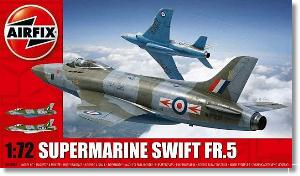
De un vistazo – Quick look
MATERIAL Y PIEZAS
MEDIA & PARTS:
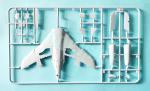
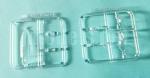
- Plástico inyectado (56 piezas), plástico transparente (7 piezas).
- Injected plastic (56 parts), clear plastic (7 parts).
CALCAS – DECALS:
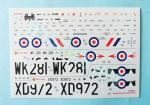
- Escarapelas británicas, marcas de cola y fuselaje, matriculas, panel de instrumentos y estarcidos. Aspecto fino y mate. Buen registro y saturación de color. Sin exceso de soporte.
- British roundels, fuselage and tail markings, registers, instrument panel and stencils. Thin and matte appearance. Good register and color saturation. No excess of carrier.
OPCIONES – OPTIONS:
- Supermarine Swift FR.5. Royal Air Force Germany. No. 79 Squadron. Gütersloh (Germany), April 1956. Aircraft flown by Flight Lieutenant Nigel Walpole.
- Supermarine Swift FR.5. Royal Air Force Germany. No. II (AC) Squadron. Jever (Germany), 1956.
INSTRUCCIONES – INSTRUCTIONS:
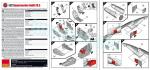
- Folleto A4 de 12 páginas impreso en color. Contiene un sumario histórico sobre el avión con especificaciones técnicas, 36 secuencias de montaje y 2 páginas de perfiles con referencias de pinturas esmalte de Humbrol. Una hoja separada del mismo tamaño impresa en blanco y negro muestra perfiles para colocar los estarcidos.
- 12-page A4 brochure printed in color. It contains a short historical summary with specifications, 36 assembly chapters and 2 pages of profiles with Humbrol enamel paints. A separate A4 sheet printed in black and white shows profiles to set the stencils.
LO MEJOR – THE BEST:
- Buen detalle general. Carlinga. Flaps. Opciones de montaje.
- Nice overall detail. Cockpit. Flaps. Assembly choices.
LO PEOR – THE WORST:
- Troneras de los cañones. Tubo pitot delicado de limpiar. Carece de luces de navegación.
- Gun troughs. Brittle pitot tube. Lack of navigation lights.
VALORACIÓN – CONCLUSION:
- Con muchos más y mejores aciertos que errores en el detalle, hoy es la maqueta de referencia para este avión largo tiempo olvidado por las marcas. Recomendable para cualquier modelista excepto principiantes.
- With many more and better details than mistakes, it is now the reference kit for an aircraft overlooked by manufacturers for a long time. Recommended for any modeler, except beginners.

La maqueta
Esta es una maqueta de nuevo cuño que Airfix lanzó en 2015. Ha tenido una reedición reciente sin cambios, salvo en la caja y el color de las piezas. Anteriormente las únicas maquetas del Swift en la escala 1/72 eran de resina o bien reediciones antiguas de un todavía más viejo molde de Hawk.
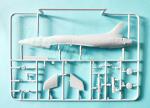
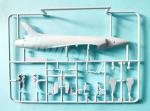
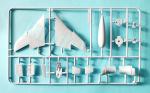
La caja trae cuatro bastidores de piezas azuladas, dos pequeños bastidores transparentes, las calcas y las instrucciones. La factura de las piezas es buena, ya que no presentan deformaciones ni rebabas. Hay marcas de eyector en el interior de la carlinga, que no deben preocuparnos porque no serán evidentes, pero las de las tapas de los pozos deben eliminarse. Muy pocas piezas presentan cilindros de salida del eyector.
El detalle general me parece bastante bueno e incluso contiene alguna característica en cierto modo novedosa en el fabricante, como la inclusión de una alternativa con arneses para el asiento del piloto. Las líneas de paneles y otros detalles están grabados con limpieza, precisión y finura, y desde luego no se corresponden con las líneas anchas y profundas que algunos aseguran haber visto en la maqueta. Deben ver menos que un gato de yeso.
Las opciones de montaje nos permiten colocar las cámaras del morro abiertas o cerradas, simular la maqueta en vuelo, mostrar la cubierta de la carlinga abierta, incorporar el depósito de combustible ventral, colocar los flaps bajados y, como acabo de mencionar, también hay doble opción para el asiento.
La maqueta representa bastante bien el modelo de reconocimiento táctico FR.5 creado a partir de los modelos anteriores del caza Swift F.1 y F.4. Además de la modificación del morro para alojar cámaras, este modelo tenía una aleta más grande, extensiones en los bordes de ataque, cubierta de burbuja, un tanque ventral de 1000 litros, pero sólo dos cañones Aden de 30 mm. Los 102 FR.5 fabricados sólo operaron en Alemania a finales de los años 50 y fueron sustituidos por el Hawker Hunter FR.10 en 1960.
Revisión
La carlinga está formada por dos piezas que cubren los lados y el suelo unido al mamparo trasero. Los lados están detallados con instrumentos y consolas reproducidas en calcas. La palanca está separada y el asiento viene en mitades con los reposapiés moldeados en el suelo y, como ya he mencionado, tiene el acolchado aparte con la doble opción de colocarlo sin arneses o con ellos. Resulta irónico que Airfix no incluya la figura del piloto para una vez que da esta alternativa.
En la parte delantera aparentemente sólo aparece el panel de instrumentos, detallado con una calca, y la mira en una pieza transparente. Los huidizos pedales están moldeados nada menos que en las dos piezas que forman el pozo de la rueda delantera, que hay que pegar a la carlinga. Al pegar todo el conjunto en el fuselaje, Airfix ya ha reservado un espacio para incluir un par de gramos de lastre y evitar que el modelo se asiente de cola.
La cubierta de la carlinga tiene dos piezas finas y posee la forma de cúpula correcta. El parabrisas tiene una pieza transparente añadida por dentro, por lo que parece auténticamente blindado, y también la parte deslizante posterior lleva la cubierta del mecanismo de apertura simulado por dentro.
Las aberturas de las cámaras del morro, dos laterales y una en el cono, pueden colocarse cegadas o con las ventanas en piezas transparentes. Además, el interior del fuselaje está detallado con los lados internos de las tomas laterales repartidos en dos piezas, que parecen lo bastante finas para no entorpecer el montaje. Los conductos bifurcados internos van pegados a las tomas por la parte delantera y en la trasera se unen a la cara externa de la turbina del motor, bien detallada con los álabes y el buje. Dos pestañas situadas en la turbina ayudan a alinear la pieza dentro del fuselaje. De la tobera de salida tenemos la sección postrera del posquemador a partir de la rejilla interna. Esta parte la reproducen tres piezas con marcas para alinear el tubo. La salida es fina y está bien moldeada.
El fuselaje está moldeado con la aleta y su filete anterior. Tanto los filos de las tomas como el de salida de la tobera son bastante finos. Las líneas grabadas son muy delgadas y de escasa profundidad, pero no por esto los detalles dejan de ser nítidos. En la parte dorsal se aprecian varias pequeñas tomas de refrigeración y sobre las tomas laterales varias rejillas bien definidas. Las salidas de los cañones están mal representadas al ser poco profundas y demasiado estrechas. La zona ventral está unida a la mitad inferior de las alas y también parece bien detallada, con la opción de poder añadir el depósito supletorio, que viene de una pieza.
Las alas tienen el despiece convencional en tres superficies. El grabado de las líneas tiene la misma limpieza, nitidez y profundidad del fuselaje. Las mitades superiores de las alas tienen cierto detalle en el fondo de los pozos que parece bien representado, mientras que las inferiores llevan los lados de estos para evitar que se vean huecos.
Los flaps y alerones son piezas aparte y pueden colocarse bajados. Los flaps tienen un detalle notable en el interior de las dos superficies, mientras que los alerones disponen de un eje en uno de los lados para insertarlos en las alas. Las extensiones de los bordes de ataque son convincentes, sin embargo las luces de las puntas no están reproducidas. El tubo pitot es muy fino y limpiar los varios cilindros de salida del eyector que tiene supone el riesgo de partir una pieza tan frágil.
Los planos horizontales de cola son de una pieza y van insertados con un eje en el fuselaje, lo que facilita un tanto el darles los 80º de diedro que necesitan, de acuerdo con las instrucciones. El grabado de los paneles es apropiado, con los timones correctamente grabados sin excesos en la anchura. El timón vertical también está exento y provisto de un eje que permite colocarlo girado. La pieza incluye el contrapeso en el extremo superior, la aleta de compensación y la aleta autoestabilizadora.
El pozo de la rueda proel está detallado por dentro, no tan profusamente como el real, pero se nota que Airfix se ha estirado un poco al representarlo. La tapa del pozo cuenta con el carenado de la luz de aterrizaje por fuera y la carcasa interna. El hueco de salida es poco profundo y tal vez demasiado pequeño. No hay pieza transparente para la lente. La pata es bastante decente y tiene la horquilla separada. La rueda tiene buena factura y las llantas son una acertada copia de las reales.
Como he mencionado antes, los pozos del tren principal tienen detalle en el fondo y los lados impiden que se vean abiertos dentro de las alas. Las tapas internas son finas y muestran el hueco interno con nitidez, sin embargo las tapas externas tienen leves marcas de eyector. Las patas incluyen los brazos de torsión y el brazo de apertura aparte. Las ruedas están bien moldeadas, aunque no simulan el peso del avión, y el detalle de las llantas es adecuado. Todas las tapas poseen piezas alternativas para colocar las ruedas plegadas si deseamos mostrar el avión en vuelo.
La hoja de calcas muestra escarapelas británicas, marcas de cola y fuselaje, matriculas, el panel de instrumentos y estarcidos, todos ellos con aspecto fino y mate sin exceso de soporte. El registro y la saturación de color son correctos.
El folleto de instrucciones tiene formato A4 y consta de doce páginas impresas en color. Contiene un sumario histórico sobre el avión con especificaciones técnicas, 36 secuencias de montaje y dos páginas de perfiles con referencias de pinturas esmalte de Humbrol. Una hoja separada del mismo tamaño impresa en blanco y negro muestra perfiles para colocar los estarcidos.
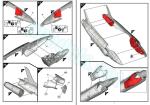
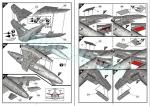
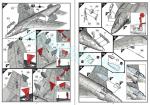
Las secuencias del montaje son explícitas y sencillas de seguir, empleando el color rojo para identificar el ensamblaje antecedente para mayor claridad. Las alternativas de construcción también se presentan con precisión.
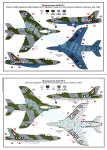
Las opciones de pintura muestran dos aviones basados en Alemania con idéntico camuflaje, salvo en las superficies inferiores. Uno de ellos perteneció a una de las escuadrillas más antiguas de la RAF, que suele identificarse con las letras AC, abreviatura de Army Cooperation. El otro Swift fue pilotado por Nigel Walpole, famoso piloto de larga trayectoria y autor de libros de aviación tras su retiro de la Fuerza Aérea.
Valoración
En general, la maqueta tiene muchos más aciertos que errores y representa bastante decentemente el avión real en esta escala. Los errores que he indicado en el texto no son de gran sustancia y creo que se pueden remediar con un poco de habilidad, si es que el modelista considera que merece la pena hacerlo. Las opciones de montaje son múltiples, entre las que destaco la posibilidad de mostrar el asiento con los arneses, característica muy inusual en maquetas similares de Airfix.
Airfix ha recuperado un avión que hacía mucho tiempo que no se veía en la escala 1/72 y menos con este detalle. Por el momento ya es la maqueta de referencia, y no me extrañaría que lo fuese aún por un largo periodo.◊

The kit
This is a new tool kit released by Airfix in 2015. It has recently been reissued with no changes except for the box and the color of the parts. Previously, the only Swift 1/72 kits were resin or old reissues of an even older Hawk tool.
The box comes with four sprues of bluish parts, two small clear sprues, the decals, and the instructions. The molding of parts is good, with no blemishes or flash. There are ejector marks on the cockpit sides that won’t be anything to worry about as they aren’t obvious, but those on the wheel covers should be removed. Very few parts have ejector pips.
Overall detail looks quite good and it even contains somewhat novel features from the manufacturer, such as the inclusion of an alternative padding with the harness for the pilot’s seat. Panel lines and other details are engraved with clean, precise, and fine detail, and certainly don’t match the wide, deep lines some claim to have seen on the kit. They must be as blind as a plaster cat, as we say around here.
Assembly options allow to place the nose cameras open or closed, simulate the model in flight, show the cockpit canopy open, add the ventral fuel tank, pose the flaps lowered, and, as mentioned, there is also a double padding for the seat.
The kit is a good representation of the FR.5 tactical reconnaissance variant, created from the earlier F.1 and F.4 Swift fighters. In addition to the nose modification to accommodate cameras, this model had a larger fin, leading edge extensions, a bubble canopy, a 1,000-liter ventral tank, but only two 30 mm Aden guns. The 102 FR.5s manufactured only operated in Germany in the late 1950s and were replaced by the Hawker Hunter FR.10 in 1960.
Review
The cockpit consists of two pieces covering the sides and the floor attached to the rear bulkhead. The sides are detailed with instruments and consoles reproduced in decals. The stick is separate, and the seat comes in halves with the footrests molded on the floor and, as mentioned, has separate padding, allowing for the dual option of fitting it with or without harnesses. It’s ironic that Airfix doesn’t include a pilot figure for the seat without the belts this time.
The cockpit front shows the instrument panel, detailed with a decal, and the sight in a clear piece. The elusive pedals are oddly molded on the two pieces comprising the front wheel well, which is attached to the cockpit. After gluing this assembly to the fuselage, you find a gap Airfix have provided to include 2 gr of ballast to prevent the model from tailsitting.
The cockpit canopy is made up of two thin pieces and has the correct dome shape. The windshield has a clear piece added inside, giving it a truly armored appearance, and the sliding rear section also has a simulated opening mechanism cover inside.
The nose camera openings, two on the sides and one in the nose cone, are provided with a panel or alternatively with the windows in clear pieces. The fuselage interior is also detailed, with the inner sides of the intakes divided into two pieces, which look thin enough not to hinder assembly. The internal branch ducts are glued to the intakes at the front and, at the rear, join the outer engine turbine, which is well detailed with the fan blades and hub. Two tabs on the turbine help align the piece within the fuselage. The exhaust nozzle is represented form the internal grille and afterburner. This part is molded in three pieces with marks for aligning the tube. The exhaust is thin and well molded.
The fuselage includes the fin and the fillet fairing. Both the intake edges and the nozzle outlet are quite thin. The engraved lines are very thin and shallow, but detail is still sharp. Several small cooling intakes can be seen on the dorsal surfaces, and well-defined grilles are visible above the side intakes. The cannon troughs are poorly represented because they are shallow and too narrow. The ventral fuselage is attached to the lower wing half and also looks well detailed, with the option to add the auxiliary tank, which is a single piece.
The wings have the conventional breakup in three pieces. Engraved lines on the surfaces show the same clean, sharp, and deep appearance as on the fuselage. The upper wing halves have some detail at the bottom of the wells that appears well rendered, while the lower wing half includes the sides of the wells to avoid visible gaps.
The flaps and ailerons are separate parts and can be posed lowered. The flaps have quite nice detail on the inside, while the ailerons have a shaft on one end for insertion into the wings. The leading edge dog-teeth are convincing, however, the navigation lights are not reproduced. The pitot tube is very thin, and cleaning the various ejector pips has the risk of breaking such a fragile part.
The horizontal tailplanes are inserted into the fuselage with pins, which makes it somewhat easier to give them the 80° dihedral they need, according to the instructions. Panelling is appropriate, with the rudders correctly engraved without excess width. The vertical rudder is also separate and has a shaft that allows rotation. The part includes the top mass balance, the trim tab, and the auto-stabilizer tab.
The front wheel well is detailed, not as extensively as the real thing, but it’s clear that Airfix have gone to some lengths. The well cover features the landing light fairing on the outside and the inner casing. The light fairing is shallow and perhaps too small. There’s no clear part for the lens. The leg is quite decent and has a separate fork. The wheel is nice, with both rims appropriately detailed.
As mentioned before, the main gear wells are detailed on the bottom and the sides prevent the wings interior from being visible. The inner covers are thin and clearly show the internal well; however, the outer covers have shallow ejector marks. The legs include the torque arms and the retraction jacks separately. The wheels are well molded, though they are not weighted, and the rim detail is adequate. All the covers have alternative pieces to show the wheels folded if we want to show the model in flight.
The decal sheet shows British roundels, tail and fuselage markings, registers, the instrument panel, consoles and stencils, all with a thin, matte appearance without excessive carrier. Color registration and saturation are correct.
The A4 instruction booklet consists of twelve pages printed in color. It contains a historical summary about the aircraft with technical specifications, 36 assembly sequences, and two pages of profiles with Humbrol enamel paint references. A separate sheet of the same size printed in black and white shows profiles for stencil placement.
Assembly sequences are explicit and easy to follow, using red to identify the previous assembly step for clarity. Construction alternatives are also accurately presented.
Paint choices show two aircraft based in Germany in the late 1950s with identical camouflage except for the lower surfaces. One of them belonged to one of the RAF’s oldest squadrons, usually identified by the letters AC, short for Army Cooperation. The other Swift was flown by Nigel Walpole, a renowned long-serving pilot and author of aviation books after his retirement from the Air Force.
Conclusion
Overall, the kit has many more successes than mistakes and is a nice rendition of the real aircraft in this scale. The mistakes I’ve pointed out in the text are not crucial and I think they can be remedied with a little skill, if the modeler deems it worthwhile. Assembly options are varied, among which is the possibility of showing the seat with harnesses, a very unusual feature in similar Airfix kits.
Airfix have brought back an aircraft that hadn’t been seen in 1/72 scale for a long time, and even less so with this detail. For now, this release has already become the reference kit, but I wouldn’t be surprised if it remains as such for a long time.◊
Publicado – Published: 8 / 2025
©www.jmodels.net
 jmodels.net
Debe estar conectado para enviar un comentario.