
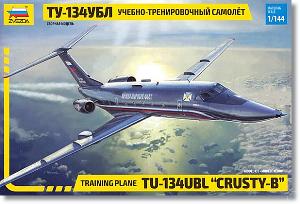
De un vistazo – Quick look
MATERIAL Y PIEZAS
MEDIA & PARTS:
- Plástico inyectado (63 piezas), plástico transparente (7 piezas). Incluye peana (2 piezas).
- Injected plastic (63 parts), clear plastic (7 parts). Base included (2 parts).
CALCAS – DECALS:
- Estrellas soviéticas y banderas rusas, matrículas, numerales, decoraciones, marcas del fuselaje y estarcidos. Aspecto fino y brillante. Sin demasiado o ningún sobrante de soporte. Buen registro y colores saturados.
- Soviet red stars and Russian flags, registers, numbers, fuselage lines and markings plus stencils. Thin and glossy finish. None or little excess of carrier. Good register and color saturation.
OPCIONES – OPTIONS:
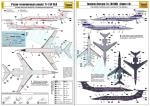
- Tupolev Tu-134UBL. 121º Regimiento de Bombarderos Pesados de la Guardia de la Fuerza Aérea Rusa de Largo Alcance. Aeródromo Engels (Sarátov, Rusia), 1995.
- Tupolev Tu-134UBL “Meshchera”. 3119ª Base de la Fuerza Aérea Rusa (Antiguo 27º Regimiento Aéreo Mixto). Base Aérea de Tambov (Rusia), 2015.
- Tupolev Tu-134UBL “Perla Negra”. N.º 54. 859º Centro de Guerra y Reentrenamiento de la Aviación Naval Rusa. Aeródromo Yeisk (Rusia), 2019.
- Tupolev Tu-134UBL. 121st Guards Heavy Bomber Regiment of the Russian Long Range Air Force. Engels airfield, 1995.
- Tupolev Tu-134UBL. “Meshchera”. 3119th Air Base of the Russian Air Force (former 27th Mixed Air Regiment). Tambov Air Base (Russia), 2015.
- Tupolev Tu-134UBL. “Black Pearl”. No. 54. 859th War and Re-Training Center of the Russian Navy Aviation. Yeysk airfield, 2019.
INSTRUCCIONES – INSTRUCTIONS:
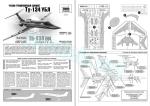
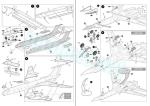
- Folleto de tamaño A4 con 4 páginas impresas en blanco y negro. Contiene un sumario histórico sobre el avión, 6 pasos de montaje, un plano numerado de piezas y perfiles para colocar los estarcidos. Una hoja separada del mismo tamaño impresa en color muestra perfiles y una lista de pinturas de Zvezda y Tamiya.
- 4-page A4 brochure printed in black and white. It shows a historical summary abour the aircraft, 6 assembly stages, a numbered parts plan and profiles to set the stencils. A separate sheet of the same size printed in color contains profiles and a list of Zvezda and Tamiya paints.
LO MEJOR – THE BEST:
- Buen detalle externo. Montaje sencillo en apariencia. Variedad en las opciones de pintura.
- Nicely external detail. Apparently an easy build. Varied paint finishes.
LO PEOR – THE WORST:
- Interior del fuselaje vacío.
- Empty fuselage interior.
VALORACIÓN – CONCLUSION:
- Bien detallada por fuera y en apariencia sencilla de armar, ofrece variedad en los acabados. Todo ello la convierten en una opción mejor que la que ofrecen otras marcas. Recomendable a modelistas de escalas pequeñas sin mucho espacio en la vitrina.
- Nicely detailed on the outside and apparently easy to build, the kit also offers variety in the paint finishes. All this makes it a better choice than the alternative kits from other brands. Recommendable to small scale modellers without much space on the shelf.

La maqueta
Se trata de una secuela de la maqueta del modelo civil Tu-134A que Zvezda puso a la venta hace más de una década. En este caso la marca nos trae el modelo UBL, que es en realidad una variante híbrida con el morro adaptado del Tu-160 empleada para entrenar tripulantes de dicho bombardero estratégico.
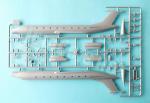
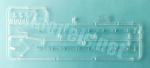
La robusta caja con sobrecubierta habitual contiene dos bastidores de piezas, un bastidor transparente, las calcas protegidas en una bolsa de cierre sellante y las instrucciones. Los bastidores presentan un aspecto limpio, sin rebabas ni marcas evidentes de eyector. Sólo hay una pequeña marca a cada lado de la carlinga que tal vez convenga limpiar por si fuesen visibles a través del parabrisas, cosa que dudo. Algunas piezas tienen pequeños nódulos de salida del eyector que se pueden limpiar sin dificultad.
A primera vista el montaje no ofrece complicaciones más allá del ajuste de las alas y el montaje del tren de aterrizaje, que resulta más entretenido por el número de piezas, su tamaño y fragilidad. La única opción de montaje es terminar el modelo con el tren de aterrizaje desplegado o en vuelo. Para esto último Zvezda ha incluido una peana de dos piezas cuyo soporte vertical va insertado en la zona ventral del fuselaje.
Fuselaje
Como en otras maquetas, Zvezda no incluye la carlinga, así que en el interior del fuselaje únicamente hay que añadir las ventanillas y el pozo del tren delantero, cuyo interior muestra cierto detalle. Las ventanillas laterales, incluida la de la puerta de acceso están moldeadas en filas, aunque la zona delantera tiene una más separada y otras tres en la zona de cola por delante de la aleta vertical. Todas ellas van insertadas en rebajes practicados alrededor de los huecos. Como es habitual en los aviones de tren de tipo triciclo, hay que añadir peso en el morro, detalle que se indica en las instrucciones.
La cubierta de la carlinga es una pieza transparente fina que incluye el techo del habitáculo además del parabrisas bien perfilado.
Las mitades del fuselaje están moldeadas con la deriva y sin el morro. Las piezas también incluyen las raíces alares. El panelado grabado es fino y limpio, realizado con una profundidad y anchura adecuadas para la escala. El detalle del fuselaje incluye dos aletas de antenas sobre y bajo el fuselaje, así como dos carenados alargados de las antenas ADF, cuya posición no está marcada en el fuselaje, aunque pueda parecerlo por las instrucciones. La zona de cola también lleva una pequeña pieza lateral y lo que parece el parachoques bajo el puro de cola.
El morro del Tu-160 está separado en mitades que muestran un panelado correcto y el característico perfil diagonal quebrado en la parte inferior.
Alas, motores y cola
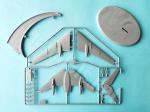
Las alas están divididas en tres piezas. La inferior va encastrada en las dos superiores desde las raíces hasta la altura del alambrado externo e incluye una sección ventral del fuselaje, con lo cual se consigue una finura en las superficies y las puntas adecuada a la escala. Las góndolas del tren de aterrizaje están moldeadas en las dos superficies de las alas. Los paneles y accesos están grabados con profusión y muestran gran finura. Es destacable la representación del alambrado de las superficies superiores y de los alerones con sus bisagras. Las puntas tienen las luces de navegación marcadas.
Las góndolas de los motores están despiezadas en mitades y van introducidas en rebajes del fuselaje. El interior tiene dos piezas, una lleva los álabes de la turbina bien detallados en la parte frontal y la otra el detalle interno de la tobera de salida del motor. El carenado externo de cada motor tiene dos pequeñas tomas separadas.
La cola está diferenciada en tres piezas. La deriva viene moldeada con el fuselaje, pero el timón vertical es una pieza separada con muescas para unirla a las bisagras de la deriva, lo que le da más realismo a la separación de las dos superficies. El timón está detallado con la aleta y su pequeño actuador. Las superficies horizontales son de una pieza y están unidas por una sección central del carenado superior de la aleta sobre el que van pegadas. Los paneles y timones están bien reproducidos. El carenado superior incluye la antena HF frontal y la luz de navegación de cola separada en una pieza puntiaguda.
Tren de aterrizaje
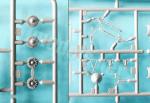
El tren delantero consiste en una pata dividida en dos tramos muy finos y un actuador tras ella. Uno de los tramos incluye los ejes de las ruedas y el amortiguador de torsión. Las ruedas muestran buen detalle en la llanta por la cara externa y en la interna el sistema de freno. Las tapas del pozo vienen separadas con una pieza alternativa que las muestra cerradas para simular el avión en vuelo.
El tren principal está bien representado con el soporte principal de cada lado moldeado con los ejes de las cuatro ruedas y un actuador posterior. Las ruedas tienen suficiente detalle por las dos caras. Como en el caso anterior, las tapas tienen piezas opcionales para representar el pozo abierto o cerrado.
Calcas
La hoja es bastante extensa e incluye estrellas soviéticas y distintivos rusos, matrículas, numerales, marcas del fuselaje y estarcidos. Los motivos tienen un aspecto fino y brillante, con muy escaso o ningún exceso de soporte. Están impresos con buen registro y colores saturados.
Instrucciones
Se proporcionan en un folleto de cuatro páginas impreso en blanco y negro en formato A4 que contiene un sumario histórico sobre el avión, seis pasos de montaje, un plano numerado de piezas y perfiles para colocar los estarcidos. Una hoja separada del mismo tamaño impresa en color muestra perfiles y una lista de pinturas de Zvezda y Tamiya con sus códigos correspondientes.
Zvezda ha incluido tres versiones, dos de ellas de la Fuerza Aérea rusa y una de la Aviación Naval con distintas libreas que dan variedad y atractivo a las opciones de pintura.
Valoración
Personalmente prefiero que las maquetas de aviones de esta pequeña escala incluyan también la carlinga, por mínima e invisible que sea, así como un despiece de las alas distinto al de esta, aunque entiendo que no siempre es posible esto último por el tamaño y finura de las piezas. Dicho esto, creo que por detalle externo, sencillez de montaje y variedad de acabados este Tu-134UBL supera claramente a los que ofrecen otras marcas, singularmente las maquetas de AZ Models e Eastern Express.
Recomendada a modelistas de escalas pequeñas seguidores de la aviación rusa que tengan más entusiasmo que espacio en la vitrina.◊

The kit
This is a sequel to the Tu-134A civilian airliner that Zvezda released more than a decade ago. In this case, the brand brings us the UBL military variant, which is actually a hybrid model with the nose adapted from the Tu-160 used to train crews of this strategic bomber.
The sturdy box with the usual jacket contains two sprues of parts, a clear sprue, the decals protected in a self-sealing bag and the instructions. The sprues show a clean appearance, without flash or evident ejector marks. There is only a small mark on each cockpit wall that may be worth cleaning up in case they are visible through the windshield, which I doubt. Some parts have small ejector nodules that can be easily cleaned up.
At first glance, assembly does not offer headaches beyond the fiiting of the wings and the assembly of the landing gear. Building this latter will be slower due to the number of pieces, their size and fragility. The only assembly option is to finish the model with the landing gear or in flight. For the latter, Zvezda has included a two-piece base with a vertical support inserted into the fuselage belly.
Fuselage
As with other kits, Zvezda does not include a cockpit, so inside the fuselage you only have to add the windows and the nose well, the interior of which shows some raised detail. The side windows, including the one for the access door, are molded in rows, although the front area has an extra piece separated and another three in the tail just in front of the vertical fin. They are all inserted in recesses around the gaps. As usual in tricycle-type landing gear aircraft, you need to add some weight to the nose such as it is indicated in the instructions.
The cockpit canopy is a thin clear piece including both the roof and a nice windscreen.
The fuselage halves are molded with the fin and without the nose. Parts also include the wing roots. The engraved panels are fine, clean and look quite suitable for this very small scale. Fuselage detail includes two antenna fins above and below the fuselage, as well as two long ADF antenna fairings without marks on the fuselage to attach them, though it may appear so from the instructions. The fuselage tail has a small side piece and what seems to be the bumper.
The nose of the Tu-160 is separated into halves which show correct panelling and the characteristic diagonally broken low profile.
Wings, engine and tail
The wings are divided into three pieces. The lower one is fitted into the two upper ones from the wing roots to the height of the outboard fences and includes a ventral section of the fuselage, which renders a fineness in the surfaces and tips appropriate to the scale. The landing gear nacelles are molded on both wing surfaces. Panels and accesses are engraved with great profusion and are thin. The representation of the fences on the upper surfaces and the ailerons with the hinges is remarkable. The tips are also provided with engraved navigation lights.
The engine nacelles are broken into halves and are inserted into fuselage recesses. Each engine interior has two pieces, one shows a nice turbine fan on the front and the other the internal detail of the outlet nozzle. The external fairing of each engine has two small separate intakes.
The tail planes are provided in three pieces. The fin is molded with the fuselage, but the vertical rudder is a separate piece with notches to attach the hinges, giving added realism to the separation of the two surfaces. The rudder is detailed with the fin and its small actuator. The horizontal surfaces are one piece joined by a central section of the fin upper fairing onto which they are glued. The panels and rudders are well reproduced. The upper fairing includes the front HF antenna and a separate tail navigation light in a pointed piece.
Undercarriage
The nose gear consists of a leg divided into two very thin sections and an actuator behind it. One section includes the wheel axles and the scissor arms. The wheels show good detail on the outside hub and the brake system on the inside. The well covers come separate with an alternative piece that shows them closed to simulate the aircraft in flight.
The main gear legs on each side include the axles of the four wheels and a rear arm. The wheels have enough detail on both sides. As in the front undercarriage, the covers have optional pieces to represent the open or closed well.
Decals
The sheet is quite extensive and includes Soviet stars and Russian markings, registrations, aircraft numbers, fuselage markings and stencils. The decals have a thin, glossy appearance, with very little or no excess support. They are printed with good registration and saturated colours.
Instructions
They are provided in a 4-page A4 booklet printed in black and white containing a historical summary of the aircraft, six assembly steps, a numbered parts plan and profiles for stencil placement. A separate sheet of the same size printed in colour shows profiles and a list of Zvezda and Tamiya paints with their corresponding codes.
Zvezda has included three finishes, two of them for the Russian Air Force and one for the Naval Aviation with different liveries that give variety and appeal to the painting options.
Conclusion
Personally, I prefer that aircraft kits of this small scale have a cockpit, no matter how poor and invisible it may be, as well as a wing attachment different from this one, though I understand that the latter is not always possible due to the size and brittleness of parts. This said, I believe that in terms of external detail, ease of assembly and variety of finishes, this Tu-134UBL clearly beats other alternative kits offered by other brands, such as AZ Models and Eastern Express.
Recommended to fans of Russian aviation in small scales with more zest than space on the shelf.◊
Publicado – Published: 12 / 2024
©www.jmodels.net
 jmodels.net
Debe estar conectado para enviar un comentario.