
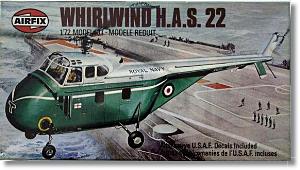
De un vistazo – Quick look
MATERIAL Y PIEZAS
MEDIA & PARTS:
- Plástico inyectado (35 piezas), plástico transparente (9 piezas). Incluye 2 figuras y una peana (2 piezas).
- Injected plastic (35 parts), clear plastic (9 parts). Two pilot figures and a stand (2 parts) included.
CALCAS – DECALS:
- Insignias británicas y de la USAF, emblemas de unidad, matrículas, banda del fuselaje y estarcidos. Aspecto algo grueso y brillante, impresas con nitidez y un poco de exceso en el soporte. Las escarapelas británicas están descentradas.
- British and USAF insignia, unit badges, registrations and fuselage stripe and stencils. A bit thick and glossy appearence, sharply printed and some excess of carrier film. The British roundels are printed off centred.
OPCIONES – OPTIONS:
- Westland Whirlwind H.A.S. Mk22. Royal Navy. WV223. 781º Escuadrilla Aérea Naval. Estación Aeronaval de Lee-on-Solent (Hampshire, Inglaterra), 1961.
- Sikorsky H-19B. USAF. 27515.
- Westland Whirlwind H.A.S. Mk22. Royal Navy. WV223. 781 Naval Air Squadron. Royal Naval Air Station Lee-on-Solent (Hampshire, England), 1961.
- Sikorsky H-19B. USAF. 27515.
INSTRUCCIONES – INSTRUCTIONS:
- Folleto doblado vertical impreso en blanco y negro. Contiene una introducción histórica sobre el helicóptero en varios idiomas, 6 vistas del montaje, dos perfiles y una lista de colores con códigos de pinturas de Airfix.
- Vertically folded sheet printed in black and white. It contains a historical introduction to the helicopter in several languages, six assembly stages, two profiles, and a color list with Airfix paint codes.
LO MEJOR – THE BEST:
- Montaje relativamente sencillo. Decoraciones alternativas variadas.
- Relatively easy assembly. Varied paint finishes.
LO PEOR – THE WORST:
- Múltiples rebabas, marcas de eyector y líneas de molde. Ventanillas del fuselaje.
- Plenty of flash, pin marks and seam lines. Fuselage windows.
VALORACIÓN – CONCLUSION:
- Maqueta de otros tiempos modelísticos. No es para quien busque un H-19 decente en esta escala, sino para coleccionistas, nostálgicos o curiosos.
- This is a rebox of a kit produced in very different times in modeling. Not suitable for those looking for a decent 1/72 H-19, but for the collector, nostalgic or just curious people.

La maqueta
Airfix lanzó por vez primera este molde en 1956 nada menos y lleva en la plaza del mundo hasta hoy, ya que hace unos pocos años el fabricante la seleccionó para su colección Vintage Classics con nuevas instrucciones y calcas solamente para el H.A.S. 22 británico. La edición que describo aquí es de los años 80, básicamente igual a las otras cajas puestas a la venta durante tanto tiempo antes y después.
Naturalmente, esta no es una maqueta para el modelista actual, que tiene mejores opciones si desea hacer el helicóptero en esta escala, sino básicamente para coleccionistas, viejos nostálgicos y maduros curiosos. Como es lógico, la edición es hija de su tiempo y se debe juzgar en su contexto para evitar inútiles comparaciones con otras maquetas más actuales, con las que siempre saldrá perdiendo, o, en sentido inverso, hacer creer al lector que se trata de una joyita envuelta en paño porque nunca lo fue ni lo pretendió.
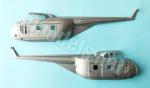
La caja entrega cuatro pequeños bastidores de piezas, el fuselaje separado, la hoja de calcas y las instrucciones. Dos de los bastidores son transparentes y contienen la clásica peana de dos piezas que Airfix aún vende por separado, más otra con elementos del helicóptero. Las piezas no transparentes están moldeadas en un plástico gris plateado brillante nada raro de encontrar en maquetas de los años 70 y anteriores. Como es esperable, hay piezas con rebabas, marcas de eyector de todo tipo y tamaño en el interior del fuselaje y algunas piezas de la carlinga, además de líneas de molde sin gran profusión.
Construida de caja, la maqueta no será difícil de ensamblar salvo por los problemas que puedan ocasionar los encajes de las ventanillas, el parabrisas y las mitades del fuselaje. En mi maqueta estas dos últimas piezas tienen un ajuste bastante bueno.
Las versiones de pintura de esta edición tienen suficiente diferencia y son, por así decirlo, clásicas de este helicóptero. Unas calcas tan viejas son una incógnita que normalmente suele resolverse por el lado negativo, así que parece sensato buscar otras, que precisamente no faltan de este helicóptero. Incluso Xtradecals hace unas para el mismo Whirlwind de esta caja.
Revisión
El interior del fuselaje tiene varias marcas en ambas mitades, tanto positivas como negativas. Aparte de la carlinga, lo único que hay que añadir dentro son las ventanillas laterales y el parabrisas. Las de la bodega de carga vienen separadas y las de la carlinga unidas en una pieza a cada banda. Todas las piezas son gruesas y algunas presentan distorsiones en el centro, por lo que deberían recibir un buen lijado y pulido posterior para mejorarlas.
La carlinga está dispuesta sobre un suelo escalonado. La parte delantera más baja lleva dos asientos, dos palancas y un panel de instrumentos sin frontal y, por tanto, sin instrumentos. La parte posterior con la caja de engranajes la ocupan en su lugar tres paneles con acolchados en relieve que tapan el hueco. Tanto el suelo como los asientos poseen marcas de eyector. La zona se puede completar con un par de pilotillos gemelos y simplones en pose de volar el aparato en los que se aprecia el casco, el chaleco y las botas.
Las mitades del fuselaje incluyen el brazo de cola y su carena del soporte. El panelado está representado por multitud de hileras de remaches de un tamaño microscópico. No es lo mejor ni lo más realista, pero al menos es coherente en todas las zonas. El detalle superficial muestra la característica rejilla de ventilación del motor, que viene lisa en los paneles situados por delante del parabrisas, pero reproducida en relieve en los que están a los lados. También se aprecian los estribos de acceso a la carlinga, pero en relieve; las compuertas laterales cerradas y las bisagras de la bahía del motor. El cabrestante y su gancho vienen unidos en una pieza y no tendrán mala apariencia después de limpiarlos. El escape viene separado sin horadar. Los huecos de las ventanillas de la bodega van a dar trabajo porque además de ser desiguales, algunos están claramente torcidos.
Las palas del rotor principal son un poco gruesas pero muy flexibles, por lo que será sencillo darles la caída apropiada al mostrarlas desplegadas. La estructura de cada pala está bien simulada con lineas muy finas. La cabeza del rotor consiste en dos pieza superpuestas con vástagos para introducir las palas entre ellas. Los reguladores y las conexiones de las palas son muy básicos y muestran algunas pequeñas marcas. Una vez montadas las palas, el rotor va unido al fuselaje mediante un perno vertical introducido a través de la placa inferior.
El brazo de cola tiene piezas separadas para los estabilizadores, la antena VHF y el parachoques. La torre de soporte del rotor de cola es más bien fina y está provista de un eje para introducir la hélice. Esta no es muy delgada y carece de los contrapesos, pero no está mal de formas y lleva la caja de engranajes aparte.
El tren de aterrizaje es simple. El delantero posee las patas unidas a las ruedas. No hay detalle ni en la amortiguación de la pata ni tampoco en las llantas. El trasero comprende dos soportes por lado y la rueda. El soporte vertical lleva la amortiguación señalada y la rueda el neumático definido y la llanta lisa.
La hoja de calcas incluye insignias británicas y de la USAF, emblemas de unidad, matrículas, una banda del fuselaje para el aparato norteamericano y estarcidos. Las calcas tienen un aspecto algo grueso y brillante, están impresas con nitidez y poseen un ligero exceso en el soporte. Las escarapelas británicas están descentradas.
Vienen en un folleto doblado en vertical e impreso en blanco y negro. Contiene una introducción histórica sobre el helicóptero en varios idiomas, seis vistas del montaje, dos perfiles y una lista de colores en los viejísimos códigos de pinturas de Airfix con una descripción de dónde deben aplicarse. Afortunadamente, se pueden encontrar páginas en Internet para trasladar los antiguos colores de Airfix a la gama de Humbrol, y de esta a cualquier otra.
Las alternativas de acabado presentan el helicóptero del Almirante de la Flota Británica pintado de verde, idéntico al que Airfix ha retratado en su última reedición y del que he obtenido los datos para identificarlo, porque la maqueta antigua no los ofrece. El helicóptero alternativo perteneció a una unidad de rescate de la USAF, pero ignoro a cuál.
Valoración
Coleccionistas aparte, tanto los nostálgicos como los curiosos que quieran montar esta maqueta de caja deben saber que no se dejará hacer tan fácilmente sin modificar algunos detalles y refinar otros. También es cierto que el contenido de la caja da lo suficiente para obtener un modelo al menos básicamente digno, otra cosa es el parecido con la realidad y la maqueta está bien alejada de ella.
Quienes no se resignen a dejar este helicóptero tal cual por dentro, por mucho que lo que añadan apenas se va a apreciar, tienen un fotograbado específico de la marca Airwaves (AC72171).◊



The kit
Airfix first launched this kit in 1956, and it has been around the world to this day, as just a few years ago the manufacturer selected it for their Vintage Classics collection with new instructions and decals only for the British H.A.S. 22. The kit I describe here is from the 1980s, basically the same as those included in other boxings released before and since.
Naturally, this is not a kit for today’s modeler, who has better alternatives if he wants to build the helicopter in this scale, but primarily for collectors, nostalgic senior modelers, and curious adults. Obviously, it is a product of its time and should be judged in context to avoid useless comparisons with other more modern releases as it will always be a loser in the contrast. Conversely, it isn’t honest to make the reader believe that this kit is a little gem wrapped in cloth because it never was and never intended to be.
The box contains four small sprues of parts, the separate fuselage, the decal sheet, and the instructions. Two of the sprues are clear and contain the usual two-piece stand that Airfix still sell separately, plus another with parts for the helicopter. Parts are molded in a glossy silver-gray plastic, not uncommon in many kits from the 1970s and earlier. As expected, pieces show flash, seam lines and ejector marks of all types and sizes inside the fuselage and some cockpit parts.
The kit shouldn’t be too difficult to build from the box, except for the problems that may pose the fit of the windows, windshield, and fuselage halves. These last two parts fit fairly well in my kit.
Paint versions in this box are quite different and look, so to speak, ‘classic’ in this helicopter. The old original decals are a mystery that usually leads to unpleasant results, so it seems sensible to look for a replacement set. Fortunately, there is quite a wide range of decals for this helicopter. Even Xtradecals have a set for the same Whirlwind depicted in this box.
Review
The fuselage interior has several marks on both halves, both positive and negative. Apart from the cockpit, the only parts to be attached are the side windows and the windshield. Those in the cargo bay are separate, while those in the cockpit are attached as a single piece to each side. All the pieces are thick, and some show distortions in the center, so they should be thoroughly sanded and polished later to improve them.
The cockpit is arranged on a stepped floor. The lower front part has two seats, two levers, and an instrument panel with no front and, therefore, no gadgets. The rear cockpit with the gearbox is instead provided with three panels with raised padding that hide the empty gap. Both the floor and the seats have ejector marks. The seats can be filled with a pair of twin little pilots in a pose flying the aircraft. The figures are depicted wearing helmets, vests, and boots.
The fuselage halves include the tail boom and the lower fairing. Panels are rendered by rows of microscopic rivets. It’s not the best or most realistic, but at least detail is consistent throughout. Surface detail shows the characteristic engine intakes and outlets, with no grilles on the panels in front of the windshield, but showing raised grilles on the sides. The cockpit access steps are also visible, but they are molded raised. Also visible are the closed side doors and the engine door hinges. The hoist and hook are one piece and won’t look bad after some clean-up. The exhaust is separate and not hollowed. The side window gaps will be a challenge because they are not only uneven, but some are clearly crooked.
The main rotor blades are a bit thick but very flexible, so it will be easy to achieve the proper droop. The structure of each blade is well simulated with very thin lines. The rotor head consists of two overlapping pieces with rods to insert the blades between them. The dampers and links are very basic and show some small marks. Once the blades are in place, the rotor is attached to the fuselage by a vertical bolt inserted through the bottom plate.
The tail boom has separate parts for the stabilizers, VHF antenna, and bumper. The tail rotor arm is rather thin and has a shaft to insert the propeller. This is not very thin and lacks the links, but it is not badly shaped and is provided with a separate gearbox.
The landing gear is simple. The front gear has legs attached to the wheels with no detail on either the oleo struts or the wheel rims. The rear undercarriage consists of two legs per side and the separate wheel. The vertical struts show the pistons on the piece, and the wheels have defined tires and plain rims.
The decal sheet includes British and USAF insignia, unit badges, registrations, fuselage stripes and stencils. Decals have a somewhat thick and glossy appearance, are sharply printed and have some excess of carrier film. The British roundels are off-center.
Instructions come in a vertically folded leaflet printed in black and white. It contains a historical introduction to the helicopter in several languages, six assembly steps, profiles, and a list of colors in the old Airfix paint codes with a description of where they are applied. Fortunately, there are online pages to help match the old Airfix colors to the Humbrol range, and from there to any other of your choice.
The alternative paint finishes feature the Admiral of the British Fleet’s helicopter painted white and green. This is the same Airfix included in their 2022 reissue, so I could get the identification data from this latest kit as the old instructions don’t provide them. The alternative helicopter belonged to a USAF rescue unit, but I don’t know which one.
Conclusion
Both nostalgic and curious modelers who wish to build this kit can count on modifying some details and refining others as there is no way around this. It’s also true that the box content provides enough to get at least a basically decent model; however, resemblance to reality is another matter, and the kit is far from it.
Those who refuse to leave this helicopter as is inside—no matter how much they add, it will hardly be visible—have a specific photo-etched fret from Airwaves (AC72171).◊
Publicado – Published: 9 / 2025
©www.jmodels.net
 jmodels.net
Debe estar conectado para enviar un comentario.