
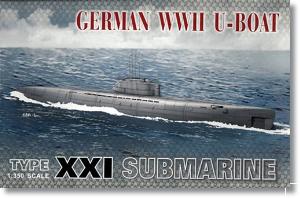
De un vistazo – Quick look
MATERIAL Y PIEZAS
MEDIA & PARTS:
- Plástico inyectado (33 piezas), peana (4 piezas).
- Injected plastic (33 parts), stand (4 parts).
CALCAS – DECALS:
- Números de gallardete y marcas de flotación. Aspecto muy brillante y fino. Aparente buena saturación de color y sin exceso de soporte.
- Pennant numbers and waterlines. Thin and very glossy finish. Apparently well saturated and with no surplus carrier.
OPCIONES – OPTIONS:
- U-Boat Type XXI. U-2513 / U-2518 / U-2528 / U-2540.
INSTRUCCIONES – INSTRUCTIONS:
- Hoja de formato A4 impresa en blanco y negro. Contiene un sumario histórico sobre el submarino, un diagrama sin numerar, dos vistas explosionadas del montaje, perfiles y una tabla de colores con equivalencias de pinturas de Gunze Sangyo.
- A4 sheet printed in black and white. It shows a historical summary about the submarine, a diagram without parts numbers, two exploded views of the assembly, profiles and a color chart with Gunze Sangyo paint matches.
LO MEJOR – THE BEST:
- Montaje muy sencillo. Buen detalle general.
- Ease of construction. Nicely detailed overall.
LO PEOR – THE WORST:
- Algún mínimo detalle de fotograbado le hubiese venido bien.
- Some minor PE detail could have been useful.
VALORACIÓN – CONCLUSION:
- La avalan un buen detalle y su fácil montaje, apto para modelistas de cualquier nivel de experiencia. Una buena opción si no se dispone de sitio en la vitrina.
- Its excellent detail and easy assembly make it suitable for modelers of all experience levels. A good option if the modeler doesn’t have much room in his cabinet.

La maqueta
El submarino alemán Tipo XXI está representado en prácticamente casi todas las escalas del modelismo naval. La maqueta más conocida es la de Revell en la escala 1/144, que, además del interior, tiene un buen porte y necesita bastante espacio en la vitrina. Hace más de 20 años AFV Club lanzó esta nueva maqueta cuando la marca parecía estar explorando otros caladeros modelísticos, además de su ya tradicional querencia por los vehículos militares.
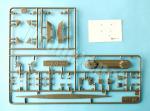
La caja contiene dos bastidores de piezas, la hoja de calcas y las instrucciones. No hace falta extenderse mucho sobre la sencillez de montar este submarino, que sólo cuenta con 33 piezas. Los elementos de plástico muestran un moldeado limpio y sólo tienen marcas visibles en los soportes y la placa de la peana.
El negociado naval casi nunca puede darnos mucha variedad en los acabados, más aún si se trata de un submarino. Los colores para pintar esta maqueta son un gris claro en la obra muerta y más oscuro en la obra viva.
Revisión
Las mitades del casco muestran un detalle notable y grabado muy fino. Se aprecian con nitidez no sólo las planchas, sino también las aberturas de los tanques de lastre y otros detalles. La parte anterior tiene un hueco donde pegar las salidas de los tubos lanzatorpedos de proa, que pueden colocarse en posición abierta o cerrada, aunque las salidas de los seis tubos no está marcada.
Los planos de inmersión de proa van añadidos sobre una pequeña base plana interna que posee pivotes para pegarlos. Los planos están moldeados con diminutas ruedas dentadas que permiten abrirlos o cerrarlos con idéntico ángulo en las dos bandas. En las instrucciones no se ve realmente dónde va pegada la base interna y me parece que el fabricante lo ha dejado al albur.
En la popa, además del timón vertical provisto de eje para situarlo entre las mitades del casco, tenemos los planos horizontales, dos de ellos más pequeños pegados al casco y otros dos mayores, separados en mitades y con las hélices en la parte posterior. Las hélices están bien moldeadas, carecen de rebabas, pero las palas me parecen un poco gruesas para la escala.
Una vez unido el casco, se le añade la cubierta, que tiene un detalle simple, pero grabado con limpieza. Sobre ella sólo hay que añadir la torre. Esta viene separada en mitades con un buen detalle externo, entre el que se aprecia la cubierta del sonar en la parte delantera y las escalas de acceso, muy simplificadas, pero difíciles de sustituir por su tamaño minúsculo. Las torretas de la artillería antiaérea vienen aparte y tienen buen aspecto.
La cubierta de la vela está separada. En ella se aprecian algunas escotillas además del detalle exento, que comprende una antena de bucle, el periscopio de ataque y el de navegación, el tubo del esnórquel, con el dispositivo separado en la parte superior, y la antena del emisor del radar FuMo 65 Hohentwiel, bien moldeada pero maciza y que puede mejorarse con un fotograbado específico. El fabricante ha añadido un par de finas antenas más a todos estos sensores, que parecen añadidos para darle un empaque innecesario a la vela.
La peana para sostener el modelo comprende una base con dos soportes y una placa con la identificación del submarino con rótulo en relieve.
La pequeña hoja de calcas trae números de gallardete y marcas de flotación con aspecto muy brillante y fino, aparente buena saturación de color y sin exceso de soporte.
La hoja de instrucciones tiene un formato A4 y está impresa en blanco y negro. Contiene un sumario histórico sobre el submarino, un diagrama de piezas sin numerar, dos vistas explosionadas del montaje, perfiles y una tabla de colores con equivalencias de pinturas de Gunze Sangyo.
Los perfiles sólo muestran un sumergible pintado de dos tonos de gris, como he dicho, y calcas para el U-2513. Entiendo que los demás de la hoja de calcas (U-2518, U-2529 y U-2540) llevan la misma librea. De los submarinos Tipo XXI repartidos entre los vencedores de la Guerra Mundial, el U-2513 fue asignado a los EE.UU.; el U-2518 a Francia (luego renombrado Roland Morillot); el U-2529 fue a parar a la URSS; y el U-2540 era el número original del Wilhelm Bauer, el único Tipo XXI superviviente, que fue operado por la Marina de la RFA en los años 60 y que hoy se conserva en Bremerhaven.
Valoración
Esta es una maqueta muy sencilla de montar y a un tamaño razonable para quienes no tengan mucho sitio en la vitrina. Creo que el detalle no desdice del tamaño en general, por mucho que en la edición no cuenta con fotograbados, que en algún caso le hubiesen venido como de molde.
Además de la antigua de Dragón, no hay muchas maquetas más del Tipo XXI en la escala 1/350 y esta puede ser la mejor opción para el modelista que, por cualquier motivo, busque una alternativa a la edición de Revell a escala mayor.◊




The kit
The German Type XXI submarine is represented in virtually every scale of ship modeling. The best-known kit is the 1/144 scale Revell release, which, in addition to its detailed interior, is bulky and takes a lot of space on the shelf. Over 20 years ago, AFV Club released this new kit when the company seemed to be exploring other modeling avenues, beyond their traditional focus on military vehicles.
The box contains two sprues of parts, a decal sheet, and the instructions. There’s no need to elaborate on the simplicity of building this submarine, which only has 33 parts. Parts are cleanly molded and only have visible marks on the stand brackets and base.
Ship modeling rarely offers much variety in finishes, especially when it comes to submarines. The recommended paint colors for this kit are a light gray for the topsides and a darker gray for the bottom.
Review
The hull halves display remarkable detail and very fine engraving. Not only are the plates clearly visible, but also the openings for the ballast tanks and other details. The forward section has a recess for attaching the bow torpedo tube outlets, which can be positioned open or closed, although the outlets for all six tubes are not marked or hollowed out.
The bow diving planes are attached to a small, flat internal base with pivots for gluing them in place. The planes are molded with tiny gears that allow them to be opened or closed at the same angle on both sides. The instructions don’t show exactly where the internal base is glued, and it seems the manufacturer has left this to chance.
At the stern, in addition to the vertical rudder with its axle for attachment between the hull halves, there are the horizontal planes: two smaller ones glued to the hull and two larger ones, separated into halves, with the propellers at the rear. The propellers are well molded, with no flash, but the blades seem a bit thick for the scale.
Once the hull is assembled, the deck is added. This has simple but cleanly engraved details. The sail comes in two halves with good external detail, including the sonar cover at the front and the access ladders, which are very simplified but difficult to replace due to their tiny size. The anti-aircraft gun turrets are separate and look good.
The sail deck is separate. It shows several hatches in addition to the separate detail, which includes a loop antenna, the attack and navigation periscopes, the snorkel tube (with the device detached at the top), and the FuMo 65 Hohentwiel radar transmitter antenna. The antenna is well-molded but solid and could be improved with a specific photo-etched part. The manufacturer has added a couple more thin antennas to all these sensors, which seem there just to add some stuff to the sail.
The display stand for the model consists of a base with two brackets and a plate with the submarine’s type in embossed letters.
The small decal sheet includes pennant numbers and watermarks with a very glossy and fine appearance, apparent good color saturation, and no excessive carrier.
The instruction sheet is A4 format and printed in black and white. It contains a historical summary about the submarine, a parts diagram, two exploded views of the assembly, profiles, and a color chart with Gunze Sangyo paint matches.
The profiles only show one submarine painted in two shades of gray, as mentioned, and decals for the U-2513. I suppose the others on the decal sheet (U-2518, U-2529, and U-2540) have the same finish. After WWII, the U-2513 was allocated to the USA; the U-2518 to France (later renamed Roland Morillot); the U-2529 went to the USSR; and the U-2540 was the original number of the Wilhelm Bauer, the only surviving Type XXI, which was operated by the West German Navy in the 1960s and is now preserved in Bremerhaven.
Conclusion
This is a very easy kit to assemble and has a reasonable size for those who don’t have much space to display large ships. I think the level of detail doesn’t detract from the overall size, even though this release doesn’t include photo-etched parts, which in some cases would have been a welcome addition.
Besides the old Dragon kit, there aren’t many other Type XXI kits in the 1/350 scale, and this might be the best option for modelers who, for whatever reason, are looking for an alternative to the larger-scale Revell kit.◊
Publicado – Published: 12 / 2025
©www.jmodels.net
 jmodels.net
Debe estar conectado para enviar un comentario.