
De un vistazo – Quick look
MATERIAL Y PIEZAS
MEDIA & PARTS:
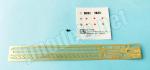
- Plástico inyectado (76 piezas), plástico transparente (8 piezas), fotograbado (14 piezas), rodamiento de plástico (1 pieza). Incluye peana (4 piezas).
- Injected plastic (76 parts), clear plastic (8 parts), photo-etched (14 parts). Stand included (4 parts).
CALCAS – DECALS:
- Banderas japonesas y números de gallardete. Aspecto fino, con buen registro y saturación de color. Bien impresas.
- Japanese Navy flags and pennant numbers. Apparently thin, with good register and color saturation. Well printed.
OPCIONES – OPTIONS:
- Submarino japonés Tipo B3 I-58, octubre de 1944 – 1945.
- Japanese Navy Type B3 I-58, October 1944 – 1945.
INSTRUCCIONES – INSTRUCTIONS:
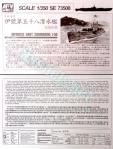
- Folleto doblado de 8 páginas impreso en blanco y negro. Contiene una breve introducción histórica sobre el sumergible, una tabla de colores con equivalencias de varias marcas de pintura, 8 pasos de montaje, perfiles y un diagrama del contenido de la caja.
- 8-page leaflet printed in black and white. It shows a short historical summary about the submarine, a color chart with matches in several paint brands, 8 construction chapters, profiles and and a diagram of the box content.
LO MEJOR – THE BEST:
- Excelente detalle y montaje sencillo en general.
- Excellent detail and an overall easy build.
LO PEOR – THE WORST:
- Montaje delicado (fotograbados y piezas diminutas). Instrucciones.
- Delicate assembly (PE and tiny parts). Instructions.
VALORACIÓN – CONCLUSION:
- Como en la primera entrega de esta maqueta, es una muy acertada reproducción de este sumergible en la escala. Tiene un despiece no muy numeroso y un montaje sencillo que también necesita destreza al manipular piezas pequeñas. Muy recomendable a los aficionados a los sumergibles y a la Armada japonesa en general.
- As the first kit, this is again another nice rendition of this submarine in the 1/350 scale. Parts count is not too high and assembly looks easy, but also needs some skills in handling tiny parts. Eagerly recommended to subs and Japanese Navy fans.

La maqueta
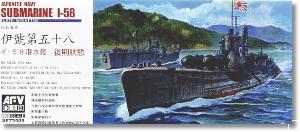
Esta es la segunda maqueta del submarino japonés I-58 que AFV lanzó un par de años después que la primera entrega, allá por 2013. Si la primera representaba al sumergible en la configuración con la que fue botado por la Marina japonesa en octubre de 1943, con una catapulta a proa para el hidroavión de reconocimiento y su hangar correspondiente por delante de la vela, en esta ocasión AFV Club reprodujo el aspecto que tuvo a partir de septiembre de 1944, cuando fue modificado como submarino nodriza de torpedos humanos Kaiten Tipo 1.
Como la maqueta es en parte idéntica a la primera, me centraré en las diferencias con la precedente, cuya revisión está publicada en la página Japanese Navy Submarine I-58 at Completion AFV Club SE 73507.
La caja contiene dos bastidores de plástico, una plancha de fotograbados, las calcas y las instrucciones. El casco viene separado en dos piezas. La edición no cuenta con el bastidor transparente del hidroavión de reconocimiento. El bastidor de piezas de mayor tamaño, que también contiene la peana, es idéntico y el resto nuevo (calcas e instrucciones incluidas). La factura del molde es muy buena y las piezas destacan por su limpieza y ausencia de defectos.
Aparentemente el montaje es sencillo, pero necesita cierto cuidado con los diminutos fotograbados y piezas de plástico. Las opciones de construcción se limitan únicamente a colocar los planos de inmersión de proa en posición plegada o desplegada, con piezas alternativas para cada caso.
Quilla
La quilla y el sistema de propulsión tiene las mismas piezas y montaje que el de la maqueta del I-58 inicial.
Parte superior del casco y cubierta
La parte superior del casco carece de las escalas laterales de acceso que traía en la entrega anterior. La cubierta es algo más ancha y excede ligeramente el perfil del casco a la altura de los anclajes de los Kaiten. Consecuentemente, AFV Club proporciona unas barandillas más largas con puntos de fijación en los filos de las plataformas que ayudan a pegarlas. Estas piezas se complementan con algunas diminutas planchas de fotograbado a los lados de las barandillas y sobre la cubierta.
Esta versión del sumergible tiene la catapulta suprimida y su hueco cubierto por una pieza alternativa, carece del hangar y también de la grúa para mover el hidroavión.
Cada uno de los seis Kaiten está moldeado de una pieza con su sistema de anclaje a la cubierta. El detalle es bastante bueno para su tamaño en esta escala y son visibles la vela, el periscopio y las hélice. Las piezas se insertan en huecos abiertos en su lugar correspondiente, con dos torpedos a proa y los cuatro restantes a popa.
La maqueta incluye también seis pequeños torpedos que ya estaban en la edición anterior. Están detallados con sus aletas y dobles hélices.
Vela
Como en la maqueta previa, la vela está separada en dos piezas, carece del hangar y tiene la cubierta y el techo separado.
Además de los binoculares de cubierta, el mástil, los periscopios, el radar de superficie y la artillería antiaérea, que son las mismas piezas, tenemos lo que parecen dos esnórqueles, un radar aéreo sobre el techo del puente sustituyendo al de bucle y compuesto de dos fotograbados, más un dispositivo en forma de altavoz situado en una pequeña plataforma por delante del puente. Las ventanas del puente no tienen fotograbados para detallarlas como en la edición previa y las barandillas también parecen más cortas y con forma distinta.
Peana
La peana se compone de dos soportes y una placa con la identificación del submarino en inglés, a diferencia de la primera maqueta, donde aparecen en caracteres japoneses o chinos.
Calcas
La hoja está bien impresa. Contiene banderas japonesas y números de gallardete sobre fondo negro que tienen un aspecto fino, registro correcto y saturación de color adecuada.
Instrucciones
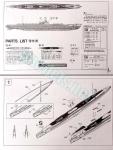
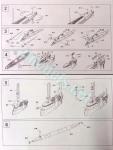
Vienen en un folleto doblado en vertical de ocho páginas impreso en blanco y negro. Contiene una breve introducción histórica sobre el sumergible, una tabla de colores con equivalencias de pintura de las gamas de Revell, Life Color, Gunze Sangyo y Humbrol, ocho secuencias de montaje, perfiles y un diagrama del contenido de la caja.
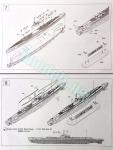
Si el formato vertical del folleto ya era un poco incómodo para la mesa del modelista, en esta edición parece que alguien tuvo un mal día en AFV Club y dejó varios capítulos del montaje impresos en posición invertida, empeorándolo un punto más. Las fotos de la galería de esta página los muestran en su posición correcta.
Los perfiles nos muestran la decoración usual en cualquier submarino japonés de la Segunda Guerra Mundial, pintado de gris en la obra muerta, excepto la cubierta de madera, y rojo por debajo de la línea de flotación.
Valoración
Esta es de nuevo una maqueta de gran detalle, despiece no agobiante y aparente construcción sencilla, dejando los fotograbados y piezas pequeñas a un lado.
En este caso, al carecer del hidroavión, no veo objeciones que ponerle aparte de la errónea impresión de las secuencias de montaje de las instrucciones. Nada importante, pero molesto.
Los aficionados a los submarinos y por extensión a la Marina japonesa con un nivel de experiencia medio o mayor tienen otra buena piedra de toque con esta versión armada con Kaiten.◊

The kit
This is the second kit of the Japanese submarine I-58 AFV released a couple of years after the first installment, back in 2013. While the first kit represented the submarine in the configuration in which it was launched by the Japanese Navy in October 1943, with a bow catapult for the reconnaissance seaplane and a hangar forward of the sail, this time AFV Club reproduced its appearance from September 1944, when it was modified as a Kaiten Type 1 human torpedo mothership.
The first kit review is published in this link Japanese Navy Submarine I-58 at Completion AFV Club SE 73507, so here I will focus on the differences of this second kit with that one.
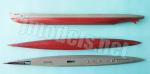
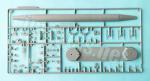
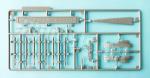
The box contains two plastic sprues, a photo-etched fret, a decal sheet, and the instructions. The hull comes in two separate pieces. This release does not include the clear sprue for the reconnaissance seaplane. The larger sprue, which also contains the base, is identical, and the rest is new (decals and instructions included). The standard of molding is very good, and parts are clean and free from blemishes.
Assembly is apparently simple, but needs some care with tiny photo-etched and plastic parts. Construction choices are limited to attaching the bow diving planes in the folded or unfolded position, with alternative parts in each case.
Keel
The keel and propulsion system have the same parts and assembly as the previous I-58 kit.
Upper hull and deck
The upper hull lacks the side access ladders seen in the previous boxing. The deck is somewhat wider and slightly extends a bit beyond the hull profile next to the Kaitens. Consequently, AFV Club provides longer railings with indented marks on the platforms edges to aid in gluing them. These pieces are complemented by some tiny photo-etched pieces on the railings sides and the deck.
This version of the submarine has the catapult removed and the gap filled by an alternative piece. It lacks the hangar and the crane for the aircarft.
Each of the six Kaitens is molded in one piece with the deck attachments. Detail is quite good for the size in this scale, and the sail, periscope, and propellers are visible. The pieces are inserted into holes on the deck, with two Kaitens at the bow and the remaining four at the stern. The kit also comes the same six small torpedoes included in the previous kit. The pieces are detailed with their fins and twin propellers.
Conning tower
As in the previous release, the sail is separated into two pieces with separate deck and roof, but it lacks the hangar.
In addition to the deck binoculars, the mast, the periscopes, the surface radar, and the anti-aircraft artillery, which come from the first kit, we have what seem to be two snorkels, an air radar on the bridge roof replacing the loop antenna and comprising two photo-etched parts, plus a speaker-like device located on a small platform forward of the bridge. The bridge windows do not have the photo-etched frames of the previous release, and the railings also look shorter and differently shaped.
Base
The base consists of two supports and a plate with the submarine’s identification in English, unlike the first kit, where they are molded in Japanese or Chinese characters.
Decals
The sheet is well printed. It contains Japanese flags and pennant numbers on a black background that look thin, with correct registration and adequate color saturation.
Instructions
They come in an 8-page, vertically folded booklet printed in black and white. It contains a short historical introduction to the submarine, a color chart with paint matches in Revell, Life Color, Gunze Sangyo, and Humbrol ranges, eight assembly sequences, profiles, and a diagram of the box contents.
If the vertical format of the booklet was already a bit annoying for the modeler’s table, in this release it seems someone had a bad day at AFV Club and printed several assembly steps upside down, making things even worse. The photos in the gallery on this page show them in their correct position.
The profiles show the usual color on any WWII Japanese submarine, painted gray on the topsides, except for the wooden deck, and red keel below the waterline.
Conclusion
This is again a highly detailed kit, with a straightforward parts breakup and apparent simple construction, aside from the small photo-etched and plastic parts present on the conning tower.
As the overscaled seaplane is missing in this version, I see no downsides in this boxing other than the erroneous printing of the assembly sequences in the instructions. Nothing too important but inconvenient.
Submarine enthusiasts, and by extension fans of the Japanese Navy with a standard or higher level of experience have another good touchstone with this Kaiten-armed version.◊
Publicado – Published: 5 / 2025
©www.jmodels.net
 jmodels.net
Debe estar conectado para enviar un comentario.