
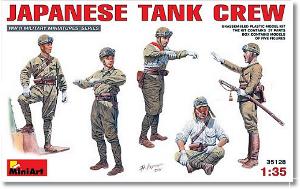
De un vistazo – Quick look
MATERIAL Y PIEZAS
MEDIA & PARTS:
- Plástico inyectado (56 piezas).
- Injected plastic (56 parts).
CONTENIDO – CONTENT:
- Figura A: Carrista asomado a la escotilla mirando a un lado (11 piezas).
- Figura B: Idem mirando al frente (11 piezas).
- Figura C: Carrista en pie con un pie sobre una superficie elevada (11 piezas).
- Figura D: Carrista sentado con las piernas cruzadas (12 piezas).
- Figura E: Oficial carrista en pie dando órdenes (13 piezas).
- Figure A: Tankman leaning out of a tank hatch looking to the side (11 pieces).
- Figure B: Same looking forward (11 pieces).
- Figure C: Tankman standing with one foot resting on a raised surface (11 pieces).
- Figure D: Tankman sitting with legs crossed (12 pieces).
- Figure E: Tank officer standing giving orders (13 pieces).
INSTRUCCIONES – INSTRUCTIONS:
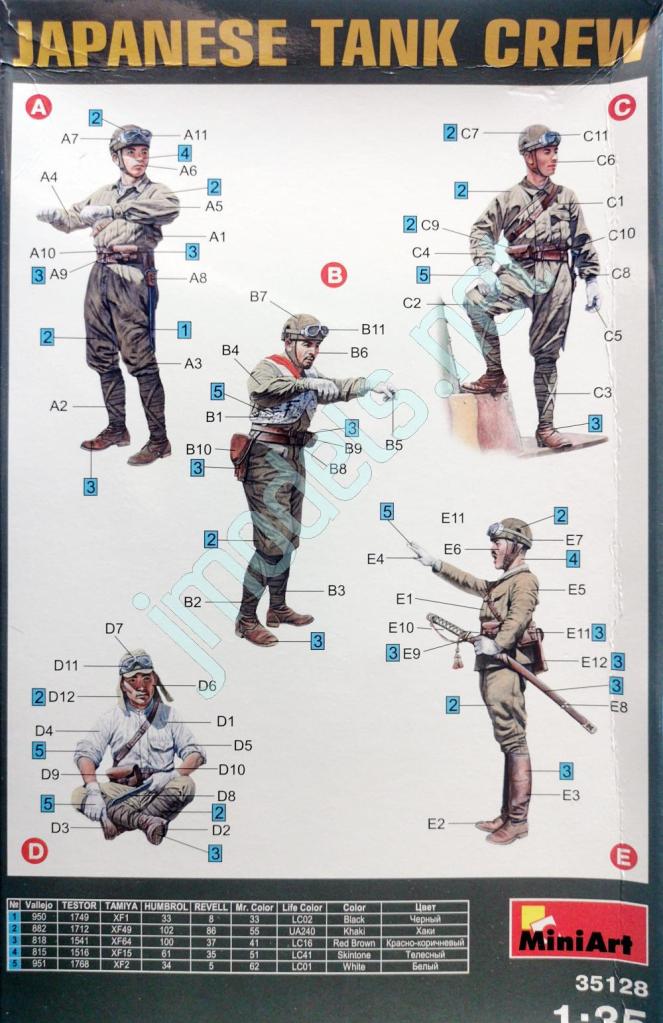
- Hoja pequeña con una reproducción de los bastidores y la numeración de las piezas. La cara trasera de la caja muestra las figuras ilustradas en color montadas con la numeración de las piezas y códigos de pinturas de Gunze Sangyo, Vallejo, Testor, Tamiya, Humbrol, Revell y Life Color.
- A small sheet with a reproduction of the sprues and the numbering of the parts. The back of the box shows the assembled figures illustrated in color with parts numbers and paint codes from Gunze Sangyo, Vallejo, Testor, Tamiya, Humbrol, Revell, and Life Color.
LO MEJOR – THE BEST:
- Buen moldeado. Aparente montaje sencillo. Atuendo y equipo personal acertado en general.
- Nice molding. Apparent ease of assembly. Overall accurate uniforms and equipment.
LO PEOR – THE WORST:
- Las poses no facilitan emplearlas interactuando en grupo. Algo más de equipo o atuendo las hubiese mejorado aún más.
- Poses aren’t easy to fit well in a group interaction. A bit more equipment or clothing would have improved them even further.
VALORACIÓN – CONCLUSION:
- Otra caja interesante de MiniArt que añade más posibilidades de complementar maquetas de blindados japoneses. Las figuras muestran buena calidad y poseen un acertado realismo en la uniformidad y equipo personal.
- Another interesting box from MiniArt that offers further possibilities for complementing Japanese armor. The figures are well done and accurate in their uniforms and personal equipment.

La maqueta
MiniArt lanzó esta caja allá por 2012, pero precisamente este año la ha vuelto a reeditar con el único cambio en el diseño de la portada, que usa la misma ilustración con la impresión en vertical, en lugar de apaisada como aquella primera. Este grupo también lo ha usado el fabricante en su maqueta Japanese M3 Stuart w/ Crew (referencia 35454) y Dragón en dos ediciones diferentes: IJA Type 97 Medium Tank “Chi-Ha” Early Production w/Japanese Tank Crew (30TH-05) e IJA Type95 Light Tank «Ha-Go» Late Production w/Japanese Tank Crew (30TH-08).
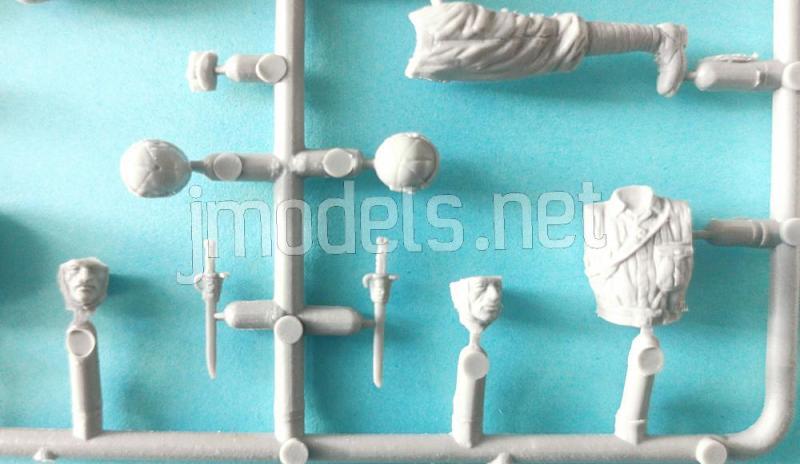
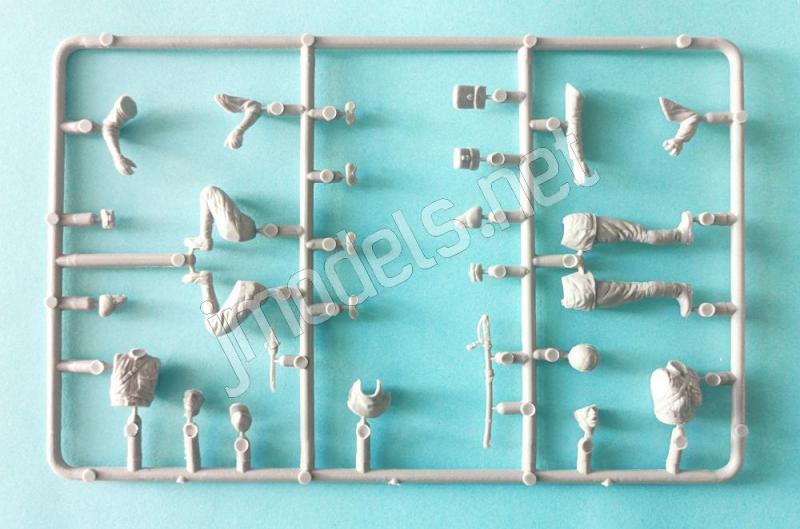
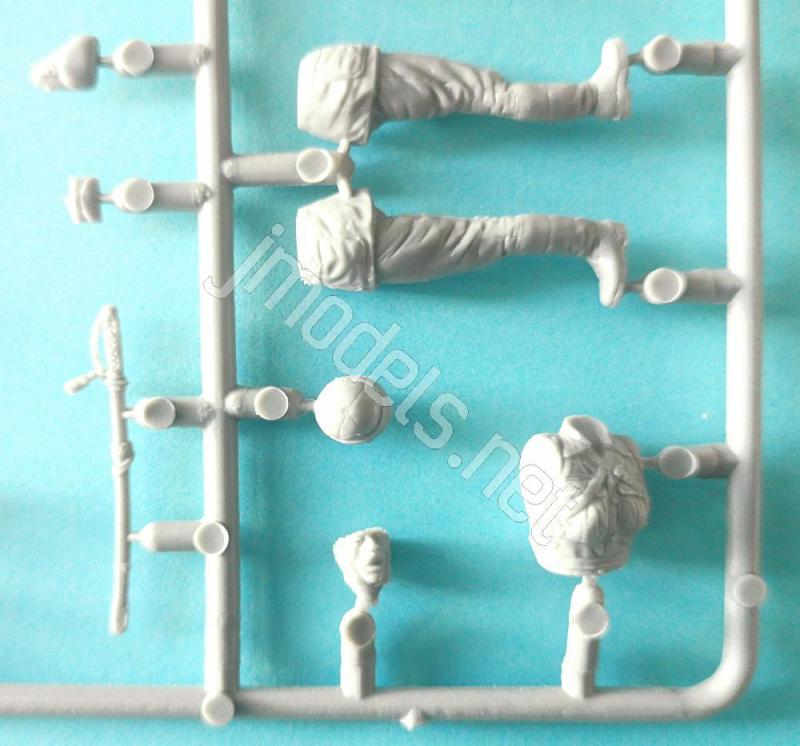
La caja trae dos pequeños bastidores sin numeración, uno con tres y el otro con dos figuras. Las piezas están bien moldeadas, sin cilindros de salida de eyector, pero con finas líneas de molde en lugares habituales, como las manos, los lados de los torsos y la parte anterior y posterior de las piernas. Estas líneas son entretenidas de retirar, especialmente entre las arrugas de las prendas. Junto a las figuras, encontramos el equipo personal de cada una, compuesto por cascos, gafas de conducción, algunas cartucheras y armamento (bayonetas, un sable y pistolas).
Las figuras están despiezadas de forma similar en cabeza tronco, piernas y brazos, en este último caso con las manos unidas a ellos. Los troncos son de una pieza, mientras que las piernas vienen por separado. Las caras está moldeadas sin cascos o gorra, y las facciones orientales parecen bien conseguidas, aunque la mayoría no muestran expresión explícita.
Tres de los soldados visten de manera muy parecida, diferenciándose en las poses. Estos llevan el usual mono de carrista con cuello vuelto y bolsillo sobre la parte izquierda del pecho. En general, los detalles y arrugas de las prendas están bien conseguidas para ser de plástico, en especial en los correajes, bolsillos, botones y polainas, aunque menos en los cinturones. Ninguno de ellos tiene marcas que indiquen su rango, y sólo cabe deducir que el de la espada es un oficial.
A continuación, describo las figuras en el orden en el que las identifica la parte posterior de la caja, cuya imagen he incluido en la galería fotográfica.
La figura A consta de once piezas. Simula estar en pie apoyando los brazos en la escotilla superior de la torre de un carro. Porta un casco acolchado de carrista con gajas sujetas a la visera, una bayoneta, una pistola enfundada y una cartuchera. Viste mono de carrista con polainas, guantes y botas de caña baja. Para darle diferencia con la figura siguiente, el rostro mira a su izquierda.
La figura B tiene las mismas piezas, pose e indumentaria. Se diferencia de la anterior en la dirección de la mirada y por llevar una especie de bandera ritual con lemas patrióticos atada por detrás al tronco, como se aprecia en las ilustraciones de la caja.
El carrista C está despiezado en once partes. Aparece en pie con pose relajada y la pierna derecha apoyada en alto. Viste las mismas prendas y equipo personal que las dos anteriores.
El soldado D consta de doce piezas y es el más diferente del grupo. Está sentado con las piernas cruzadas. Viste gorra de visera con cubrenuca, guantes, camisa y pantalones en lugar de mono, más polainas y botas bajas. Este atuendo parece el empleado en zonas tropicales. El equipo consiste en una pistola enfundada, cartuchera y bayoneta. MiniArt ha reproducido el cubrenuca como una tela continua y demasiado grande en largo y ancho, que cae por encima de los hombros de la figura. El cubrenuca japonés, el estándar al menos, era algo más corto y tenía cuatro piezas de tela separadas cosidas en su parte superior a una tira añadida a la gorra por fuera.
La figura E, que parece la de más rango, tiene trece piezas. Está de pie hablando o dando órdenes con la mano derecha levantada y sosteniendo una espada de oficial con la otra. Su uniforme se compone de guerrera y pantalones, con botas altas. Como equipo personal lleva una pistola, cartuchera, gafas sobre el casco, una funda de prismáticos y una cartera de documentos. Es la única con una pose expresiva y clara, que debería colocarse interactuando con otras figuras en una escena.
La caja contiene una hoja pequeña que ayuda a localizar las piezas de cada figura, ya que los bastidores no están numerados. Como es habitual, la parte posterior muestra un dibujo en color de cada soldado. con una amplia tabla de pinturas de distintos fabricantes. Aunque no parece imprescindible, no hubiese estado de más que MiniArt ampliase las ilustraciones con vistas posteriores. Esto ayudaría a situar más fácilmente el equipo personal.
Valoración
Como otras parecidas de carristas de distintas nacionalidadaes que MiniArt ha lanzado a lo largo de los años, esta caja merece realmente la pena por su buena factura, aparente fácil montaje y acertado retrato de los uniformes y complementos.
Tal vez a este grupo le vendría bien algunos complementos más en forma de ropa o armas, ya que los que trae son muy escuetos. A las poses les falta algo de acción, es cierto, y, si uno es un poco exigente con el realismo, le costará encajarlas todas con cierta lógica en una sola escena, sin embargo por separado o en parejas pueden ser muy útiles en cualquier maqueta de carro japonés.◊


The kit
MiniArt first released this box back in 2012 but it has popped out again this same year, with the only change being in the box art design, which uses the same illustration but in a vertical layout rather than the landscape format of the original. The manufacturer has also used this figure set in their Japanese M3 Stuart w/ Crew kit (ref. 35454), and Dragon have included it in two different reboxes: IJA Type 97 Medium Tank ‘Chi-Ha’ Early Production w/Japanese Tank Crew (30TH-05) and IJA Type 95 Light Tank ‘Ha-Go’ Late Production w/Japanese Tank Crew (30TH-08).
The box contains two small, unnumbered sprues: one with three figures and the other with two. Parts are well-molded, without ejector nodules, but they have fine seam lines in the usual places, such as the hands, the sides of the torsos, and the front and back of the legs. Removing these lines can be a tedious task, particularly inside the folds and creases in the clothing. Along with the figures, the kit includes personal gear for each, consisting of helmets, goggles, ammo pouches, and weapons (bayonets, a sword, and pistols).
The figures are broken down into similar components, head, torso, legs, and arms, with the hands molded integrally into the arms. The torsos are single-piece, while the legs are separate parts. The faces are molded without helmets or caps, and the East Asian features are well-rendered, although most of the figures lack a distinct facial expression.
Three of the soldiers are dressed very similarly, differing mainly in their poses. They wear the standard tank crew overalls, featuring a collar and a pocket on the left side of the chest. Clothing details and folds are well-done for plastic, particularly on the straps, pockets, buttons, and gaiters, though the belts are slightly less detailed. The figures have no arm or collar badges indicating the rank and the only thing we can know for sure is that the figure holding a sword is an officer.
Below, I describe the figures in the order shown on the back of the box. I have included a picture of this in the photo gallery.
Figure A consists of eleven parts. The tankman is depicted standing, resting his arms on the top hatch of a tank turret. He wears a padded tanker’s helmet with goggles, a bayonet, a holstered pistol, and an ammo pouch. He is dressed in a tanker’s overalls with gaiters, gloves, and ankle boots. To distinguish him from the next figure, his face is turned to his left.
Figure B shares the same parts, pose, clothing and equipment. He differs from the previous figure in the direction of his gaze and by wearing a sort of ritual flag bearing patriotic slogans, tied across his back, as shown in the box illustration.
Tanker C is broken down into eleven parts. He appears standing in a relaxed pose with his right leg resting on a raised surface. He wears the same clothing and personal gear as the previous two figures.
Soldier D consists of twelve parts and is the most distinct of the group. He is seated with his legs crossed. He wears a field cap with a neck-guard, gloves, a shirt, and trousers instead of an overalls, along with gaiters and low boots. His gear includes a holstered pistol, an ammunition pouch, and a bayonet. MiniArt have rendered the neck-guard as a single, continuous piece of fabric that looks too large, draping over the figure’s shoulders. The Japanese neck-guard, at least the standard version, was somewhat shorter and consisted of four separate fabric straps sewn at the top to a band attached to the outside of the cap.
Figure E, which seems to be an officer, consists of thirteen parts. He is standing, speaking or giving orders, with his right hand raised while holding an officer’s sword in the other. His uniform comprises a tunic and trousers, worn here with high boots. His personal gear includes a helmet, pistol holster, goggles, a binocular case, and a leather dispatch case. This is the only figure with a clear, expressive pose designed for interaction with other figures in a scene.
The box also brings a small sheet to help identify the parts for each figure, as the sprues themselves are not numbered. As is customary, the back of the box displays a color illustration of each soldier, accompanied by an extensive paint chart with references from several manufacturers. While not essential, it would have been a nice touch had MiniArt included one more angle of the figures; this might help positioning some pieces of equipment.
Conclusion
Like other similar sets of tank crewmen from various nations released by MiniArt over the years, this box is well.done, with a good molding quality, apparent ease of assembly, and accurate depiction of uniforms, gear and equipment.
The set might have benefited from a few extra accessories, such as additional clothing or weapons, since the included items are a bit sparse. Admittedly, the poses lack a sense of action, and anyone with high standards for realism might find it isn’t that easy to fit them all into a single scene; however, individually or in pairs, they would be excellent additions to any Japanese tank.◊
Publicado – Published: 9 / 2026
©www.jmodels.net

 jmodels.net
Debe estar conectado para enviar un comentario.