
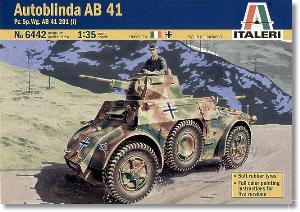
De un vistazo – Quick look
MATERIAL Y PIEZAS
MEDIA & PARTS:
- Plástico inyectado (142 piezas), vinilo (6 piezas).
- Injected plastic (142 parts), vinyl (6 parts).
CALCAS – DECALS:
- Impresas por Zanchetti. Cruces alemanas de dos tipos, matrículas italianas y alemanas, marcas tácticas y de unidad. Apariencia fina y mate. Motivos nítidos, sin soporte excesivo.
- Printed by Zanchetti. Two types of German crosses, Italian and German plates, tactical markings and unit badges. Thin and matte appearance. Sharp, without too much carrier film.
OPCIONES – OPTIONS:
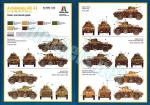
- Autoblinda AB41. Regio Esercito. Unidad desconocida. Sicilia, 1943.
- Autoblinda AB41. Regio Esercito. Regimiento Lancieri di Montebello. Roma, septiembre de 1943.
- Autoblinda AB41. República Social Italiana. Gruppo corazzato Leonessa. Turín (Italia), inicios de 1945.
- Autoblinda AB41. Ejército alemán. 162ª División de Infantería (Turca). Aufklärungsabteilung 236. Italia, inicios de 1944.
- Autoblinda AB41. Ejército alemán. Regimiento I./ Elite-Polizei. Bolzano (Italia), verano de 1944.
- Autoblinda AB41. Regio Esercito. Unknown unit. Sicily, 1943.
- Autoblinda AB41. Regio Esercito. Lancieri di Montebello Rgt. Rome, September 1943.
- Autoblinda AB41. Italian Social Republic. Gruppo corazzato Leonessa. Torino (Italy), early 1945.
- Autoblinda AB41. German Army. 162nd Infantry Division (Turkish). Aufklärungsabteilung 236. Italy, early 1944.
- Autoblinda AB41. German Army. I./ Elite-Polizei Rgt. Bolzano (Italy), summer 1944.
INSTRUCCIONES – INSTRUCTIONS:
- Folleto doblado de 10 páginas impreso en blanco y negro. Contiene una breve introducción histórica sobre el vehículo, un plano numerado de piezas, una lista de colores con referencias de pinturas de Modelmaster y 14 capítulos de montaje. Una hoja separada impresa en color muestra perfiles para pintar y colocar las calcas del modelo.
- 10-page folded brochure printed in black and white. It contains a short historical introduction about the vehicle, a numbered parts plan, a list of colors with matches in Modelmaster paints plus 14 assembly chapters. A separate sheet printed in color shows profiles for painting and decalling the model.
LO MEJOR – THE BEST:
- Detalle general. Torre. Ruedas. Montaje asequible para menos expertos. Variedad en las opciones de pintura.
- General detail. Turret. Wheels. Suitable assembly for beginners. Varied painting choices.
LO PEOR – THE WORST:
- Interior del casco vacío. Faros no transparentes.
- Empty hull interior. Lack of clear parts for the headlights.
VALORACIÓN – CONCLUSION:
- Su notable detalle, la sencillez de montaje y las amplias posibilidades de pintura la hacen muy recomendable para los aficionados a los vehículos de la Segunda Guerra Mundial.
- Its very nice detail, the ease of assembly and the wide range of alternatives to paint it make this AB41 recommendable to any WWII armor fan.

La maqueta
La aparición del Autoblinda AB41 de Italeri marcó un antes y un después respecto a las maquetas anteriores de este vehículo en la escala 1/35, todas ellas de resina y no precisamente económicas. Cuando escribo esta revisión hay una nueva maqueta de plástico a punto de aparecer de la marca china LANMO Model.
Tras el lanzamiento del AB41, Italeri expandió la familia de este blindado con el AB40 (también en versión ferroviaria) y AB43 (también reeditado por Tamiya). La propia Italeri volvió a sacar el AB41 junto con figuras de Bersaglieri para conmemorar el aniversario de El Alamein.
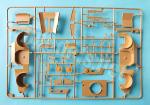
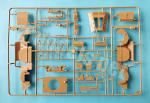
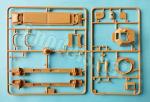
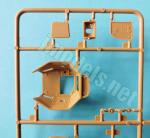
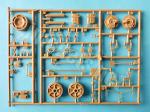
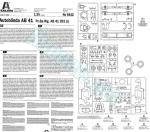
Al abrir la caja encontramos cuatro bastidores de piezas, dos bastidores con seis neumáticos de vinilo, una hoja de calcas pequeña y las instrucciones, en esta ocasión complementadas con una hoja en color con perfiles que sirve para guiar la pintura y la colocación de las calcas. Al lector que tenga o conozca la maqueta de cualquier versión de la AS42 Sahariana de Italeri le sonarán tres de los bastidores porque son los mismos.
El nivel de moldeado de las piezas es ciertamente notable y los pequeños detalles están representados con finura, a veces incluso demasiada, como en el caso de los diminutos remaches que cubren ciertas planchas del casco y la torre. Las piezas carecen de rebabas y deformaciones. Las marcas de eyector no se ven expuestas, salvo parcialmente en los huecos de las ruedas, donde hay algunas no demasiado profundas. Tratándose de este lugar, el modelista puede esperar que las ruedas tapen estas marcas, pero si uno no quiere tener sorpresas a posteriori, lo razonable es eliminarlas. En conjunto, las piezas no necesitarán mucho repaso para limpiarlas, lo que unido a su no excesivo número, para lo que se estila hoy, harán el montaje más corto.
Afortunadamente el despiece que ha hecho Italeri permite la construcción modular del modelo, cuyos ensamblajes básicos son el chasis, la carrocería y la torre. Respecto al montaje, me he tomado la molestia (no suelo hacerlo) de leer algunas revisiones anteriores sobre la maqueta donde se dice que la construcción da algunos problemas en ciertos lugares. No puedo opinar sobre esto porque no hago pruebas de montaje, pero normalmente me tomo esta clase de afirmaciones con escepticismo. Hasta que llega el momento de ponerse a montar, uno no sabe a ciencia cierta si esas dificultades las causa la propia maqueta (en muchas ocasiones es así) o el revisor, que tapa su impericia echando la culpa al producto. Naturalmente, la maqueta seguirá muda y no podrá rebatirle los argumentos.
Reseña
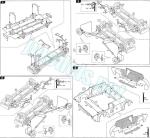
El chasis consta de cinco lados con dos extrañas piezas en forma de arco rebajado situadas por encima que son en realidad travesaños que ayudan a alinear los lados correctamente. Estos lados muestran los muelles de los amortiguadores bien definidos. La suspensión posee piezas iguales en los dos ejes y lados, con brazos, rótulas y tambores de freno separados, más dos bielas laterales en forma de barra alargada que permiten la dirección de las ruedas. El montaje no es difícil a simple vista, aunque requiere un poco de tiento para alinear las piezas correctamente.
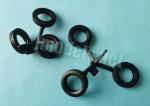
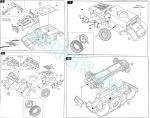
Las ruedas tienen las llantas y los neumáticos por separado. Las llantas, incluidas las de repuesto, semejan bastante bien las reales. con los radios bien perfilados y el tapabuje separado con el nombre del fabricante (SPA) en relieve. Los neumáticos van encajados a presión en las llantas. Según se aprecia en el relieve de los flancos, son del tipo Superflex Artiglio empleados en suelo europeo y tienen una factura excelente pese a ser de vinilo. La banda de rodadura está limpia de marcas y carece de líneas de molde porque el único punto de unión con el bastidor se encuentra justo en el ángulo interno que separa la banda de rodadura del hombro, y por tanto cualquier resto de corte de la pieza resulta invisible al colocar la rueda, especialmente si se orienta hacia el suelo. El ajuste de las ruedas se realiza con vástagos moldeados en los tambores de freno.
Los lados del casco incluyen los guardabarros, con un grosor más que aceptable considerando que estaban blindados, los huecos de las ruedas de repuesto y los huecos de las puertas. El detalle externo está bien perfilado, aunque los remaches parecen algo más pequeños que en la realidad. El interior sólo lo ocupan cuatro cilindros transversales para alinear los lados y dos perfiles paralelos a los lados que cierran parcialmente el espacio inferior. Al montar los cilindros, también hay que pegar la plancha inferior trasera del casco.
La cubierta del motor viene de una pieza y muestra las tapas separadas con buena definición en las bisagras, aunque las rejillas están cegadas. Sin embargo, hay un par de rejillas por delante de las tapas que vienen abiertas, al igual que en la plancha posterior separada del casco. Hay también una sirena y dos palas con sus enganches estibadas a ambos lados de la cubierta que no son muy buenas. Sin duda ganarían si se reemplazan por algo mejor. La parte inferior trasera lleva dos ganchos de arrastre, un eslabón, la placa de matrícula y los tubos de escape sobre los guardabarros. Estas piezas vienen en mitades con el extremo del tubo horadado. Los faros no están a la altura del resto y conviene reemplazarlos porque no tienen lentes transparentes que Italeri podría haber añadido sin gran problema.
La plancha frontal del conductor trasero está moldeada con el soporte de la antena, una mirilla con visor aparte y la ametralladora en su montaje de bola. Este arma viene completa en una sola pieza y su aspecto es pasable.
En la parte delantera encontramos una sola plancha frontal remachada detallada con varios enganches, los gálibos, sólo pertinentes para las versiones italianas, la bocina y dos piezas que simulan tapones. La plancha frontal del conductor delantero posee una mirilla central con visor separado, los faros con las lentes moldeadas en sus respectivos huecos y las tapas blindadas, que pueden colocarse abiertas. De nuevo, el detalle, bastante bueno, se ve un tanto mermado por la falta de lentes transparentes.
Además de las ruedas de repuesto, los lados del casco contienen los estribos bajo las puertas, un pico, latas de combustible opcionales, la antena de una pieza, el tapón del depósito de combustible y las puertas, separadas en dos hojas provistas de bisagras y cierres nítidos. La hoja superior de cada puerta lleva una mirilla vertical bien detallada con el visor interno, aunque las piezas muestran un par de marcas de eyector leves que limpiar si se coloca abierta.
El tamaño y ángulos de las planchas de la torre fueron discutidos cuando apareció la maqueta, pero sinceramente no aprecio diferencias significativas con la torre del vehículo real que puedan amargarle la vida al modelista (a algunos realmente les amargan estas nimiedades). Lo que sí está claramente por debajo de la escala son los remaches de las planchas.
En la parte exterior se aprecia el periscopio del comandante, el contrapeso del cañón en la parte trasera, las dos mirillas laterales y las salidas de ventilación con los protectores perfectamente reproducidos. Las escotillas poseen tapas separadas con un detalle mínimo por dentro pero sin marcas.
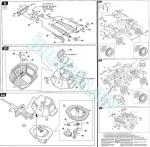
El interior de la torre contiene el asiento del comandante más la manivela de giro de la torre y del periscopio. El mantelete comprende tres piezas superpuestas y muestra las salidas del periscopio y la ametralladora coaxial, moldeada entera en una pieza con detalle aceptable y pegada a un lado del afuste del arma principal. El cañón está separado en mitades, excepto el tubo, y la boca es un cilindro horadado aparte. En la parte interior tenemos la empuñadura, la manivela de alza y el tubo de la mira con la lente ocular en una pieza independiente. Aunque el cañón no está mal, Italeri podría haber proporcionado el tubo de aluminio y haberlo mejorado aún más a bajo coste. En cualquier caso, esta pieza no es tan necesaria como las lentes transparentes de los faros. Al contrario que en el casco, el detalle incluido en la torre es más que suficiente para permitirnos mostrarla abierta, aunque el encaje de una figura puede resultar más problemático.
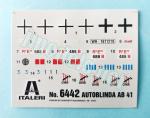
La hoja de calcas está impresa por Zanchetti, lo que en principio augura buenos resultados al colocarlas. En ella vemos cruces alemanas de dos tipos, matrículas italianas y alemanas además de marcas tácticas y de unidad. Los motivos parecen finos y mates, están impresos con buena nitidez y no presentan soporte excesivo.
El folleto de instrucciones consta de 10 páginas impresas en blanco y negro. Contiene una breve introducción histórica sobre el vehículo, un plano numerado de piezas, una lista de colores con referencias de pinturas de Modelmaster (esmaltes y acrílicos) y 14 capítulos de montaje. Una hoja separada impresa en color muestra perfiles y una serie de colores expuestos también en el folleto.
Italeri ha hecho una buena selección de patrones de camuflaje con distinto atractivo y dificultad que abarcan desde un vehículo monocolor a otros en dos y tres colores de camuflaje. Pero caben también otras posibilidades a nada que el modelista investigue un poco y repare en los AB41 empleados por los griegos, los partisanos yugoslavos, la Gendarmería francesa o los vehículos capturados por los británicos en el norte de África.
Valoración
No hay duda que la maqueta merecía la acogida que tuvo en su momento y no se le pueden poner inconvenientes importantes a su buen detalle general más allá de los faros, y del nulo interior del casco, que impedirá a muchos dejar las puertas abiertas incluso parcialmente. El buen detalle interno de la torre compensa en parte esta ausencia.
Otros activo interesante, por insólito, es el detalle y el ingenioso moldeado que Italeri le dio a los neumáticos de vinilo. También lo es el precio, normalmente aún razonable, de esta maqueta, tan buena como otras que sólo se distinguen por su nombre y fama en muchas ocasiones.
Todo esto, unido a un montaje no demasiado exigente para el modelista de nivel básico, pero con espacio para afinar detalles, más las interesantes y variadas opciones de pintura hacen muy recomendable esta maqueta para cualquier aficionado a los vehículos de la Segunda Guerra Mundial.◊

The kit
The release of Italeri’s AB41 marked a turning point with the previous 1/35 scale kits, all of which were resin and not exactly cheap. As I write this review, a new plastic AB41 kit is about to be released from the Chinese brand LANMO Model.
After the release of the AB41, Italeri expanded the family of this armored vehicle with the AB40 (also in a railway version) and the AB43 (also reissued by Tamiya). Italeri reissued the AB41 along with Bersaglieri figures to commemorate the Battle of El Alamein in 2022. Upon opening the box, we find four sprues of parts, two sprues containing six vinyl tires, a small decal sheet, and the instructions, this time complemented by a color sheet with profiles as a guide for painting and setting of decals. Readers who already know any version of Italeri’s AS42 Sahariana will recognise three of the AB41 sprues because they are same.
The standard of moulding is certainly quite good, and the small details are rendered with finesse, sometimes even too much so, as is the case of the small rivets on the hull and turret plates. Parts are free from flash or blemishes. Ejector marks are not evident, except a few of them on the wheelhouses. The modeler can reasonably expect that they will be hidden by the wheels, but if he wants to avoid surprises later, it seems wise to remove them. Overall, parts won’t need much cleanup and this, combined with their relative small number compared to most kits today, will make assembly much faster.
Fortunately, Italeri’s breakdown allows for modular construction of the kit, with the basic sub-assemblies being the chassis, body, and turret. Regarding assembly, I took the trouble (I don’t usually do so) to read some previous reviews of the kit where it is said that construction has some fitting problems in certain places. I can’t comment on this because I don’t do assembly tests, but I normally take these statements with skepticism. Until the time comes to build a kit, one never knows for sure whether these difficulties are caused by the kit itself (which is often the case) or by the reviewer, who covers up his poor skills by blaming the product. Naturally, the kit will remain silent and won’t answer him back.
Review
The chassis consists of five sides with two unusual arch-shaped pieces above them, which are actually cross members that help space the sides correctly. These sides show well-defined shock absorber springs. The suspension has identical parts on both axles and sides, with separate arms, ball joints, and brake drums, plus two long bar-shaped side rods that allow the wheels to steer. Assembly is not difficult at first sight, although it needs a bit of skill to align parts correctly.
The wheels have separate rims and tires. The rims, including the spares, resemble the real thing quite well, with well-shaped spokes and a separate hubcap embossed with the manufacturer’s name (SPA). The tires are press-fit onto the rims. As can be seen from the embossing on the sidewalls, they are the Superflex Artiglio type used in Europe and look excellent despite being made of vinyl. The tread is free from marks or seam lines because the only gate with the sprue is located at the inner angle separating the tread from the tire shoulder, and therefore it is invisible when the wheel is fitted, especially if the cutting point is positioned toward the ground. Wheel adjustment is achieved with rods moulded on the brake drums.
The hull sides include the fenders, with a more than acceptable thickness considering they were armored, the spare wheel wells, and the door gaps. External detail is quite nice, although the rivets look smaller than they should be. The hull interior only include four transverse beams to align the sides and two pieces that partially close the lower hull gap. When attaching the beams, the lower rear hull plate is also glued.
The engine deck is a single piece showing separate covers with good definition on the hinges, although the grilles are not hollowed. However, there are a pair of grilles forward of the covers that are moulded open, as is the case with the rear hull plate. There is also a siren and two shovels with their clamps stowed on either side. These are not very good and would certainly benefit from a better replacement. The lower rear section has two tow hooks, a shackle, the license plate, and the exhausts above the fenders. These pieces come in halves with the tailpipes hollowed out. The headlights are not on the same level as the rest as Italeri moulded the lenses as separate nontransparent pieces. Clear lenses would have improved detail and are not that difficult to produce.
The rear driver’s front plate is moulded with the antenna holder, a separate sight with a visor, and the machine gun on its ball mount. This weapon comes in one piece and looks passable. At the hull front we find a single riveted front plate detailed with several hooks, the clearance gauges (applicable only to the Italian versions), the horn, and two pieces simulating caps. The front driver’s plate has a central sight with a separate visor, the headlights moulded inside hull recesses and the armored covers, which can be positioned open. Again, detail, which looks quite good, is somewhat diminished by the lack of clear lenses.
In addition to the spare wheels, the hull sides contain the access doors steps, a pick, optional jerrycans, the one-piece antenna, the fuel filler cap, and the access doors. These are separated provided in two panels moulded with neat hinges and handles. The upper panel of each door features a vertical slit with the internal visor. The pieces show a couple of shallow ejector marks that need to be cleaned up if the doors are attached open.
The size and angles of the turret plates were questioned when the kit was released, but I honestly don’t see any significant differences with the real vehicle’s turret that could be a source of distress for modelers (some people really find these trivialities annoying). What is clearly a bit under scale are the rivets on the plates.
On the outside, you can see the commander’s periscope, the rear gun counterweight, two vision ports, and the ventilation outlets with nicely rendered covers. The hatches have separate covers with minimal detail inside but no marks on them.
The turret interior contains the commander’s seat as well as the turret and periscope cranks. The mantlet comprises three superimposed pieces and shows the periscope and the coaxial machine gun openings. The machine gun is one piece, has decent detail and is attached to one side of the main gun mount. The gun is separated into halves, except for the barrel, and the muzzle is a separate, hollowed cylinder. Inside the hull we have the grip, the elevating handle and the sight tube with a separate eyepiece lens. Although the barrel is not bad, Italeri could have provided an aluminum counterpart and further improved the weapon at a low cost. In any case, this part is not as necessary as the clear headlight lenses. Unlike the hull, detail included in the turret is more than enough to allow us to show it open, although fitting a figure may be not that easy.
The decal sheet was printed by Zanchetti, so one can expect no problem with decal placement. It features two types of German crosses, Italian and German plates, as well as tactical and unit markings. The items look fine and matte, are sharply printed and do not show excessive carrier.
The instruction booklet consists of 10 pages printed in black and white. It contains a brief historical introduction to the vehicle, a numbered parts plan, a list of colors with Modelmaster paint references (enamels and acrylics), and 14 assembly chapters. A separate sheet printed in color shows profiles and a the same colors listed in the booklet.
Italeri has made a good selection of camouflage patterns with varying appeal and difficulty. These range from a single-color vehicle to two- and three-color camouflages. However, other possibilities are also available if the modeler does a little research and considers the AB41s used by the Greeks, the Yugoslav partisans, the French Gendarmerie, or some vehicles captured by the British in North Africa.
Conclusion
Unquestionably, the kit deserved the reception it had when it was first released. No major issues can be found for its excellent overall detail beyond the headlights and the lack of interior hull detail, which will prevent many from posing the doors open. The nice detail inside the turret partly compensates for this lack.
Another interesting asset, though unusual, is the detail and the clever moulding Italeri employed to produce the vinyl tires. Also noteworthy is the still reasonable price of this kit for today’s standards.
All this, combined with an assembly that isn’t too demanding for the beginner, but still offers room for some improvement, plus the interesting and varied paint finishes, make this kit highly recommendable to any WWII vehicle fan.◊
Publicado – Published: 7 / 2025
©www.jmodels.net
 jmodels.net
Debe estar conectado para enviar un comentario.