
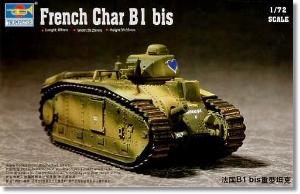
De un vistazo – Quick look
MATERIAL Y PIEZAS
MEDIA & PARTS:
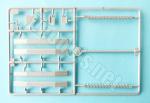
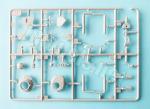
- Plástico inyectado (58 piezas), vinilo (dos tramos).
- Injected plastic (58 parts), vinyl (2 lengths).
CALCAS – DECALS:
- Insignias de unidad, apodos de carros y escarapelas francesas. Aspecto fino y muy brillante, sin mucho exceso de soporte y escarapelas descentradas, en especial las más pequeñas.
- Unit marking, tank nicknames and French roundels. Thin and very glossy finish, without too much carrier film and out of registration roundels, especially the smallest ones.
OPCIONES – OPTIONS:
- Char B1 bis. 2ª División Blindada, 15º Batallón de Carros, 1ª Cía., 2ª Sección. Carro 257 “Bourrasque”. Francia, mayo de 1940.
- Char B1 bis. 46º Batallón de Carros, 3ª Cía., carro 481 “Vercingétorix”. Francia, mayo de 1940.
- Char B1 bis. 2nd Armored Division, 15th Combat Tank Battalion, 1st Co., 2nd Section. Tank 257 “Bourrasque”. France, May 1940.
- Char B1 bis. 46th Tank Battalion, 3rd Co. Tank 481 “Vercingétorix”. France, May 1940.
INSTRUCCIONES – INSTRUCTIONS:
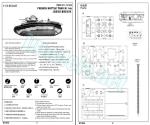
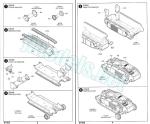
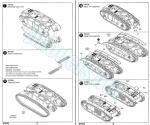
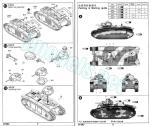
- Folleto doblado de 8 páginas impresas en blanco y negro. Muestra un plano de piezas con numeración, 15 secuencias de construcción, una página de perfiles y una tabla de colores con pinturas equivalentes de varias marcas.
- 8-page folded leaflet printed in black and white. It shows a numbered parts paln, 15 construction chapters, a page of profiles and a chart of colors with matches in several paint ranges.
LO MEJOR – THE BEST:
- Destacable y acertado detalle en general. Montaje sencillo. Alternativas de montaje y pintura.
- Nice and accurate overall detail. Easy build. Assembly and paint choices.
LO PEOR – THE WORST:
- Cadenas de vinilo.
- Vinyl tracks.
VALORACIÓN – CONCLUSION:
- Tiene un detalle en general notable con cadenas que desmerecen al ser de vinilo. La construcción evidencia sencillez y ofrece alternativas. Las camuflajes son variados y pueden resultar atractivos de pintar.
- It has a very nice general detail with somewhat disappointing vinyl tracks as they will surely be difficult to glue and adapt. Assembly looks easy and straightforward and offers alternatives. Camo schemes are varied and may be attractive to paint.

La maqueta
Trumpeter viene reeditando este Char B1 bis sin cambios desde hace muchos años, aunque resulta extraño que el fabricante no le haya dado a este molde más recorrido con otras versiones alemanas como las que en su día hizo de los carros rusos KV-1 y KV-2. En el caso del B1, por ejemplo, se han quedado por el camino la versión estándar Panzerkampfwagen B-2 740(f), la versión lanzallamas (Flammwagen auf Panzerkampfwagen B-2(f)) y también el cañón autopropulsado 10.5 cm leFH18/3 (Sf) auf Geschützwagen B-2(f).
La caja de esta edición, única por el momento, contiene el casco separado, tres bastidores de piezas, dos tramos de cadenas, las calcas y las instrucciones. Las piezas tienen un moldeado muy bueno y bastante limpio. Sólo hay que hacer notar mínimos restos de rebabas en los bordes de alguna pieza y cilindros de salida del eyector en varias más, algunas delicadas de eliminar por tratarse de elementos muy finos.
El número de partes de la maqueta no es demasiado alto debido en parte a que casi todo el casco está moldeado en una única pieza y por ello es presumible que el montaje sea bastante sencillo. También es influyente el hecho de que la maqueta no tenga interior, salvo el afuste del cañón de 75 mm del casco.
La maqueta ofrece la opción de montar dos modelos de guardabarros y dos tipos de escapes distintos. De alguna manera Trumpeter parece haber querido plasmar ciertos detalles diferentes muy concretos que estos carros tenían en su aspecto final, debido en parte a que cada fabricante terminaba el lote de producción con detalles de su propia cosecha y también al hecho de que muchos B1 fueron actualizados al estándar del B1 bis con mejoras en el blindaje, además de la introducción de la torre APX-4 del B1 bis y el cañón SA 35 de tubo más largo. En ocasiones no resulta sencillo distinguir el modelo inicial B1 modificado de un B1 bis. Este último tenía algo más de anchura en las cadenas y los guardabarros, así como placas de blindaje más marcadas en torno al cañón de 75 mm y el visor del conductor. Las torres eran muy similares, pero la torre APX 4 del modelo bis se distinguía por las mirillas laterales menos salientes sobre el perfil de la torre.
Casco
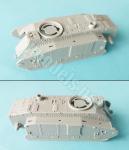
El casco está moldeado casi en su totalidad en una sola pieza fina que muestra con gran nitidez el remachado, rejillas de ventilación, la puerta de acceso al vehículo, el protector de la base de la antena, el anillo de la torre, los expulsores de barro del tren de rodaje, los puntos de fijación del gato para reparar las cadenas o el blindaje del puesto de conductor. Precisamente el visor frontal del conductor es lo menos logrado porque aparece en posición cerrada y con menos definición en el detalle.
Esta pieza se complementa con el suelo separado, que está unido a la base de la cubierta trasera de la transmisión y por delante a la zona inferior del casco, dejando un hueco para el cañón de 75 mm. Lo único que hay que montar en el interior es precisamente el afuste del cañón, compuesto de dos mamparos moldeados con los muñones para insertar la base del arma unida al tubo, horadado en su boca. El mamparo derecho está detallado por fuera y contiene el eje de la rueda tensora. Hay otro panel similar con el eje de la rueda en el lado opuesto. El mantelete del cañón es fino y viene aparte.
La zona trasera del casco posee cuatro planchas que tapan la abertura del blindaje de la suspensión. Sobre este blindaje se añaden cuatro piezas a cada lado con tramos de raíles para guiar las cadenas.
Los guardabarros tienen dos opciones muy parecidas que las instrucciones diferencian como “early” y “late”, lo mismo que los escapes. Las piezas muestran marcas negativas de eyector en el lado inferior que serán imperceptibles y son un poco gruesos para la escala, pero este detalle tampoco se notará por los bordes externos achaflanados.
La zona frontal del casco está detallada con el faro, cuya lente no se aprecia por el protector cerrado, y dos enganches, uno de ellos unido al casco y el otro a la plancha exterior empleada para montar el cañón. La parte trasera también cuenta con enganches dobles, en este caso pegados al suelo del carro. La plancha trasera que cubre la transmisión carece de los enganches de las gruesas y largas cadenas de remolque que se aprecian en las fotos. Sin duda la maqueta mejorará mucho si se le añaden estas cadenas.
La parte superior del casco cuenta con piezas que simulan el raíl situado tras la torre, diversas herramientas de moldeado nítido con sus enganches y la base de la antena bien definida. Los escapes son alternativos, como he dicho, y vienen de una sola pieza unidos a los protectores y con las boquillas de salida aplanadas de tamaño y aspecto diferente. El modelo inicial las tiene más grandes y orientadas hacia abajo (aunque muchos B1 bis también las llevaban orientadas hacia la parte interna), mientras que el modelo final las tiene de menor tamaño, rectas y situadas hacia detrás.
Echando un vistazo a las variadas fotos que nos han quedado de los carros incluidos en esta caja se aprecia claramente que «Bourrasque» llevaba guardabarros iniciales y escapes con salidas más grandes. Las fotos de «Vercigétorix» no permiten distinguir qué configuración tenía. Un lado de la caja lo muestra con escapes de salidas grandes.
Tren de rodaje y cadenas
Pese a su sencillez, el tren de rodaje tiene buen aspecto. Las ruedas tractoras y tensoras están separadas en dos piezas con detalle sobre las dos caras. Las tractoras muestran los dientes adecuadamente perfilados.
Las ruedas del tren de rodaje están unidas en una pieza y montadas en soportes longitudinales. Trumpeter ha capturado bien la altura distinta sobre el suelo de la primera y última rueda de cada lado y lo ha plasmado con acierto. Las dos piezas van pegadas sobre la plancha inferior del casco, quedando bien asentadas bajo la maqueta.
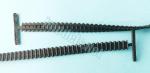
Las cadenas son otro cantar. Están fabricadas en dos tramos de vinilo cuyos extremos se abrochan con vástagos. Los eslabones están limpios de marcas por ambas caras y las bisagras entre eslabones en la parte interna están decentemente reproducidos, lo mismo que la cara externa de cada eslabón.
Las instrucciones nos indican que se pueden montar con pegamento normal. Esto siempre hay que ponerlo en duda incluso con algunas cadenas de plástico, más aún cuando son de vinilo. El modelista precavido sabrá a qué atenerse. Ciertamente Trumpeter debería actualizarse un poco y proporcionar las cadenas en tramos y eslabones.
Torre
La torre tiene la base, la cúpula del jefe de carro y el cañón separados. En la cara posterior la escotilla de recarga de munición está más bien sugerida que reproducida y lo mismo sucede con el visor de la cúpula, sin embargo las ranuras de visión de los lados son más nítidas y muestran la forma correcta de este modelo de torre. Los diminutos ganchos de izado vienen aparte.
El cañón está unido a un rodillo con pequeños muñones que sirve para moverlo. El arma se introduce en la plancha situada tras el mantelete, moldeada también con el afuste de la ametralladora coaxial. Los manteletes del armamento vienen separados y se pegan por fuera.
Calcas
La hoja tiene un tamaño pequeño. Contiene insignias de unidad, nombres de carros y escarapelas francesas de dos tamaños con un aspecto fino y muy brillante. Los motivos carecen de exceso de soporte. Desafortunadamente, los círculos de las escarapelas están descentrados, especialmente en las más pequeñas.
Instrucciones
Están impresas en blanco y negro en un folleto doblado de ocho páginas que contiene un plano numerado de piezas, 15 capítulos de montaje, una página de perfiles y una tabla de colores con pinturas equivalentes de Mr Hobby, Vallejo, Model Master, Tamiya y Humbrol.
Las secuencias de montaje son claras y los esquemas de camuflaje están bien elegidos por su diferencia. ”Bourrasque” luce un camuflaje bicolor (arena y verde claro, por denominarlos de forma sencilla) aplicado horizontalmente en bandas irregulares sobre los lados y terciado sobre la parte superior. Los bordes entre colores están difuminados. Sin embargo, ”Vercingétorix” lleva un esquema tricolor (verde, marrón rojizo y arena) más irregular con líneas negras delimitando las manchas.
Los perfiles muestran cuatro vistas del primer carro y sólo una del segundo, pero los lados de la caja completan en color el resto de vistas ausentes en el folleto.
Valoración
Hace años monté el KV-1 de Trumpeter en esta escala. Realmente disfruté el montaje, que fue sencillo, rápido y nada dificultoso. Sin embargo, las cadenas dieron bastante lata para montarlas al venir, además, dobladas. Intuyo que el montaje de este Char B1 bis no va a ser muy diferente. Es claro que las cadenas, aunque bien detalladas, desmerecen del resto de esta maqueta, pensada para resultar fácil, rápida de armar y con un detalle bastante notable en su mayor parte.
Las opciones de pintura me parecen acertadas en la variedad de esquemas de camuflaje, que muestra casi todos los colores distintos y patrones diversos.
Este voluminoso y un tanto desmañado carro de combate de aspecto retro puede resultar una opción muy sugerente para los aficionados a la escala.◊


The kit
Trumpeter has been reboxing this Char B1 bis unchanged for many years, although it’s strange that the manufacturer hasn’t given this tooling more chances with other German versions as they did with their KV-1 and -2 kits. In the case of the B1, for example, the standard Panzerkampfwagen B-2 740(f), the flamethrower version (Flammwagen auf Panzerkampfwagen B-2(f)), and the self-propelled gun 10.5 cm leFH18/3 (Sf) auf Geschützwagen B-2(f) have all been left out.
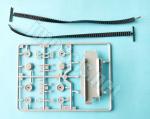
This boxing contains the separate hull, three sprues of parts, two lengths of tracks, the decals, and the instructions. Parts are very well and cleanly moulded. Only minimal flash is present on a few parts and there are ejector pips on some others. These are tricky to clean up as they are moulded on very thin pieces.
Part count is not high, partly because the hull is mostly provided in a single piece, and therefore assembly is presumably quite simple. Also influential is the fact that the kit has no interior, except for the 75 mm gun mount.
The kit offers the choice for two types of fenders and exhausts. Trumpeter intended to capture very specific differences that these tanks had as each manufacturer completed the production batch with details of their own design and also because many B1s were upgraded to the B1 bis standard with improved armour as well as the introduction of the B1 bis APX-4 turret and the long-barreled SA 35 gun. It’s sometimes difficult to distinguish the modified early B1 from a B1 bis. The latter had slightly wider tracks and fenders, as well as more evident armour plating around the 75 mm gun and driver’s sight. The turrets were very similar, but the APX 4 turret of the bis model was distinguished by the less prominent side slits on the turret.
Hull
The hull is moulded in a single, thin piece, clearly showing the riveting, ventilation grilles, vehicle access door, antenna base protector, turret ring, undercarriage mud chutes, jack attachment points for track repairs, and the armour plates protecting the driver. However, the driver’s front visor is moulded closed and detail is not very sharp.
This piece is supplemented by the separate floor, which is attached to the base of the rear transmission cover and, at the front, to the lower hull, leaving a gap for the 75 mm gun. The only thing to add inside the hull is the gun mount, consisting of two bulkheads with trunnions for inserting the gun base, which includes the barrel. This shows the muzzle open. The right bulkhead is detailed on the outside and contains the idler wheel axle. There is a similar piece with the wheel axle on the opposite hull side. The gun mantlet is thin and comes separately.
The rear hull has four plates covering gaps in the suspension armour. Four small lenghs of rails to guide the tracks are also added on the suspension plating.
The fenders have two very similar options that the instructions differentiate as early and late, and the same happens with the exhausts. The fenders are a bit thick and show negative ejector marks on the underside, but this will not be noticeable due to the chamfered edges.
The front hull is detailed with the headlight, with the lens hidden by the protecting lid, and two towing hooks, one moulded with the hull piece and the other to the outer plate needed to build the gun. The rear side also has double hooks attached to the hull floor. The rear plate covering the transmission lacks the hooks and the thick and long towing chains the B1s carried. The kit will be greatly enhanced if these chains are added.
The upper hull features pieces simulating the rail located behind the turret, a set of sharply moulded tools with their clamps, and a well-defined antenna insulator. The exhausts are alternative, as mentioned, and come in a single piece attached to the guards with flattened outlet nozzles of different sizes and shapes. The early type has larger, downward-facing nozzles (although many B1 bis also had them folded horizontally), while the late type has smaller, straight, and rearward-facing nozzles.
Checking images of the real tanks portrayed in this kit, it’s clear that Bourrasque had the original fenders and exhausts with larger nozzles. The photos of Vercigétorix don’t allow us to know what configuration it had. One of the box sides shows it with large exhaust nozzles too.
Running gear and tracks
Despite its simplicity, the undercarriage looks fine. The sprocket and idler wheels are separated into two pieces detailed on both sides. The sprockets show appropriate sharp teeth.
The undercarriage wheels are moulded as a single piece in longitudinal rows. Trumpeter has captured the different heights above the ground of the first and last wheels on each side and has rendered them accurately. The two pieces are glued to the lower hull plate, sitting evenly under the hull.
Tracks assembly is a different story. They are made from two sections of vinyl, the ends of which are fastened. The links are clean from marks and well moulded on both sides, with the hinges between links clearly visible.
The instructions say they can be assembled with ordinary glue. If this is open to doubt in the case of some plastic tracks, it is definitely questionable when they are vinyl. The cautious modeler will know what to expect. Trumpeter should certainly update a bit and provide lengths and links in their 1/72 kits.
Turret
The turret has a separate base, commander’s cupola, and gun. On the rear side, the ammo reloading hatch is suggested rather than reproduced, as is the cupola’s visor. However, the vision slits on the sides are sharper and show the correct shape for this turret. The tiny lifting hooks also come as separate pieces.
The gun is attached to a roller with small trunnions that allow to move it. The gun is inserted into the plate behind the mantlet, also moulded with the coaxial machine gun mount. The armament mantlets are separate and glued from the outside.
Decals
The small sheet contains unit markings, tank nicknames, and French roundels in two sizes with a fine, very glossy appearance and not too much carrier film around the edges. The items lack excess support. Unfortunately, the roundels are clearly off-centered, especially the smaller ones.
Instructions
They are printed in black and white in an eight-page folded leaflet containing a numbered parts plan, 15 assembly chapters, a page of profiles, and a color chart with matches in Mr. Hobby, Vallejo, Model Master, Tamiya, and Humbrol paints.
Assembly sequences are clear, and camouflage schemes are well-chosen for their variety. Bourrasque sports a two-color camouflage pattern (sand and light green, to put it simply) applied horizontally in irregular bands on the sides and layered across the top. The borders between colors are blurred. However, Vercingetorix shows an irregular patchy tricolor pattern (green, reddish brown, and sand) with black lines outlining the spots.
The profiles show four views of the first tank and only one of the second, but the sides of the box supplement the missing views in the instructions.
Conclusion
Years ago I built the Trumpeter 1/72 KV-1 kit. I really enjoyed the assembly, which was simple, quick, and easy. However, the tracks were quite a pain to assemble, as they were also bent. I suspect the assembly of this Char B1 bis won’t be much different. It’s clear that the tracks, though well-detailed, detract from the rest of this kit, which is designed to be an straightforward build with quite remarkable detail for the most part.
I think the paint options are attractive, showing some variety in the camouflage schemes with different colors and patterns.
This bulky and somewhat clumsy, old-fashioned looking tank can prove to be a very attractive choice for the small scale AFV modeller.◊
Publicado – Published: 5 / 2025
©www.jmodels.net
 jmodels.net
Debe estar conectado para enviar un comentario.