
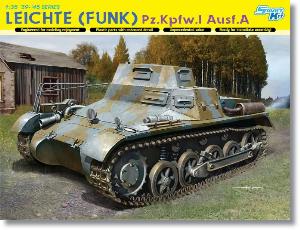
De un vistazo – Quick look
MATERIAL Y PIEZAS
MEDIA & PARTS:
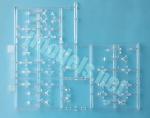
- Plástico inyectado (307 piezas + Magic Tracks 192 piezas), plástico transparente (39 piezas), fotograbado (44 piezas).
- Injected plastic (307 parts + Magic Tracks 192 parts), clear plastic (39 parts), photo-etched (44 parts).
CALCAS – DECALS:
- Cruces alemanas y marcas tácticas. Apariencia fina. Bien impresas.
- German crosses and tactical markings. Apparently thin. Well printed.
OPCIONES – OPTIONS:
- Leichte (Funk) Pz.Kpfw. I Ausf. A. Unidentified unit. Germany 1938.
- Leichte (Funk) Pz.Kpfw. I Ausf. A. Unidentified unit. Germany 1939.
- Leichte (Funk) Pz.Kpfw. I Ausf. A. 1st Panzer Division. Germany 1935.
INSTRUCCIONES – INSTRUCTIONS:
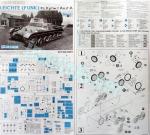
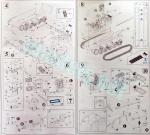
- Folleto doblado de 8 páginas impreso en blanco y negro. Contiene plano numerado de piezas, una tabla de colores con equivalencias en pinturas de varias marcas, 17 secuencias de montaje y una página de perfiles. Claras.
- 8-page folded brochure printed in black and white. It shows a numbered parts plan, a color chart with matches in different paint ranges, 17 assembly steps and a page of profiles. Clear.
LO MEJOR – THE BEST:
- Molde limpio. Magnífico detalle interior y exterior.
- Clean tool. Outstanding internal and external detail.
LO PEOR – THE WORST:
- Ausencia de motor y de algún pequeño detalle interno. Magic Tracks (según preferencias).
- Lack of engine and some small interior detail. Magic Tracks (depending on preference).
VALORACIÓN – CONCLUSION:
- Magnífica reproducción de una variante menor del Panzer I a la que prácticamente le falta el motor para ser completa. Muy recomendable a modelistas de nivel medio en adelante.
- A really nice rendition of a minor variant in the Panzer I family, which only needs the engine to be fully rounded off. Eagerly recommended to modellers from standard skills onwards.

La maqueta
Esta es una maqueta que hemos visto antes por separado en otras versiones y que Dragón ha combinado con acierto para traernos este modelo muy inusual del Panzer I. Que recuerde, es la primera vez que la marca dedica una edición a este modelo del conocido carro alemán y no creo deban faltarle muchas más para tener todas las versiones basadas en el Ausf. A o B, más allá del Munitionschlepper (transporte de municiones) y del Breda.
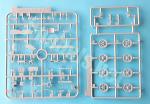
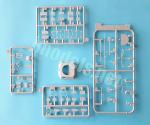
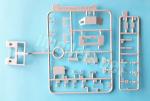
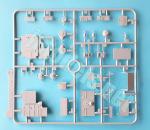
La maqueta comprende 13 bastidores de diferente tamaño más la parte inferior del casco aparte, un bastidor transparente, dos planchas pequeñas de fotograbados, varias arandelas del mismo material para detallar las ruedas, 192 eslabones para las cadenas, que son del tipo Magic Tracks tan empleado por la marca, la hoja de calcas y las instrucciones. Puede parecer irónico todo este despiece para un carro tan pequeño, pero el motivo es que la maqueta contiene el interior casi completo representado en la transmisión y la cámara de combate. El compartimento del motor viene vacío. Como es de esperar en un molde compartido por varias versiones, también hay multitud de piezas que nos sobrarán al final del montaje.
Las piezas están limpias de rebabas y muy bien moldeadas. No hay marcas de eyector visibles ni líneas de molde, ni siquiera en las ruedas, que son tan proclives a llevarlas. Salvo que el ajuste de las piezas dicte lo contrario, el modelista no va a emplear mucho tiempo limpiando piezas, desde luego. Sí hay que cuidar la eliminación de cilindros de eyector en algunas piezas transparentes por ser muy frágiles.
El detalle en general es excelente y muestra gran nitidez, sin necesidad de recurrir a un montón de fotograbados para afinar detalles. Como he mencionado, el interior viene completo salvo el motor, pero Dragón casi no ha hecho concesiones por más que gran parte de él no se apreciará. Por otro lado, no puede afirmarse que esta maqueta sea del todo novedosa, si no es por el tema elegido y la presencia de la torre y la superestructura específica de esta variante, por ello los que ya conozcan otras maquetas del Panzer I de Dragón sabrán lo mucho que puede esperarse de esta.
El modelo representado en la maqueta es un Kleiner Panzerbefehlswagen (Carro de Mando) basado en el chasis del Panzer I Ausf. A de la segunda serie de fabricación (2.Serie/La.S.) y designado 1 Kl A. Sólo se suministraron 15 unidades a partir de 1935 que se caracterizaban por llevar una torreta fija sin armamento a la derecha del casco en lugar de la típica torre con dos ametralladoras. En su interior solía haber dos radios, un receptor Fu2 y un transmisor/receptor Fu5. Como vehículo de mando, estaba destinado a los comandantes de compañía y por ello se le conoció inicialmente como “Kompanie Chefpanzer”.
Parte inferior del casco e interior
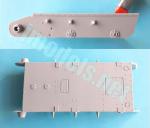
La parte inferior del casco está moldeada en una pieza sin la plancha frontal ni trasera. El detalle externo en el suelo muestra varios accesos redondos y dos planchas remachadas con finura. Los lados tienen las superficies remachadas y contienen la cubierta de la transmisión de las ruedas tractoras y los ejes de los rodillos de retorno.
La plancha anterior muestra pequeños remaches y las cubiertas frontales de la transmisión bien perfiladas, mientras que la trasera contiene un enganche, la luz de freno y lo que parece el taco del gato en su soporte.
El suelo interior está dividido en dos secciones. La trasera lleva varios paneles grabados sobre el suelo y el panel del motor tras ella. El panel muestra un estante con las máscaras antigás, la caja del botiquín y el la parte inferior la salida del eje de la transmisión desde el motor. El estante de las radios va colocado en la parte derecha por delante del panel del motor. Cada radio está dividida en varias piezas con el frontal bien detallado y cuenta con una batería también formada por varias piezas. El estante está detallado con un tablero auxiliar con soporte y unos finos auriculares. Hay también una segunda batería en el lado derecho del suelo y un soporte para las banderas de señales, que se añade tras pegar el suelo al casco.
La sección delantera del suelo contiene el puesto de conducción y la transmisión. El lugar del conductor cuenta con un asiento, las palancas y un suelo antideslizante con tres pedales, todo ello muy bien reproducido. El panel de indicadores situado frente al conductor no está incluido. La transmisión está compuesta de catorce elementos y viene muy bien detallada. Sin embargo, al pegarla sobre el suelo hay que tener cuidado de que las cubiertas internas en los extremos de los ejes coincidan con las ruedas tractoras en la parte externa. En este punto el modelista quizá tenga que decidir antes del montaje si va a colocar la plancha frontal inferior del casco antes de pegar el suelo al chasis para facilitar esta alineación. El montaje del interior no debe resultar difícil, pero las instrucciones no son muy claras en la situación de la transmisión y el panel del motor.
Suspensión y tren de rodaje
El tren de rodaje comprende una rueda tractora, una tensora, cuatro ruedas y tres rodillos de retorno. El conjunto representa perfectamente el de un Panzer I inicial y posee un gran nivel de detalle. Las tractoras vienen de una pieza con los dientes y el detalle del buje bien perfilado. La primera rueda de apoyo posee su propio brazo de suspensión y un amortiguador excelente para ser de plástico. El carretón central lleva dos ruedas unidas en medio de los brazos con la amortiguación de ballesta por encima del conjunto, como es propio del Ausf. A. La última rueda va unida mediante una suspensión similar a la rueda tensora, quedando esta al nivel del suelo. Las ruedas de apoyo y la tensora están correctamente detalladas con aros de fotograbado que representan el reborde de acero necesario para vulcanizar las bandas de caucho directamente sobre las ruedas. Las planchas protectoras exteriores de los dos últimos conjuntos de ruedas vienen separadas. La maqueta incluye las rueda originales del molde que son casi idénticas, pero algo más gruesas y con reborde entre la rueda y la banda de caucho.
Las cadenas agradarán a unos y horrorizarán a otros sin término medio. Como en otras ediciones de este carro, Dragón las proporciona como Magic Tracks, con 89 eslabones sueltos por lado. Las piezas están bien fabricadas y limpias, listas para usar, pero hay que manipularlas con cuidado al ser muy frágiles. Sin embargo, los dientes de guía no son los correctos para este modelo porque vienen sólidos en lugar de huecos. Lo cierto es que, de haberse moldeado así, las piezas serían aún más delicadas. No creo que las denominadas de plástico DS sean una alternativa mucho mejor, ya que, de estar bien reproducidas, si tuviésemos que estirarlas un poco, es muy probable que se partiesen igualmente. Para los más pudientes siempre queda la alternativa de un juego de cadenas de metal, pero no se librarán del tedio de unir los minúsculos eslabones.
Guardabarros
Están separados en tres tramos y muestran una finura adecuada al plástico. La sección plana central tiene el suelo antideslizante muy bien detallado y hay que taladrar varios agujeros para instalar el equipo estibado sobre ella. El guardabarros derecho lleva un faro, las antenas y los repuestos de las radios y el gato, todos ellos formados por varias piezas. El gato está complementado con una cizalla que es opcional según las instrucciones. El izquierdo muestra varias herramientas moldeadas con sus enganches, un extintor y un faro idéntico.
En la parte posterior hay que situar los escapes, que vienen representados con dos tubos de salida unidos a los silenciadores en mitades y a los extremos. Llevan las cinchas y los protectores de fotograbado. Los extremos están correctamente aplanados y huecos. Las bisagras de la sección anterior de los guardabarros están separadas, lo mismo que los soportes de las secciones traseras.
Superestructura y torre
Ambas son diferentes a las del Ausf. A de serie, lo que no significa que Dragón no haya aprovechado piezas de sus otras maquetas. La plancha del glacis está detallada con el panel de acceso a la transmisión separado y el tubo de salida de humos del compartimento, un faro con lente transparente, los enganches del cable de arrastre, que no incluye la maqueta, y el claxon. La presencia del cable no es imprescindible porque las fotos de este vehículo lo muestran con y sin él.
La superestructura delantera es de una pieza unida a la plancha frontal con el techo en una pieza exenta. Los laterales y la plancha trasera poseen las caras externas en piezas superpuestas. Todos los visores y escotillas pueden colocarse abiertos, salvo la mirilla de la parte posterior y una de las aberturas que hay que tapar. La parte interna de los visores está detallada con una pieza transparente y con el sistema de apertura por separado. La escotilla del conductor incluye los pequeños cierres aparte en el interior.
La plancha frontal contiene en su lado interno el estante de los auriculares, una tercera radio de una pieza con el soporte de fotograbado y un compartimento de estiba. El panel de indicadores situado frente al conductor no está incluido.
La cubierta del motor tiene los accesos y las tapas blindadas de relleno de combustible separadas. La rejilla trasera es fina y está bien detallada con bisagras. Las salidas de refrigeración posteriores están representadas con las rejillas de fotograbado y dos piezas internas para evitar que se aprecie el vacío que deja la ausencia del motor. La maqueta cuenta también con el denominado Nebelkerzenabwurfvorrichtung, o soporte para lanzar granadas fumígeras, que aparece opcional en las instrucciones, aunque creo que no sería muy pertinente en esta maqueta.
La torre es de una pieza pegada directamente sobre el anillo de la torre original del Ausf. A. y tiene la escotilla aparte detallada con el tope de apertura de goma sobre el techo. Acertadamente, Dragón no ha incluido visores internos, sino sólo las tapas planas detalladas con mirillas que, según aparece en las fotos de este vehículo no se abrían. Las mirillas están detalladas con deflectores del agua de lluvia. La parte trasera de la torre lleva el soporte y la antena separados con el sistema de plegado en el interior de la torre.
Calcas
La pequeña hoja muestra cruces alemanas y marcas tácticas cuya apariencia es fina. Los motivos están bien impresos. Dragón se ha molestado en incluir este hoja, pese a que las instrucciones no indican que ninguno de los carros de los perfiles usara marca o numeral alguno.
Instrucciones
El habitual folleto alargado del fabricante contiene en esta ocasión ocho páginas impresas en blanco y negro. Muestra un plano numerado de piezas, una tabla de colores con equivalencias de pinturas de Gunze Sangyo y Model Master, 17 secuencias de montaje y una página de perfiles. Los pasos de montaje son claros en general, con la salvedad del interior del vehículo, donde falta un poco de concreción en la localización de un par de elementos ya mencionados.
Las opciones de pintura me parecen bien elegidas por su diferencia y además son correctas históricamente, porque representan los camuflajes empleados por el Panzer I en los años finales de la década de 1930. Por un lado tenemos un carro pintado con el camuflaje marrón y gris, otro carro luce el clásico gris Panzer y el último un camuflaje de tres colores. Este último no tiene relación con el usado al final de la Guerra Mundial en otros vehículos alemanes.
Valoración
Considerando las anteriores que Dragón ha hecho del Panzer I, esta maqueta no podía dejar a la marca en evidencia y vuelve a ser una gran reproducción del vehículo original con un magnífico detalle y un montaje que no debe tener dificultades, salvo en las cadenas debido a su tamaño y fragilidad.
No hay duda de que pese a ser una versión ciertamente escasa en número, ha sido bien estudiada por el fabricante y el resultado final debe asemejarse bastante al vehículo real. La falta de un motor y de algún elemento interno es lo único que la aleja un tanto de ese nivel de semejanza.
Muy recomendable a modelistas con un nivel de destreza medio y avanzado.◊









The kit
This is a kit that we have seen before in other versions. Dragon have successfully combined them to bring us this very unusual variant of the Panzer I. As far as I remember, it is the first time the company releases this specific tank and by now there should not be many other members of the Panzer I family that have not been kitted by the company, leaving aside the Munitionschlepper (munitions transport) and the Breda.
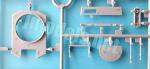
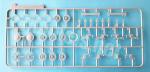
Inside the box are 13 sprues of different sizes plus the lower part of the hull separately, a clear sprue, two small photo-etched frets, several washers of the same material to detail the wheels, 192 links for the tracks, which are of the Magic Tracks type, the decal sheet and the instructions. Parts count may seem too high for such a small tank, but the reason is that the kit comes with an almost complete interior represented in the transmission and the fighting compartment. The engine compartment is empty. As you would expect from a tool shared by several versions, there are also plenty of parts that will not be used at the end of assembly.
Parts are clean from flash and nicely moulded. There are no visible ejector pin marks or seam lines, not even on the roadwheels, which are so prone to have them. Unless the fitting dictates otherwise, the modeller will not spend much time cleaning up parts, but some care is needed when removing the ejector pips present on some clear parts as these are very brittle.
Overall detail is excellent and shows great sharpness, without the need to resort to a lot of photo-etched parts for enhancement. As mentioned, the interior comes almost complete, but Dragon have not compromised detail even though most of it will not be seen. New parts include a new turret and the superstructure specific to this variant, so those who already know other Panzer I kits from Dragon will know how much can be expected from this one.
The variant the kit renders is a Kleiner Panzerbefehlswagen (Command Tank) based on the chassis of the Panzer I Ausf. A of the second production series (2.Serie/La.S.) designated 1 Kl A. Only 15 units were produced from 1935 onwards with a fixed, unarmed turret on the right of the superstructure instead of the standard turret with two machine guns. The tank usually had two radios, a Fu2 receiver and a Fu5 transmitter/receiver. As a command vehicle, it was intended for company commanders and for this reason it was initially known as “Kompanie Chefpanzer”.
Lower hull and interior
The lower hull is moulded in one piece without the front and rear plates. External detail on the floor shows several rounded accesses and two finely riveted hatches. The sides have riveted surfaces and contain the final drive cover and return roller axles.
The front plate shows small rivets and nicely shaped front transmission covers, while the rear plate contains a hitch, the brake light and what seems a jack block or tool stowage.
The fighting compartment floor is divided into two pieces. The rear piece has several engraved panels and the engine firewall behind it. This includes a shelf with gas masks, a first aid kit box and the opening for the drive shaft coming from the engine compartment. The radio rack is fitted on the right side forward of the engine panel. The two radios are broken down in several pieces with the fronts showing nice raised detail. They are complemented by a battery, also made up of several pieces. The plastic rack is detailed with a small writing board and headphones. There is also a second battery on the right side of the floor and a rack for the signal flags, which is added after gluing the floor to the hull.
The forward floor piece contains the driver’s seat, the controls and the transmission. The driver’s seat, levers and a small non-slip floor with three separate pedals are all finely rendered as well as the transmission, this compring no less than fourteen pieces. Unfortunately, Dragon have not provided the driver’s dashboard. When gluing the transmission to the floor, care is needed to match the final drives covers to their counterparts moulded on the outside of the hull. Before building the hull tub the modeller may need to decide whether to fit the lower front hull plate before gluing the floor to the chassis to facilitate this alignment. Assembly of the interior should not be difficult, but the instructions are not very clear in the assembly of the transmission and engine panel.
Suspension and running gear
The undercarriage comprises a drive wheel, an idler, four roadwheels and three return rollers per side. The layout matches that of an early Panzer I quite well and the level of detail is high. The drive wheels come in one piece with the teeth and hub detail finely reproduced. The first roadwheel has its own suspension arm and an excellent plastic shock absorber. The centre bogie has two wheels attached between the arms with the leaf spring suspension above the assembly, as is typical of the Ausf. A. The last wheel is attached by a similar suspension to the idler wheel, with the latter being at ground level. The roadwheels and the idler are detailed with photo-etched rings representing the steel flange needed to vulcanize the rubber treads directly onto the wheels. The outer protecting plates of the last two wheel assemblies are separate. The kit includes the Panzer I kit standard wheels which are almost identical, but a fraction thicker and moulded with a wider flange between the wheel and the rubber tread.
The tracks will please some and horrify others without a nobody’s land. As with other releases of this kit, Dragon provides them as Magic Tracks, with 89 loose links per side. Pieces are correctly moulded and clean, just ready to use, but they should be handled with care as they are very brittle. However, the guide horns are not the correct ones for this variant because they come solid instead of hollow. In fact, if they had been molded like this, pieces would have become even more delicate. I don’t think an alternative set of DS plastic tracks is a much better choice since the thin links would be likely to break with just stretching the tracks a little. For the more opulent modeller, there is always the alternative of a set of metal tracks, but they will not save him from the tedium of gluing the tiny links.
Fenders
They are separated into three lengths looking reasonably thin for plastic. The central flat length has a well detailed non-slip floor and several holes are drilled through the piece to install the equipment stowed on it. The right fender has a headlight, the tubular antenna, antenna spares and a jack, all of them multi-part assemblies. The jack is complemented by a wire cutter which is optional according to the instructions. The left mudguard shows several tools molded with the clamps, a fire extinguisher and an identical headlight.
The exhausts on the rear are represented by two outlet pipes attached to the mufflers, moulded in halves, and the tail pipes. The mufflers are detailed with photo-etched straps and grilles. Tail pipes are correctly flattened and hollowed. The front fenders hinges and the rear fenders braces are separate pieces.
Superstructure and turret
Both are different from the standard Ausf. A tank but this does not mean Dragon have not used some parts from other kits. The glacis plate is detailed with the separate transmission cover and the transmission outlet pipe, a headlight with a clear lens, the hooks for the towing cable, which is not included, and the horn. The cable is not essential because most pictures of this vehicle show this variant without it.
The front superstructure is in one piece joined to the front plate with the roof separately. The sides and the rear plate have superimposed pieces. All the hatches can be showed open, except for the rear one that needs to be covered. The glass blocks come as clear pieces and have separate opening handles. The driver’s hatch includes separate small locks on the inside. The inner front side shows the headphones holder, a third one-piece radio with a photo-etched rack and a stowage compartment.
The engine deck has separate access hatches and fuel filler covers. The rear grille is thin and detailed with sharp hinges. The rear cooling outlets are provided with photo-etched grilles to represent the mesh and two internal pieces to fill the void left by the lack of the engine. The kit also icludes the so-called Nebelkerzenabwurfvorrichtung, or smoke grenade launcher, which is optional in the instructions, but I think it is not suitable for this variant as pictures do not show it installed.
The turret is one piece glued onto the standard Ausf. A turret ring and has a separate hatch detailed with the rubber opening stop on the roof. Accurately, Dragon have not included the vision blocks, but only the flat ports provided with slits which, as shown in pictures of this vehicle, could not be opened. The ports are detailed with rain channels above them. The turret rear includes the antenna and the base with the folding gear inside the turret.
Decals
A small sheet shows German crosses and tactical markings which look fine and well printed. Dragon have bothered to include this sheet, even though the instructions do not show that any of the tanks in the profiles used any markings or numerals.
Instructions
They are printed in an 8-page black and white brochure. It shows a numbered parts plan, a colour chart with Gunze Sangyo and Model Master paint matches, 17 assembly chapters and a page of profiles. Assembly steps are clear in general, with the exception of a couple of interior pieces which are not clearly shown, as mentioned above.
Paint choices seem well chosen for their difference and are also historically correct as they represent the range of camouflages used by the Panzer I in the late 1930s. On the one hand we have a tank painted in brown and grey camouflage, another tank sports the classic Panzer grey and the last choice a three-colour camouflage. This latter is similar, but not the same, as the standard camouflage used on other German vehicles in the late war period.
Conclusion
Considering the previous Panzer I kits Dragon have released, this one could not let us down and is once again a great rendition of the vehicle with outstanding detail. Assembly should not be difficult, except for the tracks due to their size and fragility.
Unquestionably, the tank has been thoroughly studied by Dragon despite not being a very popular variant and the finished model should be quite similar to the real vehicle. Only the lack of an engine and a few internal elements prevents the kit to be a still nicer replica.
Highly recommended to modelers with medium and advanced modelling skills.◊
Publicado – Published: 8 / 2024
©www.jmodels.net
 jmodels.net
Debe estar conectado para enviar un comentario.