
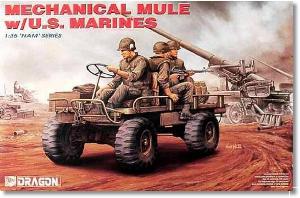
De un vistazo – Quick look
MATERIAL Y PIEZAS
MEDIA & PARTS:
- Plástico inyectado (59 piezas). Incluye 4 figuras (65 piezas).
- Injected plastic (59 parts). Four figures included (65 parts).
CALCAS – DECALS:
- No tiene.
- Not included.
OPCIONES – OPTIONS:
- M274 Mechanical Mule. Vietnam War.
INSTRUCCIONES – INSTRUCTIONS:
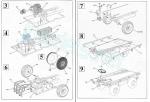
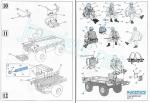
- Folleto doblado de 6 páginas impreso en blanco, negro y azul. Contiene un plano numerado de piezas, una tabla de colores con equivalencias de pinturas de Gunze Sangyo e Italeri y 12 capítulos de montaje.
- 6-page folded brochure printed in black, white and blue. It contains a numbered parts plan, a table of colors with Gunze Sangyo and Italeri paint matches and 12 assembly chapters.
LO MEJOR – THE BEST:
- Buena fidelidad general con el vehículo real. Montaje sencillo. Figuras.
- Nice rendition of the real vehicle. Easy build. Figures.
LO PEOR – THE WORST:
- Detalles menores omitidos. Carga escasa. Pequeña desproporción entre las figuras (ver texto).
- Some minor detail missing. Scarce load. Slight disproportion between the figures (see text).
VALORACIÓN – CONCLUSION:
- Bien ejecutada, salvo detalles menores, sencilla de armar y bien complementada de figuras. Muy recomendable a los incondicionales de esta escala y tema.
- Well executed, save for minor elements, easy to assemble, and well complemented with figures. Highly recommended to fans of this scale and topic.

La maqueta
Cualquier modelista aficionado a la Guerra de Vietnam conoce este pequeño vehículo y, si es seguidor de la escala, también esta maqueta lanzada por vez primera a finales de los años 90 junto con otra caja denominada M274 Mule w/106mm R.R. & Crew (Hue City 1968) (Dragon 3315) que, como indica su nombre, lleva un cañón sin retroceso y dos tripulantes en lugar de los cuatro de esta edición.
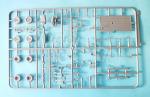
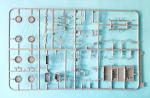
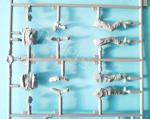
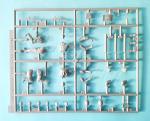
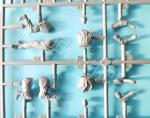
La caja contiene cuatro bastidores, la mitad de ellos contienen los elementos del vehículo y la otra mitad el despiece de las figuras, y las instrucciones. No hay calcas, y es comprensible, porque escaso espacio tenía este esqueleto de vehículo para insignias, matrículas o códigos.
El plástico está muy bien moldeado y las piezas muestran en general excelente definición. Sólo hay que destacar algunos nódulos del eyector en ciertas piezas muy finas que necesitarán cuidado al retirarlos.
El montaje de este vehículo con tan escasos elementos es bastante fácil y tampoco tiene alternativas de montaje ni de pintura, por ello no debería durar mucho sobre la mesa del modelista.
Las figuras le dan todo el aliciente al M274 y ciertamente tienen un modelado y complementos notables, aunque parece que Dragón cometió un desliz con la escala sobre el que me extenderé más abajo. La inclusión del conductor y los acompañantes piden una escena y una carga de más enjundia que la parca que se ha incluido en este edición, aunque el modelista siempre puede sacar una mejor de su propio magín.
Reseña
La plataforma del vehículo está realmente bien conseguida, con las superficies antideslizantes reproducidas con gran finura y limpieza por los dos lados. La cara superior muestra la trampilla de acceso al motor. La cara inferior lleva los travesaños moldeados en la pieza, lo que nos permite colocar con sencillez los dos tubos que son en realidad los dos largueros del bastidor y a su vez tomas de aire. Sobre ellos se inserta la transmisión delantera y trasera, con el fino eje y la caja de cambios entre ellas. El lado frontal de la plataforma no muestra el estárter ni el cebador, situados en ese lugar para emplearlos fácilmente cuando el vehículo se conducía desde fuera de la plataforma.
El motor consta de una pieza con un elemento frontal aparte que contiene la cubierta del volante de inercia y el ventilador con la persiana de la toma de aire cerrada. Por lo demás, el motor no es muy destacable, pero se puede decir que da el avío. El escape unido al silenciador y el depósito de combustible, con el tubo de llenado separado, son los siguientes elementos que añadir. El motor está protegido por una delgada estructura tubular de buena factura y en forma de jaula de la que hay que retirar cuidadosamente algunos nódulos de plástico para no partirla. Esta estructura no lleva la sección de malla metálica que suele verse en fotos del vehículo real, aunque se puede simular con fotograbado.
Las ruedas son de plástico separadas en mitades. El dibujo de los neumáticos muestra una definición que compagina bastante bien con el real. La parte exterior de las llantas intenta reproducir los ojales para sujetar el M274 a un palé cuando se lanzaba en paracaídas, pero son muy pequeños y poco evidentes. La cara interna de las llantas tiene dos pequeñas rótulas de la suspensión que permiten encajarlas en los extremos de los ejes colocando la rueda en cualquier ángulo. Este detalle viene como de molde si deseamos exhibir las ruedas con giro para dar más realismo al modelo.
Terminada la parte inferior, el montaje continua con la parte superior delantera, donde se añade un asa, las palancas, la columna de la dirección, unida a un brazo auxiliar, y el volante, todas ellas piezas muy bien definidas. Por delante de ellas y sobresaliendo de la parte delantera del vehículo, hay otra estructura tubular que soporta los pedales y que consta de dos piezas montadas una sobre la otra, más los pedales unidos por un eje. En la pieza superior hay un deflector de lluvia para la toma de aire del motor que en la realidad tiene forma semiesférica y en la maqueta es incorrecto por ser plano y redondo. Este elemento debemos doblarlo para colocarlo en su posición correcta, según las instrucciones. Al hacerlo, partiremos la pieza sin remedio. Tal vez sea mejor cortarla directamente y buscar algo mejor.
A continuación se añaden las barras que rodean la plataforma de carga, despiezadas en dos piezas laterales y una trasera. Esta última incluye lo que parece un catadióptrico.
La única carga de esta Mula Mecánica son tres contenedores de munición (parecen de obús de 105 mm) con dos bases de soporte. Estas bases aparecen también en la maqueta con cañón sin retroceso, pero no así la munición. También encontramos un pequeño bastidor con cuatro contenedores de combustible y los soportes separados que podemos emplear a voluntad.
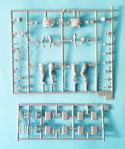
Esta caja trae las dos figuras de marines de la primera edición junto con otras dos nuevas. Las antiguas representan un conductor y un soldado de pie junto al vehículo. Las dos nuevas están sentadas sobre la plataforma. El modelado de todas ellas es excelente, destacando los detalles del uniforme (chalecos, bolsillos, solapas, botas, etc.). Las cabezas y miembros vienen separados del tronco y las caderas están unidas a las piernas. Junto a ellas, Dragón proporciona una buena cantidad de equipo personal como cantimploras, rifles M16, carabinas M2, cascos separados de las cabezas, cuchillos y hasta un transmisor portátil AN/PRC-77 de notable factura.
Aunque las figuras y equipo están bien proporcionados individualmente, las dos figuras de la caja anterior (conductor y soldado de pie) están ligeramente sobreescaladas respecto a las nuevas. Afortunadamente, la diferencia de proporciones no es tan grande para no ser natural, como la que puede haber entre un forzudo Arnold Schwarzenegger y un tipo mediopeo del montón. Supongo que habrá modelistas que prefieran no combinarlas en la misma escena. El problema mayor de estas figuras llega cuando deseamos cambiarles las cabezas o manos por otras de resina, que lógicamente serán de menor tamaño.
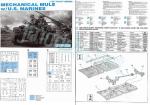
El folleto de instrucciones consta de seis páginas impresas en blanco, negro y azul. Contiene un plano numerado de piezas, una tabla de colores con equivalencias de pinturas de Gunze Sangyo e Italeri y doce capítulos de montaje. En principio, no he detectado errores en las secuencias de montaje ni en la numeración de las piezas, tan frecuentes en Dragón, pero podría haberlos. Los códigos de las pinturas de Italeri no corresponden a los actuales de la marca sino a los de Model Master.
Valoración
Salvo por escasos elementos menores que el modelista puede mejorar sin dificultad, esta es una maqueta bien ejecutada y hasta con cierta riqueza en los detalles para un vehículo tan aparentemente simple. La construcción y pintura no deben tener complicaciones y el complemento de las figuras viene al pelo para poner a esta mula en su papel.
En suma, una pieza muy recomendable a los seguidores de esta escala, con especial encomienda a los adeptos a la Guerra de Vietnam.◊

The kit
Any Vietnam War modeler will recognize this small vehicle, and if he is also a fan of the scale, he will also know this kit, first released in the late 1990s with another box called M274 Mule w/106mm R.R. & Crew (Hue City 1968) (Dragon 3315). As the name suggests, that set includes a recoilless rifle and two crew members instead of the four figures in this release.
The box contains four sprues, half of them with the vehicle parts, and the other half with the figures, along with the instructions. There are no decals, which is understandable, as this simple vehicle had very little space for insignia, license plates, or codes.
Plastic is very well molded, and the parts generally show excellent definition. The only drawback is some plastic nodes on some very thin pieces that will need care when removing them.
Assembling this vehicle with so few parts is quite easy, still more when there are no alternative assembly or painting options, so it shouldn’t last long on the modeler’s bench.
The figures give this M274 its appeal, and they certainly have remarkable sculpting and accessories, although it seems Dragon made a mistake with the scale. I explain this below. The inclusion of the driver and his companions calls for a more substantial load than the meager one included in this boxing, although the modeler can always come up with something better from their own imagination.
Review
The vehicle’s platform is really well done, with the non-slip surfaces reproduced with great precision and cleanliness on both sides. The upper side shows the engraved access hatch to the engine. The lower side has the crossmembers molded on the piece, allowing to easily position the two tubes that are actually two frame long members also used as air intakes. The front and rear transmissions are inserted onto these, with the thin axle and gearbox between them. The front side of the platform doesn’t show the choke and the starter, located there for easy access when the vehicle was driven from outside the platform.
The engine consists of a piece with a separate front section that houses the flywheel cover and the fan with the air intake louvers closed. Otherwise, the engine isn’t particularly remarkable, but it gets the job done. The exhaust, attached to the muffler, and the fuel tank, with its separate fuel filler neck, are the next elements to be attached. The engine is protected by a thin, well-made, cage-like tubular structure. Some plastic nodules must be carefully removed to avoid breaking it. This structure lacks the metal mesh seen in pictures of the real vehicle, although this can be simulated with photo-etched parts.
The wheels are plastic and split into halves. The tire tread pattern is well-defined and matches the real thing quite well. The outer side of the rims attempts to replicate the eyelets used to secure the M274 to a pallet when airdropped, but they are very small and barely visible. The inner side of the rims has two small suspension ball joints that allow them to be fitted to the ends of the axles, positioning the wheel at any angle. This feature is nice if you wish to display the wheels turned for more realism.
With the lower platform completed, assembly continues with the upper front section, where a handle, the levers, steering column (attached to an auxiliary arm), and steering wheel are added. All of them are sharply defined parts. In front of these, protruding from the front of the vehicle, is another tubular structure or basket with the pedals. This is made up of two pieces one on top of the other, plus the pedals connected by an axle. The upper piece includes a rain deflector for the engine air intake, which in reality is hemispherical but incorrectly flat and round in the kit. This element is bent to fit it into its correct position, according to the instructions. Doing so will inevitably break the piece. Perhaps it’s better to simply cut it and find a better replacement. Again, the basket comes with no mesh for the driver’s feet.
Next, the rail assembly surrounding the cargo platform is added, these being broken down into two side and a rear piece. The rear piece includes what appears to be a reflector.
The cargo this Mechanical Mule carries is three ammo containers (they seem to be for 105mm howitzers) with two bases. These bases also appear on the recoilless rifle kit, but not the ammunition. We also find a small sprue with four fuel jerrycans and separate holders that can be used as needed.
This box contains the two Marine figures from the first boxing, along with two new ones. The older figures depict a driver and a soldier standing next to the vehicle. The two new ones are seated on the platform. The sculpting of all of them is excellent, with particular attention to detail in the uniforms (vests, pockets, lapels, boots, etc.). The heads and limbs are separate from the torso, and the hips are attached to the legs. Along with these, Dragon provides a good amount of personal equipment such as canteens, M16 rifles, M2 carbines, separate helmets, knives, and even a remarkably well-made AN/PRC-77 portable transmitter.
Although the figures and equipment are individually well-proportioned, the two figures from the previous box (driver and standing soldier) are slightly overscaled compared to the new ones. Fortunately, the difference in proportions isn’t so great as to look unnatural, like the difference between a muscular Arnold Schwarzenegger and an average-looking guy. I suppose some modelers will prefer not to combine them in the same scene. The biggest problem with these figures arises when we want to replace their heads or hands with resin ones, which will naturally be smaller.
The instruction brochure consists of six pages printed in white, black, and blue. It contains a numbered parts diagram, a color chart with equivalent Gunze Sangyo and Italeri paints, and twelve assembly chapters. After a rough inspection, I don’t detect any mistake in the assembly sequences or the part numbering, which are so common with Dragon kits, but they could be present. The Italeri paint codes don’t correspond to the brand’s current codes but rather to those of Model Master.
Conclusion
Except for a few minor elements that the modeler can easily improve, this is a well-executed kit, even showing a certain richness of detail for such a simple vehicle. Construction and painting shouldn’t have any complications, and the figures are perfect for bringing this mule to life.
In short, a highly recommended kit for 1/35 modelers, with special emphasis on those who are fans of the Vietnam War.◊
Publicado – Published: 5 / 2026
©www.jmodels.net

 jmodels.net
Debe estar conectado para enviar un comentario.