
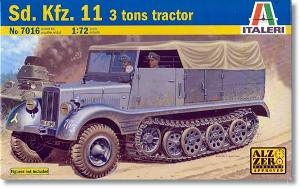
De un vistazo – Quick look
MATERIAL Y PIEZAS
MEDIA & PARTS:
- Plástico inyectado (120 piezas), plástico transparente (1 lámina). Incluye 2 figuras (6 piezas).
- Injected plastic (120 parts), clear plastic (1 sheet). Two figures included (6 parts).
CALCAS – DECALS:
- Impresas por Zanchetti. Varios juegos de matrículas, marcas tácticas y del Afrika Korps con apariencia fina y brillante, nítidas y sin exceso de soporte.
- Printed by Zanchetti. Several number plates, tactical and Afrika Korps markings. Thin, glossy finish and sharp, no excess of carrier film.
OPCIONES – OPTIONS:
- Sd.Kfz. 11. 1ª División Panzer. Kursk (Rusia). 1943.
- Sd.Kfz. 11. 9ª División Panzer. Rusia. 1942.
- Sd.Kfz. 11. Deutsche Afrika Korps. 15ª División Panzer. Norte de África. 1941-42.
- Sd.Kfz. 11. 21ª División Panzer. Normandía (Francia). Junio de 1944.
- Sd.Kfz. 11. 5ª Brigada de Lanzacohetes (Werfer). 71º Regimiento de Lanzacohetes. Zona de Cassino (Italia). Mayo de 1944.
- Sd.Kfz. 11. 116ª División Panzer. Normandía (Francia). Junio de 1944.
- Sd.Kfz. 11. 1st Panzer Division. Kursk (Russia). 1943.
- Sd.Kfz. 11. 9th Panzer Division. Russia. 1942.
- Sd.Kfz. 11. Deutsche Afrika Korps. 15th Panzer Division. North África. 1941-42.
- Sd.Kfz. 11. 21st Panzer Division. Normandy (France). June 1944.
- Sd.Kfz. 11. 5th Werfer Brigade. 71st Werfer Regiment. Cassino Area (Italy). May 1944.
- Sd.Kfz. 11. 116th Panzer Division. Normandy (France). June 1944.
INSTRUCCIONES – INSTRUCTIONS:
- Folleto A5 doblado de 10 páginas impreso en blanco y negro. Contiene una breve referencia histórica sobre el vehículo, un plano de piezas numerado, 8 capítulos de montaje y 3 páginas de perfiles. Las referencias de color pertenecen al código RAL y a la gama de acrílicos de Model Master. La cara trasera de la caja muestra perfiles de tres versiones con las mismas referencias de color.
- 10-page A5 folded brochure printed in black and white. Contains a short historical reference about the half-track, a numbered parts plan, 8 assembly chapters and 3 pages of profiles. Color references are given in the RAL code and Model Master acrylic paint range. The back side of the box shows profiles for 3 of the versions with the same color references.
LO MEJOR – THE BEST:
- Sencillez de montaje. Múltiples posibilidades de pintura.
- Ease of assembly. Varied paint finishes.
LO PEOR – THE WORST:
- Ruedas del tren de rodaje trasero. Detalle interno en las cadenas. Parabrisas.
- Rear running gear wheels. Flat links on the inside of the tracks. Windshield.
VALORACIÓN – CONCLUSION:
- Sin alternativas mucho mejores, tal vez es lo mejor que aún tenemos a esta escala para hacer este vehículo. Apta para diferentes niveles de experiencia y pericia.
- With no better alternative, it still may be the best kit to build this German vehicle in the scale. Quite suitable for modelers with different levels of experience and skill.

La maqueta
A día de hoy aún no tenemos un Sd.Kfz. 11 en la escala 1/72 a la altura de los tiempos modelísticos que corren. Tomando como referencia sólo las marcas más conocidas, la única alternativa a las maquetas de Italeri son las tres de Special Armour, cuyo molde data de 2006. Desgraciadamente, estas maquetas no son sencillas de montar e incluyen unas decepcionantes cadenas de vinilo. La polaca First to Fight tiene otra maqueta de este vehículo, pero, al igual que otras de su catálogo, tiene un despiece bastante básico.
La maqueta de Italeri procede de un molde de los años 70 de ESCI, reeditado muchas veces por este y otros fabricantes. Sin embargo, Italeri lo ha lanzado únicamente en tres ocasiones desde inicios de este siglo y, sabiamente, le añadió a la maqueta original unas cadenas de plástico para sustituir las originales de vinilo.
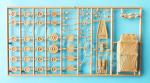
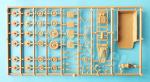
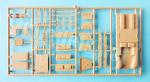
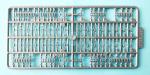
La caja nos entrega tres bastidores de piezas, dos de ellos copiados de ESCI y un tercero nuevo que contiene las cadenas, una lámina de plástico transparente, las calcas y las instrucciones. Las piezas de plástico tienen un moldeado bastante bueno, heredero de la marca original, muy avanzada en su tiempo en este aspecto. Aunque no hay rebabas, varias piezas poseen marcas de eyector negativas y en otras se aprecian líneas de molde muy finas. El parabrisas está plagado de cilindros de eyector.
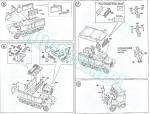
El ensamblaje del modelo me parece sencillo y asequible incluso para modelistas novatos. Básicamente, la construcción comienza por las cadenas, le sigue el chasis, la base de la carrocería con sus lados, y finaliza con la cabina, el morro y la caja de carga.
La edición ofrece una gama de terminaciones adaptables a diferentes niveles de destreza, por ello tenemos la posibilidad de pintar el vehículo tanto en libreas monocromas como en camuflaje de dos y tres colores.
Revisión
El chasis está moldeado en una única pieza que contiene el bastidor, el tubo de escape, la mitad inferior del motor, la caja de cambios, la parte inferior del depósito de combustible así como un par de cilindros de aire comprimido. La transmisión no están representada. En la parte delantera tenemos el eje detallado con una ballesta transversal y dos brazos de torsión separados. Las ruedas tienen buena factura y definición tanto en la llanta como en el neumático, aunque este posee dos pequeñas marcas negativas en la cara interna y hay líneas de molde muy finas por limpiar en la banda de rodadura, que es lisa. Las llantas son muy semejantes a las reales y a este tamaño son bastante destacables. En la parte trasera sólo hay que añadir inicialmente el gancho de remolque.
La suspensión de las cadenas está moldeada sobre dos piezas pegadas a los lados del chasis. Sobre estas piezas aparecen las ballestas, las pequeñas cubiertas de la transmisión de las ruedas tractoras además de ejes de distinta longitud para introducir las ruedas.
Las ruedas son un tanto decepcionantes si no consideramos la antigüedad del molde ni la escala. Las ruedas tractoras carecen de radios y de la cobertura central del eje. Además, los dientes son demasiado cortos. Las demás ruedas, tensoras incluidas, también tienen errores, unas por carecer de la cubierta del eje y otras, en el caso de las situadas más al interior y exterior, por no tener horadada la característica corona de círculos, que podemos taladrar en cualquier caso. Además, las ruedas intermedias carecen de los radios estampados en las llantas. Una pena, porque son las únicas con los círculos abiertos.
Las cadenas están separadas en tramos y eslabones sueltos para conformarlos a las ruedas tractoras y tensoras. El detalle exterior en las zapatas no es nada malo, aunque el hueco entre los eslabones es demasiado amplio y parece irreal. La parte interna es plana y carece de detalle, de modo que sea más fácil adaptar las ruedas y dientes de las tractoras.
Terminado el chasis, el montaje sigue con lo que se puede describir como el suelo de la carrocería. Este viene en una sola pieza que contiene los guardabarros, un espacio vacío para el motor, el suelo de la cabina con paneles antideslizantes nítidos, las bases de los asientos texturizadas y el compartimento trasero, que también posee suelo antideslizante y filas laterales de asientos texturizados.
En la parte delantera el morro tiene los lados separados. El capó tiene dos pequeñas tapas de acceso moldeadas con finura y el soporte del parabrisas menos definido por el tamaño. La parrilla delantera posee un buen detalle en las láminas de admisión de aire al radiador y su tapón de llenado viene aparte.. Los lados muestran las rejillas de ventilación con moldeado aun poco irregular y los cierres de las tapas de acceso al motor. El detalle separado incluye los gálibos, faros y luz Notek sobre los guardabarros más un retrovisor. Los faros presentan un pequeño rechupe del plástico en la lente. Pese a que Italeri ha incluido varias matrículas en las calcas, extrañamente faltan las dos placas en la maqueta.
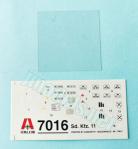
El parabrisas es erróneo y necesita varias mejoras. La pieza incluye dos malos limpiaparabrisas, dos pequeños retrovisores correctos y dos cristales en el lado derecho del parabrisas en lugar de uno como sería lo acertado. Italeri provee una lámina de plástico transparente para recortar el cristal con la plantilla impresa en las instrucciones. Esta pieza va pegada simplemente por detrás del parabrisas cubriéndolo en toda su amplitud. Este detalle no extraña en un molde tan viejo, pero en realidad es bastante chusco incluso para esta escala. Supongo que en ESCI debieron pensar que el toldo cubriría en parte la evidencia del desatino, como así es.
La cabina dispone de un panel trasero moldeado con los respaldos texturizados de los asientos. Además de las palancas de freno y marchas, tenemos el panel frontal, donde destaca el salpicadero, la columna de dirección y un volante muy grueso. El salpicadero es parecido al real y tiene los indicadores e instrumentos bien definidos en relieve, pero sin calcas. Los pedales no están representados.
Los distintos paneles laterales de la carrocería vienen separados y se insertan mediante diminutos vástagos sobre su base. Todas estas piezas poseen marcas de eyector en sus lados internos, pero si empleamos el toldo, serán invisibles en su mayor parte. Las puertas delanteras vienen cerradas y muestran tanto las bisagras como las manetas representadas en ellas. El resto de paneles comprende las dos puertas del compartimento central de la munición o equipo, los lados del habitáculo trasero y la plancha posterior. Los paneles laterales muestran remaches y enganches para el toldo con cierta nitidez.
El techo del compartimento central está detallado con un par de palas y lo que parece una cesta de estiba. Los paneles internos del compartimento de carga son piezas separadas provistas de los respaldos de los asientos.
El toldo está reproducido de una pieza y muestra algunas marcas no evidentes en el lado interno y una superficie externa texturizada en demasía, en mi opinión. Las instrucciones sugieren dejar la colocación del parabrisas para el final del montaje para alinearlo con el toldo con más sencillez.
Aunque la portada de la caja reza que no se incluyen las figuras que se ven en la ilustración, lo cierto es que Italeri respetó las dos que ESCI le puso a esta maqueta en su día. Los tripulantes son idénticos y están moldeados de una pieza, excepto los brazos separados, que pueden adaptarse al volante. En general el detalle en su atuendo me parece decente y sólo le veo el inconveniente de que sus uniformes son del Afrika Korps, como demuestran la gorra y los pantalones cortos.
La pequeña hoja de calcas está impresa por Zanchetti, acostumbrado proveedor de Italeri. En ella aparecen varios juegos de matrículas, marcas tácticas y del Afrika Korps. Los motivos parecen finos, tienen un aspecto brillante, son nítidos y carecen de exceso de soporte.
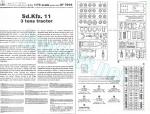
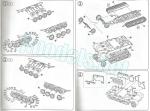
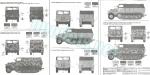
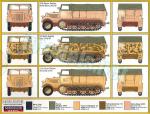
El folleto doblado de instrucciones tiene un formato A5 y diez páginas impresas en blanco y negro. Contiene una breve referencia histórica sobre el vehículo, un plano de piezas numerado, ocho capítulos de montaje y tres páginas de perfiles. Las referencias de color pertenecen al código RAL y a la gama de acrílicos de Model Master. La cara trasera de la caja muestra perfiles de tres versiones con las mismas referencias de color.
Los perfiles ofrecen hasta cinco alternativas para pintar la maqueta en camuflajes muy variados, que abarcan desde el gris RAL 7021, amarillo Dunkelgelb 1943, color arena RAL 8020 y patrones diferentes de dos y tres colores. En mi opinión este es uno de los alicientes de la maqueta.
Valoración
Lo mejor de esta maqueta es la aparente sencillez de montaje y la variedad de alternativas de pintura que la hacen apta para modelistas de diferentes niveles de destreza. A este molde tan viejo no se le puede pedir más de lo que ofrece, que es bastante comparado con otros fabricantes del momento, pese a que ciertos detalles no están a la altura de lo que hoy se ofrece en las maquetas de esta escala.
En cualquier caso, creo que gustará a los aficionados a esta escala que simplemente quieran pasar un buen rato o ir más allá y buscar un motivo para afinar sus habilidades mejorando detalles, lo cual nunca está de más.◊

The kit
To this day, we still don’t have a 1/72 Sd.Kfz. 11 that meets current modeling standards. Considering only the most well-known brands, the only alternative to Italeri’s kits are the three from Special Armour, with a tooling dating back to 2006. Unfortunately, these kits are not easy to build and include disappointing vinyl tracks. The Polish company First to Fight has another kit of this vehicle, but, like others in their catalog, it has a rather basic parts breakdown.
The Italeri kit comes from a 1970s ESCI tool, reissued many times by this and other manufacturers. However, Italeri has only released it three times since the beginning of this century and, wisely, added plastic tracks to the original kit to replace the original vinyl ones.
The box contains three sprues of parts, two of which are copies of the ESCI kit, plus the new one including the tracks, a sheet of clear plastic, the decal sheet, and the instructions. Plastic parts are quite well molded, a legacy of the original brand, which was very advanced for its time in this respect. Although there is no flash, several parts have negative marks, and others show very fine seam lines. The windshield has a bunch of ejector pips.
Assembly looks quite simple and offers no tricks even for the novice modeler. Basically, construction begins with the tracks, followed by the chassis, the body base with the sides, and finishes with the cab, the hood, and the rear crew compartment.
This release offers a range of finishes adaptable to different skill levels, so we have the option of painting the vehicle in monochrome liveries or two- and three-color camouflage.
Review
The chassis is molded as a single piece containing the frame, exhaust pipe, lower half of the engine and gearbox, lower part of the fuel tank, and a pair of cylinders. The transmission is not rendered. At the front, we have a detailed axle with a transverse leaf spring and two separate torsion arms. The wheels are well-made and have defined rims and tires, although these has two small negative marks on the inner sidewall and very fine seam lines to clean up on the smooth tread. The rims are very similar to real ones and look fine at this size. At the rear, only the tow hook needs to be added.
The track torsion arms are molded on two pieces glued to the chassis sides. The pieces feature the leaf springs, the small final drive covers and axles of varying lengths for attaching the wheels.
The wheels are somewhat disappointing if we disregard the age of the tooling and the scale. The sprockets lack the spokes and the hubcap, and the teeth are too short. The other wheels, including the idlers, also have mistakes: some lack the hubcap and the inner and outer wheels have solid lightening holes, which can be drilled in any case. Additionally, the intermediate wheels lack the spokes stamped on the rims. It is a shame, because they are the only ones with the open holes.
The tracks are provided in lengths and loose links to fit the drive and idler wheels. The external detail on the track shoes is quite good, although the gap between the links is too wide and looks unrealistic. The interior side is flat and lacks detail, making it easier to fit the drive wheels and sprockets.
Once the chassis Is finished, assembly continues with what can be described as the body floor. This comes as a single piece containing the fenders, an empty space for the engine, the cab floor with crisp, non-slip panels, textured seat bases, and the rear compartment, which also has a non-slip floor and side rows of textured seats. At the front, the nose has separate sides. The hood has two small, finely molded access panels, and the windshield support is less defined due to its size. The front grille has good detail in the radiator air intake slats, and the radiator filler cap is separate. The sides show the vents with slightly uneven molding and the engine access cover latches. Separate detail includes the width indicators, headlights, and Notek light on the fenders, plus a rearview mirror. The headlights have a small sink on the lens. Although Italeri has included several license plates in the decals, strangely, both plates are missing from the kit parts.
The windshield is incorrect and needs several changes. The part includes two chunky windshield wipers, two small, correct rearview mirrors, and two frames on the windshield right side instead of one. Italeri provides a sheet of clear plastic to cut out the glass using the template printed in the instructions. This piece is simply glued behind the windshield, covering it completely. This detail isn’t surprising in such an old tool, but it’s actually quite shoddy, even for this scale. I suppose that someone at ESCI thought that the tarp would partially cover up the evidence of the blunder, which it does.
The cab features a molded rear panel with textured seat backs. In addition to the brake and gear levers, there’s the front panel with a very nice dashboard, steering column, and a thick steering wheel. The dashboard is similar to the real one and has well-defined, raised gauges and instruments, but without decals. The pedals are not represented.
The side body panels come separately and are inserted into their bases using tiny pins. All these pieces have marks on their inner sides, but these will be mostly invisible if the tarp is used. The cab doors come closed and show both the hinges and handles. The remaining panels include the two doors of the central ammo or equipment compartment, the sides of the crew’s compartment, and the rear side. The side panels show rivets and tie downs.
The roof of the ammo compartment is detailed with a pair of shovels and what looks like a storage basket. The rear compartment’s interior panels are separate pieces fitted with seat backs.
The tarp is provided in a single piece and shows some marks on the inside and an overdone textured surface on the outside. The instructions suggest leaving the windshield installation until the end of assembly for an easy alignment with the tarp.
Although the box cover states that the figures shown in the illustration are not included, Italeri actually copied the two that ESCI originally provided with this kit. The crew figures are identical and molded as one piece, except for the separate arms, which can be attached to the steering wheel. Overall, detail on their uniforms seems decent. The only drawback is that they wear Afrika Korps uniforms, as evidenced by the cap and shorts, and this limits their use in other settings.
The small decal sheet is printed by Zanchetti, a regular supplier for Italeri. It features several sets of license plates, tactical markings, and Afrika Korps markings. The decals look fine and sharp, have a glossy finish and lack excess carrier.
The folded instruction brochure is A5 format and has ten pages printed in black and white. It contains a short historical summary about the vehicle, a numbered parts diagram, eight assembly chapters, and three pages of profiles. Color references correspond to the RAL code and Model Master acrylic range. The back of the box shows profiles of three versions with samples of the same color references.
The profiles offer up to five options for painting the model in a wide variety of camouflage patterns, ranging from RAL 7021 gray, Dunkelgelb 1943 yellow, RAL 8020 sand, and different two- and three-color schemes. In my opinion, this is one of the kit’s most appealing features.
Conclusion
The best thing about this kit is its apparent simplicity of assembly and the variety of paint options, making it suitable for modelers of different skill levels. You can’t ask for more from such an old tooling than what it offers, which is quite good compared to other manufacturers of the time, even though some details aren’t up to the standard offered in 1/72 kits today.
In any case, I think it will appeal to enthusiasts who simply want to have a good time or go further and find a reason to test their skills by improving details, which is always useful.◊
Publicado – Published: 11 / 2025
©www.jmodels.net
 jmodels.net
Debe estar conectado para enviar un comentario.