
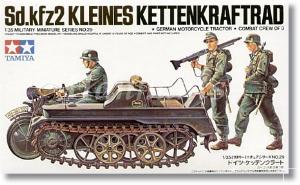
De un vistazo – Quick look
MATERIAL Y PIEZAS
MEDIA & PARTS:
- Plástico inyectado (68 piezas). Incluye 3 figuras y su equipo (39 piezas).
- Injected plastic (80 parts). Three figures and their equipment included (39 parts).
CALCAS – DECALS:
- Tres juegos de matrículas, insignias de unidad y varias insignias para las figuras. Acabado brillante y fino. Nítidas, con buen registro y sin exceso de soporte.
- Three sets of number plates, unit markings and several insignia for the figures. Thin and glossy finish. Sharp, in register and with no excess of carrier.
OPCIONES – OPTIONS:
- SdKfz 2 kleines Kettenrad. WH-371209. Reichswehr. 2nd Tank Division. Normandy.
- SdKfz 2 kleines Kettenrad. WH-371209. Reichswehr. 116th Tank Division. Normandy.
- SdKfz 2 kleines Kettenrad. WL-391702. Luftwaffe. “Ramcke” Brigade. North Africa.
- SdKfz 2 kleines Kettenrad. WL-391702. Luftwaffe. Airborne Panzer Division. Italy.
- SdKfz 2 kleines Kettenrad. SS-273591. Waffen SS. 5th SS Panzer Division Wiking. Normandy.
- SdKfz 2 kleines Kettenrad. SS-273591. Waffen SS. 9th SS Panzer Division Hohenstaufen. Russia.
INSTRUCCIONES – INSTRUCTIONS:
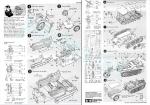
- Folleto vertical doblado impreso en blanco y negro. Contiene un sumario histórico sobre el vehículo, un plano de piezas numerado, 9 pasos de montaje y vistas para pintar el vehículo y las figuras.
- Folded leaflet printed vertically in black and white. It contains a historical summary about the vehicle, a numbered parts plan, 9 assembly chapters and views to paint the vehicle and the figures.
LO MEJOR – THE BEST:
- Montaje sencillo. Detalle general decente considerando su antigüedad. Posibilidad de mostrar el motor. Equipo y armamento de las figuras. Incluye el tráiler. Fácil de ambientar en casi cualquier escenario.
- Easy build. Oveall ncely detail for its age. Engine can be shown. Trailer included. Easy to adapt to almost any setting.
LO PEOR – THE WORST:
- Marcas de eyector en lugares difíciles. Moldeado de la rueda delantera y tren de rodaje. Ausencia visible de amortiguadores y freno.
- Pin marks difficult to clean up. One-piece front wheel and running gear. Evident lack of shock absorbers and brake lever.
VALORACIÓN – CONCLUSION:
- Con la maqueta de Dragón y el nuevo molde de la propia Tamiya terminó el reinado de casi medio siglo de este Kettenkrad de producción inicial, uno de los referentes del modelismo de su época. Aún es factible con mejoras insoslayables tanto en el vehículo como en las figuras.
- With the Dragon kit and Tamiya’s new tool ended the nearly half-century reign of this early production Kettenkrad, one of the pacesetters in modeling of its time. It’s still a nice kit to build with unavoidable improvements to both the vehicle and the figures.

La maqueta
Entre las maquetas de Tamiya que aún quedan procedentes de los años 70 se encuentra este mil veces reeditado Kettenfraftrad. Pocos modelistas de vehículos militares serán los que no le hayan echado el ojo alguna vez tanto por su curiosidad y atractivo al tratarse de un vehículo poco común, como por su sencillez de montaje.
La maqueta siempre ha sido el referente en esta escala, aunque Dragón también cuenta con su propio molde lanzado en 2001. A partir de 2021 Tamiya ha actualizado esta maqueta con otra de nuevo cuño (referencia 35377) y figuras que recuerdan en las poses a las antiguas, pero también renovadas y bastante mejores. Ambas maquetas incluyen el carro de transporte, denominado de forma abreviada Sd.Anh. 1. Por ahora, parece que ambas ediciones van a seguir conviviendo, ya veremos por cuánto tiempo.
La maqueta reciente representa un modelo de producción intermedia, como se aprecia en el resalte redondeado situado entre los dos asientos traseros que contenía la placa de matrícula y las luces de convoy Notek. En la antigua maqueta este resalte tiene la forma cuadrada propia de un vehículo de serie inicial.
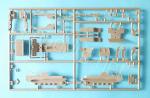
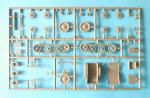
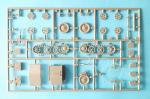
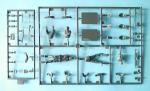
La caja del modelo temprano nos entrega dos bastidores de piezas para el vehículo, un bastidor con tres figuras más su armamento y equipo, la hoja de calcas y las instrucciones. Dejando a un lado prejuicios modernos y volviendo, en lo posible, 50 años atrás en el modelismo, uno se puede figurar que esta maqueta, como otras de Tamiya, estaba a la vanguardia del “estado del arte” de entonces. Las piezas están moldeadas con limpieza y el detalle es simple pero normalmente suficiente y eficaz para lo que representa en cada caso. Además de algunos cilindros de eyector, hay líneas de molde que limpiar y algunas marcas de eyector por rellenar. De estas últimas, las más delicadas y fastidiosas son las presentes en las ruedas del tráiler. Las ruedas del tren de rodaje también llevan las suyas, pero al menos están situadas en las caras internas y no son visibles.
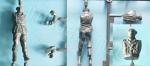
En comparación, el bastidor de las figuras no tiene taras de moldeado, salvo las finas líneas de molde que normalmente se encuentran en cualquier maqueta.
Como en otras ocasiones, Tamiya sintetiza los elementos más evidentes y afina en los más obvios para simplificar la construcción del modelo, que es por lo general simple. En el apartado de pintura cabe reseñar que estos vehículos no solían llevar camuflaje, salvo los monocolores para la nieve y el desierto. Sólo algunos ejemplares empleados en Normandía y operaciones posteriores se ven camuflados. Las fotos de la guerra prueban que las marcas o insignias, más allá de las matrículas, no son tampoco muy evidentes. Me parece exagerado camuflar incluso la rueda delantera, lo que va contra la lógica del propio camuflaje, donde la atracción del ojo humano por objetos pequeños de varios colores en movimiento es obvia. Una cosa es el atractivo modelístico y otra diferente la realidad histórica, pero que cada quisque se las entienda con su maqueta.
Para abarcar un espectro amplio de posibilidades, Tamiya ofrece dos vehículos camuflados en dos y tres colores pertenecientes a unidades del ejército, la fuerza aérea y las Waffen SS. Estas últimas no son evidentes en las instrucciones en las últimas reediciones, pero sí en la hoja de calcas.
Revisión
La carrocería consta de un suelo unido en su parte trasera con los reposapiés de los pasajeros, la plancha trasera con la forma de los asientos posteriores, dos paneles superpuestos por delante y dos de igual disposición a cada lado. Las piezas dobles internas proporcionan espacio para colocar posteriormente sobre ellas los paneles de los depósitos de combustible laterales y el panel de instrumentos.
Los lados están moldeados con las cubiertas de los diferenciales y las salidas de los ejes de las ruedas en la parte inferior y las barandillas posteriores en la zona superior.
El motor está separado en mitades con muy poco detalle en el bloque, unido a la caja de cambios y a la de transferencia. No obstante, hay algunos elementos aparte, como el filtro de aire y el carburador. La caja de transferencia lleva la cubierta separada con el tapón de llenado del líquido de frenos. Los tambores de frenos vienen independientes de los ejes. A ambos lados de la caja de cambios auxiliar se añaden los reposapiés del conductor reproducidos como paneles de madera con rejillas. El radiador, ventilador y otros elemento situados por detrás del motor no están representados.
El armazón de la cubierta del motor viene de una pieza y tiene dos pasadores que permiten alzarla para ver el interior. Este detalle lo mantiene también la maqueta más reciente, pero en ella las rejillas de ventilación son de fotograbado en lugar de moldeadas finamente en el plástico como ocurre en esta.
Para terminar la carrocería queda añadir los paneles laterales, que muestran las tapas de llenado de los depósitos, el asiento posterior sin textura y el soporte de la placa de matrícula entre los dos asientos traseros, que posee la forma cuadrada típica de un vehículo inicial, como he indicado arriba. Esta pieza lleva las luces Notek separadas y la placa de matrícula sobre ella. La parte trasera incluye un gancho de remolque, el silenciador del escape sin el tubo de salida y las faldillas antibarro con el catadióptrico en la pieza del lado derecho. La pieza del silenciador tiene forma cilíndrica incorrecta, ya que su perfil era más aplastado. Sobre el respaldo del asiento hay una lona enrollada poco nítida.
El puesto de conducción está detallado con el asiento y su soporte, las palancas de marchas y de la caja auxiliar y el retrovisor. No hay palanca de freno ni pedales para los frenos y cambios de marchas. La parte delantera de la carrocería tiene dos enganches separados y las luces de posición integradas en los pequeños guardabarros delanteros. El panel interno del puesto lleva las almohadillas para las rodillas del conductor bien definidas.
El tren de rodaje cuesta poco de montar porque está muy simplificado, aunque el detalle es bastante decente incluso para los estándares de hoy. Los únicos inconvenientes son limpiar las líneas de molde de las cadenas y las marcas internas en las ruedas, aunque de todas formas estas no se van a ver. Las ruedas tractoras y tensoras, así como las ruedas sencillas centrales forman un conjunto unido a las cadenas, cuyos eslabones y zapatas están definidos por fuera, si bien los dientes internos resultan bastante menos nítidos y los huecos entre eslabones son sólidos, por eso Tamiya no se ha molestado en reproducir los dientes de las tractoras insertados en ellos.
Los dientes de la rueda tractora me parecen adecuados, pero los radios del buje son cortos y carecen de huecos entre ellos. La corona central de tuercas también parece algo pequeña en comparación con la real. Las ruedas dobles, dos por lado, son independientes, con los huecos y radios de los bujes definidos y la banda externa de caucho sólo pasable, aunque es difícil de apreciar en fotos de época por su finura.
La rueda delantera va situada en medio de la horquilla separada en dos mitades. Tamiya se comió la amortiguación, desatino que no ha cometido en la maqueta más moderna. La horquilla está detallada con la barra de la dirección, el manillar y el faro con la lente separada. La dirección se pega entre las dos mitades de la parte superior de la horquilla para permitir el giro del manillar.
Uno de los peores detalles de esta maqueta, pero supongo que admisible hace medio siglo, es la unión de la rueda con el guardabarros, la placa de matrícula e incluso el faro Notek. El neumático está horadado en uno de sus lados para insertar unos de los vástagos de la horquilla. Realmente es una pena, porque la rueda está bien reproducida en las cubiertas de los bujes y las bandas de rodadura de los neumáticos grabadas.
La carrocería del tráiler Sd.Anh. 1 está reproducida en una pieza junto con los guardabarros, a excepción del panel trasero, el brazo del enganche y el eje de las ruedas. El panel lleva un faro trasero y las luces de convoy Notek separadas. Las ruedas son idénticas a las del vehículo, pero tienen dos marcas en el lado interno de la cubierta de la llanta que van a ser difíciles de tapar sin afectar a los radios.
La carga dispuesta por Tamiya para el tráiler son tres latas de combustible que obligatoriamente hay que pegar unas a otras ya que carecen de uno de sus lados y una radio con excelente detalle moldeada dentro de su contenedor con la tapa separada. Las instrucciones señalan que estas piezas también pueden colocarse sobre el asiento trasero del vehículo. Para cubrir la carga del transporte hay una lona desplegada con cierto detalle en las arrugas provocadas por la tensión.
Para acompañar al vehículo y formar una pequeña escena de tránsito en cualquier camino o carretera tenemos un conductor y dos soldados a pie con su equipo más dos sencillas bases de plástico para sostenerlos. Las figuras son muy representativas del hacer de Tamiya en la época de esta maqueta y tienen algo que llamaría “solidez” o rotundidad” en el modelado, tal vez ocasionado por la escasa finura en los detalles de las arrugas de los uniformes. Otro detalle que no deja de tener su punto irónico es que las tres figuras tienen la misma cara, como si de trillizos se tratase. Las facciones incluso parecen desencajadas y, junto con las orejas separadas, les da a estos personajes todos los pronunciamientos favorables para que pudieran llamarse Abundio todos a la vez, en lugar de Fritz, Karl y Jürgen.
El conductor tiene el casco separado, mientras que los soldados puede ser tocados con un casco o una gorra de campaña. El detalle de la chaqueta del uniforme con sus bolsillos, correajes y cinturones no está mal y se le puede sacar partido con la pintura. Las polainas de las botas tienen un detalle borroso. Las instrucciones señalan que los soldados caminantes pueden colocarse en dos poses distintas.
El equipo es múltiple e intercambiable en cierta medida. El bastidor cuenta con dos rifles Kar 98K, un Panzerfaust 60, una MG 42, todos ellos de buena factura, además de cartucheras, contenedores de máscaras antigás, la caja de munición de la ametralladora, palas, cantimploras, etc. Además de incluir equipo de sobra, una buena idea de Tamiya fue hacer calcas para las insignias del casco, que nunca son sencillas de pintar bien.
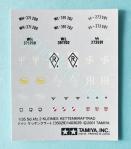
La pequeña hoja de calcas muestra tres juegos de matrículas (Reichswehr, Luftwaffe y Waffen SS respectivamente), insignias de unidad y varias insignias para las figuras. Los motivos tienen un acabado brillante y fino, son nítidos, poseen buen registro y carecen de soporte excesivo.
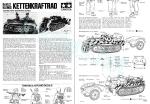
Las instrucciones están impresas en blanco y negro en un folleto vertical doblado que contiene un sumario histórico sobre el vehículo, un plano de piezas numerado, nueve pasos de montaje y vistas para pintar el vehículo y las figuras. Aunque la hoja de calcas sigue teniendo marcas para ellas y una matrícula, el folleto actual omite las dos unidades de las Waffen SS que aparecían en las instrucciones de la primera edición. Imagino que la causa se debe a razones de política y ventas, ya que en determinados países la simbología nazi está prohibida y Tamiya preferirá no pillarse los dedos.
Las indicaciones de color, identificación de piezas y alternativas de montaje, incluso para las figuras, es clara y comprensible. Al igual que en otras maquetas del fabricante la caja trae también un folleto idéntico en japonés.
Valoración
Ahora que la propia compañía ha renovado esta maqueta después de tanto tiempo, y falta que le hacía, será más difícil que el modelista la prefiera antes que al nuevo molde, mejor despiezado y con menos errores que este, por mucho que el precio de una y otra sean muy distintos. Y eso mientras sigan conviviendo, porque acaso Tamiya se canse de ella algún día y no vuelva a reaparecer.
En cualquier caso, la maqueta es factible todavía para cualquier aficionado y puede convertirse en una aceptable representación del vehículo si el detalle excelente no es crucial y se realizan mejoras esenciales en la rueda delantera y algunos detalles omitidos como el freno, por poner sólo dos casos concretos. Otros elementos no tienen arreglo tan sencillo en el caso del tren de rodaje unido a las cadenas.
Las figuras no son una maravilla, pero pueden valer, con un cambio de cabeza muy pertinente, al modelista sin exceso de hocico fino para la escultura. También el equipo extra bien modelado tendrá su efecto en la apariencia final.◊

The kit
Among Tamiya kits still remaining from the 1970s is this much-reissued Kettenfraftrad. Few AFV modelers won’t have kept an eye on it at some point, both for its appeal as a rare vehicle and for its ease of assembly.
This kit has always been the reference in this scale, although Dragon also have their own kit released for the first time in 2001. Back in 2021, Tamiya updated this kit with a new one (reference 35377) with figures reminiscent of the older ones in their poses and also considerably improved. Both kit include the transport trailer, abbreviated as Sd.Anh. 1. It seems both boxings will continue to coexist; we’ll see for how long.
The 2021 kit represents a mid production model, as can be seen in the rounded projection between the two rear seats that contained the license plate and the Notek convoy lights. This projection had a square shape typical of an early production vehicle in the older kit.
The box installment includes two sprues with the vehicle and trailer parts, a sprue with three figures plus their armament and equipment, the decal sheet, and the instructions. Leaving aside modern prejudices and going back 50 years in modeling history, one can imagine that this kit, like others from Tamiya, was the state of the art of its time. Parts are molded cleanly, and detail is simple but generally sufficient and effective for its purpose. In addition to some ejector nodes, there are seam lines to clean up and a few ejector marks to fill. Of these, the most delicate and tedious are those on the trailer wheels. The running gear wheels also have their own share, but they are located on the inner faces and are not visible. In comparison, the figures have no molding blemishes, except for the thin seam lines typically found on any kit.
As in other kits, Tamiya simplify the less obvious elements and refine the most evident for ease of assembly, which is generally simple. As regards painting, it’s worth noting that these vehicles didn’t usually wear camouflage, except for the single-color schemes for snow and desert use. Only a few examples used in Normandy and later operations can be seen wearing a camouflage in pics of the time. War photos prove that markings or insignia, beyond the license plates, were not very obvious either. I think it’s excessive to camouflage even the front wheel, which goes against the logic of camouflage itself, where the human eye’s attraction to small, multi-colored moving objects is obvious. Modeling appeal is one thing, and historical reality is a different one.
To cover a wide range of possibilities, Tamiya offer two and three-color camouflaged vehicles belonging to army, air force, and Waffen SS units. The latter are not evident in the instructions of the latest reboxes, but are evident on the decal sheet.
Review
The body consists of a floor molded with the rear footrests, a panel shaped like the rear seat, two overlapping panels at the front, and two similarly arranged panels on each side. The internal double panels provide space to attach the fuel tanks and the instrument panel pieces.
The sides are molded with the differential covers and wheel axle openings at the bottom and the rear rails at the top.
The engine is separated in halves with very little detail in the block and molded with the gearbox and transfer case. However, some elements are separate, such as the air filter and carburetor. The transfer case has a separate cover with the brake fluid filler cap. The brake drums are independent of the axles. On both sides of the auxiliary gearbox there is space to attach the driver’s footrests, reproduced as wooden grates. The radiator, fan, and other elements located behind the engine are missing.
The engine hood is a single piece molded with two pins to raise it and show the engine. This detail has also been kept in the new-tool kit, but the grilles are photo-etched instead of being finely molded on the piece as in this case.
The body is finished with the attachment of the side panels showing the fuel filler caps, the smooth rear seat, and the license plate bracket between the two rear seats, which has the square shape typical of an early vehicle, as mentioned. This piece features separate Notek lights and the license plate above it. The rear section includes a tow hook, the exhaust muffler without the tailpipe, and the mud flaps with the reflector on the right-hand piece. The muffler piece has the incorrect cylindrical shape, as its profile was flattened. On the seat backrest there is a poor rolled-up canvas.
The driver’s station is detailed with the seat and the support, the gear and auxiliary gear levers, and a rear view mirror. There is no brake lever or pedals for the brakes and gearshifts. The front of the body has two separate tow hooks and the indicators are molded on the small front fenders. The panel in front of the driver features clearly defined driver’s knee pads.
The running gear is easy to assemble because it’s so simplified, although detail is quite decent even for today’s standards. The only drawbacks are cleaning up the seam lines on the tracks and the internal marks on the roadwheels, although these won’t be visible anyway. The sprockets and idlers as well as the center single wheels are one piece with the tracks. The links and rubber pads are defined on the outside, although the internal teeth are less sharp and the gaps between the links are solid, which was the probable reason why Tamiya didn’t bother to reproduce the sprocket teeth inside the links.
The sprocket wheel teeth look fine but the hub spokes are short and lack the gaps between them. The center nut ring also seems a bit small compared to the real thing. The double wheels, two per side, are independent, with defined hub lightening holes and spokes. The outer rubber tread is just passable, although it’s difficult to distinguish in war photos as it was quite thin.
The front wheel is attached between the two-piece fork. Tamiya skipped of the suspension coil springs, a mistake they didn’t make in the more modern kit. The fork is detailed with the steering column, handlebars, and headlight with a separate lens. The steering column is glued between the two halves of the upper fork to allow the handlebar to turn.
One of the worst details of this kit, though probably acceptable half a century ago, is the front wheel molded with the fender, the license plate, and even the Notek headlight in one piece. The tire is drilled on one side to attach one of the fork pieces. It’s really a shame, because the wheel is well reproduced and have nice hubs and engraved tire treads.
The body of the Sd.Anh. 1 trailer is reproduced in one piece along with the fenders, except for the rear panel, the trailer tongue and the wheel axle. The panel features a tail light and separate Notek lights. The wheels are identical to the vehicle’s, but have two marks on the inner hub sides that will be difficult to fill without damaging the thin spokes.
The cargo for the trailer consists of three fuel cans, which need to be glued together as they are missing one side, and a beautifully detailed radio molded inside its container with a separate lid. The instructions indicate that these pieces can also be placed on the rear seat of the Kettenkrad. The trailer also includes a tarp with slightly textured surfaces.
To accompany the vehicle and create a small scene on any road or path, we have a driver and two soldiers on foot with their equipment, plus two simple plastic bases to hold them. The figures are very representative of Tamiya’s sculpting at the time of this kit and have something I would call «solidity» or «roundness» in the modeling, perhaps due to the lack of finesse in the wrinkles of the uniforms. Another detail that is not without its irony is that the three figures have the same yokel face, as if they were triplets.
The driver has a separate helmet, while the soldiers have the choice for a helmet or a field cap. Detail on the uniform jacket, with its pockets, straps, and belts, is not bad and can be enhanced with paint. The boot gaiters have a fuzzy detail. The instructions state the walking soldiers can be posed in two different positions.
The equipment is varied and somewhat interchangeable. The sprue includes two Kar 98K rifles, a Panzerfaust 60, and an MG 42, all of them very nice, as well as ammo poaches, gas mask containers, a machine gun ammo box, shovels, canteens, etc. In addition to including plenty of equipment, Tamiya also came up with decals for the helmet insignia, which are never easy to paint properly.
The small decal sheet shows three sets of plates (Reichswehr, Luftwaffe, and Waffen SS, respectively), unit markings, and several insignia for the figures. The decals have a fine, glossy finish, are sharp, have good registration, and lack excessive carrier.
The instructions are printed in black and white in a vertically folded leaflet containing a historical summary of the vehicle, a numbered parts diagram, nine assembly steps, and views for painting the vehicle and the figures. Although the decal sheet still includes SS markings and a number plate, the current leaflet omits the two Waffen SS units present in the original instructions. I imagine this is due to political and sales reasons, as Nazi symbols are forbidden in some countries.
Color callouts, parts identification and assembly options, also for the figures, are clear and comprehensible. As with other Tamiya kits, the box also includes an identical leaflet in Japanese.
Conclusion
Now that the company has updated this kit after so much time, and it was really much needed, most modelers won’t prefer it to the newer release, which is better molded and has fewer drawbacks than this one, even though the price is also very different. And that’s only as long as they continue to coexist, because Tamiya may tire of it one day and never rebox it.
The kit is still suitable for any modeler and could become an acceptable rendition of the vehicle if crispy detail is not essential and improvements are made to the front wheel and some omitted details such as the brake lever, to name just two specific examples. Other elements are not so easily fixed, such as the one-piece running gear and tracks.
Compared to modern counterparts, the figures are not something to write home about, but with an appropriate head replacement, they can still be useful to the lenient modeler. Also, the nice additional equipment will have an obvious impact on the final appearance.◊
Publicado – Published: 9 / 2025
©www.jmodels.net
 jmodels.net
Debe estar conectado para enviar un comentario.