
De un vistazo – Quick look
MATERIAL Y PIEZAS
MEDIA & PARTS:
- Plástico inyectado (91 piezas), plástico transparente (3 piezas).
- Injected plastic (91 parts), clear plastic (3 parts).
CALCAS – DECALS:
- Insignias nacionales, matrículas, paneles de instrumentos, numerales y diversos estarcidos. Aspecto fino y mate. Buena nitidez, saturación y registro. Sin exceso de soporte.
- US Navy markings, registrations, numbers, instrument panels and some stencils. Sharp, in register, and good color saturation. No excess carrier.
OPCIONES – OPTIONS:
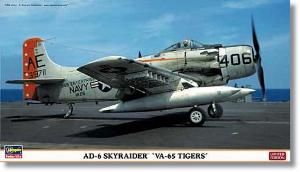
- Douglas AD-6 Skyraider. AE406. U. S. Navy. USS Enterprise. VA-65 “Tigers”.
- Douglas AD-6 Skyraider. AH500. U. S. Navy. USS Oriskany. VA-165. 1962-63.
INSTRUCCIONES – INSTRUCTIONS:
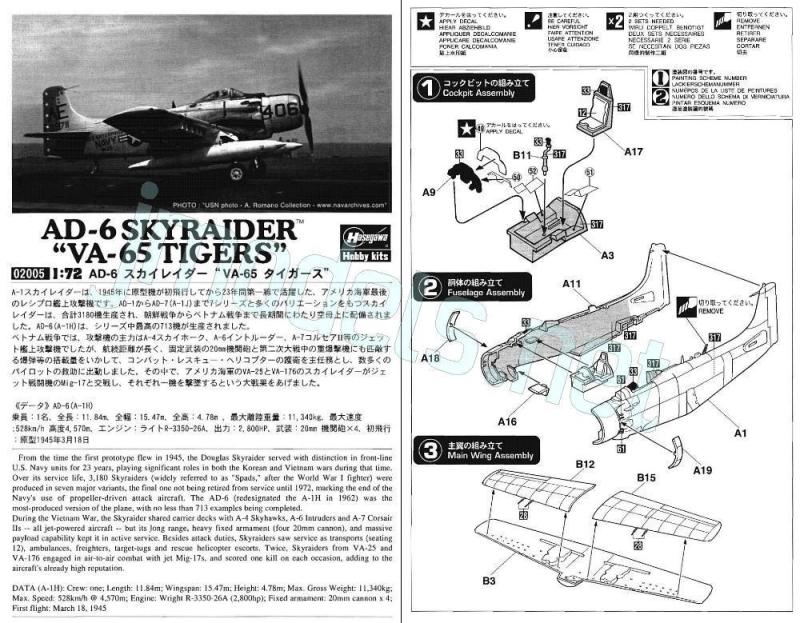
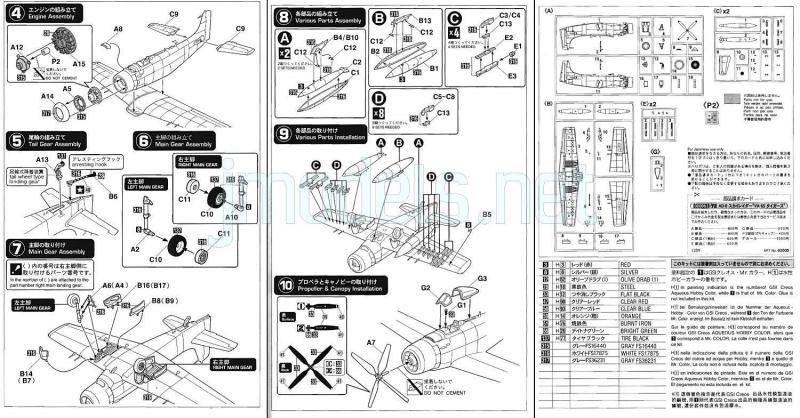
- Folleto A5 doblado formando 8 páginas impreso en blanco y negro. Contiene una introducción histórica sobre el avión, 10 capítulos de construcción, 2 hojas de perfiles, un plano numerado de piezas y una tabla de colores con pinturas equivalentes de Gunze Sangyo.
- 8-page A5 folded leaflet printed in black and white. It shows a historical introduction, 10 assembly steps, 2 pages of profiles, a numbered parts plan and color chart with matches in Gunze Sangyo paints.
LO MEJOR – THE BEST:
- Buen molde. Aparente sencillez de montaje. Cubierta de la carlinga separada.
- Nice mold. Apparent ease of assembly. Two-piece canopy.
LO PEOR – THE WORST:
- Carlinga, motor y carga subalar muy básicos.
- Basic cockpit , engine and underwing load.
VALORACIÓN – CONCLUSION:
- Buena maqueta de caja, que puede tornarse excelente si se aprovecha su amplio margen de mejora al menos en la carlinga, el motor y el armamento.
- A good kit right out of the box, which can become excellent if you take advantage of the ample room for improvement, at least in the cockpit, engine, and armament.

La maqueta
Hasegawa debe haber sacado a estas alturas lo menos veinte reediciones del molde original de 1996. No es raro, porque la marca nunca deja de la mano su Skyraider por mucho tiempo, y una prueba es que la última maqueta ha salido este mismo año. Hay moldes de otros fabricantes anteriores y posteriores diferentes a este, pero seguramente las cajas de Hasegawa han sido siempre las más vendidas desde que apareció la primera.
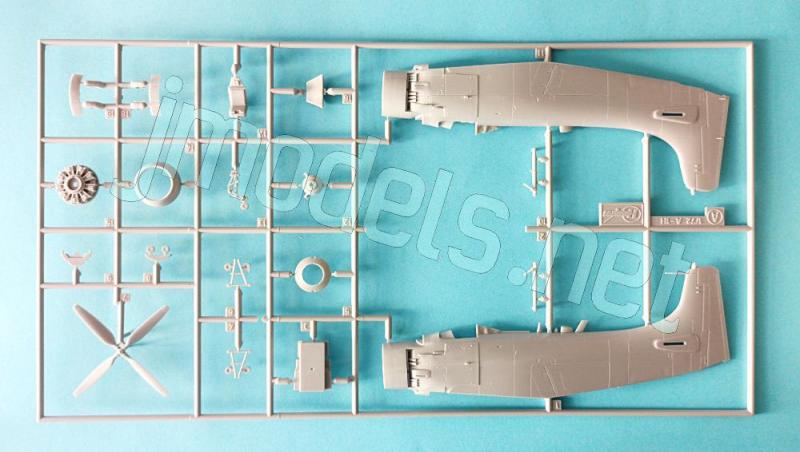
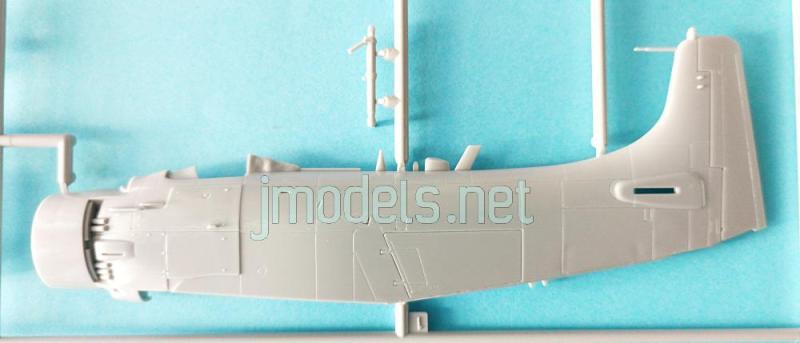
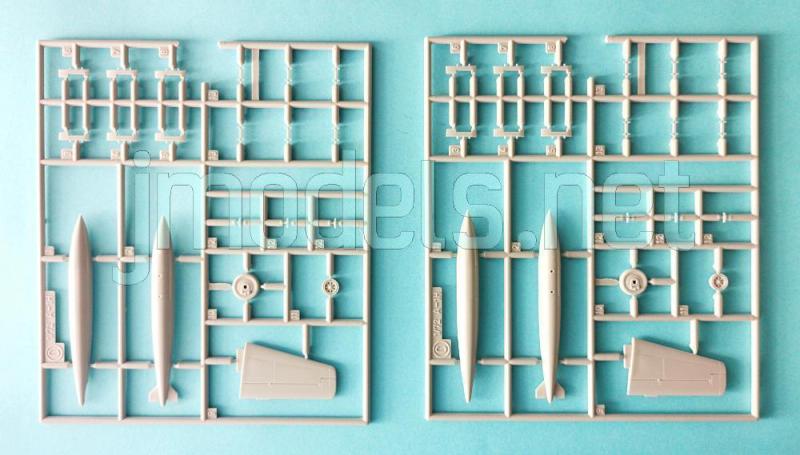
La maqueta se compone de siete bastidores de plástico opaco, un bastidor transparente, una extensa hoja de calcas y las instrucciones. Como habitualmente, el nivel del moldeado es excelente; las piezas están limpias de imperfecciones. Las marcas de eyector leves que hay sobre los lados del fuselaje en torno a la carlinga son inapreciables. Respecto al panelado inciso, basta con decir que es el propio del fabricante para encarecerlo. En el caso de esta maqueta, me parecen especialmente bien conseguida la separación de las superficies de control de las alas y la cola.
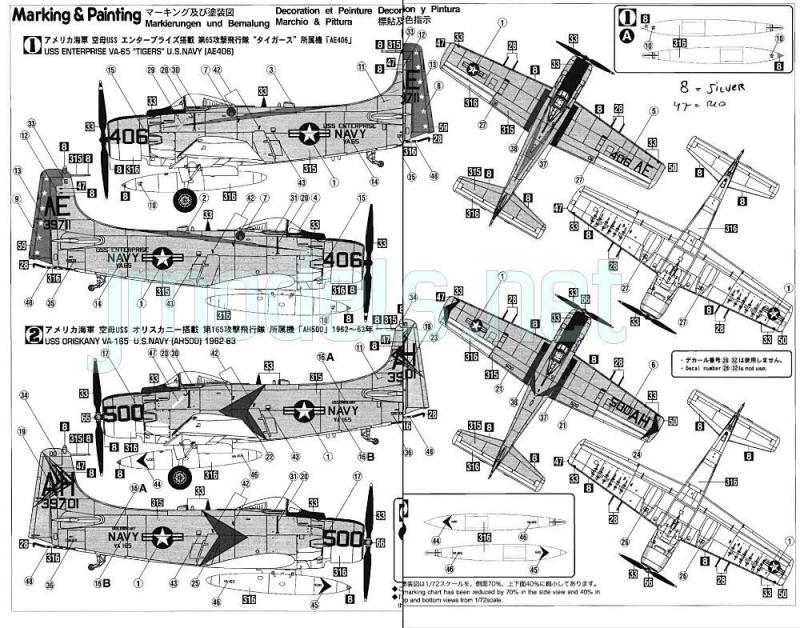
La construcción de la maqueta no tiene dificultad aparente incluso para el modelista con nivel básico. Las instrucciones ofrecen dos aviones navales de inicios de los años 60 pintados en la usual librea gris y blanca de entonces.
El primer aparato perteneció a la Escuadrilla de Ataque 65 (VA-65), apodada “The World Famous Fighting Tigers”, que operó en el USS Enterprise desde agosto de 1962 a octubre de 1964. En ese tiempo la unidad tomó parte en el bloqueo a Cuba durante la Crisis de los Misiles y también circunnavegó el globo en la llamada Operación Sea Orbit, en la cual todos los buques que la realizaron eran de propulsión nuclear. El otro Skyraider estuvo integrado en la Escuadrilla de Ataque 165, apodada “Boomers”, que operó desde el USS Oriskany de 1963 a 1966. Con este portaaviones estuvo desplegada en el Mar del Sur de la China al inicio de la Guerra de Vietnam, comenzando a operar sobre Laos en febrero de 1965.
Reseña
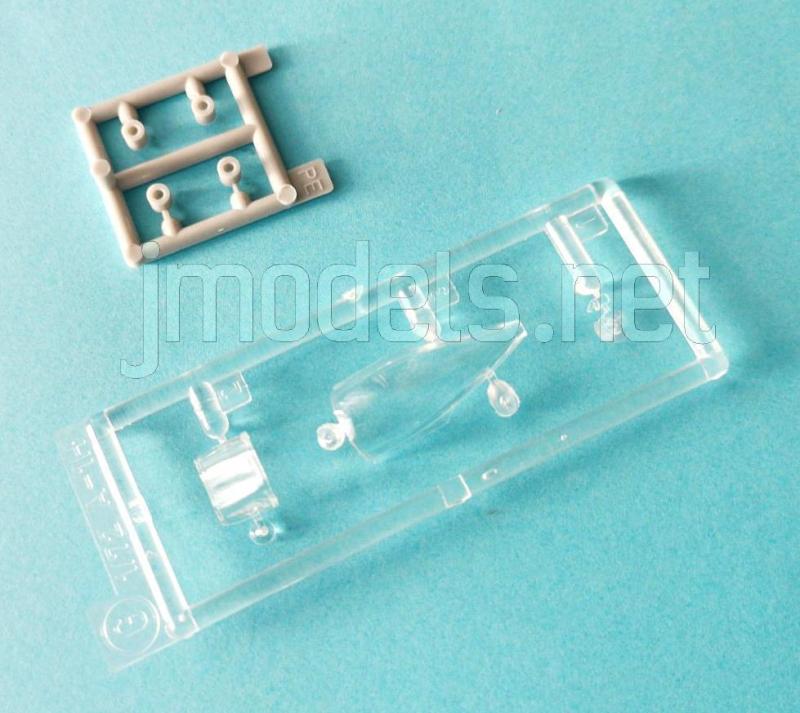
La carlinga tiene un detalle mínimo y presenta la habitual disposición que Hasegawa le ha dado durante años a sus aviones. Hay una pieza en forma de bañera que contiene el suelo con los pedales y los lados. Complementando al asiento con reposacabezas y la palanca de control están las calcas para representar los instrumentos del panel y las consolas. Los lados del fuselaje están provistos de aletas para acomodar la carlinga con facilidad. Antes de cerrar el fuselaje hay que pegar también una pieza por detrás de la toma inferior. La cubierta de la carlinga consta de dos piezas muy transparentes, finas y bien grabadas, especialmente el parabrisas.
Las mitades del fuselaje incluyen el capó del motor a excepción del anillo frontal y sólo las superficies verticales de cola. Estas últimas llevan integradas la luz anticolisión y el tubo Pitot. Sobre la zona dorsal, las piezas llevan varios sensores y aletas. En la parte delantera se aprecian unos escapes nídidos cubiertos por dos piezas con las aletas de ventilación del motor. La entrada de la toma de aire del carburador, situada tras el capó, está separada. Los aerofrenos laterales y el ventral vienen cerrados. El gancho de apontaje y la rueda de cola, de gran definición, son igualmente elementos aparte.
El motor es bastante simplón. Los cilindros, muy nítidos, están moldeados sobre una pieza circular y poseen un detalle mínimo, que no se va a apreciar de todas formas porque por delante hay un anillo con las aletas de ventilación en posición cerrada. Esta pieza tiene un hueco en su centro para introducir la caja de engranajes de la hélice, que viene aparte del motor, y así poder alinear este. El anillo frontal del capó también viene exento. Las palas de la hélice son muy finas y muestran líneas finas en las puntas para situar las bandas en color de las calcas. El eje va introducido en un rodamiento situado dentro de la caja de engranajes.
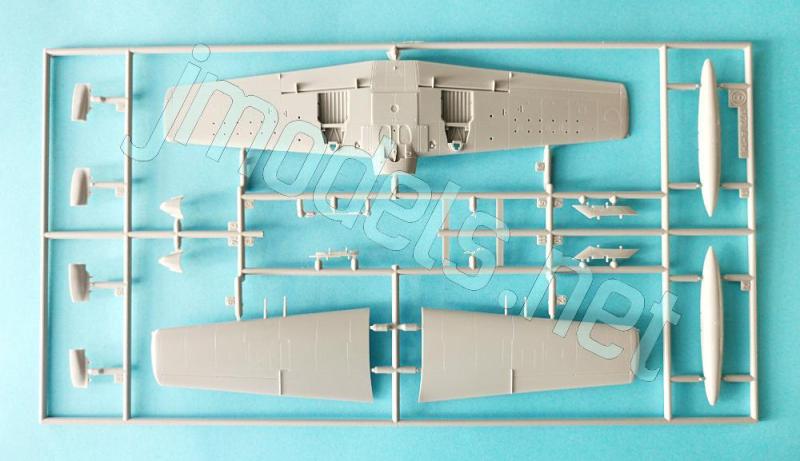
Las alas están separadas en tres piezas. El grabado de las superficies es excelente. Las piezas superiores incluyen las luces de las puntas y los tubos de los cañones. Los pozos y tapas son muy destacables por su detalle interno. Las patas de las ruedas muestran un detalle al menos decente y tienen las cubiertas aparte, sin embargo las ruedas parecen mucho mejores, aunque no tengan los neumáticos detallados. Las llantas tienen un detalle preciso, apreciándose el sistema de freno sobre el lado interno y el detalle de la llanta exterior separada.
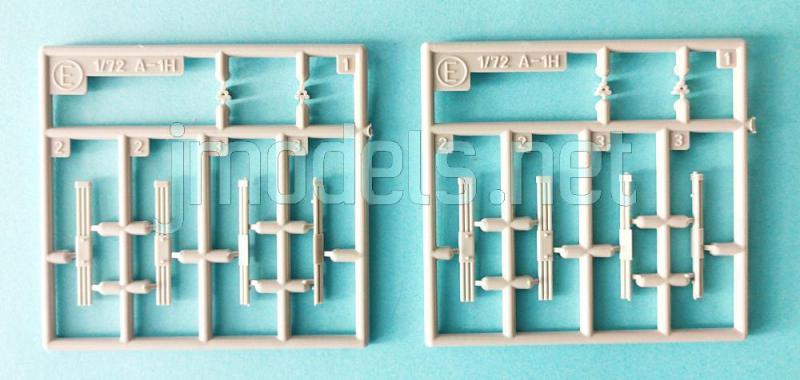
La carga subalar siempre es importante en un avión de combate, y en el Skyraider aún más. La maqueta trae tres depósitos de 260 galones y cuatro lanzacohetes en los soportes externos, quedando vacíos los cuatro soportes internos de cada ala.
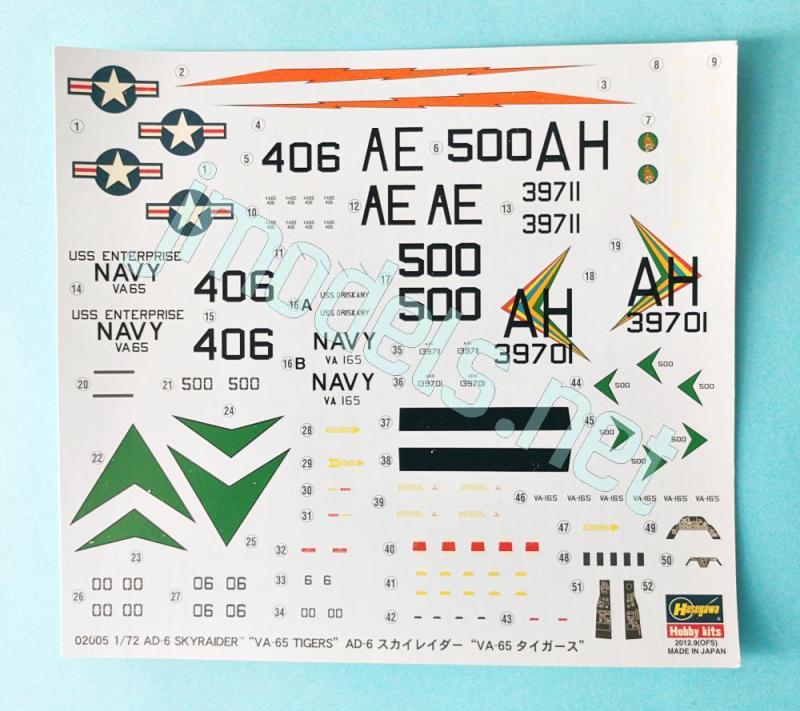
Una amplia hoja de calcas provee insignias nacionales, matrículas, paneles de instrumentos, numerales y diversos estarcidos, todos ellos con un aspecto fino y mate, aparente buena nitidez, saturación de color y registro. Los motivos no tienen exceso de soporte.
El folleto de instrucciones tiene formato A5 y está formado por ocho páginas impresas en blanco y negro. Contiene un sumario histórico sobre el avión, diez capítulos de construcción, dos páginas de perfiles, un plano numerado de piezas y una tabla de colores con pinturas equivalentes de Gunze Sangyo.
Valoración
Como en otras ocasiones, pero no siempre, Hasegawa proporciona un molde muy destacable aderezado con lo imprescindible para montar una maqueta al menos decente. Sin embargo, a este Skyraider se le ve de lejos que tiene amplio potencial de mejora si el modelista decide sacarle todo el partido a un avión tan vistoso en zonas como la carlinga, el motor y el armamento.◊

The kit
So far Hasegawa must have released around twenty reissues of their 1/72 Skyraider since 1996. This is hardly surprising, as the brand never neglects this aircraft for long, a proof of this is that the latest boxing was released just this year. There are older and newer kits from other companies, but most probably Hasegawa’s kits have been the best-sellers since the first one appeared.
The kit comprises seven sprues, a clear sprue, an extensive decal sheet, and the instruction manual. As usual, the standard of molding is excellent and parts are free from blemishes. The shallow pin marks on the fuselage sidewalls near the cockpit are virtually imperceptible. Regarding the engraved panel lines, suffice it to say they reflect the manufacturer’s high standard. In this particular kit, the rendering of the control surfaces on the wings and tail look especially well-executed.
Assembly appears straightforward, even for a modeler with a basic skill level. The instructions offer options for two Navy aircraft from the early 1960s, both featuring the standard gray-and-white livery of that era.
The first aircraft belonged to Attack Squadron 65 (VA-65), nicknamed «The World Famous Fighting Tigers», which operated from the USS Enterprise between August 1962 and October 1964. During that period, the unit participated in the blockade of Cuba during the Missile Crisis and also circumnavigated the globe as part of Operation Sea Orbit, a mission involving an all-nuclear-powered fleet. The other Skyraider was part of Attack Squadron 165, nicknamed the «Boomers,» which operated from the USS Oriskany between 1963 and 1966. It was deployed with the carrier to the South China Sea at the start of the Vietnam War, beginning operations over Laos in February 1965.
Review
The cockpit features minimal detail and follows the standard layout Hasegawa have used for years. It consists of a tub piece with the floor, sidewalls and the pedals molded on. Decals are provided for the instrument panel and consoles to complement the seat (which includes a headrest) and the control stick. The fuselage sides feature locating tabs to ensure easy cockpit installation. Before closing the fuselage, a part is also attached behind the lower air intake. The two-piece canopy is transparent, thin, and well-molded, particularly the windshield.
The fuselage halves include the engine cowling except for the separate front ring and the vertical tail surfaces, the latter featuring the ant-collision light and Pitot tube. Various sensors and fins are molded on the fuselage. Crisp raised exhausts are visible behind the cowling plus two separate pieces molded with the engine cooling vents. The carburetor air scoop, located on the cowling, also comes apart. The side and ventral airbrakes are molded in the closed position. The arrester hook and the tailwheel, this being specially nice, are also separate parts.
The engine is rather basic. The cylinders are sharply molded on a round part. Unfortunately, it doesn’t really matter how much you improve the engine, as hardly anything will be seen after you install the nose flaps in front of it. This piece has an opening to fit the engine. The propeller gearbox comes apart with a small polycap inside to hold the propeller in place.
The wings are molded in three pieces with excellent surface detail. The upper wing pieces include the wingtip lights and cannon barrels. The wheel wells and covers are crisply detailed inside. The landing gear legs feature at least decent detail and have separate fairings. The wheels look much better, even though the tires lack the tread pattern. The hubs show the brake assembly on the inner side and a nice outer side provided apart.
Underwing stores are always important on a combat aircraft, and even more so on the Skyraider. The kit includes three 260-gallon fuel tanks and four rocket launchers for the outboard pylons, leaving the four inboard pylons on each wing empty.
A large decal sheet provides national insignia, serial numbers, instrument panels, aircraft numbers, and some stencils. All of them look crisp and matte, with good sharpness, color saturation, and in register. They have minimal excess carrier film.
The folded instruction leaflet consists of eight pages printed in black and white. It includes a brief history of the aircraft, ten assembly steps, two pages of profiles, a numbered parts plan, and a color chart with Gunze Sangyo paint matches.
Conclusion
As is often the case, Hasegawa provides a good tool with the essentials for building a nice kit. However, it is immediately apparent that this Skyraider offers great potential for enhancement if the modeler decides to fully exploit the possibilities of such a distinctive aircraft, particularly in the cockpit, engine, and underwing stores.◊
Publicado – Published: 9 / 2026
©www.jmodels.net


Debe estar conectado para enviar un comentario.