
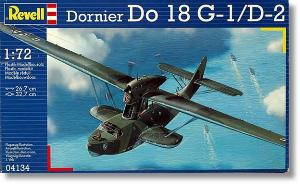
De un vistazo – Quick look
MATERIAL Y PIEZAS
MEDIA & PARTS:
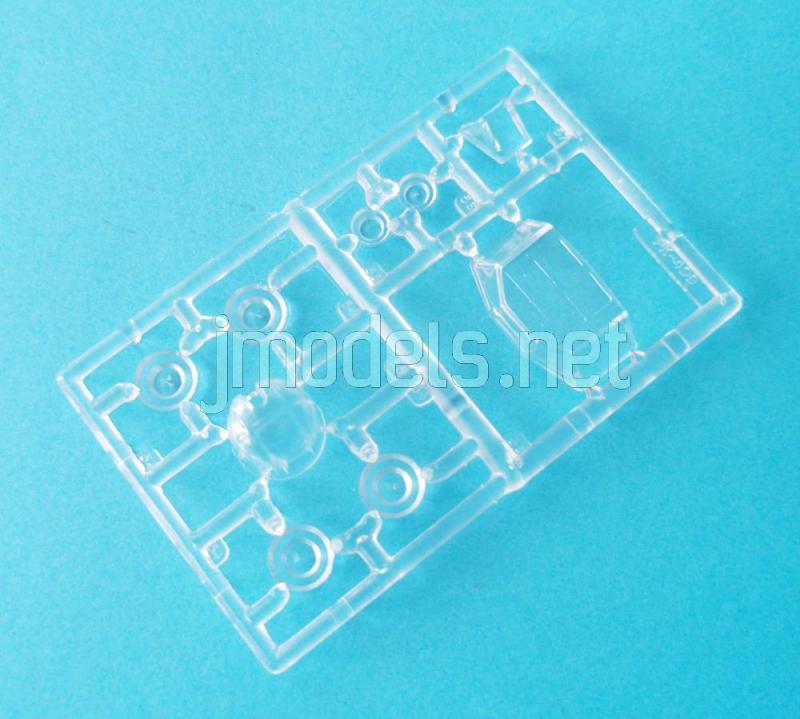
- Plástico inyectado (62 piezas), plástico transparente (9 piezas). Incluye 4 figuras.
- Injected plastic (62 parts), clear plastic (9 parts). Four figures included.
CALCAS – DECALS:
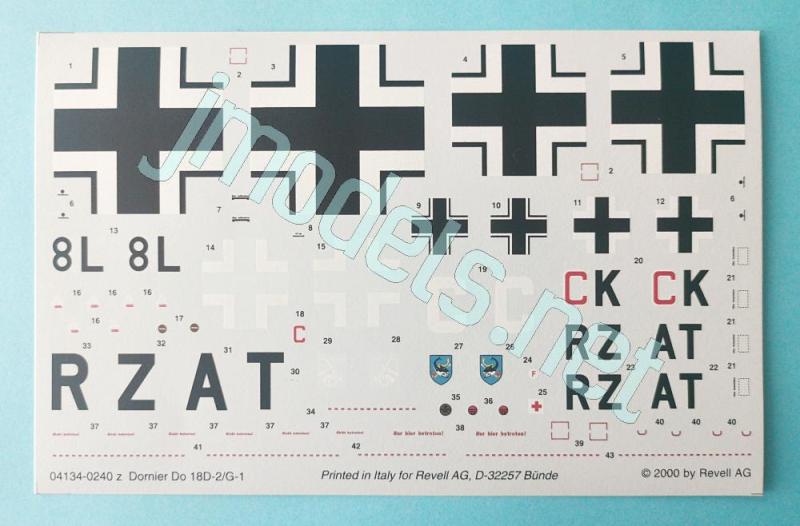
- Cruces alemanas, matrículas, insignias de unidad y diversos estarcidos. Acabado fino y brillante, con buen registro, saturación de color y nitidez. Sin exceso de soporte.
- German crosses, unit badges and some stencils. Thin and glossy finish, god color saturation, register and sharpness. No surplus carrier.
OPCIONES – OPTIONS:
- Dornier Do 18D-2. 2./SAGr. (Seeaufklärungsgruppe) 131. Norway, 1944
- Dornier Do 18G-1. Seenotstaffel 6. Taormina (Syracuse, Italy), 1944.
INSTRUCCIONES – INSTRUCTIONS:
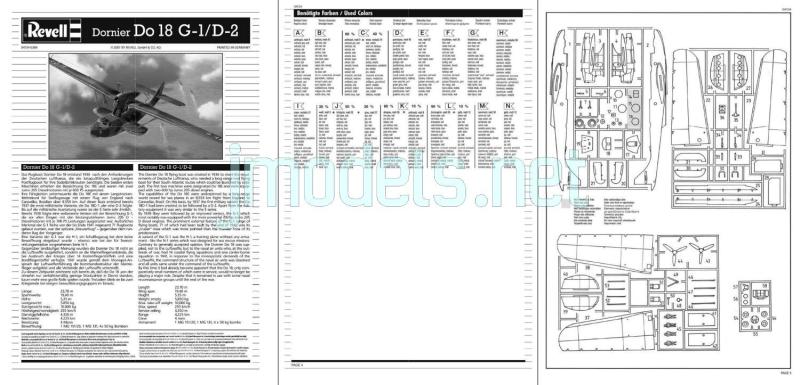
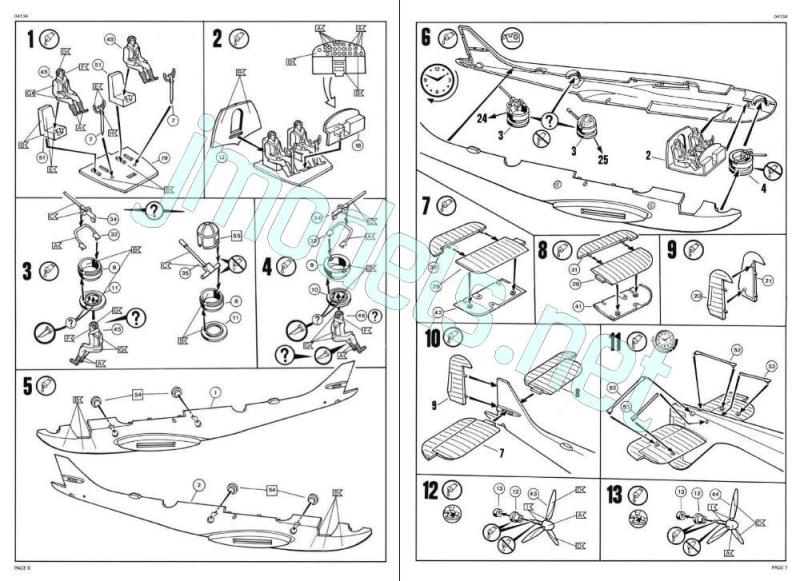
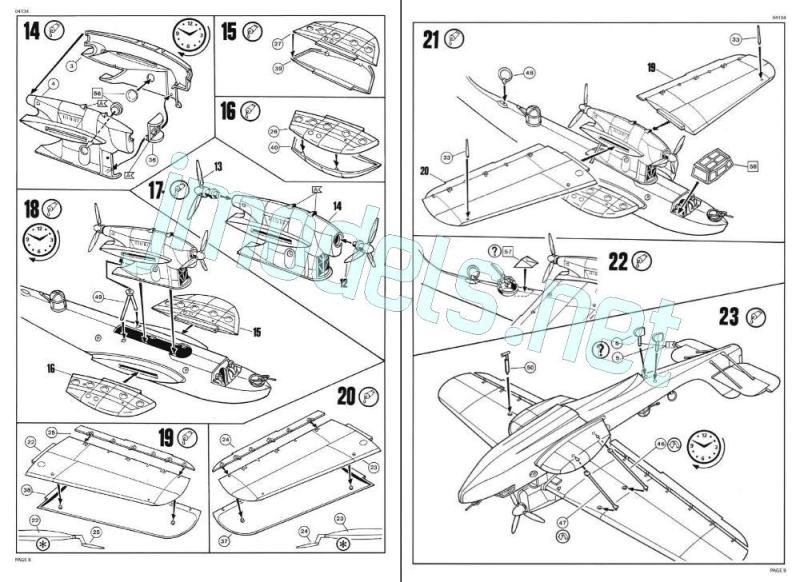
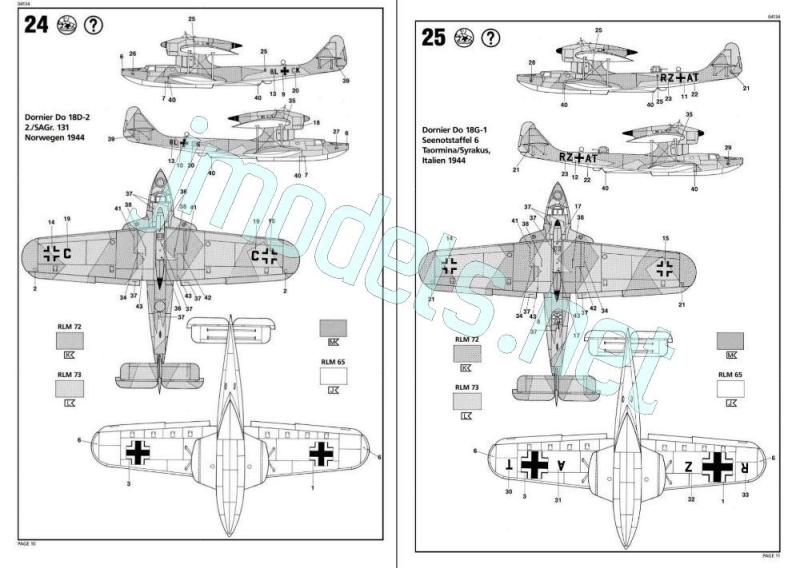
- Folleto A4 de 12 páginas impreso en blanco y negro. Contiene un sumario histórico y técnico sobre el avión, una lista de colores con equivalencias en pinturas del fabricante, un plano numerado de piezas, 23 capítulos de montaje y 2 páginas de perfiles.
- 12-page A4 bokklet printed in black and white. It contains a historical and technical summary about the aircraft, a list of colors with matches in Revell paints, a numbered parts plan, 23 assembly chapters and 2 pages of profiles.
LO MEJOR – THE BEST:
- Sencilla de montar de caja.
- Easy to build from the box.
LO PEOR – THE WORST:
- Parco detalle interno. Paneles demasiado grandes. Grosor de algunas piezas.
- Sparse interior detail. Wide engraved panel lines. Some thickish parts.
VALORACIÓN – CONCLUSION:
- Junto con las de Matchbox, es la única maqueta por ahora del Do 18 en esta escala. Molde antiguo necesitado de varias mejoras, especialmente por dentro, si se trata de sacarle partido.
- Along with the Matchbox kits, it’s currently the only Do 18 offer in this scale. It’s an old mold which needs several refinements, especially internally, to give its full potential.

La maqueta
Este bonito hidro alemán sólo ha sido retratado en las escalas 1/144 y 1/72. Nada hay nuevo de él desde hace muchos años y sería bueno que alguna marca le echase el ojo otra vez, porque esta maqueta de Revell es lo más reciente que nos queda, y ya ha llovido.
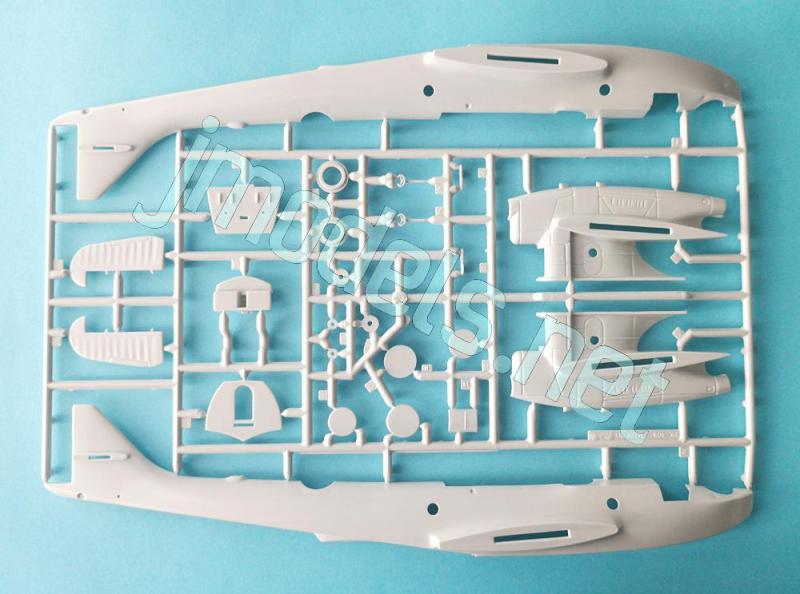
La maqueta es copia de una maqueta muy anterior de Matchbox con nuevas instrucciones y calcas. La caja trae cuatro bastidores de piezas, uno de ellos transparente, las calcas y las instrucciones. El moldeado es robusto y contundente, como corresponde al origen, y las piezas poseen un aspecto brillante. Los paneles de las alas (no los hay en el fuselaje) están grabados sin miramientos, lo que le da un aspecto un punto tosco a la maqueta. Además de las líneas de molde esperables en un molde tan viejo, las piezas no tienen defectos otros defectos que dos pequeños rechupes tras el escalón de la quilla y en los bujes de las hélices sencillos de rellenar. No hay rebabas de importancia. Las marcas internas del fuselaje no interfieren ni con la carlinga ni con lo poco que se ve del interior a través del puesto dorsal trasero.
La construcción del modelo de caja no es en apariencia difícil, ya que tan sólo consta de 62 piezas y las versiones de pintura reflejan el mismo camuflaje compuesto de RLM 72 y 73 con RLM 65 por debajo. Siendo un molde tan antiguo, el modelista que quiera sacarle más partido a su modelo deberá trabajarlo a fondo.
Al igual que en la maqueta original de Matchbox, esta caja permite elegir entre un Do 18D-1 o G-1. El modelo D fue el primero militar y llevaba dos motores Jumo 250C de 600 hp con dos ametralladoras MG 15 a proa y en la zona dorsal, mientras que el G-1 fue una variante mejorada con motores Jumo 250D de 880 hp y su armamaento consistía en una ametralladora MG 131 a proa y una torreta eléctrica con control remoto dotada de un cañón MG 151 de 20 mm. Las diferencias de armamento están incluidas en la maqueta.
Reseña
La carlinga trae dos asientos demasiado grandes, dos controles, un mamparo trasero con un acceso hueco y el panel con la consola central, que tal vez sea lo mejor de todo porque lleva los instrumentos en relieve nítido. Para darle algo más de contenido a todo esto, tenemos dos pilotos patilargos en traje de vuelo. En las figuras se aprecian el casco y gafas, las botas y los arneses bien definidos. Con ellos van otros dos semejantes para colocarlos en los puestos artilleros proel y dorsal. La cubierta de la carlinga es gruesa y su estructura está representada con un relieve aceptable. El techo lleva también grabadas las ventanillas.
Los montajes del armamento consisten en anillos dobles superpuestos con el afuste y las ametralladoras por separado. Las armas son pasables, pero el cañón alternativo del modelo G-1 es una birria. La maqueta da opción para instalar en la zona dorsal la ametralladora en un puesto abierto con un parabrisas gordo por delante (Do 18D-1) o bien el mencionado cañón alojado en una torreta, también gruesa, pero con los montantes marcados (Do 18G-1). El puesto proel no tiene cobertura. Antes de unir las mitades del fuselaje sólo hay que colocar las ventanillas, reproducidas en gruesas piezas transparentes.
Las mitades del fuselaje muestran superficies completamente limpias de líneas de panel y están moldeadas con las raíces de los flotadores laterales y la deriva. La zona dorsal tras el puesto artillero lleva una base para colocar la antena direccional separada y la quilla tiene dos timones, también un poco anchos, emplazados por detrás del escalón inferior.
El siguiente proceso consiste en pegar los flotadores y montar los motores. Los flotadores laterales van insertados en el fuselaje con lengüetas. Las superficies me parecen bien logradas, con el detalle tanto en relieve como grabado, Las tomas de las células de combustible están bien perfiladas y resultan creíbles.
El compartimento de los motores, encastrado en las alas, está separado en mitades que tienen ranuras para pegarlas. La estructura se añade al hueco del fuselaje sobre lengüetas situadas en el borde del hueco. Cada mitad del fuselaje lleva una puerta de acceso grabada y detallada con una ventanilla. Las líneas de panel no son tan profundas como demasiado anchas e irreales. Las cubiertas de los motores muestran ranuras de refrigeración a los lados con aspecto simplón y las dos tomas de cada motor, ambas lógicamente orientadas hacia proa, vienen sin ahuecar. Por debajo del motor delantero hay un hueco para pegar las tomas superpuestas de los radiadores, con la malla bien reproducida. La sección del ala encastrada bajo el motor trasero lleva un soporte en forma de V.
Las hélices tienen los bujes unidos a las palas, pero estos son erróneos. Ambos tienen distinto diámetro que los hace distintos como en la realidad, pero el de la hélice empujadora (trasera) debería ser muy puntiagudo y el de la tractora no tan romo. Las palas parecen demasiado anchas en la zona central y el grosor es un punto excesivo.
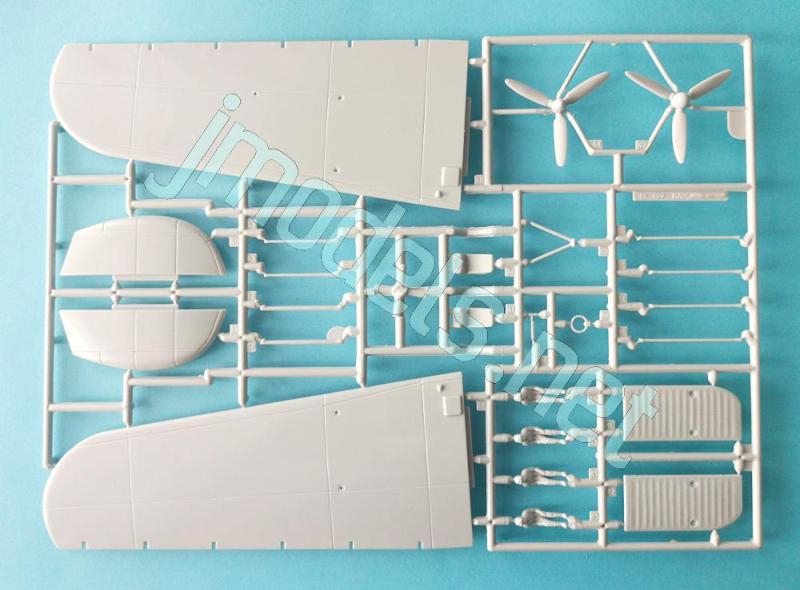
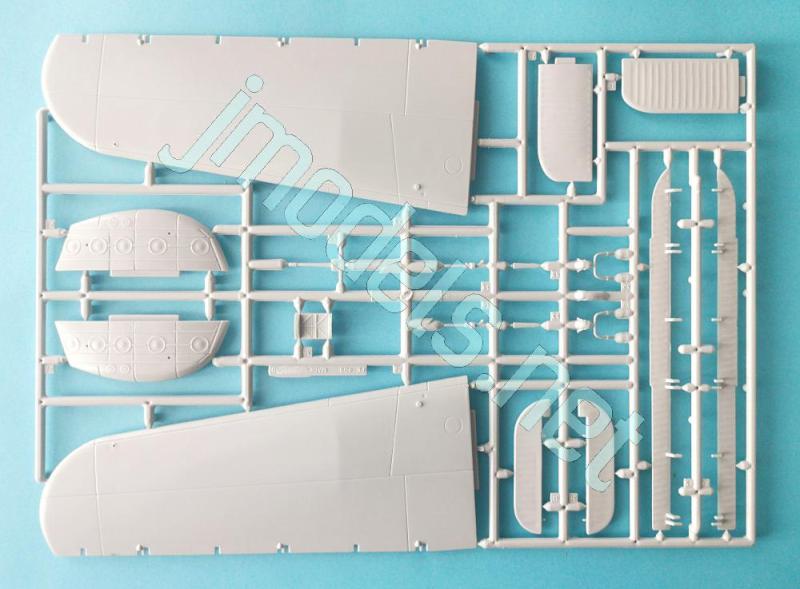
Las alas se presentan en mitades con los alerones y flaps tipo Junker de una pieza moldeados con las bisagras. Estas se insertan en las ranuras de los bordes de salida. La superficie de estas piezas muestran el relieve de la estructura consistentemente, pero con poca sutileza. Las líneas de panel son demasiado anchas, aunque no tan profundas y apenas hay un par de tapas de accesos grabadas de la misma forma. Las puntas carecen de las luces de navegación y el único detalle de la cara superior son los dos mástiles de las antenas. En la zona inferior tenemos el tubo Pitot y los dos soportes pegados sobre los flotadores laterales.
Las superficies de cola tienen los timones separados y los estabilizadores también los soportes inferiores. Las superficies muestran un relieve en la estructura consistente y muy definido. En el timón vertical es más sutil que sobre los estabilizadores.
La hoja de calcas incluye cruces alemanas, matrículas, insignias de unidad y diversos estarcidos con un acabado fino y brillante, buen registro, saturación de color y nitidez. No tienen exceso de soporte.
El manual de instrucciones tiene un formato A4 y costa de doce páginas impresas en blanco y negro. Contiene un sumario histórico y técnico sobre el avión, una lista de colores con equivalencias en pinturas de Revell, un plano numerado de piezas, 23 capítulos de montaje y dos páginas de perfiles.
Como ya he señalado antes, se pueden pintar dos aparatos con idéntico camuflaje formado por los colores RLM 72 y 73 en todas superficies superiores y RLM 65 por debajo de ellas.
El Do 18G-1 tiene un claro error tanto en la datación como en la localización de la unidad (Seenotstaffel 6). En realidad esta unidad no estaba en Taormina (Sicilia) en 1944 porque para entonces la isla estaba en manos Aliadas, sino que fue en ese año cuando fue disuelta en Portofino (Italia), a donde se había trasladado en agosto de 1943.
Valoración
Es un tanto penoso que lo único que nos quede por el momento de este hidroavión alemán tan elegante sea una maqueta de un molde viejo. Como tal, al modelista sólo le caben dos alternativas: construirla como viene sin más complicaciones o con mejoras parciales, o bien remangarse y, además de hacerle un interior más digno, refinar el detalle externo, que se puede por mucho que esos paneles como autopistas causen dentera.◊

The kit
This attractive German seaplane has only ever been released in the 1/144 and 1/72 scales. Nothing new has appeared for many years, and it would be great if a manufacturer took another look at it as the Revell kit is the most recent option available, and that was a long time ago.
The kit is a reissue of an older Matchbox tool, with new instructions and decals. The box contains four sprues, one of which is clear, along with the decals and instructions. The molding is robust and substantial, consistent with its origins, and parts have a glossy finish. Panel lines on the wings (there are none on the fuselage) are deeply and somewhat crudely engraved, giving the kit a rather rough appearance. Beyond the seam lines typical of such an old kit, the only other flaws are two small sink marks located behind the keel step and on the propeller hubs which are easy to fill. There is no significant flash. Internal marks on the fuselage sidewalls do not affect the cockpit or the limited interior visible through the rear dorsal station.
Building the kit out of the box is straightforward, as it consists of only 62 parts, with all painting options featuring the same camouflage scheme: RLM 72 and 73 on the upper surfaces and RLM 65 on the undersides. Given the age of the tool, any modeler looking to get the best result will need to put in a significant amount of extra work.
As with the original Matchbox kit, this release offers the choice of building either a Do 18D-1 or a G-1 variant. The D model was the first military version; it was powered by two 600 hp Jumo 250C engines and featured MG 15 machine guns in the nose and dorsal positions. The G-1, by contrast, was an improved variant equipped with 880 hp Jumo 250D engines; its armament consisted of an MG 131 machine gun in the nose and a remotely controlled electric turret housing a 20 mm MG 151 cannon. These differences in armament are reflected in the kit.
Review
The cockpit includes two oversized seats, a pair of control columns, a rear bulkhead with an open access, and an instrument panel with a center console, arguably the best feature, as the instruments are crisp. To add some detail, the kit provides two long-legged pilots in flight suits; their helmets, goggles, boots, and harnesses are all well-defined. Two identical figures are included for the forward and dorsal gunner positions. The cockpit canopy is thick, with its framing represented in reasonably raised detail; the overhead windows are also molded on the piece frame.
The armament mounts consist of double rings, with the mounts and machine guns provided as separate parts. The weapons are passable, but the alternative cannon for the G-1 variant is quite poor. The kit offers the option to equip the dorsal position either as an open station with a thick windscreen (for the Do 18D-1) or with the said cannon in a turret, which is also rather thick, though it does feature a clearly defined structural frame (for the Do 18G-1). The forward gunner position is open. Before joining the fuselage halves, the fuselage windows, molded as thick, clear pieces, are attached.
The fuselage halves show smooth surfaces without any panel lines, and are molded with the attachment points for the side sponsons and the vertical stabilizer. Behind the dorsal gunner station, there is a separate loop antenna, while the keel includes two rudders, also a bit thick, attached aft of the lower hull step.
The next stage involves attaching the side floats and assembling the engines. The side floats are glued to the fuselage with tabs. The surfaces look well-done, featuring both raised and engraved detail; the fuel cell fillers are well-defined and look convincing.
The engine superstructure are provided in halves with slots to assemble the wings. The structure attaches to a recess in the fuselage via tabs located along the edge of the gap. Each fuselage half features an engraved access door, complete with a small clear window. Panel lines are not particularly deep, but they are overly wide and lack a realistic appearance. The engine cowlings feature cooling louvres on the sides that look rather simplistic, and the the intakes for each engine, both correctly facing the front, are solid. Beneath the forward engine, there is a recess for attaching the radiator intake assemblies, which feature well-reproduced mesh detail. The wing section beneath the rear engine includes a V-shaped support strut.
The propellers have the hubs molded with the blades, but those are inaccurate. While they differ in diameter, correctly reflecting the real things, the hub for the rear (pusher) propeller should be very pointed, and the hub for the front (tractor) propeller should be less blunt. The blades appear too wide in the center, and they are a bit too thick.
The wings are also provided in halves, with the ailerons and Junkers-style flaps molded as single pieces, including their hinges; these fit into slots along the trailing edges. The surface detail consistently shows the underlying structural ribs, but are a bit too raised. Panel lines are too wide, though not particularly deep, and there are only a couple of access panels, in the same style. The wingtips lack navigation lights, and the only detail on the upper surface consists of two antenna masts. On the underside, there is a Pitot tube, along with the wing struts.
The tail assembly features separate rudders and elevators, while the stabilizers have separate lower support struts. The surfaces feature a consistent and very well-defined raised structural detail. On the rudder, this is more subtle than on the stabilizers.
The decal sheet includes German crosses, registrations, unit insignia, and some stencils; they have a fine, glossy finish, good register and color saturation, and are sharp. There is no excess carrier film.
The instruction manual is printed in A4 format and consists of twelve pages in black and white. It contains a historical and technical summary about the aircraft, a list of colors with their matches in Revell paints, a numbered parts diagram, 23 assembly steps, and two pages of profiles.
As previously mentioned, you can paint two aircraft with an identical camouflage scheme, consisting of RLM 72 and 73 on all upper surfaces, and RLM 65 on the undersides.
The Do 18G-1 alternative contains a clear mistake regarding both the date and the location of the unit (Seenotstaffel 6). In fact, this unit was not based in Taormina (Sicily) in 1944, as the island was in Allied hands by that time, but was instead disbanded that same year in Portofino (Italy), having relocated there in August 1943.
Conclusion
It is rather a pity that, for the moment, all that we have of this elegant German seaplane is a kit based on an old mold. Consequently, the modeler is left with only two options: build it as is, either straight out of the box or with a few minor enhancements, or roll up their sleeves and, in addition to provide a more respectable interior, refine the external detail. This is certainly possible, even if those wide panel lines are enough to make one grimace.◊
Publicado – Published: 10 / 2026
©www.jmodels.net


Debe estar conectado para enviar un comentario.