

De un vistazo – Quick look
MATERIAL Y PIEZAS
MEDIA & PARTS:
- Plástico inyectado (40 piezas), plástico transparente (3 piezas). Incluye 2 figuras.
- Injected plastic (40 parts), clear plastic (3 parts). Two figures included.
CALCAS – DECALS:
- Escarapelas británicas de tres tipos, matrículas, líneas de pisado, marcas de los flotadores y estarcidos. Apariencia brillante y algo gruesa. Motivos nítidos, con algunos círculos ligeramente descentrados. Soporte sobrante de moderado a excesivo.
- Three types of British roundels, registers, wing walk lines, float markings and some stencils. Gloss and a bit thick finish, with good register but some circles are a slightly off-centred. Surplus carrier film ranging from moderate to excessive.
OPCIONES – OPTIONS:
- Fairey Seafox. Red L. Fleet Air Arm. 702 Squadron detached to HMS Asturias. 1942.
- Fairey Seafox. Black H9A. 713 Catapult Flight Kalafrana. HMS Arethusa. Malta, 1939.
INSTRUCCIONES – INSTRUCTIONS:
- Folleto de formato A5 y 4 páginas impreso en blanco y negro. Contiene un sumario histórico sobre el avión, una tabla de colores genéricos, 14 pasos de montaje y perfiles. La parte posterior de la caja muestra perfiles en color con la identidad de aparatos y las medidas del modelo terminado.
- 4-page A5 leaflet printed in black and white. Shows a historical summary about the aircraft, a color chart , 14 assembly steps and profiles. The back side of the box contains profiles in color with the identity of the two paint choices and the measure of the finished model.
LO MEJOR – THE BEST:
- Molde bastante limpio. Montaje de caja sencillo. Cúpula del observador posicionable. Opciones de pintura variadas.
- Fairly clean tooling. Easy build from the box. The observer’s canopy can be shown open. Varied paint finishes.
LO PEOR – THE WORST:
- Líneas de paneles en relieve. Detalle interno escaso.
- Raised panel lines. Scarce cockpit detail.
VALORACIÓN – CONCLUSION:
- Desaparecida desde hace décadas, sólo interesará al nostálgico, que lo puede montar de caja sin problemas obvios, o bien al muy interesado en este avión, para el que puede ser una ocasión de mejorar lo que Matchbox le puso a este inusual avión.
- A piece for the second-hand market for decades, it will only be interesting either for the nostalgic plastic lot, who can be easily build it from the box, or those seeking for a chance to train their skills improving this rare aircraft.

La maqueta
La revisión de hoy está dedicada a un avión de la que no hay maqueta moderna más acá de 2007. Eso, en la escala 1/72, porque si consideramos la 1/48, hay que remontarse a los años 40 del siglo pasado.
Esta no es de las maquetas más antiguas de la Matchbox británica, que la lanzó en los años 80, con sucesivas reediciones de la Matchbox alemana y también de Revell en 2007. Sin embargo, a juzgar por esta caja concreta, parece que también hubo una edición que la marca china Shangai Universal Plastic Toys Co. debió importar para el mercado nacional. Se conoce que mi maqueta nunca llegó a su destino y debió rodar hacia otros rincones del esférico mundo.
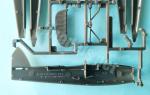
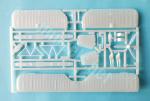
La caja trae dos bastidores de distinto color, un bastidor transparente, las calcas y las instrucciones. A estas alturas, los modelistas del negociado aéreo ya deben saber a qué atenerse con las ediciones de Matchbox: molde contundente, marcas de eyector, paneles en relieve, piezas transparentes mediocres cuando menos, pero también, por lo general, ensamblaje sencillo y ausencia de rebabas.
Las opciones de pintura son distintas, permitiendo escoger entre un aparato camuflado del HMS Asturias, un mercante incautado y armado por el Almirantazgo británico para realizar patrullas en el Atlántico Sur, o bien el hidro del crucero ligero HMS Arethusa, que estaba pintado en color aluminio en 1939, cuando el buque servía aún en el Mediterráneo.
Revisión
La carlinga es muy pobre y está mal reproducida. Los lados muestran un par de marcas positivas en cada uno. No hay suelo en los puestos, sino un par de pestañas a diferente altura para colocar los asientos separados y simplones. El panel de instrumentos lo suponemos moldeado con cada lado del fuselaje y representado en mitades lisas y sin calca. El puesto delantero carece de palanca o instrumentos de vuelo y el trasero lleva un receptáculo para posicionar una ametralladora mediocre y un panel separado en el fuselaje para escamotearla.
Las piezas transparentes son un poco gruesas y la estructura está reproducida en fino relieve. Además del parabrisas del piloto, el puesto del observador está cubierto por una cúpula separada que puede mostrarse abierta.
Para rellenar el hueco de la casi nada interior hay dos figuras de tripulantes bien moldeadas y bastante limpias, aunque sin mucha nitidez en la indumentaria. Recuerdan las patilargas de Airfix de otros tiempos.
Las mitades del fuselaje están provistas de vástagos para facilitar su alineación y moldeadas con la deriva a cola. El detalle exterior está en relieve y comprende las líneas de los paneles y registros más los peldaños de acceso. En la parte delantera se observa el tubo Venturi mal reproducido in situ y las dos salidas de refrigeración laterales del motor cegadas. Los escapes también están moldeados en su lugar, pero son demasiado finos y poco abultados. Sobre la cubierta del motor hay un panel separado que incluye el prominente refrigerador de aceite y una toma adicional por debajo del fuselaje que puede verse en fotos del Seafox. La cola está detallada con un patín de amarre.
La cara frontal del motor tiene las tomas de aire bien marcadas pero cerradas. La hélice está unida al buje y el perfil de las palas guarda un cierto parecido con el real, aunque la torsión es muy escasa.
Las alas vienen separadas en tres piezas, las dos inferiores van insertadas mediante lengüetas en el fuselaje. Los timones y flaps están bien grabados pero el costillaje de todas las superficies está excesivamente marcado comparado con las imágenes del avión real. Las luces de aterrizaje están bien representadas, pero carecen de piezas transparentes.
El timón vertical y los estabilizadores están separados. En ambos casos las superficies de control muestran un entelado marcado en exceso, aunque las aletas están bien grabadas.
Los soportes interplanos están unidos por la base y se insertan en ranuras abiertas en los planos superiores para facilitar el montaje y la alineación de estas piezas. Los soporte de control de los alerones y flaps vienen aparte. Los puntales situados sobre el fuselaje consisten en una pieza en V y un soporte suelto a cada lado. En general, estas piezas son finas y están limpias.
Los flotadores están divididos en dos mitades con la parte superior separada. Esta pieza muestra un buen detalle en relieve de las superficies antideslizantes, así como de los puntos de anclaje de los soportes. Los timones están definidos, pero no son delgados y carecen de los controles. Los soportes están separados en dos piezas finas en forma de M que carecen de los estribos y de la barra vertical de control de los timones, situada en medio de los soportes traseros. Las piezas parecen demasiado finas y aplastadas en lugar de planas. Un puntal separado y también delgado refuerza la estructura del conjunto trasero.
La hoja de calcas aparenta buen estado. Muestra escarapelas británicas de tres tipos, matrículas, líneas de pisado, marcas de los flotadores y estarcidos con apariencia brillante y algo gruesa. Los motivos son nítidos, pero algunos círculos están ligeramente descentrados. El soporte sobrante varía de moderado a excesivo.
Las instrucciones vienen en un folleto de formato A5 y cuatro páginas impreso en blanco y negro que contiene un sumario histórico sobre el avión, una tabla de colores genéricos, catorce pasos de montaje y perfiles. La parte posterior de la caja muestra perfiles en color con la identidad de los aparatos y las medidas del modelo terminado.
El texto del folleto está en chino, pero gracias a los traductores visuales podemos enterarnos de los colores necesarios para pintar la maqueta, además de otras referencias en fotos o publicaciones. Los acabados muestran un aparato camuflado en tres grises diferentes empleado durante la Guerra Mundial y otro de color aluminio de preguerra, ambos lo bastante diferentes en apariencia y grado de dificultad.
Valoración
El Seafox es un avión tan raro que ni siquiera se produjo en serie con ruedas. Consecuentemente, el modelismo le ha prestado casi nula atención hasta ahora. Por este motivo no se puede dejar de valorar que Matchbox decidiese un día lanzar esta maqueta. Lleva décadas en el mercado de segunda mano, donde la encontrarán quienes sientan un interés particular por este tipo de aviones fuera de catálogo o les traiga recuerdos de otros tiempos.
El montaje de caja no aparenta dificultades singulares más allá de las de cualquier biplano de este tamaño. Pero también puede tener su aliciente para el modelista deseoso de encontrar un avión inusual con el que poner a prueba habilidades e ingenio en la mejora. Si las necesitan, hay algunas calcas y piezas específicas para esta maqueta en el mercado.◊




The kit
Today’s review is dedicated to an aircraft for which no modern model kit has been available since 2007. That’s in the 1/72 scale, because if we consider the 1/48 scale, we have to go back to the 1940s.
This isn’t one of the oldest kits from the British Matchbox, which launched it in the 1980s, with subsequent reissues by the German Matchbox and also by Revell in 2007. However, judging from this particular boxing, it seems there was also a release that the Chinese company Shanghai Universal Plastic Toys Co. must have imported for the domestic market. Apparently, my kit never reached its destination and clearly travelled to other corners of the globe.
The box contains two different colored sprues, a clear sprue, the decals, and the instructions. By now, aircraft modelers should know what to expect from Matchbox kits: a robust tooling, ejector pin marks, raised panels, and mediocre clear parts at best, but also, generally, easy assembly and no flash.
Paint options are varied, allowing you to choose between a camouflaged aircraft from HMS Asturias, a merchant ship armed by the British Admiralty for patrols in the South Atlantic, or the seaplane operating on board the light cruiser HMS Arethusa, which was painted aluminum in 1939 when the ship was still serving in the Mediterranean.
Review
The cockpit is very poor and badly reproduced. The sides show a couple of raised marks on each side. There’s no floor in the cockpits, but rather a couple of tabs at different heights for attaching the simple, separate seats. We assume the instrument panel is molded with each fuselage side and represented in smooth halves without a decal. The front cockpit lacks a control stick or flight instruments, and the rear one has a panel to install a poor machine gun and a separate panel in the fuselage to store it.
The clear parts are a bit thick, and the frames are raised. In addition to the pilot’s windshield, the observer’s cockpit is covered by a separate canopy that can be displayed open.
To fill the gap of the almost empty interior, there are two well-molded and fairly clean crew figures, although their clothing lacks sharpness. They are reminiscent of the long-legged Airfix figures of yesteryear.
The fuselage halves are fitted with pins for easy alignment and molded with the tail fin. External detail is molded raised and includes the panel lines, access panels, and steps. At the front, the poorly rendered Venturi tube and the two closed side cooling outlets are visible. The exhausts are also molded in place, but they are too thin and lack definition. On the engine cowling is a separate panel that includes the prominent oil cooler and there is an additional intake below the fuselage that it is evident in some photos of the Seafox. The tail is detailed with a mooring skid.
The engine front has clearly defined but closed air intakes. The propeller is attached to the hub, and the blades profile bears some resemblance to the real one, although the twist is minimal.
The wings come in three separate pieces; the two lower ones are inserted into the fuselage with tabs. The rudders and flaps are well-engraved, but the ribbing on all surfaces is excessive compared to images of the real aircraft. The landing lights are well-represented but molded in place without clear parts.
The vertical rudder and the stabilizers are separate. In both cases, the structural detail is overdone, although the tabs are well-engraved.
The wing struts are joined in the base and inserted into slots on the upper wings to ease assembly and alignment. The aileron and flap push rods are separate. The cabane struts consist of a V-shaped piece and a separate strut on each side. Overall, these parts are thin and clean.
The floats are divided into two halves with the top side separate. This part shows good embossed detail on the non-slip surfaces, as well as the attachment points for the struts. The rudders are well-defined but not thin and they lack the controls. The struts are separated into two thin, M-shaped pieces that lack the footrests and the vertical rudder control bar located between the rear struts. The pieces look too thin and flattened rather than square. A separate thin strut reinforces the rear assembly structure.
The decal sheet seems in good condition. It shows three types of British roundels, registers, wing walk lines, float markings, and stencils with a glossy, somewhat thick appearance. The decals are sharp, but some roundels are slightly off-center. The carrier film varies from moderate to excessive.
The instructions come in a 4-page A5 leaflet printed in black and white containing a historical summary about the aircraft, a color chart with generic references, fourteen assembly steps, and profiles. The back of the box shows color profiles identifying the aircraft and the dimensions of the finished model.
The text is in Chinese, but thanks to modern visual translators, we can understand the colors needed to paint the model, in addition to other references in pictures or publications we can use. The finishes show an aircraft camouflaged in three different shades of gray used during World War II, and another in pre-war aluminum, both quite different in appearance and level of difficulty.
Conclusion
The Seafox is such a rare aircraft that it wasn’t even series-produced with wheels. Consequently, the modeling community has paid it almost no attention until now. For this reason, Matchbox’s decision to release this kit is truly remarkable. It has been available on the secondhand market for decades, where it can be found by those with a particular penchant in this type of discontinued kits or those who are the nostalgic plastic kind.
The kit itself doesn’t appear to pose any particular difficulties beyond those of any biplane in this scale. However, it can also be appealing to the modeler eager to find an unusual aircraft with which to test their skills and ingenuity in modifications. If needed, there are some decals and parts available specifically designed for this kit.◊
Publicado – Published: 11 / 2025
©www.jmodels.net
 jmodels.net
Debe estar conectado para enviar un comentario.