
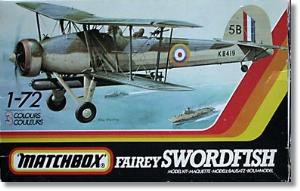
De un vistazo – Quick look
MATERIAL Y PIEZAS
MEDIA & PARTS:
- Plástico inyectado (65 piezas), plástico transparente (1 pieza). Incluye 2 figuras.
- Injected plastic (65 parts), clear plastic (1 part). Two figures included.
CALCAS – DECALS:
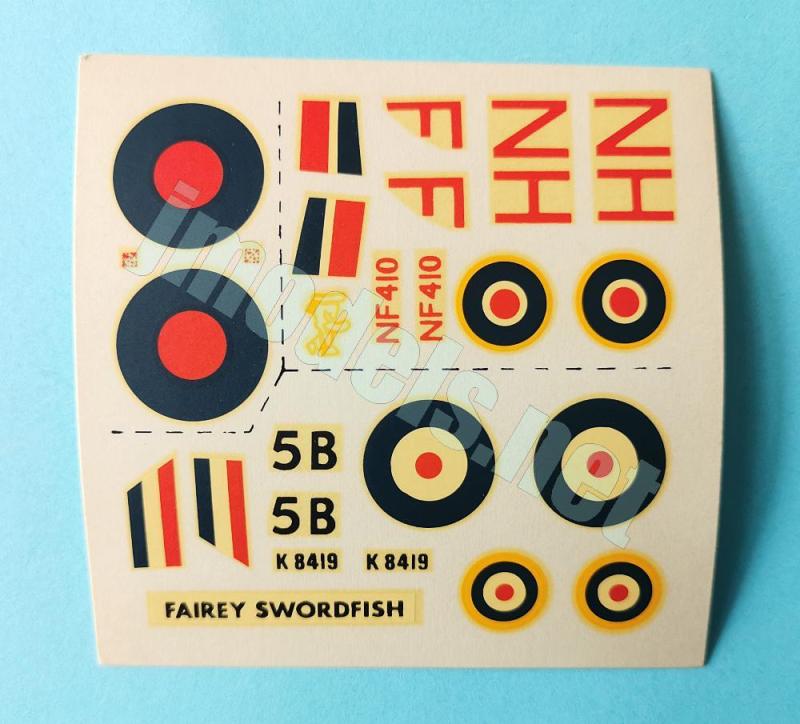
- Escarapelas británicas, insignia de unidad y matrículas. Aspecto fino y mate. Aparente buena saturación de color y registro correcto, salvo 2 escarapelas. Sin demasiado soporte excedente.
- British roundels, squadron marking and registrations. Thin and matte finish. Apparent good color saturation, and correct register but for 2 roundels. Minimum surplus carrier.
OPCIONES – OPTIONS:
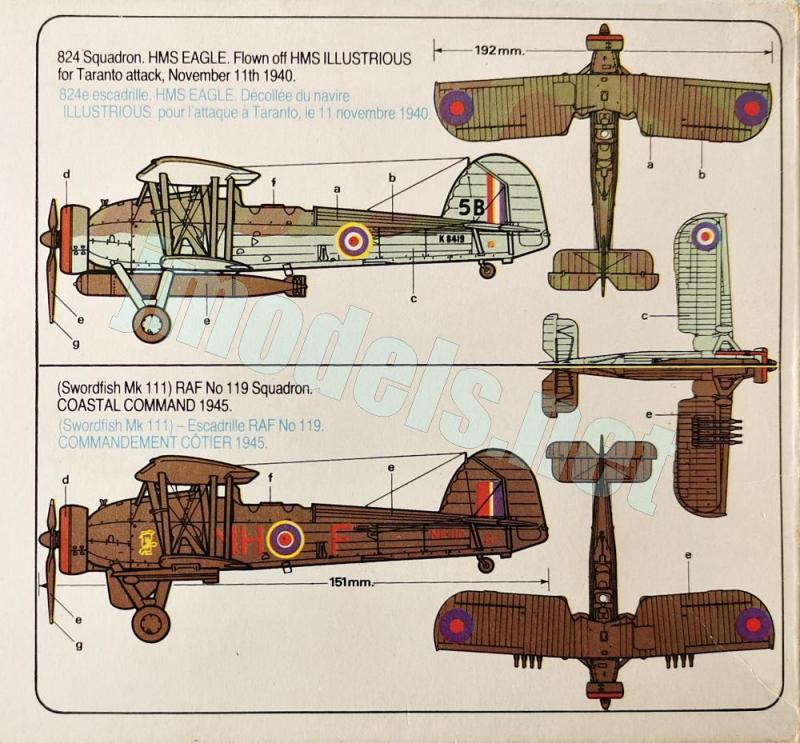
- Fairey Swordfish Mk I. Escuadrilla 824.HMS Eagle. Destinado al HMS Illustrious en el raid de Tarento. 11 de noviembre de 1940.
- Fairey Swordfish Mk III. Escuadrilla N.º 119 de la RAF. Mando Costero. 1945.
- Fairey Swordfish Mk I. 824 Squadron.HMS Eagle. Flown off HMS Illustrious for Taranto attack. November 11th 1940.
- Fairey Swordfish Mk III. RAF No. 119 Squadron. Coastal Command. 1945.
INSTRUCCIONES – INSTRUCTIONS:
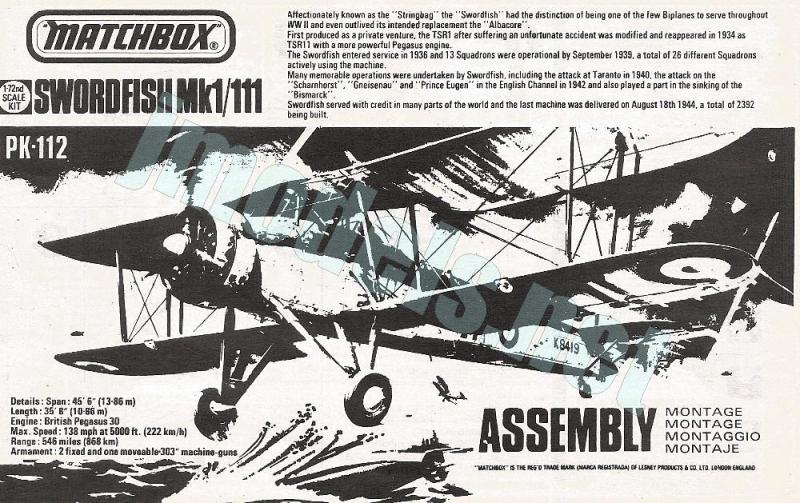
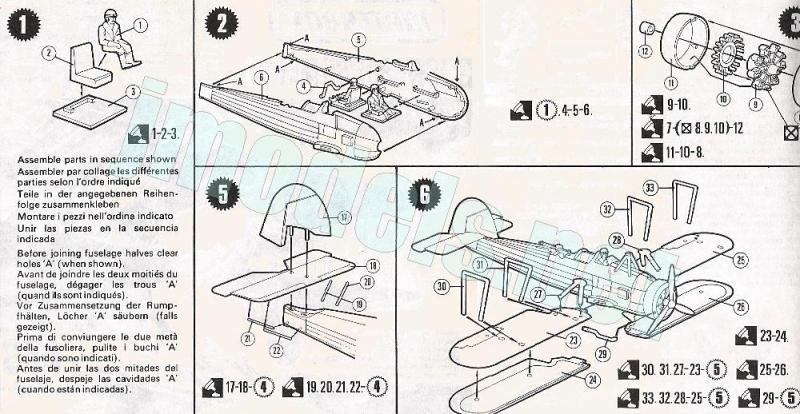
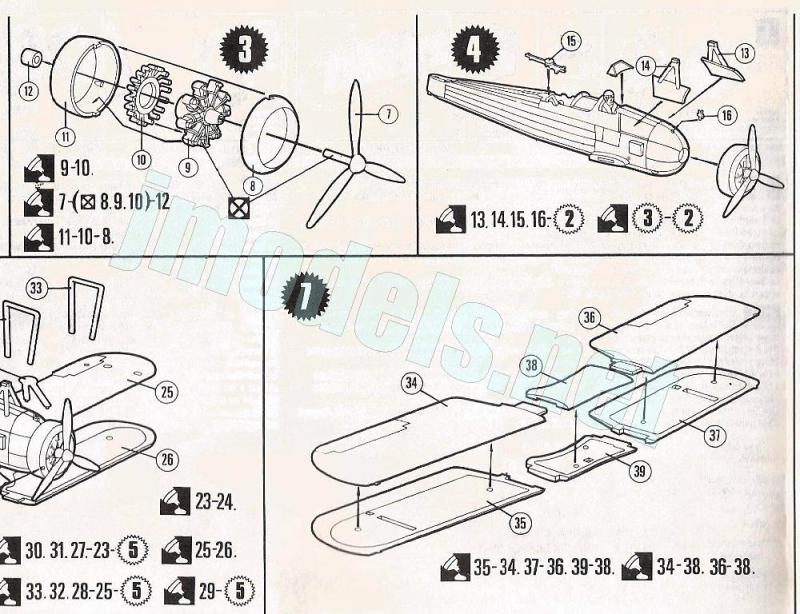
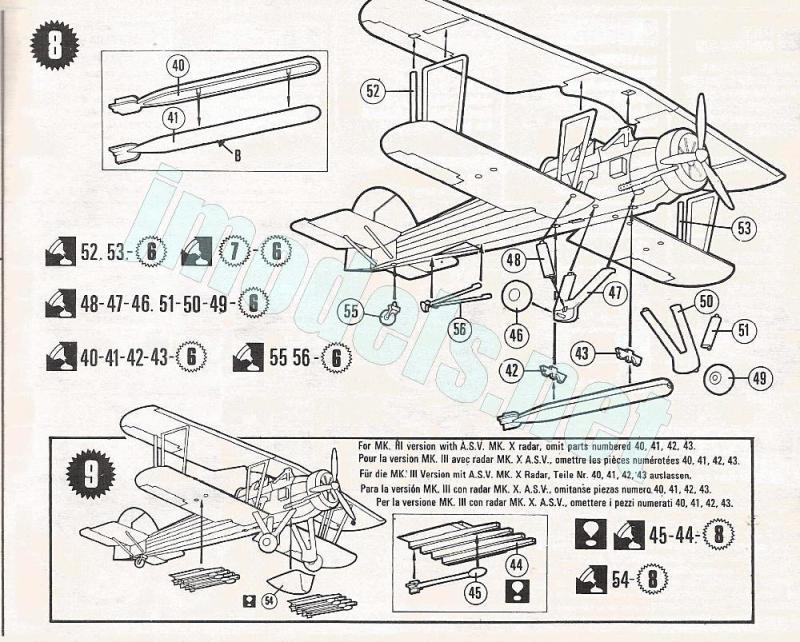
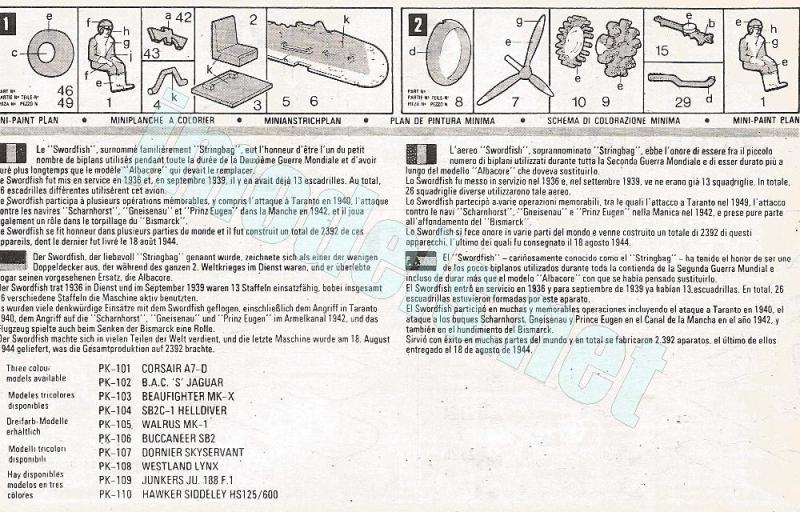
- Folleto apaisado doblado de 6 páginas impreso en blanco y negro. Contiene un sumario histórico en varios idiomas sobre el avión, 9 secuencias de montaje y una tabla de colores en varios idiomas con equivalencias de pinturas de la gama Humbrol Authentic. La cara trasera de la caja muestra las opciones de pintura en color.
- 6-page folded landscape leaflet printed in black and white. It contains a historical summary about the aircraft in several languages, 9 assembly sequences and a multilingual table of colors with matches in the Humbrol Authentic range. The back side of the box shows the painting choices in color.
LO MEJOR – THE BEST:
- Sencillez de montaje. Alternativas de armamento y pintura.
- Ease of assembly. Armament and paint choice.
LO PEOR – THE WORST:
- Carlinga. Líneas de panel. Detalle y piezas sobredimensionados.
- Cockpit. Panel lines. Oversize detail and parts.
VALORACIÓN – CONCLUSION:
- No trae cuenta comparada con la moderna de Airfix en la escala pequeña, pero si se tiene en cartera, se puede montar con comodidad como viene, o bien servir para base para las múltiples mejoras que necesita.
- Compared with the modern 1/72 Airfix kit, this Swordfish isn’t worth the effort, but if you have it in your stash, you can easily build it as is, or use it as a base for the many upgrades it needs.

La maqueta
Matchbox comenzó a lanzar sus maquetas del Swordfish allá por los años 70. Estas ediciones dejaban atrás a las anteriores de Airfix y Frog, que dominaron el mercado durante las décadas anteriores. Hasta la aparición del nuevo molde de Airfix hace unos años, el Swordfish de Matchbox era aún la maqueta más moderna en la escala 1/72. Esta caja concreta fue la última que hizo la marca británica antes de pasar a manos alemanas a inicios de los años 90.
La caja contiene tres bastidores de diferente color, un pequeño bastidor transparente, la hoja de calcas y las instrucciones. El moldeado de las piezas es marca de la casa e inconfundible: limpieza en el molde, piezas de aspecto brillante, detalle contundente y por encima de escala en ciertos casos, más nulas rebabas, salvo en el motor.
Las alternativas que se ofrecen son un Swordfish Mk I con un torpedo debajo del fuselaje y un Mk III con cohetes RP-3 y radar centimétrico. El armamento y el radar son las únicas alternativas de montaje. En ambos casos el puesto intermedio del tercer tripulante está suprimido.
Reseña
Los lados internos del fuselaje no tienen detalle y hay una leve marca a cada lado que no se apreciará con el fuselaje pegado. Las carlingas están vacías con la excepción del asiento de cada tripulante y una base para pegarlo. Sólo el puesto trasero lleva un soporte y una ametralladora, nada mala para tener 40 años. El hueco que Matchbox no rellenó se disimula con dos figuras patilargas en las que se aprecian detalles del traje de vuelo que faltan en otras a esta escala, y lo mejor es que al menos no tienen esas deformaciones en el plástico que vulgarmente llamamos rechupes. El parabrisas es grueso y tiene el marco definido. Esta pieza la juzgo por imágenes de internet, ya que mi maqueta no lo trae.
Las líneas de panel, concentradas en la parte delantera del fuselaje, son tremendamente gruesas y profundas. Esta es una característica intrínseca a las maquetas de Matchbox, por ello quienes las adquieren ya saben uno de los precios a pagar. El inconformista las tapará y volverá a grabarlas, y el nostálgico deseará dejarlas tal cual. No hay tercer camino.
En la parte posterior del fuselaje la réplica de la estructura está sobreescalada, pero es más aceptable al no llevar líneas. La parte inferior es plana sin detalle, sólo hay un par de leves hundimientos en el plástico que se remedian fácilmente. Los elementos más evidentes en las mitades del fuselaje son el filtro de combustible, naturalmente liso y sin definir, un par de tapas grabadas a los lados, las raíces de los planos inferiores, el gancho de apontaje alojado en un rebaje en el extremo inferior, y dos rebajes en la cubierta delantera para colocar los soportes intermedios del plano superior, que vienen unidos al panel que les sirve de base.
El motor es bastante decente. Tiene los cilindros y alzaválvulas bien definidos y un anillo posterior separado que contiene los finos colectores de escape. La cubierta está dispuesta en dos anillos de diferente profundidad. La hélice es fina, de una pieza, y moldeada con el buje. El perfil de las puntas de las palas y su torsión parecen adecuadas. El escape viene separado y muestra las aletas de refrigeración del extremo definidas aunque simplonas.
Las alas están separadas en mitades. Se unen entre sí y con el fuselaje mediante lengüetas y ranuras. El plano superior está separado en tres partes. Tanto el detalle del entelado como el grabado de las superficies de control es demasiado grande, aunque consistente y, como en el caso del fuselaje, más aceptable por tener menos paneles reproducidos a lo salvaje, por así decir. Los bordes de ataque poseen poca redondez, sin embargo el perfil de las puntas se parece bastante al real en ambos planos. Las luces de navegación son nítidas, aunque no hay faro de aterrizaje.
Los soportes son todos demasiado gruesos para la escala, incluido el de conexión de los alerones. Los soportes externos entre las alas van insertados en una ranura abierta en el plano superior, lo que facilita mucho el montaje, pero carece de realismo.
Los planos de cola está separados en dos piezas gruesas con el mismo detalle superficial que las alas. Los soportes de los estabilizadores son algo más finos y creibles.
Los puntales del tren de aterrizaje vuelven a ser gruesos pese a estar bien perfilados. Las ruedas son de una pieza, grandes y gordas a simple vista. Las llantas están bien grabadas, pero carecen de la válvula de aire de los neumáticos. La rueda de cola está moldeada con su pata.
El Swordfish Mk I lleva como armamento un torpedo separado en mitades con las aletas definidas pero sin las hélices, más dos soportes. El Mk III lleva en su lugar el radomo del radar de una pieza que hay que situar a ojímetro, además de dos paneles subalares que incluyen los raíles de lanzamiento de los cohetes sin detallar. Los cohetes vienen aparte. Su aspecto es más bien simplón y grueso.
La hoja de calcas incluye escarapelas británicas, una insignia de unidad y matrículas de aspecto fino y mate. Poseen aparente buena saturación de color y registro correcto, salvo dos escarapelas con los círculos centrales desiguales. No tienen demasiado soporte excedente.
Las instrucciones son iguales a las de las primeras cajas y consisten en un folleto apaisado doblado formando seis páginas impreso en blanco y negro. Contiene un sumario histórico en varios idiomas sobre el avión, nueve secuencias de montaje y una tabla de colores en varios idiomas con equivalencias de pinturas de la gama Humbrol Authentic, desaparecida hace décadas. La cara trasera de la caja muestra las opciones de pintura en color.
Son dos las posibilidades de pintar la maqueta. El Mk I lleva el conocido patrón denominado “Shadow Shading scheme”, empleada por los Swordfish que tomaron parte en el ataque a la base italiana de Tarento, mientras que el Mk III luce un librea negra acorde a sus misiones nocturnas. La Escuadrilla Nº 119 a la que perteneció estuvo basada en Bélgica en 1944-45. Su misión era la caza nocturna de submarinos enanos alemanes que pretendían interferir la navegación en el Cana de la Mancha, por este motivo estaban dotados del radar centimétrico ASV Mk XI.
Valoración
Si uno no es de los que viven del pasado y pretende conservar la maqueta en su caja hasta el fin de los tiempos, sino que pertenece a la selecta facción de los que no hacen prisioneros con sus maquetas y está decido a montarla algún día, no tiene más alternativa que hacerla de caja aceptando todos sus rasgos de medio siglo atrás, o bien dedicarle unas sesiones de “arte y ensayo” para darle un acabado más digno y afín a los tiempos que corren. Campo donde darle algo más de lo que trae tiene de sobra, desde luego.
El modelista que no la tenga en inventario debería considerar si le merece la pena obtenerla en el mercado de segunda mano. Hace tiempo salía a cuenta lo pagado por el esfuerzo de mejorarla y además no existía el molde nuevo de Airfix. Ahora, como todo vale una gónada y media, ignoro qué precio descomedido se paga por ella.◊


The kit
Matchbox released their first Swordfish kits back in the 1970s. These kits surpassed the earlier ones from Airfix and Frog, which had dominated the market for decades. Until the arrival of the new Airfix tool a few years ago, the Matchbox Swordfish was still the most modern offer in the 1/72 scale. This particular boxing was the last one produced by the British brand before it passed into German hands in the early 1990s.
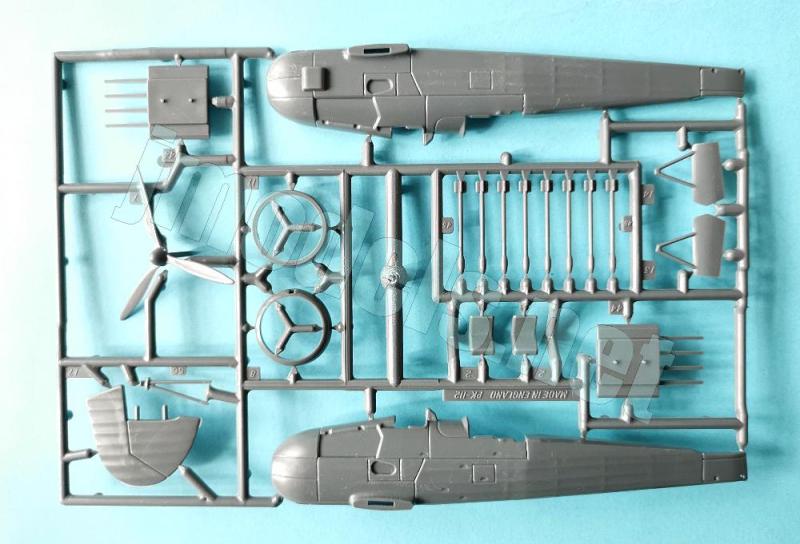
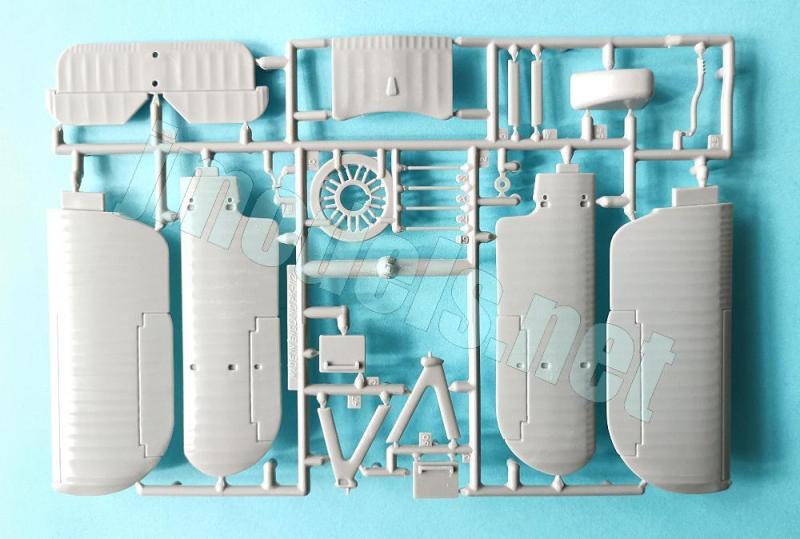
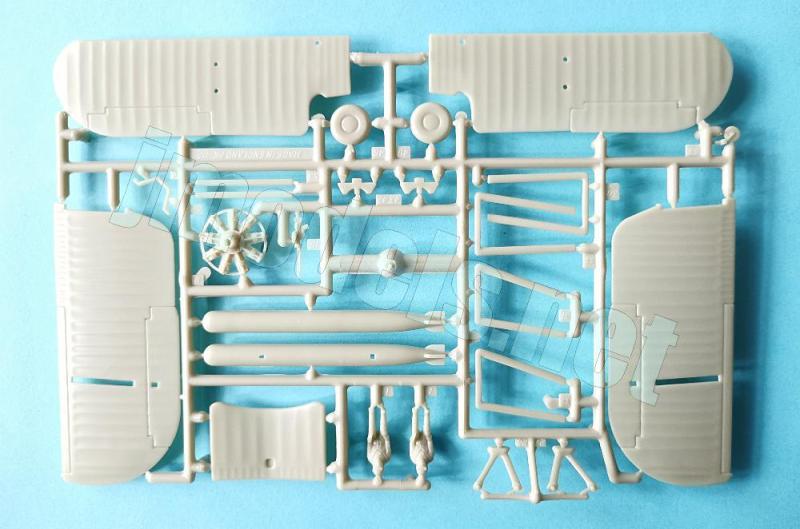
The box contains three different colored sprues, a small clear sprue, a decal sheet, and the instructions. The standard of molding is unmistakable and a hallmark of the brand: clean molding, glossy parts, overscaled detail, and virtually no flash, except on the engine.
The box allows you to build a Swordfish Mk I with a torpedo under the fuselage or a Mk III with RP-3 rockets and a centimetric radar. The armament and radar are the only assembly alternatives. In both cases the intermediate cockpit for a third crew member is missing.
Review
The fuselage sidewalls are empty of detail, and there’s a shallow pin mark on each side that won’t be visible once the fuselage is attached. The cockpits are empty except for a seat and a floor. Only the rear cockpit has a mount and a machine gun, which doesn’t look bad for a 40-year-old kit. The gap that Matchbox left inside the fuselage is filled by two long-legged figures with passable detail on the flight suits and no sinks on the plastic. The windshield is thick and has a defined frame. I’m judging this piece from Internet pictures, as my kit doesn’t have one.
Panel lines, mostly engraved at the fuselage front, are incredibly thick and deep. This is an intrinsic characteristic of Matchbox kits, so those who get them already know this is one of the prices to pay. The nonconformist will fill them up and re-engrave them, while the nostalgic will want to leave them as they are. There is no third way.
On the rear of the fuselage, the structural detail is overscale, but looks more acceptable since there are no engraved lines. The underside is flat without detail; there are only a couple of slight sinks on the plastic that can be easily filled. The most obvious elements on the fuselage halves are the fuel filter, smooth and undefined, a couple of engraved covers on the sides, the lower wing roots, the separate arrester hook attached inside a recess molded on the lower tail cone, and two recesses on the forward fuselage deck for the panels molded with the cabane struts.
The engine is quite decent, showing well-defined cylinders and valve tappets and a separate rear ring containing the thin exhaust manifolds. The cowling is arranged in two rings of different depths. The propeller is thin, one-piece, and molded with the hub. The blade tip profile and twist look fine. The exhaust is separate and shows well-defined, though simple, cooling fins.
The wings are separated into halves. They are joined to each other and to the fuselage by tabs and slots. The upper wing is separated into three parts. Both the fabric detail and the engraved lines for the control surfaces are too wide, although consistent and, as with the fuselage, more acceptable because fewer panels are present. The leading edges are a bit flat; however, the profile of the tips is quite similar to the real thing on both wings. The navigation lights are molded on the wingtips, although there is no landing light.
The struts are all too thick for the scale, including the aileron connect struts. The outboard struts are inserted into slots open on the upper wing, which greatly facilitates assembly but detracts realism.
The tailplanes are separated into two thick pieces with the same surface detail as the wings. The stabilizer struts are somewhat thinner and more realistic.
The landing gear struts are again thick despite being well-profiled. The wheels are one-piece, large, and visibly thick. The hub covers are well-engraved, but the tire valves are missing. The tailwheel is molded with the strut.
The Swordfish Mk I’s armament consists of a torpedo divided into halves with defined fins but no propellers, plus two braces. The Mk III carries a one-piece radar radome below the fuselage as well as two underwing panels that include the rocket launch rails, which are not detailed. The rockets are separate pieces with a rather simplistic appearance.
The decal sheet is printed with British roundels, squadron marking and registrations. They have a thin and matte finish, apparent good color saturation, and correct register but for two roundels out of register. They show minimal surplus carrier.
The instructions are the same as those included in the first Swordfish kits and consist of a 6-page folded landscape leaflet printed in black and white. It contains a historical summary about the aircraft in several languages, nine assembly sequences and a multilingual table of colors with matches in the Humbrol Authentic range. The back side of the box shows the painting choices in color.
There are two paint options for the model. The Mk I is painted in the well-known «Shadow Shading scheme”, used by the Swordfish bombers that took part in the Taranto raid; while the Mk III sports a black livery for its night attack role. No. 119 Squadron, to which it belonged, was based in Belgium in 1944-45. Its mission was the night hunt for German midget submarines that attempted to disrupt shipping in the English Channel; for this reason, they were equipped with the ASV Mk XI centimetric radar.
Conclusion
If you’re not one of those who live in the past and intend to keep the kit inside the box until the end of time, but rather belong to the select group of those who take no prisoners in their kits and are determined to build it someday, you have no alternative but to build it straight from the box, accepting all its half-century-old features, or dedicate a few sessions to give it a more upgraded finish, in keeping with modern times. There’s certainly plenty of room for improvement.
Modelers who don’t already own this kit should consider whether it’s worth getting one on the second-hand market. Some time ago, when the new Airfix tool was yet to be released, its low cost could compensate for the effort needed to improve the kit. Now that any trifle costs a fortune, I don’t know what exorbitant price people are asking for it.◊
Publicado – Published: 6 / 2026
©www.jmodels.net

 jmodels.net
Debe estar conectado para enviar un comentario.