

De un vistazo – Quick look
MATERIAL Y PIEZAS
MEDIA & PARTS:
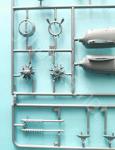
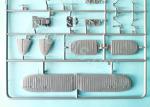
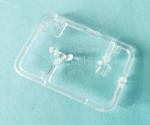
- Plástico inyectado (85 piezas), plástico transparente (3 piezas).
- Injected plastic (85 parts), clear platic (3 parts).
CALCAS – DECALS:
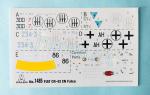
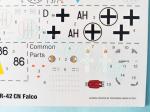
- Impresas por Cartograf. Escarapelas italianas y cruces alemanas, marcas de cola y unidad, matrículas, arneses y panel de instrumentos. Acabado fino y brillante, gran nitidez y saturación de color. Sin exceso de soporte.
- Printed by Cartograf. Italian roundels and German crosses, tail markings and unit badges, registers, seat belts and instrument panel. Thin and very glossy finish, great sharpness and color saturation. No excess of carrier film.
OPCIONES – OPTIONS:
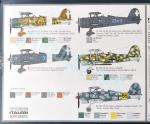
- Fiat CR.42 CN “Falco”. Regia Aeronautica. 167º Gruppo Autonomo. 300ª Squadriglia. Ciampino, September 1942. Aircraft flown by Capitano Corrado Ricci.
- Fiat CR.42 CN “Falco”. Regia Aeronautica. 377ª Squadriglia Autonoma Intercettori. Palermo (Sicily), 1943. Aircraft flown by Tenente Luigi Torchio.
- Fiat CR.42 CN “Falco”. Regia Aeronautica. MM 9128. 60º Gruppo Autonomo Intercettori. 234ª Squadriglia. Venegono (Varese), 1943. Aircraft flown by Capitano Mario Anselmi.
- Fiat CR.42 CN “Falco”. Luftwaffe. Nachtschlatgruppe 9. Rome, March 1944.
- Fiat CR.42 CN “Falco”. Luftwaffe. Jagdgeschwader 107. Nancy (France), May 1944.
INSTRUCCIONES – INSTRUCTIONS:
- Folleto A5 de 12 páginas impreso en color. Contiene un sumario histórico sobre el avión, un plano numerado de piezas, 10 pasos de montaje y 5 páginas de perfiles con referencias de color del código Federal Standard y pinturas acrílicas de Italeri.
- 12-page A5 booklet printed in color. It contains a historical summary about the aircraft, a numbered parts plan, 10 assembly steps and 5 pages of profiles with colors identified in the Federal Standard code and Italeri acrylics.
LO MEJOR – THE BEST:
- Molde limpio. Buen detalle general, en especial la carlinga y el motor. Calcas. Versiones de pintura variadas. Primera maqueta de Italeri de la variante CN italiana.
- Clean tooling. Nicely detailed overall, especially in the cockpit and engine. Decals. Varied paint finishes. First kit of the CN variant released by Italeri.
LO PEOR – THE WORST:
- Relieve superficial en las alas un tanto exagerado.
- Wing surface raised structure a bit overdone.
VALORACIÓN – CONCLUSION:
- Indudablemente, Italeri estudió bien este caza y por eso el molde le renta con los años y sigue siendo el mejor CR.42 en la escala 1/72. Esta edición es en realidad doble al contener los modelos CN y LW con sus características particulares en la misma caja. Apta para modelistas de menor experiencia y a un precio todavía asequible.
- Unquestionably, Italeri studied this fighter well, and that’s why the tooling has served them well over the years and remains the best CR.42 in the 1/72 scale. This release is actually a double edition, including both the CN and LW variants with their own characteristics in the same box. Suitable for less experienced modelers and still a good value for money.

La maqueta
De alguna manera el Fiat CR.42 siempre estuvo presente en la escala 1/72. La maqueta más antigua de plástico parece la de Revell de los años 60, que reeditaron numerosas marcas, entre ellas Matchbox ya en los años 90. Pavla Models también tuvo su propia versión a inicios de este siglo y finalmente se añadió Italeri con un estreno a todo trapo, ya que su nuevo molde de 2006 incluía un magnífico libreto lleno de información útil para el modelista. Desgraciadamente, este complemento no ha vuelto a adjuntarse en las reediciones posteriores, al igual que ha ocurrido con otras maquetas de la marca de temas y escalas diversas.
Hace largo tiempo publiqué una revisión sobre la maqueta que Italeri le dedicó al modelo CR.42 AS, un a versión empleada en el norte de África con ciertas características propias. La aparición de una nueva maqueta del avión es una ocasión propicia para volver a darle un repaso, esta vez sobre la versión de caza nocturno.
Lo primero que conviene señalar es que esta reedición no es una simple copia de la última maqueta que Italeri lanzó del CR.42 (CR.42 LW, referencia 1276), un modelo fabricado para la Luftwaffe, sino que se trata de una versión, que hasta ahora no teníamos, del caza nocturno de la Regia Aeronáutica (CR.42 CN), aunque Italeri ha mezclado ambos modelos en la caja. Además, los nuevos bastidores, incluido el de las piezas transparentes, coinciden en realidad con los de la primera edición (referencia 1260), que poseen partes suplementarias para el tren de aterrizaje, armamento subalar y los escapes, entre otras.
La caja contiene dos bastidores de piezas, un bastidor transparente, la hoja de calcas y las instrucciones. Las piezas están bien embaladas y las transparentes vienen en su propia bolsa aparte. Lo único que sigue sin protección son las calcas. Al igual que en las cajas previas, el molde muestra una factura notable y gran limpieza, sin rebabas en las piezas y dos leves marcas de eyector a los lados de la carlinga que no es necesario limpiar.
El folleto de instrucciones es nuevo, aunque gran parte de los pasos de montaje son idénticos a otras ediciones. De este nuevo folleto, las versiones de pintura A y E estaban ya presentes en la primera edición de la maqueta y la D procede de la maqueta CR.42 LW. Aunque Italeri no lo indica, el modelista tiene de hecho dos variantes con el mismo rol en una misma caja: el modelo italiano CN y el alemán LW, diferenciados no solamente por la pintura y las calcas.
Revisión
La carlinga sigue siendo uno de los aspectos más destacables de la maqueta. Contiene los lados del fuselaje moldeados con el relieve estructural y una consola en el lado derecho con una calca para los instrumentos. Estos lados taparán las dos marcas de eyector que mencionaba anteriormente. Los lados van pegados sobre el suelo, que contiene la base del asiento. El respaldo viene separado y las calcas de los arneses llevan incluido el almohadillado de esta pieza. Además de la palanca, tenemos un mamparo frontal que incluye el panel de instrumentos, también reproducido en calca, la mira y los pedales separados. La parte superior de la carlinga dispone de un fino bastidor estructural y el panel trasero aparte que incluye el reposacabezas. Al contrario de mi revisión anterior, el parabrisas me parece ajustado a la escala y no lo veo tan grueso como en aquella ocasión.
Las mitades del fuselaje muestran un detalle notable, con el relieve estructural tras la carlinga muy bien simulado y paneles grabados en la parte delantera. Las piezas incluyen las raíces alares de los planos inferiores, las superficies verticales de cola, la rueda de cola carenada y la luz de navegación de cola, mientras que el tubo venturi viene separado. La rueda de cola y su carena están separadas en mitades y desdicen del resto. El timón vertical está bien grabado y detallado con líneas finas en relieve simulando la estructura interna, aunque la bisagra inferior es demasiado gruesa debido a las limitaciones del plástico en esta escala. La cubierta superior está moldeada aparte con los tubos de las ametralladoras muy bien reproducidos en las troneras.
Las dos coronas del motor están limpias de rebabas y muestran los cilindros y alzaválvulas con gran nitidez. La parte trasera dispone de un colector unido a los escapes. El capó lo componen cuatro piezas. Las aletas de refrigeración forman un anillo, mientras que la parte anterior viene en dos mitades más el anillo externo. El carenado de las cabezas de los cilindros está reproducido con finura. La hélice es de una pieza y sus palas son finas y bien perfiladas. El buje viene separado.
Los apagallamas de los escapes tienen los soportes incluidos y dos alternativas distintas, correspondientes a la versión CN y LW respectivamente. El modelo alemán dispone de pequeñas aletas de refrigeración bien definidas. La alargada toma de aire del carburador también posee estas dos opciones con formas redondeada o cuadrada en la entrada según el caso. Las instrucciones nos indican los escapes apropiados para los dos aviones de la Luftwaffe en el paso 5, aunque uno de ellos no los lleva en los perfiles a color. Sin duda, debe tratarse de una pequeña omisión.
Las alas están separadas en tres piezas. Como ya he mencionado, las raíces de los planos inferiores están unidas al fuselaje. Su envergadura es algo más larga de lo normal para poder moldear las tomas y salidas abiertas del radiador, que el CR.42 llevaba dentro del fuselaje junto al extradós de las alas. Los planos inferiores van insertados con lengüetas en las raíces.
Las alas muestran un ligero exceso de relieve debido a las líneas con las que Italeri lo ha querido representar. Sin embargo, los alerones están muy bien grabados en los planos superiores y las bisagras son realistas. El plano superior lleva las luces de navegación bien marcadas y como alternativa el pequeño generador para los focos subalares. Las instrucciones indican que solamente es aplicable a la versión D, aunque en realidad se trata de la A, como se aprecia en los perfiles. Bajo las alas inferiores podemos instalar dos soportes y dos bombas opcionales para uno de los LW alemanes, o bien dos focos con las lentes transparentes aplicables a uno de los CN italianos.
Los soportes de las alas son delgados y presentan perfiles estrechos. Dos de ellos contienen los tubos pitot. La instalación entre las alas no debería ser problemática porque los puntos de unión están bien marcados en las superficies. Los tensores de los soportes exteriores están solamente reflejados en los perfiles.
Los planos horizontales de cola también cuentan con lengüetas para pegarlos. Los timones y aletas están bien grabados. Las superficies de los timones no está representada con líneas, sino con ligeros rebajes entre las costillas, aunque también parecen un tanto exagerados.
El tren de aterrizaje se puede montar con las patas carenadas en las versiones italianas o bien con medias carenas o sin ellas en el modelo LW. Las carenas completas o sin la parte inferior consisten en dos mitades moldeadas con el soporte trasero y las ruedas entre ambas, mientras que las patas sin carenas tienen la horquilla separada y también incluyen el soporte posterior. El soporte intermedio entre las patas viene aparte. Las ruedas tienen las llantas detalladas y los neumáticos simulan el peso del avión, aunque la forma parece un tanto desmesurada.
Creo que es la primera vez que Cartograf realiza la hoja de calcas del CR.42 de Italeri. Como es esperable, la impresión es excelente. La hoja contiene escarapelas italianas y cruces alemanas, marcas de cola y unidad, matrículas, los arneses y el panel de instrumentos. Las calcas presentan un acabado fino y brillante con gran nitidez y saturación de color. No tienen exceso de soporte.
Las instrucciones están impresas en color en un folleto de formato A5 de doce páginas que muestra un sumario histórico sobre el avión, un plano numerado de piezas, diez pasos de montaje y cinco páginas de perfiles con referencias de color del código Federal Standard y pinturas acrílicas de Italeri.
Aparte de los pequeños errores que he descrito, los capítulos de construcción se pueden seguir fácilmente. Las terminaciones de pintura son casi todas distintas y variadas. Tan sólo dos aviones lucen una librea negra típica de un caza nocturno y los demás diferentes camuflajes que supongo harán difícil la elección entre todos ellos.
Valoración
Ya era hora que Italeri volviese a reeditar este Fiat CR.42, que no veíamos desde hace algunos años en una edición conmemorativa de la Batalla de Inglaterra, y en su forma de caza nocturno desde casi dos décadas atrás.
Sin lugar a dudas, el molde sigue siendo el mejor en esta escala y tiene pocos defectos que achacarle, entre los que no van a figurar el destacable detalle de la carlinga, el motor o la sencillez de montaje, apto para los menos expertos. Las versiones que Italeri nos ofrece son de hecho dos versiones del CR.42 en una sola caja con acabados distintos y atractivos en su mayoría. Tampoco es despreciable que el precio aún resulte asequible, lo que no se puede decir de casi ninguna maqueta actual, incluso cuando se trata de auténticas “bacalás”.
Si Italeri sigue en su línea de lanzamientos, es probable que veamos otras reediciones con más o menos diferencias a no mucho tardar. Tanto mejor para quienes no pudieron hacerse con otras variantes del caza en su momento.◊






The kit
In some ways, the Fiat CR.42 has always been present in the 1/72 scale. The oldest plastic kit seems to be the Revell kit from the 1960s, which was reboxed by lots of other companies, including Matchbox well into the 1990s. Pavla Models also had their own offer at the beginning of this century, and Italeri finally joined the group with a resounding debut, as their 2006 new tool kit included a splendid booklet full of useful information for modelers. Unfortunately, this supplement has not been included in subsequent reissues, as has happened with other kits from the company of different topics and scales.
A long time ago, I published a review about Italeri’s CR.42 AS, a version fielded in North Africa with certain unique characteristics. The release of this new box is a good excuse to complement the first article with the night fighter version this time.
The first thing to note is that this reissue is not a simple copy of Italeri’s last CR.42 kit (CR.42 LW, reference 1276), a variant manufactured for the Luftwaffe, but rather a version, previously unavailable, of the Regia Aeronautica night fighter (CR.42 CN), although Italeri have combined both variants in the box. Furthermore, the new sprues, including the clear parts, actually match those of the first edition (reference 1260), which have additional parts for the landing gear, underwing armament, and exhausts, among others.
The box comes with two sprues of parts, a clear sprue, the decal sheet, and the instructions. Parts are neatly bagged, and the clear pieces kept in their own separate bag. The only thing left unprotected are the decals. As with previous boxings, the standard of moulding is quite good and parts are remarkably clean from flash and show two small ejector marks on the cockpit sides that do not need to be cleaned.
The instruction booklet has been refreshed, although many of the assembly steps are identical to other releases. Of this new booklet, paint versions A and E were already present in the first edition of the kit, and D comes from the CR.42 LW kit. Although Italeri does not indicate it, the modeler actually has two variants with the same role in the same box: the Italian CN model and the German LW counterpart, differentiated not only by their liveries and decals.
Review
The cockpit remains one of the kit’s most notable aspects. It contains the fuselage sides moulded with the raised structural detail and a console on the right side with a decal for the instruments. These sides will hide the two ejector marks I mentioned above. The sides are glued to the floor, which contains the seat base. The backrest is separate, and the harness decals include padding for this part. In addition to the control column, there is a front bulkhead that includes the instrument panel, also provided with a decal, the sight, and separate pedals. The upper cockpit has a thin structural frame, and the rear panel includes the headrest. Contrary to my previous review, the windshield appears to be true to scale and is not as thick as it seemed to me back then.
The fuselage halves show remarkable detail, with the aft raised structure very well simulated and engraved panels on the front. The parts include the lower wing roots, the vertical tail surfaces, the faired tailwheel, and the tail navigation light, while the venturi tube comes separately. The tailwheel and its fairing are separated in halves, which looks poor compared to the rest of detail. The vertical rudder is well engraved and detailed with thin raised lines reproducing the internal structure, although the lower hinge is solid due to the limitations of plastic at this scale. The upper fuselage deck is moulded apart, with nice machine gun barrels inside the troughs.
The two engine rows are clean from flash and show sharp cylinders and tappers. The rear row has a manifold connected to the exhausts. The cowling is made up of four pieces. The cooling gills are provided in a ring, the front section is in two halves and the outer ring is separated. The cylinder head fairings are finely reproduced. The propeller is a single piece, with thin, well-profiled blades and the hub provided separately.
The flame dampers are moulded with the support brackets and have two different alternatives corresponding to the CN and LW versions respectively. The German model has small, well-defined cooling fins. The carburetor air intake also has the same options, with rounded or square inlets depending on the version. The instructions indicate the appropriate exhausts for both Luftwaffe aircraft in step 5, although they are missing in one of them depicted in the color profiles. This must surely be a minor omission.
The wings are separated into three pieces. The roots moulded with the fuselage parts have a longer span to include radiator intakes and outlets, which the CR.42 had inside the fuselage next to the wing upper surface. The lower wings are inserted with tabs into the roots.
The wings have a bit overdone structural ribbing that Italeri have rendered in thin raised lines. However, the ailerons are very well engraved and the hinges are realistic. The wing plane features defined navigation lights and, as an option, the small generator for the underwing searchlights. The instructions indicate these are only applicable to the D version, but it is actually the A version, as can be seen in the profiles. Under the lower wings, we can install two optional racks and bombs for one of the German LWs, or two searchlights with clear lenses for one of the Italian CNs.
The wing struts are thin and have flattened profiles. Two of them contain the pitot tubes. Installation between the wings should not be problematic because the attachment points are clearly engraved on the surfaces. The outboard wire bracing are only shown in the profiles.
The tailplanes also have tabs for attachment. The elevators and trim tabs are well engraved. Their surfaces are not represented with lines, but with slight sinks between the ribs, but these also look a bit overdone.
The landing gear can be assembled with spats in the Italian versions, but also with half spats or without them in the LW variant. The spats come in halves moulded with the rear strut and the wheels in between them, while the bare wheel struts have a separate fork. The brace strut between the undercarriage legs is separate. The wheels have detailed rims, and the tires simulate the weight of the aircraft, but the shape seems too flat.
I think this is the first time Cartograf have produced a decal sheet for Italeri’s CR.42. As expected, the sheet is excellent. It contains Italian roundels and German crosses, tail and unit markings, registers, the harnesses, and the instrument panel. Decals have a very thin, glossy finish with great sharpness and color saturation. They have no excess carrier.
The instructions are printed in color in a 12-page A5 booklet that shows a historical summary about the aircraft, a numbered parts plan, ten assembly steps, and five pages of profiles with color references provided in the Federal Standard code and Italeri acrylic paints.
Aside from the minor mistakes described, the construction chapters are easy to follow. Paint finishes are almost all distinct and varied. Only two aircraft feature a black livery typical of a night fighter, and the others sport different camouflages. I suppose this will make choosing between them all difficult.
Conclusion
This new Fiat CR.42 has taken a long time to arrive again since Italeri launched a Battle of Britain commemorative edition some years ago, but modelers have waited for a night fighter variant for almost two decades.
The tool remains the best in this scale and has few relevant flaws to criticize and these of course exclude the remarkable cockpit detail, the engine, or the ease of assembly, suitable for the less experienced. Italeri offer two versions of the CR.42 in a single box, with different and attractive finishes for the most part. On top of that, the price is still affordable, which can’t be said of most current offers, even when it comes to genuine infamous kits.
If Italeri continue with their release policy, we’re likely to see other reboxes with some other variants soon. So much the better for those who couldn’t get the fighter and AS kits at the time.◊
Publicado – Published: 7 / 2025
©www.jmodels.net
 jmodels.net
Debe estar conectado para enviar un comentario.