
De un vistazo – Quick look
MATERIAL Y PIEZAS
MEDIA & PARTS:
- Plástico inyectado (57 piezas).
- Injected plastic (57 parts).
CALCAS – DECALS:
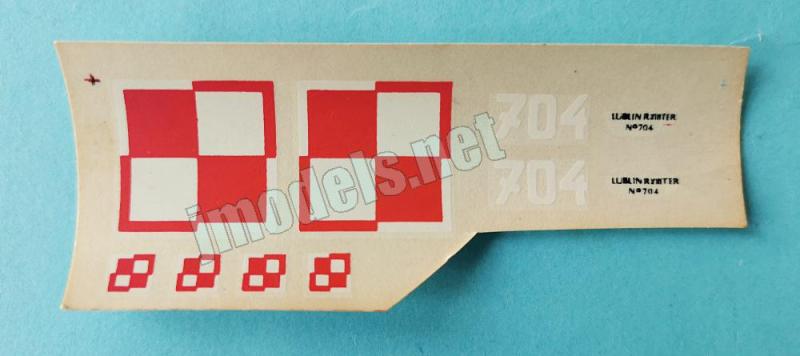
- Insignias polacas de dos tamaños, numerales y estarcidos. Aspecto fino y brillante. Aparente buena saturación y registro. No hay exceso de soporte.
- Polish markings in two sizes, aircraft numbers and stencils. Thin and glossy finish. Apparent good saturation and register. No surplus carrier.
OPCIONES – OPTIONS:
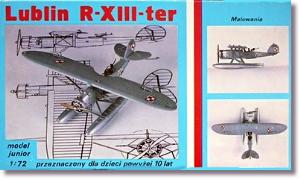
- Lublin R-XIII-ter. Marina Polaca. Aviación Naval. Blanco 704. Puck (Polonia), 1934.
- Lublin R-XIII-ter. Polish Navy. Naval Aviation Wing. White 704. Puck (Poland), 1934.
INSTRUCCIONES – INSTRUCTIONS:
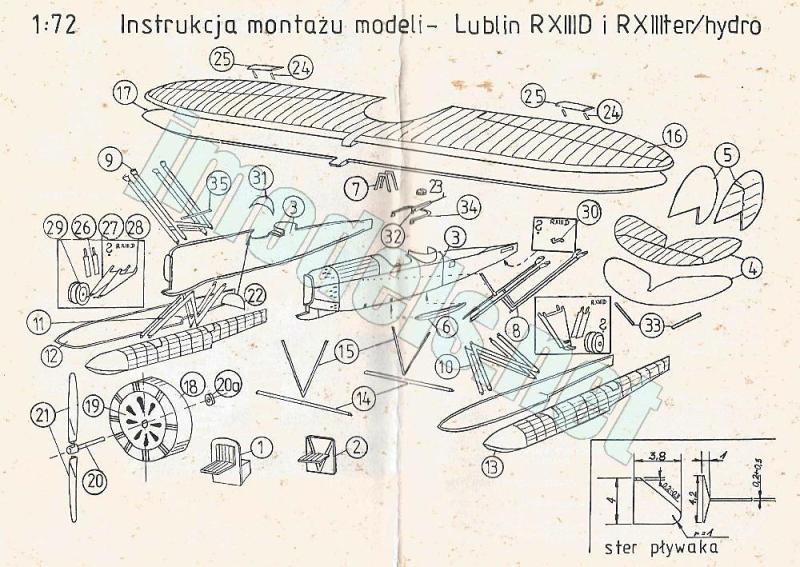
- Hoja A5 en polaco. Contiene una introducción histórica sobre el avión con datos técnicos, instrucciones de montaje y una vista explosionada del despiece de la maqueta.
- A5 sheet in Polish. It contains a historical introduction about the aircraft with technical data, assembly instructions and an exploded view of the kit breakdown.
LO MEJOR – THE BEST:
- Tema poco usual. Panelado decente.
- Unusual topic. Decent engraved panel lines.
LO PEOR – THE WORST:
- Carlinga poco detallada. Motor y armamento. Alas y cola separadas en mitades. Carece de algunos detalles y hay que fabricar o sustituir otros.
- Sparse cockpit detail . Engine and armament. Two-piece wings and tail. It lacks some details and others need to be built or replaced.
VALORACIÓN – CONCLUSION:
- Único molde de plástico del Lublin R-XIII en la escala 1/72, con copias de otras marcas polacas. Es una maqueta factible, pero necesita experiencia. Para modelistas muy interesados en este avión o en la aviación polaca.
- It’s the only plastic tool for a 1/72 Lublin R-XIII and also has copies from other Polish brands. It’s a buildable kit, but needs experience. For modelers very interested in this aircraft or in Polish aviation.

La maqueta
Esta es una maqueta curiosa que nos llega de los años 80. Se trata de una edición casera, y por tanto limitada, de un tal Janusz Makowski que, según se dice en las instrucciones, realizó el molde a partir de un modelo original de Leszek Dąbrowski, otro ilustre desconocido para el modelismo. El señor Makowski sólo hizo esta maqueta y su contraparte Lublin R-XIII-D. Curiosamente, esta dos maquetas aparecen un tiempo después, pero también en los años 80, con el nombre de Hanna Jachowicz e idéntica caja y contenido. Bicheando un poco en internet con la información de los respectivos domicilios que aparece en las cajas, he comprobado que ambos eran casi vecinos en el pueblo de Kobyłka, al noreste de Varsovia. Como me gustan las intrigas y el mundo entero no es más que un patio de vecinos para el cotilleo, quiero pensar que acaso fueron parientes. Vaya usted a saber.
Ciertamente, estas maquetas no se han olvidado en su país porque varias marcas polacas las han reeditado con diferentes calcas e instrucciones a través de los años. La menos desconocida de ellas es Aeroplast. Quienes no le hagan ascos a la resina también tienen un molde en la misma escala de Ardpol. No hay más moldes para hacer un Lublin R-XIII en la escala 1/72.
A todos los efectos, esta es una maqueta artesanal destinada a los muy cafeteros con ganas de poner a prueba habilidades ya probadas. Antes de comenzarla conviene hacer tres cosas: buscar buenos planos e imágenes del avión, que afortunadamente existen; hacerse con el fotograbado específico de la marca Part (referencia ST2-002), si es posoble; y por último, dejarse todos los remilgos colgados a la entrada.
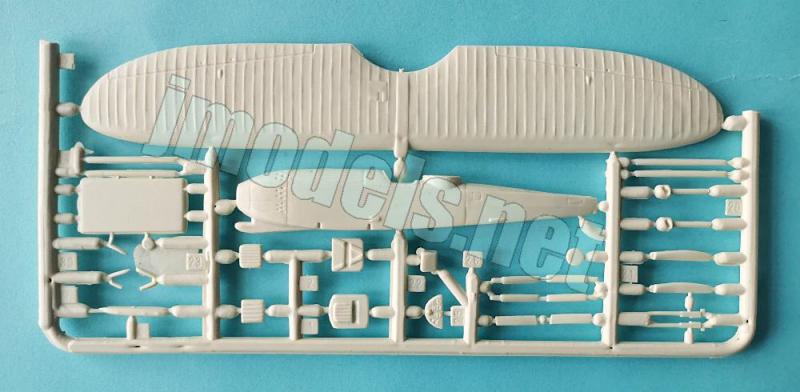
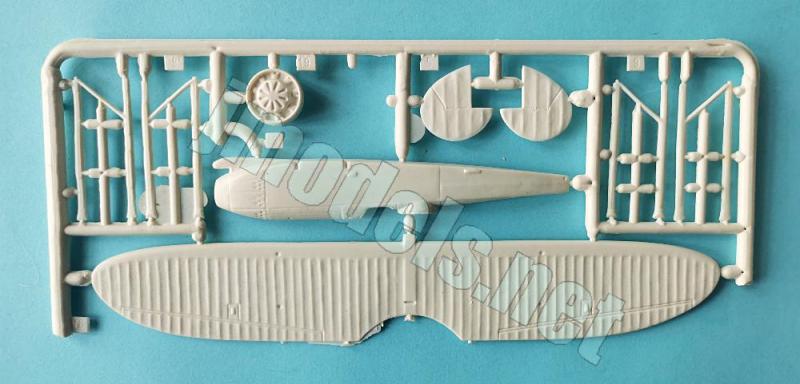
La caja trae tres bastidores, una pequeña hoja de calcas y las instrucciones. Aunque el molde no es del todo limpio por la presencia de algunas rebabas y variadas líneas de molde, la maqueta no otros defectos que un par de mínimos rechupes y dos marcas de eyector negativas muy leves a cada lado de la carlinga nada visibles. El relieve estructural en las alas y la cola es bastante decente, aunque algo exagerado, para una maqueta de sus características. Las líneas de los paneles son finas y están bien grabadas. Las mitades que forman las alas y la cola son un poco gruesas y por eso estas superficies le van a dar al modelo un aspecto un tanto contundente, alejado de las ágiles líneas del avión real.
La maqueta contiene tanto la versión ter/hydro con flotadores como el model R-XIII-D con ruedas, aunque las calcas pertenecen al primero. Salvo esto, no hay alternativas de construcción. Las instrucciones aconsejan realizar el montaje siguiendo el mismo orden consecutivo que nos indica la numeración de las piezas, a partir de la número 1 en adelante. Sin duda el señor Makowski se tomó su tiempo para analizar el despiece y su numeración antes de hacer el molde.
Las instrucciones nos indican que el modelista deberá fabricar algunos elementos, además de añadir los tensores y cables de control, pero no hay un diagrama para arriostrar el modelo.
Reseña
Antes de inciar el montaje de la carlinga la hoja de instrucciones nos informa (después de traducirla, claro) que hay que abrir los accesos a los dos puestos, ya que están cegados. Los lados del fuselaje carecen de detalle y la carlinga sólo cuenta con dos mamparos donde van pegados los asientos texturizados, el panel con los instrumentos en relieve, más la ametralladora y su tambor de munición, bastante malos ambos. El afuste de la ametralladora y el parabrisas del piloto hay que fabricarlos.
El fuselaje está bien grabado, especialmente en la parte delantera, donde se aprecian las salidas de ventilación del motor. Las marcas para colocar los soportes de las alas y flotadores son nítidas. En la zona ventral lleva una especie de aleta aparte.
El motor viene unido al capó, que es fino en su parte frontal. Habría que adelgazarlo en los bordes de salida para colocar los escapes ausentes en la maqueta. El motor apenas está reproducido con unos cilindros muy mal definidos y la placa frontal con las aberturas de refrigeración bien perfiladas. También hay que perforar el hueco de la hélice. Esta pieza tiene un eje unido al buje y las palas separadas. Las palas están limpias de rebabas y su perfil no está mal, pero son muy planas en su lado trasero.
Tanto las alas como las superficies de la cola están separadas en mitades que les dan más grosor del necesario. Los alerones poseen un buen grabado en su contorno en ambas caras. Los compensadores son delgados y los soportes hay que fabricarlos. La parte central del borde de ataque carece del generador eléctrico y su hélice. En su lugar aparece una pestaña plana. Este dispositivo era parecido al del caza italiano Fiat CR.32. También faltan las luces de las puntas, semejantes a las del Bristol Bulldog, pero más reducidas. Los soportes de las alas no estarían mal si no fuera porque son completamente planos por una de sus caras. Sin duda es mejor sustituirlos.
Las superficies de la cola presentan los timones muy bien grabados y sólo falta la luz de navegación sobre la aleta vertical. Al igual que en las alas, el relieve de la estructura es demasiado obvio y conviene matizarlo más son lija. Los soportes de los estabilizadores debe hacerlos el modelista.
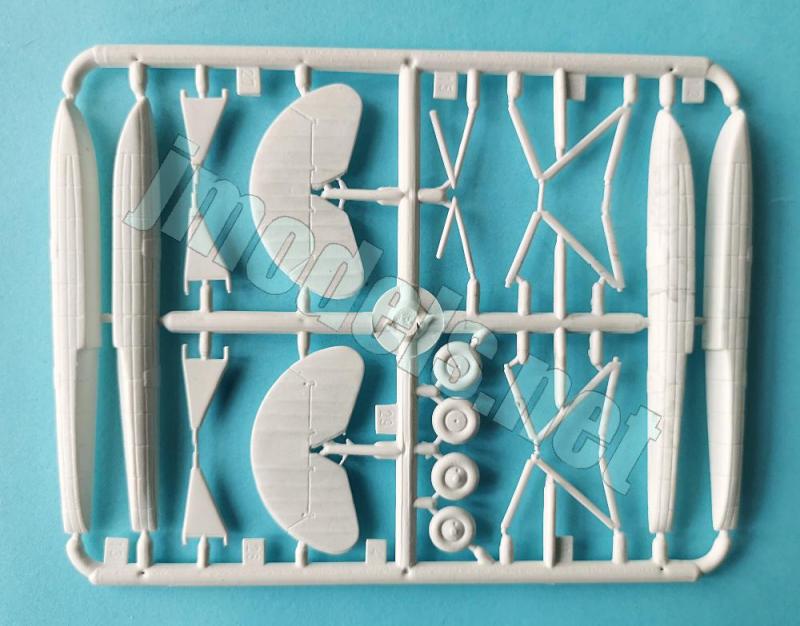
Los flotadores está divididos en mitades y son piezas delgadas. Los paneles de la estructura son demasiado profundos y evidentes. En las imágenes y documentales del avión, estas superficies se ven prácticamente lisas. Los soportes tienen el mismo problema que en las alas y los timones también hay que hacerlos.
Como he mencionado, la maqueta puede acabarse también como un R-XIII-D. Para esta versión tenemos un patín de cola, las ruedas separadas en mitades con un detalle decente al menos, más unos soportes finos de forma triangular complementados por amortiguadores.
La hoja de instrucciones tiene un tamaño A5 y está impresa en blanco y negro con el texto en polaco. Contiene por un lado una introducción histórica sobre el avión con datos técnicos y las instrucciones de montaje. Por el otro hay una vista explosionada del despiece de la maqueta. La numeración consecutiva de las piezas es la aconsejada para construirla. Las fotos de la caja sirven para pintar el modelo y colocar las calcas, con la única opción del aparato con numeral 704 blanco, cuyos datos no están en las instrucciones. Los he buscado por mi cuenta para la introducción de esta revisión.
Las piezas números 24 (soportes de los contrapesos de los alerones), 33 (soportes de los estabilizadores), 34 (refuerzos laterales de los soportes de las alas), 35 (afuste de la ametralladora) y los timones de los flotadores debe hacerlos el modelista. Las dimensiones de los timones aparecen en una vista de detalle junto al despiece general. La pieza 31 (parabrisas) de la vista explosionada también hay que hacerla, aunque las instrucciones no la mencionan.
Valoración
Fuera de Polonia, el Lublin R-XIII es un avión muy poco conocido, por eso no hay maquetas a ninguna escala de fabricantes no polacos por el momento. Por esta razón y por sus características de serie limitada, esta maqueta o cualquiera de sus secuelas posteriores de otras marcas siempre tendrá un publico reducido entre los modelistas expertos dispuestos a remangarse y trabajarla.◊


The kit
This is a curious kit from the 1980s. It’s a homemade, and therefore limited, edition by one Janusz Makowski who, according to the instructions, made the mold from an original model by Leszek Dąbrowski, another unknown figure in the modeling world. Mr. Makowski only made this kit and its counterpart, the Lublin R-XIII-D. Interestingly, these two kits were released with identical box and contents some time later, but also in the 1980s, under a new owner called Hanna Jachowicz. Doing a little research online using the address information on the boxes, I discovered that they were almost neighbors in the town of Kobyłka, northeast of Warsaw. Since I enjoy a bit of intrigue, and the whole world is just a gossip mill, I’d like to think they might have been relatives. Who knows?
Though very old, these kits haven’t been forgotten in Poland and several Polish brands have reissued them with different decals and instructions over the years. The best-known of these manufacturers is Aeroplast. Those who don’t mind resin also have an offer in the same scale from Ardpol. There are no other kits available for building a Lublin R-XIII in the 1/72 scale.
This is clearly a DIY mold intended for enthusiasts eager to put their already proven skills to the test. Before starting, it’s advisable to do three things: find good plans and images of the aircraft, which fortunately do exist; get the specific photo-etched fret from Part (reference ST2-002), if possible; and finally, leave all your squeamishness at the doorstep.
The box contains three sprues of parts, a small decal sheet, and the instructions. Although the molding isn’t entirely clean due to some flash and seam lines, the kit has no other blemishes than a couple of very small sink marks and two shallow negative ejector marks on the cockpit sidewalls. Though it looks a bit large, the raised structural detail on the wings and tail is quite decent for a kit of this type. Panel lines are fine and well-engraved. The wing and tail halves are a bit thick, giving the finished model a somewhat heavy appearance, far from the sleek lines of the real aircraft.
The kit includes both the ter/Hydro version with floats and the R-XIII-D wheeled variant, although the decals are for the floatplane. Aside from this, there are no building choices. The instructions recommend assembling the model in the same sequential order as the numbering of parts, from number 1 on. Mr. Makowski undoubtedly took his time analyzing the parts diagram and its numbering before making the mold.
The instructions also point out that the modeler will need to build some components, in addition to the brace wires and control cables, but no diagram is provided for rigging the model.
Review
Before starting the cockpit assembly, the instruction sheet says (if you translate it, of course) you need to open both cockpit openings, as they come closed by plastic. The fuselage sidewalls have no detail, and the cockpit only comprises two bulkheads to attach the padded seats, the instrument panel molded with raised gadgets, and the machine gun and the ammo drum, both rather poor. The machine gun mount and the pilot’s windshield are to be provided by the modeler.
The fuselage is well-engraved, especially at the front, where the engine cooling louvers are visible. The notches for attaching the wing and float struts are clearly visible. There is also a separate fin-like part glued below the cockpit.
The engine comes molded with the cowling ring, which is thin at the front. The trailing edges would need to be thinned, as the exhaust pipes, missing from the kit, need to be added. The engine is barely reproduced, showing poorly defined cylinders and a face plate detailed with sharp cooling vents. The propeller hole needs to be drilled. This part has a shaft attached to the hub and separate blades. The blades are free from flash and the profile is not bad, but they are very flat on their rear sides.
Both the wings and tail surfaces are split into halves and this makes them a bit thicker. The ailerons are well-engraved on both sides. The balances are thin, but the vertical struts need to be built. The mid leading edge lacks the electric generator and the propeller. Instead we have a flat tab. This device was similar to that installed in the Italian Fiat CR.32 fighter. The wingtip lights, similar to those of the Bristol Bulldog but smaller, are also missing. The wing struts would be fine if they weren’t flat on one side. It’s definitely better to replace them.
The tail components show nicely engraved control surfaces, and you only need to build the navigation light on the vertical fin. As with the wings, the structural ribbing is too obvious and should be improved with sandpaper. The tail planes bracing struts are built by the modeler.
The floats are split into thin halves. The surface is too deeply engraved and panels are too evident. Pictures and documentaries of the aircraft show them smooth. The strut assembly have the same problem with the flat sides as the wings, and the rudders also need to be made.
As mentioned, the kit can also be finished as an R-XIII-D. For this version, we have a tail skid, wheels provided in halves, plus thin, vee-legs with separate oleo struts.
The A5 instruction sheet is printed in black and white with the text in Polish. One side contains a historical introduction to the aircraft with technical data and assembly directions. The other side shows an exploded view of the kit. The said directions recommend building the model following the sequence of part numbers.. The photos on the box are used for painting and applying the decals, with the only option being the floatplane numbered 704. No other information about unit, location, or year is given about this aircraft. I searched it myself for this review.
Part 24 (aileron balance struts), 33 (tail planes bracing struts), 34 (short wing strut braces), 35 (machine gun mount), and the float rudders are to be made by the modeler. The dimensions of the rudders are shown in a detailed view next to the exploded view. Part 31 (windshield) of the exploded view also needs to be provided, although the directions do not mention it.
Conclusion
Outside Poland, the Lublin R-XIII is a very little-known aircraft, so there are currently no kits in any scale from non-Polish manufacturers. For this reason, and due to its limited run nature, this kit, or any of the reboxes from other brands, will only have a small public among expert modelers willing to roll up their sleeves and turn it into a nice model for the shelf.◊
Publicado – Published: 7 / 2026
©www.jmodels.net


Debe estar conectado para enviar un comentario.