
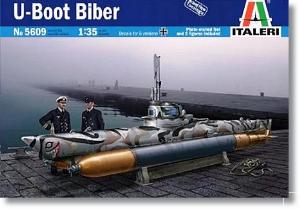
De un vistazo – Quick look
MATERIAL Y PIEZAS
MEDIA & PARTS:
- Plástico inyectado (65 piezas), fotograbado (28 piezas), acetato (5 piezas). Incluye 2 figuras (8 piezas).
- Injected plastic (65 parts), photoetched (28 parts), acetate (5 parts). Two figures included (8 parts).
CALCAS – DECALS:
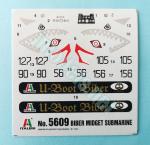
- Impresas por Zanchetti. Panel de instrumentos y diversos indicadores, numerales, rótulo de la peana y decoraciones para la proa (bocas de tiburón). Nítidas, con apariencia fina y mate. Sin exceso de soporte.
- Printed by Zanchetti. Instrument panel and some gauges, numbers, plate name and stencils for the bow (shark mouths). Sharp, with thin and matte appearance. No excess carrier.
OPCIONES – OPTIONS:
- U-Boot Biber. Unidad desconocida. Mar del Norte. Finales de 1944.
- U-Boot Biber. Unidad desconocida. Noruega, 1945.
- Biber U-Boot. Unkown unit. North Sea. Late 1944.
- Biber U-Boot. Unkown unit. Norway, 1945.
INSTRUCCIONES – INSTRUCTIONS:
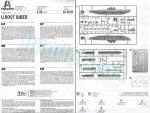
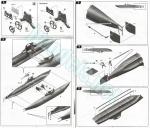
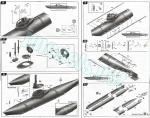
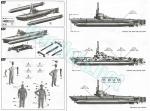
- Folleto doblado de 8 páginas impreso en blanco y negro. Contiene una introducción breve sobre el sumergible, un plano numerado de piezas, una lista de pinturas acrílicas y esmaltes de Italeri-Model Master, 14 capítulos de construcción y perfiles.
- 8-page folded brochure printed in black and white. It contains a short historical introduction about the submarine, a numbered parts diagram, a list of acrylic and enamel Italeri-Model Master paints, 14 assembly chapters and profiles.
LO MEJOR – THE BEST:
- Montaje sencillo. Buen detalle general. Opciones de montaje.
- Easy build. Nicely detailed overall. Assembly choices.
LO PEOR – THE WORST:
- Marcas interiores en la vela.
- Ejector marks inside the sail.
VALORACIÓN – CONCLUSION:
- Buena reproducción de este minisubmarino y un acierto de Italeri la escala escogida porque permite al modelista multitud de opciones para mostrarla.
- A nice kit of this mini-submarine. Italeri made a good choice in the scale chosen as it allows the modeler lots of options to display it.

La maqueta
En 2010 Italeri se descolgó con esta nueva maqueta bastante inesperada tanto por el tema como por la escala. Desde entonces sólo se ha reeditado una sola vez hace un par de años con el único cambio de la caja.
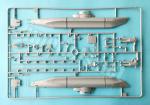
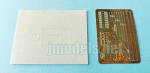
Dentro de ella hay dos bastidores de piezas, una plancha de fotograbados, una lámina de acetato transparente, las calcas y las instrucciones. Las piezas de plástico tienen un buen moldeado, careciendo de rebabas o defectos. Sólo hay marcas de eyector importantes en el interior de la vela, que pueden ser visibles si se deja la escotilla abierta.
La maqueta nos permite optar por varias alternativas durante el montaje. Así, se puede colocar la escotilla de acceso abierta o cerrada; el panel de control puede reproducirse sólo con una calca o bien con la misma calca y un fotograbado; las entradas a los tanques de lastre se pueden tapar con tiras de fotograbado; y, finalmente, también hay opciones para los torpedos.
La inclusión de las dos figuras, combinadas con la escala, tan productiva en múltiples accesorios de todo tipo, permite idear una escena o diorama. De hecho, es frecuente ver modelistas que optan por integrar la maqueta de esta manera, incluso con otros vehículos terrestres, lo que evidencia que Italeri no iba descaminada cuando se decidió por esta escala mayor.
La caja señala que se incluyen calcas para seis terminaciones, aunque en realidad se refiere a los cinco numerales distintos empleables si pintamos el modelo en el gris naval de rigor. La otra opción real de pintura es un sumergible con un interesante camuflaje compuesto de cuatro colores.
Reseña
El montaje comienza, obviamente, por el interior de la vela, que Italeri ha representado parcialmente con el asiento del tripulante pegado a los lados interiores y el panel de mando con las dos ruedas de los timones separadas. Los diferentes indicadores vienen en una calca y algunos también aparte. La calca puede detallarse con un fotograbado como opción. Entre las omisiones de este interior está el indicador de profundidad que era un dispositivo separado del panel, y tal vez por ello Italeri no se ha querido meter en dibujos.
Los cristales blindados están representados por piezas de acetato transparente. El techo de la vela tiene la escotilla exenta y provista de sus cierres separados más una luneta también de acetato. Una base separada dispuesta sobre la parte anterior del techo lleva tres piezas que corresponden a la toma de aire, la brújula magnética y el periscopio.
Tras la vela hay que añadir un dispositivo con un tubo conectado con el motor. Sin saberlo a ciencia cierta, me atreveré a decir que debería ser una bomba o válvula para introducir o sacar aire del motor ausente en la maqueta. Por último, antes de cerrar el casco, se añade el actuador del timón horizontal de popa.
El casco está moldeado en mitades y muestra una fina reproducción de las entradas de los tanques de lastre, diversos accesos, los ojales de izado y el de amarre moldeado en uno de los lados. Diferentes piezas de fotograbado nos sirven para detallar algunos elementos, como las entradas de los tanques de lastre, un par de accesos en la parte superior del casco y la anterior de la vela. Hay también un par de perfiles que colocar en la quilla.
Continuando con el exterior del casco, el timón vertical está dividido en mitades con el actuador separado, mientras que el horizontal es de una pieza. La hélice, su eje y el soporte que la sujeta al casco vienen aparte. La hélice está bien torsionada y las palas tienen una finura adecuada a la escala.
La siguiente fase del montaje nos lleva a doblar y colocar los soportes laterales de los torpedos. Las barras de sujeción son dos por lado fijadas al casco con soportes de fotograbado. Los de proa son más cortos y pequeños, pero los de popa, más grandes y largos, hay que recortarlos en bisel para adaptarlos a la forma del casco.
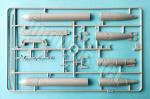
Los torpedos están despiezados en dos tramos y ello le ha permitido a Italeri alternar la parte posterior para ofrecer dos opciones: el modelo inicial G7a tiene las aletas horizontales de los timones y las hélices separadas, mientras que el posterior y más moderno G7e tiene dos pequeñas aletas aparte y las hélices sin la cobertura del bastidor de los timones como el primero. En los dos casos el detonador tiene la hélice por separado. Ambos modelos están fielmente reproducidos.
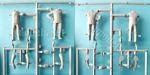
Para exhibir el modelo hay una peana anodina de cuatro piezas con sus calcas identificativas. Además de ella, Italeri incluyó en la maqueta dos figuras para dar juego al modelista que desee hacer una escena simple. Representan un marinero y un oficial en poses estáticas, menos realista y tiesa en el caso del primero. El oficial tiene la cabeza, gorra y uno de los brazos separados, y su compañero la cabeza y los brazos. Los detalles del uniforme (bolsillos, botones y solapas) tienen buena definición, pero la cara y las arrugas de las prendas están mejor conseguidas en el oficial. Con todo, ambas me parecen un buen activo de esta edición.
Como en otras maquetas de Italeri, las calcas corren a cargo de Zanchetti. La hoja incluye el panel de instrumentos y diversos indicadores, números de gallardete, rótulos de la peana y decoraciones para la proa (ojos y bocas de tiburón). Las calcas muestran gran nitidez, aspecto fino y mate. No tienen exceso de soporte.
Las instrucciones vienen en un folleto doblado formando ocho páginas impreso en blanco y negro que contiene una introducción breve sobre el sumergible en varios idiomas, un plano numerado de piezas, una lista de pinturas acrílicas y esmaltes de Italeri-Model Master, catorce capítulos de construcción y perfiles.
La primera opción de pintura está tomada de fotos del sumergible recuperado en Dover (Gran Bretaña) en junio de 1945, reconocible por su cabeza de tiburón y su mancha triangular en la proa. Esta unidad llevaba el numeral 90 que encontramos en la hoja de calcas. Otro sumergible documentado en fotos de época es el 127, que aparece pintado como el anterior.
La segunda opción nos ofrece un Biber camuflado del que Italeri no ofrece muchos datos además de su localización y año. La maqueta de Special Navy en la escala 1/72 (referencia SN72006) nos aporta además que esta unidad perteneció a la 263ª K-Flottille (3. Biber-Flottille) con base en Høllen (Noruega) en la primavera de 1945.
Valoración
Italeri seguramente relanzará la maqueta durante mucho tiempo, ya que acertadamente la produjo en una escala muy popular, donde existen gran cantidad de figuras, accesorios y otros modelos que facilitan el situarla en una escena o diorama. La inclusión de las figuras ya nos sugiere algo de esto.
El montaje aparenta sencillez y el nivel de detalle está bien reproducido para la escala, donde cualquier error o falta se hace más evidente. Recomendable a cualquier seguidor de esta escala y no solamente a los dedicados al tema naval.◊

The kit
In 2010, Italeri surprised everyone with this new kit, quite unexpected both in terms of topic and scale. Since then, it has only been reissued once, a couple of years ago, with the only a change in the box.
Inside, there are two parts sprues, a photo-etched fret, a clear acetate sheet, decals, and instructions. Plastic parts are well-molded, free from flash and blemishes. There are only significant ejector marks on the inside of the sail, which can be visible if the hatch is left open.
The kit allows for several assembly choices. The access hatch can be positioned open or closed; the control panel can be reproduced with just a decal or with the same decal and a photo-etched front; the ballast tank openings can be covered with photo-etched strips; and finally, there are also options for the torpedoes.
The inclusion of the two figures, combined with the scale, so productive in a wide variety of accessories, allows for the creation of a scene or diorama. In fact, it’s common to see modelers who choose to integrate the kit in this way, even with other land vehicles, which shows that Italeri was right to select this larger scale.
The box indicates that decals for six finishes are included, although it actually refers to the five different numbers that can be used if the model is painted in the standard naval gray. The other real painting option is a submarine with an interesting four-color camouflage scheme.
Review
Assembly begins, obviously, with the sail interior, which Italeri have partially represented with the crew seat attached to the inner sides and the control panel with two separate rudder wheels. The various gauges come on a decal, and some are also provided separately. The decal can be detailed with a photo-etched part as an option. Among the omissions from this interior is the depth gauge, which was a separate device from the panel, and perhaps for this reason, Italeri chose not to include it.
The armored windows are represented by pieces of clear acetate. The sail roof has a separate hatch with its own locks, plus a round window, also made of acetate. A base located on the forward roof holds three pieces corresponding to the air intake, the magnetic compass, and the periscope.
Behind the sail, a device with a tube connected to the engine is added. Without knowing for sure, I would risk to say that it should be a kind of pump or valve for introducing or extracting air from the engine, which is absent from the model. The horizontal stern rudder actuator is also added inside the hull before closing it.
The hull is molded in halves and features a fine reproduction of the ballast tank inlets, various access points, the lifting eyes, and the mooring ring molded on one side. Different photo-etched parts are used to detail some elements, such as the ballast tank inlets, a couple of access points on the upper hull, and the forward of the sail. There are also a couple of fins to attach to the keel.
Continuing with the hull exterior, the vertical rudder is divided into halves with a separate actuator, while the horizontal rudder is a single piece. The propeller, the shaft, and the strut bearing are separate. The propeller is well-twisted, and the blades have a thickness appropriate to the scale.
The next stage of assembly involves bending and attaching the side torpedo mounts. There are two mounting bars per side, fixed to the hull with photo-etched parts. The bow bearings are shorter and smaller, while the stern ones, larger and longer, have to be trimmed and beveled to fit the shape of the rear hull.
The torpedoes are provided into two sections. This has allowed Italeri to alternate the rear section, offering two options: the initial G7a model has separate horizontal rudder fins and propellers, while the later G7e has two small separate fins and propellers without the rudder frame found on the first model. In both cases, the magnetic pistol has a separate propeller. Both models are faithfully reproduced.
For displaying the model, there is a plain four-piece base with its identifying decals. In addition to this, Italeri included two figures with the kit to give modelers something to work with if they want to create a simple scene. They represent a sailor and an officer in static poses, less realistic and stiff in the case of the former. The officer has separate head, cap, and one arm, while the sailor has his head and arms apart. Detail of the uniform (pockets, buttons, and lapels) are well-defined, but the face and the wrinkles in the clothing are better rendered on the officer. All in all, I think both figures a valuable addition to this release.
As with other Italeri kits, the decals are printed by Zanchetti. The sheet includes the instrument panel and various gauges, pennant numbers, base label, and bow decorations (shark mouths). The decals are very sharp, have a fine, matte finish, and show no excess carrier.
The instructions come in a folded, 8-page booklet printed in black and white, containing a brief introduction to the submarine in several languages, a numbered parts diagram, a list of Italeri-Model Master acrylic and enamel paints, fourteen assembly chapters and profiles.
The first paint option is based on photographs of the submarine recovered in Dover (Great Britain) in June 1945, recognizable by its shark mouth and triangular patch on the bow. This unit bore the number 90, which is found on the decal sheet. Another submarine documented in period photographs is the 127, which looks painted like the previous one.
The second option offers a camouflaged Biber, about which Italeri provides no information beyond its location and year. The 1/72 Special Navy kit instructions (reference SN72006) reveal that this unit belonged to the 263rd K-Flottille (3. Biber-Flottille), based in Høllen (Norway) in spring 1945.
Conclusion
Italeri will surely reissue this kit for a long time, as they wisely produced it in a very popular scale, where there are a large number of figures, accessories, and other models that make it easy to place in a scene or diorama. The inclusion of the figures already suggests this.
Assembly looks simple, and detail is nicely reproduced for the scale, where any mistakes or omissions are more noticeable. Recommended to any fan of this scale, not just those dedicated to naval topics.◊
Publicado – Published: 5 / 2026
©www.jmodels.net

 jmodels.net
Debe estar conectado para enviar un comentario.