
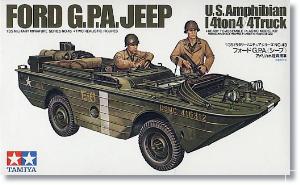
De un vistazo – Quick look
MATERIAL Y PIEZAS
MEDIA & PARTS:
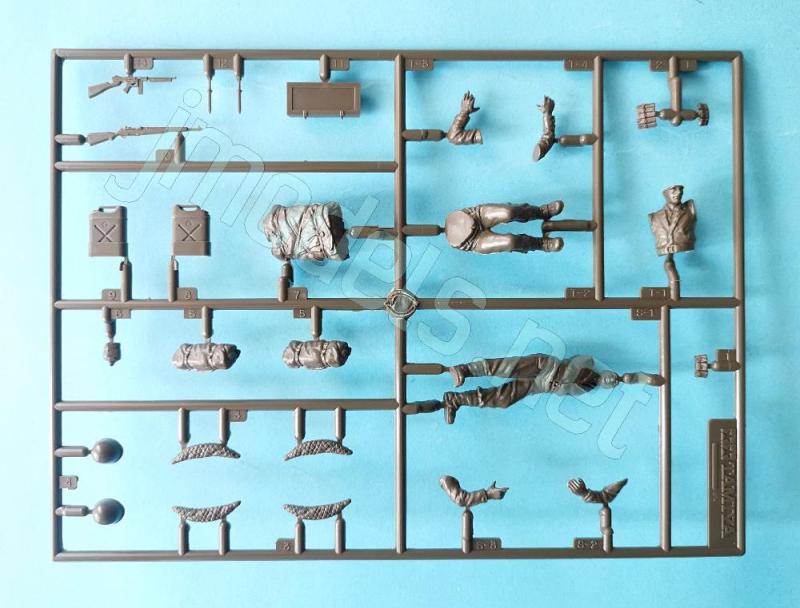
- Plástico inyectado (82 piezas), plástico transparente (3 piezas). Incluye 2 figuras (17 piezas).
- Injected plastic (82 parts), clear plastic (3 parts). Two figures included (17 parts).
CALCAS – DECALS:
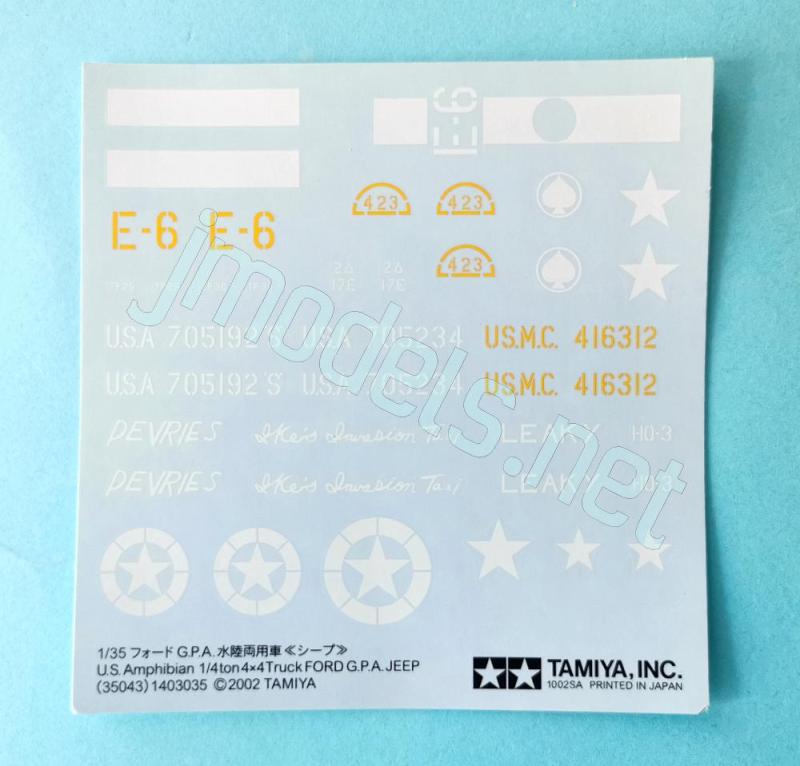
- Insignias nacionales, matrículas, numerales, marcas de formación y algunos estarcidos. Apariencia fina y brillante, buen registro, sin exceso de soporte, salvo en algunas estrellas.
- National markings, vehicle numbers, formation signs and some stencils. Thin and glossy finish, with good register and no excess carrier except on some US stars.
OPCIONES – OPTIONS:
- Ford G.P.A. U.S. Army 705234. “Leaky”.
- Ford G.P.A. U.S. Marine Corps 416312. Black E-6.
- Ford G.P.A. U.S. Army 705192 S. “De Vries”.
INSTRUCCIONES – INSTRUCTIONS:
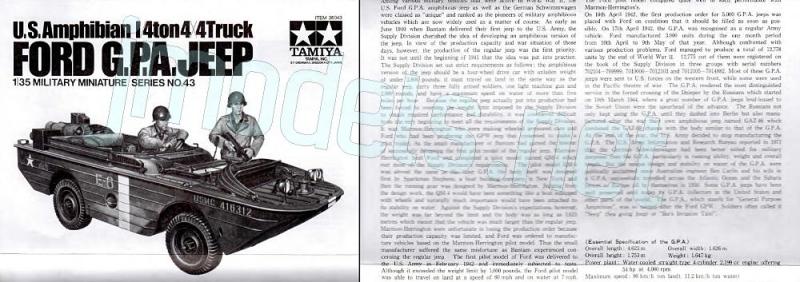
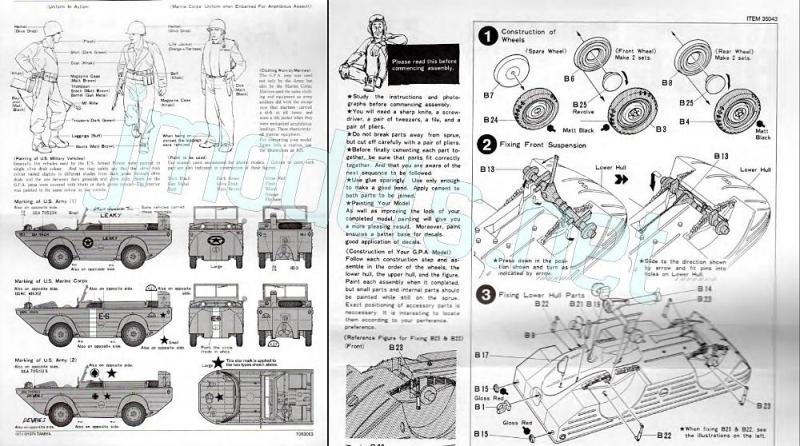
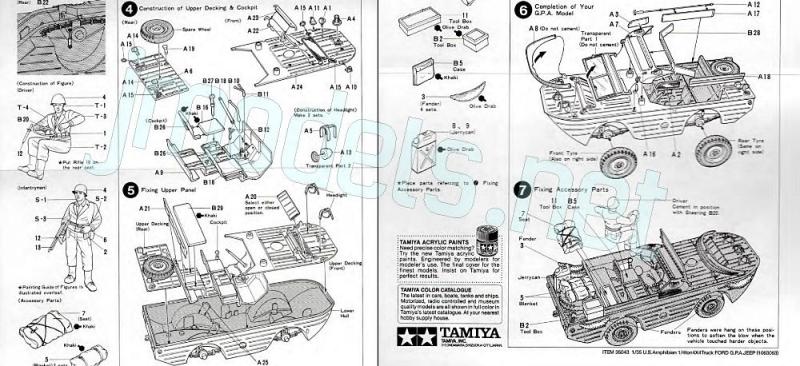
- Dos folletos doblados idénticos en inglés y japonés impresos verticalmente en blanco y negro. Contienen una introducción histórica y técnica sobre el vehículo, perfiles, una guía para montar y pintar las figuras, más siete etapas de montaje. Las referencias de pintura son genéricas con la recomendación de emplear la gama acrílica del fabricante.
- Two identical leaflets in English and Japanese printed in black and white. They contain a historical introduction to the vehicle with technical data, profiles, a guide to build and paint the figures, plus 7 assembly steps. Paint references are generic, but the manufacturer’s acrylic range is recommended.
LO MEJOR – THE BEST:
- Buen detalle general. Montaje sencillo. Incluye complementos y figuras.
- Nice overall detail. Ease of assembly. Vehicle load and figures included.
LO PEOR – THE WORST:
- PerFalta de motor. Pedales. Ruedas mejorables.
- Lack of an engine. Pedals. Wheels could be better.
VALORACIÓN – CONCLUSION:
- Molde muy antiguo, pero aún válido por el detalle y montaje fácil. La edición actual, con varias mejoras, sale más a cuenta a quienes no tengan aún la maqueta.
- A very old kit, but still worthwhile due to its level of detail and ease of assembly. The updated re-release is a better value for those who don’t yet own the kit.

La maqueta
El Ford GPA de Tamiya, como tantas otras maquetas de la casa, lleva rodando el mundo desde los años 70. Tras más de 30 años de carrera, el fabricante le dio un empuje con una edición limitada en forma de GPA ruso de reconocimiento con figuras de ICM (Tamiya 89771). Ya en 2014 apareció otra maqueta parcialmente renovada con piezas para el motor, fotograbados, nuevas figuras e instrucciones (Tamiya 35336).
La caja nos entrega cuatro bastidores, uno de ellos transparente, el casco del vehículo por separado, las calcas y las instrucciones. La calidad del molde es la habitual y contrastada en el fabricante. Este en concreto ha envejecido muy bien y me parece bastante válido todavía, pese al increíble nivel de detalle que los fabricantes actuales logran sacarle a sus productos. Las piezas están limpias de imperfecciones salvo por dos marcas medio disimuladas sobre el suelo de la cabina, la cara trasera del deflector de olas y pocas más tras los respaldos de los asientos delanteros.
Como de costumbre el montaje del modelo no tiene dificultades aparentes y la pintura emplea el usual Olive Drab de la mayoría de los vehículos militares norteamericanos de esta época.
Reseña
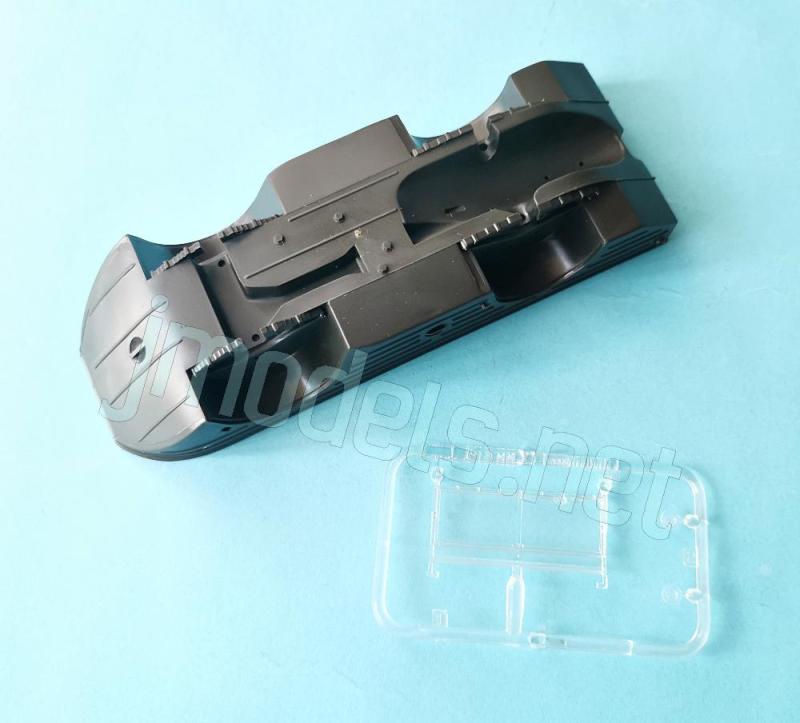
El casco del GPA es casi todo de una pieza e incluye los pasos de rueda y todos los lados excepto la parte superior. Sobre ellos se aprecian molduras finas y nítidas, los estribos laterales y las ballestas de la amortiguación moldeadas in situ. Con el casco ya formado, el montaje se simplifica mucho y esto permite montar la suspensión y transmisión sin rodeos.
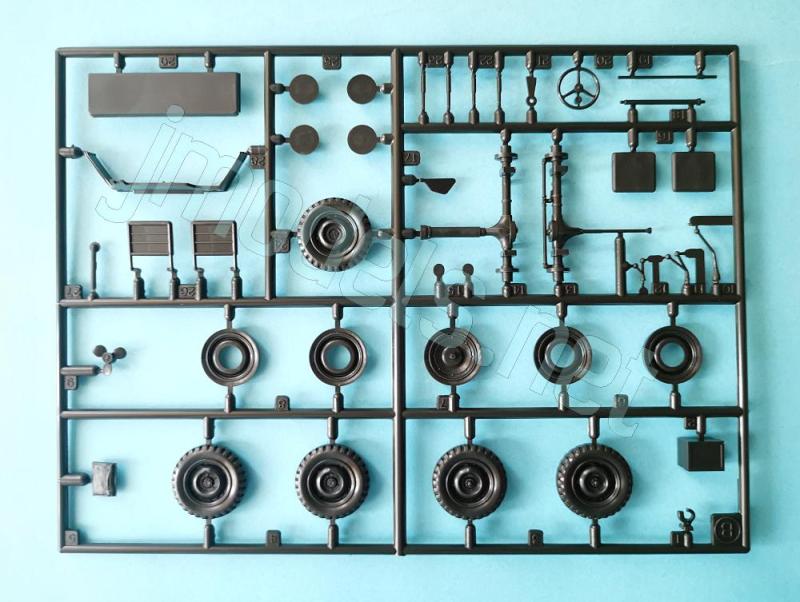
Ambos ejes están unidos a los diferenciales y un tramo del eje de la transmisión, bastante más fino en el eje delantero que en el trasero, y los tambores de freno en los extremos. El eje no viene completo porque un panel central lo cubre parcialmente. El eje delantero también incluye una fina barra estabilizadora. Pequeños amortiguadores separados detallan cada uno de los lados de los ejes. El sistema de navegación cuenta con una hélice de palas delgadas, el eje y un soporte.
Las ruedas están moldeadas con las llantas externas y los neumáticos unidos. Sólo carecen de las llantas internas separadas. El detalle de cada llanta, diferente en la parte central según el eje y similar al del Jeep, está en general bien plasmado, pero acaso le falta algo un punto de definición, lo mismo que a la banda de rodadura de los neumáticos. No están del todo mal, pese a la fina línea de molde que los rodea. Con todo, un recambio en las ruedas le vendría bastante bien a la maqueta.
La parte inferior del casco se termina con el añadido de las luces traseras, no transparentes, el gancho de remolque y las defensas en los cuatro extremos. Estas forman parte del equipo opcional y no son del todo malas, pero cabe darles mejor definición. A partir de aquí, el montaje continúa con el interior y la parte superior del vehículo.
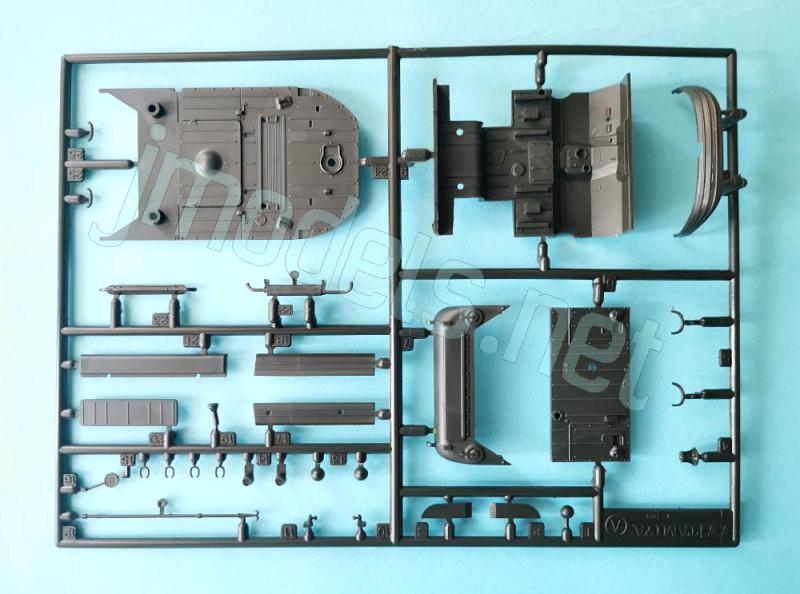
Con el suelo interno y dos cubiertas Tamiya resolvió la parte superior, ya que la maqueta carece de motor. El suelo contiene desde el panel delantero de la carlinga hasta el asiento posterior y las bases de los asientos delanteros, tras los cuales el suelo muestra molduras en relieve.
En la parte delantera interior tenemos unos pedales que dejan que desear moldeados sobre el suelo, la cubierta de la caja de cambios bien definida, las distintas palancas y la columna de la dirección. El volante es fino, pero las instrucciones sugieren pegarlo primero a la figura del conductor si la vamos a emplear. El salpicadero, detallado con finos instrumentos en relieve se pega a una pieza que lo cubre situada sobre la cubierta delantera. En esta pieza podemos insertar el parabrisas sin fijarlo para poder abatirlo. La pieza transparente contiene el marco y un pequeño limpiaparabrisas con el motor bien representado en la parte superior.
Los asientos delanteros muestran el acolchado liso y los respaldos separados. El mismo despiece tiene el asiento posterior, a cuyos lados tenemos un par de asas dispuestas sobre los pasos de rueda traseros.
Las cubiertas muestran molduras similares a las del casco. La trasera lleva la rueda de repuesto, la toma de combustible separada, dos argollas y lo que parecen las luces de conducción nocturna. La cubierta delantera está detallada con la salida de ventilación del motor y su malla bien reproducida, aunque la maqueta actual de Tamiya tiene la malla de fotograbado. La cubierta viene separada y puede colocarse abierta o cerrada. Tras ella aparece el tubo de escape con el silenciador y el protector aparte. Los faros llevan los protectores separados y lentes transparentes. Además, tenemos dos argollas, el cabrestante sin el cabo y el claxon, El deflector de olas va sujeto a la cubierta mediante dos bisagras separadas que permiten moverlo hacia delante o detrás. Los lados del casco llevan dos paneles suplementarios, uno de ellos provisto de un bichero.
Para completar la maqueta con una carga apropiada, Tamiya la acompañó de algunos fardos de distinto tamaño, cajas de herramientas, una cartera portadocumentos y un contenedor de combustible.
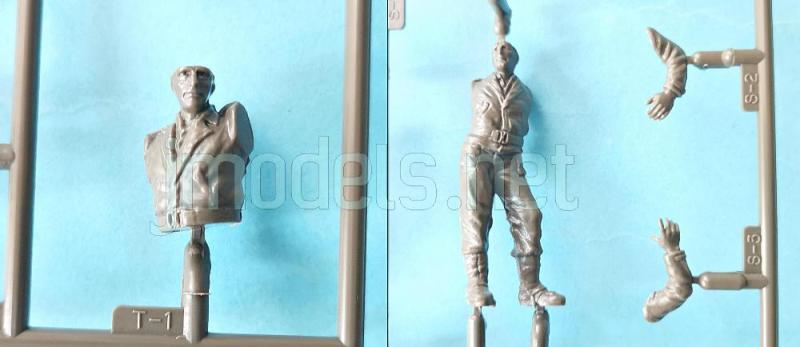
La maqueta se complementa con dos figuras de soldados norteamericanos, el conductor sentado y su acompañante de pie fuera del vehículo. Con ser aún válidas, a ambas se les nota un tanto el moldeado que hace medio siglo Tamiya le daba a sus figuras.
El conductor tiene la cabeza unida al torso, las caderas a las piernas y los brazos aparte. Las piernas y brazos muestran leves líneas de molde, habituales en tantas figuras. El uniforme no está demasiado definido salvo en el cuello, las botas y el cinturón. La reproducción de la textura del uniforme no es extraordinaria. La cara posee los rasgos bien recreados y las manos correctamente moldeadas. Su equipo consiste en cartucheras, casco, bayoneta y un fusil M1 Garand de buena factura.
Su compañero está moldeado de una pieza, excepto los brazos separados. El modelado y detalles del uniforme son similares a los del conductor. El equipo es el mismo salvo por el subfusil Thompson, bien reproducido.
Las calcas incluyen insignias nacionales, matrículas, numerales, marcas de formación y algunos estarcidos, como los indicadores de presión de los neumáticos, con una apariencia fina y brillante, buen registro y sin exceso de soporte, excepto en algunas estrellas.
La maqueta trae dos folletos doblados idénticos en inglés y japonés impresos en blanco y negro que contienen una introducción histórica y técnica sobre el vehículo, perfiles, una guía para montar y pintar las figuras, más siete etapas de montaje. Las referencias de pintura son genéricas con la recomendación de emplear la gama acrílica del fabricante. Los tres vehículos propuestos en el folleto llevan el Olive Drab como única librea.
Valoración
Esta edición del GPA de Tamiya ha envejecido bastante bien, cosa que no ocurre a menudo con los viejos moldes del fabricante. Continúa siendo válida gracias a su calidad, detalle externo y facilidad de montaje. A quienes aún no la tengan en cartera, puede convenirles la edición actual que mencionaba en la introducción, ya que trae más detalle y mejores figuras.◊

The kit
Tamiya’s Ford GPA, like many of the company’s kits, has been around the world since the 1970s. After more than 30 years on the market, the manufacturer gave it a boost with a limited-edition release, a Russian reconnaissance GPA featuring figures from ICM (Tamiya 89771). Then, in 2014, a partially updated version was released, including an engine, photo-etched parts, new figures, and revised instructions (Tamiya 35336).
The box contains four sprues (one of which is clear), the vehicle hull (provided as a separate piece), the decals, and the instruction manual. The standard of molding is consistent with the high standards for which this manufacturer is known. This particular kit has aged very well and remains quite solid, even when compared to the incredible level of detail achieved by today’s manufacturers. Parts are free from blemishes, save for a few marks on the cab floor, the rear side of the wave deflector, and behind the backrests of the front seats.
As is typical, the assembly process presents no apparent difficulties, and the paint scheme calls for the standard Olive Drab used on most U.S. military vehicles of that era.
Review
The hull of the GPA is a single piece molded with the wheel arches and all sides, excluding the top. It features crisp, fine molded details, including side steps and the leaf springs in place. With the hull in a single unit, assembly is greatly simplified, allowing for a straightforward installation of the suspension and transmission.
Both axles are connected to their respective differentials, along with sections of the driveshaft, notably thinner at the front than at the rear, and brake drums at the ends. The axle assembly is not fully exposed, as a central panel partially covers it. The front axle also includes a thin stabilizer bar. Small, separate shock absorbers are provided for each side of the axles. The amphibious propulsion system consists of a propeller with thin blades, a driveshaft, and a support bracket.
The wheels are molded as single units, with the outer rims and tires in the pieces; only the inner rims are separate parts. Detail on the wheels, which varies at the hub depending on the axle and resembles that of a Jeep, is generally well-executed, though it could perhaps benefit from a bit more definition and this is also applicable to the tire treads. While not poor, they feature a visible seam line running around them. Overall, the model would certainly benefit from aftermarket replacement wheels.
The rear hull side is completed by adding the taillights (which are not clear parts), the hitch, and fenders at all four corners. These last are part of the optional equipment; while not bad, they could be refined for a better appearance. From this point, the build proceeds to the interior and the upper deck of the vehicle.
Tamiya addressed the upper side of the kit using an interior floor and two deck panels, a logical choice, given that the kit does not include an engine. The floor extends from the front cab panel to the rear seat including the bases of the front seats, behind which the floor features raised moldings.
The cab has the pedals molded on the floor, though poorly rendered, along with a well-defined gearbox cover, the control levers, and the steering column. The steering wheel is thin; however, the instructions suggest attaching it to the driver figure first, if you choose to include one. The dashboard, featuring finely raised instruments, attaches to a piece glued on the forward deck. The windshield can be inserted into this piece, allowing it to be folded down. The clear windshield includes the frame and a small windshield wiper, with its motor nicely represented.
The front seats show smooth textute and separate backrests. The rear seat follows the same construction, with a pair of grab handles positioned on the rear wheel arches.
The deck panels show the same moldings as those on the hull. The rear deck is detailed with the spare tire, a separate fuel filler, two shackles, and what seems to be night-driving lights. The forward deck includes a detailed engine air vent with a well-reproduced mesh, though the current Tamiya kit features a photo-etched mesh instead. The vent cover is separate and can be displayed either open or closed. Behind it lies the exhaust system, with the muffler and the cover provided as separate parts. The headlights come with separate guards and clear lenses. Also included are two shackles, a winch (without the cable), and a horn. The wave deflector attaches to the deck via two separate hinges, allowing it to be positioned either forward or folded back. The hull sides have two additional panels, one of which is detailed with a boat hook.
To round off the kit with an appropriate load, Tamiya included several bundles of various sizes, toolboxes, a document case, and a fuel container.
The kit includes two figures of American soldiers: a driver seated in the vehicle and a companion standing outside. While still useful, both figures clearly reflect the molding style Tamiya used half a century ago.
The driver’s head is molded with the torso, the hip comes with the legs, and the arms are separate pieces. The legs and arms show thin seam lines as in many figures. The uniform lacks sharp definition, except for the collar, boots, and belt; the rendering of the uniform’s texture is not particularly remarkable. The facial features are well-done, and the hands are accurately molded. The equipment includes ammo pouches, a helmet, a bayonet, and a nice M1 Garand rifle.
His companion is molded as a single piece, with the exception of the separate arms. The sculpting and detailing of the uniform are similar to those of the driver. The equipment is the same, save for a well-reproduced Thompson submachine gun.
The decals include national insignia, license plates, unit numbers, formation signs, and various stencils, such as tire pressure markings. They have a thin, glossy appearance, good registration, and minimal carrier film, except for some of the stars.
The kit comes with two identical, folded, black-and-white instruction leaflets in English and Japanese that show a historical and technical introduction to the vehicle, profiles, a guide for assembling and painting the figures, and seven assembly steps. Paint references are generic, with a recommendation to use the manufacturer’s acrylic paints. All three vehicle options feature an Olive Drab livery.
Conclusion
This Tamiya GPA has aged quite well, something that cannot often be said for the manufacturer’s older kits. It remains a solid choice, thanks to its overall quality, external detail, and ease of assembly. For those who don’t yet have it in their stash, the current version mentioned in the introduction might be a better alternative, as it features more detail and better figures.◊
Publicado – Published: 10 / 2026
©www.jmodels.net


Debe estar conectado para enviar un comentario.