
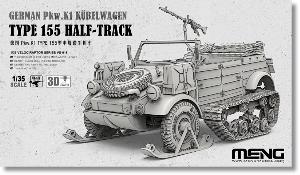
De un vistazo – Quick look
MATERIAL Y PIEZAS
MEDIA & PARTS:
- Plástico inyectado (97 piezas), plástico transparente (3 piezas), resina impresa en 3D (12 piezas).
- Injected plastic (97 parts), clear plastic (3 parts), 3D printed resin (12 parts).
CALCAS – DECALS:
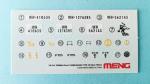
- Tres juegos de matrículas, instrumento del salpicadero, marcas tácticas y de unidad. Aspecto fino y brillante. Nítidas, sin sobrante de soporte.
- Three set of plates, dashboard gauge, tactical and unit markings. Thin and glossy appearance. Sharp, no excess of carrier.
OPCIONES – OPTIONS:
- Pkw.K1 Kübelwaguen Type 155. 10th Panzer Division.
- Pkw.K1 Kübelwaguen Type 155. 19th Panzer Division.
- Pkw.K1 Kübelwaguen Type 155. 11th Panzer Division.
INSTRUCCIONES – INSTRUCTIONS:
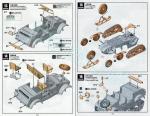
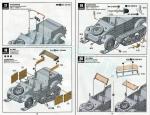
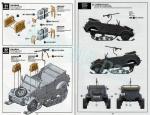
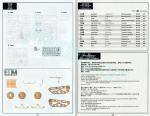
- Folleto de 24 páginas impreso en color. Contiene una introducción histórica sobre el vehículo, 22 capítulos de montaje, 3 páginas de perfiles, un plano numerado de piezas y una tabla de colores con equivalencias de pinturas de Meng/AK Interactive y Mr Hobby Acrysion.
- 24-page booklet printed in color. It contains a historical introduction about the vehicle, 22 assembly chapters, 3 pages of profiles, a numbered parts plan and a color chart with matches in Meng/AK Interactive and Mr Hobby Acrysion paints.
LO MEJOR – THE BEST:
- Sencillez de montaje. Buen detalle en general, excelente en el caso del tren de rodaje. Las puertas se pueden colocar abiertas.
- Ease of assembly. Nice detail overall, excellent in the case of the running gear. Doors can be posed open.
LO PEOR – THE WORST:
- Piezas impresas en 3D delicadas.
- Brittle 3D printed parts.
VALORACIÓN – CONCLUSION:
- Primera maqueta de este modelo especial del conocido Kübelwagen en la escala. Es en gran parte idéntica a cajas anteriores de Meng Model, mejorada en el tren de rodaje con notables piezas impresas en tres dimensiones, aunque frágiles.
- First kit in this scale of a special version of the well-known Kübelwagen. It is largely identical to previous Meng Model releases, improved in the running gear with outstanding, but fragile, 3D-printed parts.

La maqueta
Meng Model parece haber sido el primer fabricante en hacer este modelo del famoso Kübelwagen en la escala 1/35. Esta edición, última en aparecer de las cuatro cajas que Meng ha lanzado hasta ahora, comparte muchos elementos con la maqueta German Pkw.K1 Kübelwagen Type 82 (Eastern Front), referencia VS-016, revisada anteriormente en estas páginas.
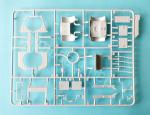
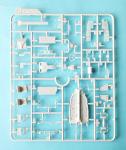
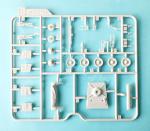
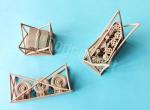
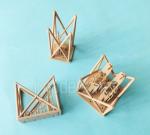
La caja trae cuatro bastidores de piezas, uno de ellos transparente, la hoja de calcas, las instrucciones y una caja de cartón rígido que contiene doce piezas impresas en tres dimensiones bien protegidas con espuma para evitar daños. Además, Meng nos obsequia con un par de cajitas de plástico con tapa hermética que nos servirán para guardar estas piezas una vez sacadas de los bastidores.
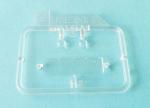
Uno de los bastidores transparentes y los bastidores A y C son iguales a los de la maqueta VS-016. Un bastidor nuevo, marcado como B y que sustituye al D de la maqueta anterior, trae el toldo y su bastidor plegados más algunas latas adicionales de combustible, entre otras piezas. Las instrucciones son parcialmente diferentes y las calcas completamente distintas.
Obviamente, el montaje es casi en todo parecido al del Tipo 82, pero una de las mejoras de esta edición es la posibilidad de colocar las puertas abiertas. La maqueta anterior carecía de tal opción sin hacer modificaciones, al estar diseñada para poner el toldo extendido con los cristales, que eran de una pieza. Esta posibilidad no aparece en las instrucciones, aunque es factible. Otras opciones de montaje que sí están en el folleto son los dos contenedores de combustible y sus soportes colocados sobre los guardabarros delanteros así como la posibilidad de colocar el parabrisas bajado.
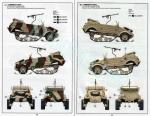
En la selección de acabados, Meng vuelve a mojar en todas las salsas y nos ofrece un vehículo pintado de color gris, otro de color arena, más un tercero en camuflaje. El Tipo 155 nunca llegó a fabricarse en serie, de modo que cualquiera que seleccionemos carece de realidad histórica, por eso la imaginación puede volar donde queramos.
Como la mayor parte de los elementos de la maqueta son iguales a los del Kübelwagen Tipo 82, ya bien descrita en la revisión mencionada, me enfocaré en las partes propias de este Tipo 155.
Reseña
El montaje del chasis es en gran parte idéntico a la maqueta anterior, excepto en la pieza C6 que corresponde a los guardabarros traseros. A estos hay que hacerles un rebaje en los extremos delanteros de 5×6 mm para poder instalar las cadenas posteriormente.
Otra distinción está situada en los guardabarros delanteros, que opcionalmente podemos taladrar para colocar un par de contenedores de combustible con sus soportes en una fase posterior del armado.
La placa de deslizamiento, que protege el eje delantero es aquí una pieza impresa en 3D con una moldura muy nítida en relieve. La pieza sustituye a la del Tipo 82, con forma más cuadrada y no redondeada como la que describo.
La parte posterior de la carrocería tiene una pequeña modificación. El panel inferior es igual, pero carece del catadióptrico. Además, el faro trasero se ha suprimido y también la barra del paragolpes, apareciendo en su lugar dos ganchos de remolque. La placa de matrícula y las luces de convoy siguen intactas.
En este caso, creo que Meng ha hecho bien en tirar por la calle de en medio y ha dejado a un lado las dos ruedas delanteras y la de repuesto con neumáticos de vinilo y las proporciona de resina impresa en 3D. Los neumáticos tiene un buen detalle en las bandas de rodadura, pero la cara externa de las llantas no puedo juzgarla al venir tapadas por múltiples varillas que las sujetan a los bastidores. En cualquier caso, ya se ve que estas varillas deben limpiarse a conciencia, especialmente por dicha parte exterior.
Para las ruedas delantera hay también dos esquíes impresos de igual manera que van pegados sobre las llantas. Su factura es muy buena, pero son delicados de manipular y pueden partirse fácilmente al intentar sacarlos de los bastidores sin cuidado.
El tren de rodaje posterior, junto con las cadenas, son de una pieza en ambos lados. Las varillas de la impresión aparece sólo por las caras internas, con lo que resulta más sencillo y menos evidente su limpieza. El detalle de las ruedas, rodillos de retorno y en especial las cadenas es extraordinario. Ambas piezas incorporan la parte interna de las llantas del eje trasero y es en apariencia sencillo colocarlas en este. Parece muy conveniente que al pegar el tren trasero, se haga junto con el delantero para asentarlo todo bien sobre una superficie plana.
La barra de asidero situada tras los asientos delanteros es otra pieza impresa sin las abrazaderas de los fusiles. En su lugar tiene la base del soporte de la ametralladora. También son piezas de este tipo el propio soporte, el arma y un tramo de cinta de munición. La MG 42 está perfectamente reproducida y tiene la bocacha horadada.
Las puertas son iguales a las del Tipo 82, pero en esta maqueta podemos situarlas abiertas si lo deseamos. El toldo viene solamente en posición plegada para dejar espacio a la ametralladora. Las varillas de soporte vienen separadas. La pieza tiene una representación convincente de la textura, pero los lados son más lisos y están descuidados.
Los demás elementos tanto del interior de la carrocería (asientos) como del exterior (faros, herramientas, retrovisor, indicadores de giro, parabrisas, etc.) son los mismos del Tipo 82. La única diferencia es la supresión de la barra del paragolpes delantero situada entre los ganchos de remolque.
Las calcas proporcionan tres juegos de matrículas, un indicador del salpicadero, marcas tácticas y de unidad. Tienen un aspecto fino y brillante, los motivos muestran buena nitidez y carecen de soporte sobrante.
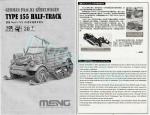
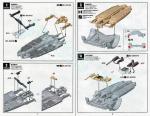
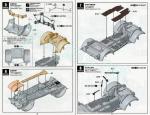
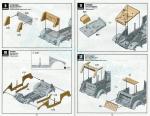
El folleto de instrucciones consta de 24 páginas impresas en color. Contiene una introducción histórica sobre el vehículo, 22 capítulos de montaje, tres páginas de perfiles, un plano numerado de piezas y una tabla de colores con equivalencias de pinturas de Meng/AK Interactive y Mr Hobby Acrysion.
Como he mencionado antes, los acabados de pintura ofrecen tres libreas básicas alemanas. Creo que Meng las ha seleccionado no sólo por la variedad, sino también para que el vehículo pueda situarse en casi cualquier escena invernal de mediado de la guerra en adelante. Dónde y cómo es un asunto que cada modelista puede imaginar.
Valoración
Tengo entendido que es la primera ocasión en que una marca lanza este Kübelwagen Tipo 155 en la escala 1/35, al menos de plástico, lo que supone una buena noticia para los seguidores del conocido Kübelwagen, que ya pueden hacer también esta versión tan peculiar.
Como secuela de las dos primeras ediciones de Meng dedicadas al Tipo 82, la maqueta es sencilla de montar. También posee un detalle en general bien conseguido y especialmente excelente en los elementos fabricados en impresora de tres dimensiones, aunque algunos son bastante frágiles. Afortunadamente, esta versión soluciona el problema de la maqueta anterior a la que no se le pueden colocar las puertas abiertas sin hacer modificaciones importantes, ya que las ventanillas lo impiden.
Los acabados de pintura son un tanto genéricos, por así decirlo, pero siendo todos ficticios, puesto que esta versión semioruga nunca se fabricó en serie, me parecen admisibles.◊

The kit
Meng Model seems to have been the first manufacturer to release this model of the famous Kübelwagen in the 1/35 scale. This edition, the latest of the four boxes Meng has launched so far, shares many elements with the German Pkw.K1 Kübelwagen Type 82 (Eastern Front) kit, reference VS-016, reviewed previously on these pages.
The box contains four parts sprues, one of them clear, a decal sheet, the instructions, and a rigid cardboard box containing twelve 3D-printed parts, well-protected with foam to prevent damage. Meng also includes a couple of small plastic boxes with tight lids for storing these parts once removed from the frames.
One of the clear sprues and sprues A and C are identical to those of the VS-016 kit. A new sprue, marked B and replacing sprue D from the previous kit, includes the folded tarp and its frame, as well as some additional jerrycans, among other parts. The instructions are very similar, and the decals are completely different.
Obviously, assembly is almost the same as for the Type 82 kit, but one of the improvements in this edition is the option to display the doors open. The previous kit lacks this option without modification, as it is designed to be displayed with the tarp unfolded and the windows, which are molded as a single piece. This option is not mentioned in the instructions, although it is feasible. Other assembly options included in the booklet are the two fuel jerrycans and their brackets attached on the front fenders, as well as the possibility to show the windshield lowered.
In terms of paint finishes, Meng once again goes all out, offering us a gray-painted vehicle, a sand-colored one, and a third in camouflage. The Type 155 was never mass-produced, so any version we choose will lack historical accuracy, allowing our imagination to run wild.
Since most of the kit parts are the same as those of the Type 82 Kübelwagen, already thoroughly described in the said review, I will focus on the parts specific to this Type 155.
Review
The chassis assembly is largely identical to the previous kit, except for part C6, which corresponds to the rear fenders. These need a 5×6 mm recess at the front ends to allow for the later installation of the tracks.
Another difference lies in the front fenders, which can optionally be drilled to attach a pair of fuel jerrycans with their brackets at a later stage of assembly.
The skid plate, which protects the front axle, is a 3D-printed part with a very sharp, raised molding. This part replaces the Type 82 skid plate, which has a square profile and not rounded like the one described here.
The rear of the body has a minor modification. The lower panel is the same, but lacks the reflector. Furthermore, the taillight and bumper bar have been removed and replaced by two tow hooks. The license plate and convoy lights remain unchanged.
In this case, I think Meng did well to take the middle road and opted for 3D-printed resin wheels instead of the two front wheels and the spare with vinyl tires. The tires have nice tread detail, but I can’t judge the outer sides of the rims as they are hidden by multiple rods that hold them to the 3D frames. In any case, it’s clear that these rods need to be thoroughly cleaned, especially on the outer side.
For the front wheels, there are also two skis printed in the same way, which are glued onto the rims. They are very well made, but delicate to handle and can break easily if you try to remove them from the frames carelessly.
The rear running gear, along with the tracks, is a single piece on both sides. The printed rods are only visible on the inner sides, making cleaning easier and less noticeable. Detail on the wheels, return rollers, and especially the tracks is outstanding. Both pieces include the inner part of the rear axle rims, and it seems easy to fit them in the axles. It is advisable to glue the rear running gear together with the front one to ensure everything sits properly on a flat surface.
The bar behind the front seats is another printed piece without the rifle clamps. Instead, it has the base of the machine gun mount. The mount itself, the gun, and a length of ammo belt are also printed pieces. The MG 42 is perfectly reproduced and has a drilled muzzle.
The doors are the same as those of the Type 82, but they can be attached open if desired. The tarp only comes in the folded position to make room for the machine gun. The frame rods are separate. The piece has a convincing representation of the texture, but the sides are smoother and less detailed.
The other elements, both inside the body (seats) and outside (headlights, tools, rearview mirror, turn indicators, windshield, etc.), are the same as in the Type 82. The only difference is the removal of the front bumper bar located between the tow hooks.
The decals provide three sets of license plates, a dashboard gauge, tactical and unit markings. They have a fine, glossy finish, are sharp, and there is no excess carrier film.
The instruction booklet consists of 24 pages printed in color. It contains a historical introduction to the vehicle, 22 assembly chapters, three pages of profiles, a numbered parts diagram, and a color chart with equivalent paints from Meng/AK Interactive and Mr. Hobby Acrysion.
As mentioned before, paint finishes offer three basic German liveries. I think Meng selected them not only for variety but also so that the vehicle could be displayed in almost any winter scene from the mid-war period onward. Where and how is a matter that each modeler can imagine.
Conclusion
This is the first time a brand has released a Type 155 in the 1/35 scale, at least in plastic, which is good news for fans of the well-known Kübelwagen, who can now also build this special version.
As a sequel to Meng’s first two Type 82 boxings, the kit is easy to assemble. It is also nicely detailed and particularly excellent in the 3D-printed parts, although some are quite brittle. Fortunately, this release solves the problem with the windows in the previous kit, which can’t be posed open without significant modifications.
Paint finishes are somewhat generic, so to speak, but since they are all fictional, as this half-track version was never mass-produced, I find them acceptable.◊
Publicado – Published: 5 / 2026
©www.jmodels.net


Debe estar conectado para enviar un comentario.