
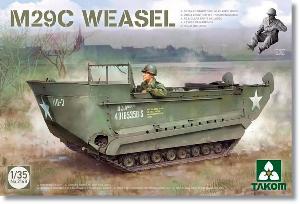
De un vistazo – Quick look
MATERIAL Y PIEZAS
MEDIA & PARTS:
- Plástico inyectado (308 piezas), plástico transparente (3 piezas), fotograbado (49 piezas), hilo (1 tramo). Incluye 1 figura (8 piezas).
- Injected plastic (308 parts), clear plastic (3 parts), PE (49 parts). One figure included (8 parts).
CALCAS – DECALS:
- Insignias norteamericanas, números de serie, marcas sanitarias, instrumentos y algunos estarcidos. Aspecto fino y brillante. Buena saturación de color y registro correcto. Sin soporte excesivo.
- US national markings, serial numbers, red crosses, instruments and some stencils. Thin and glossy finish. Good color saturation and correct register. No excess carrier.
OPCIONES – OPTIONS:
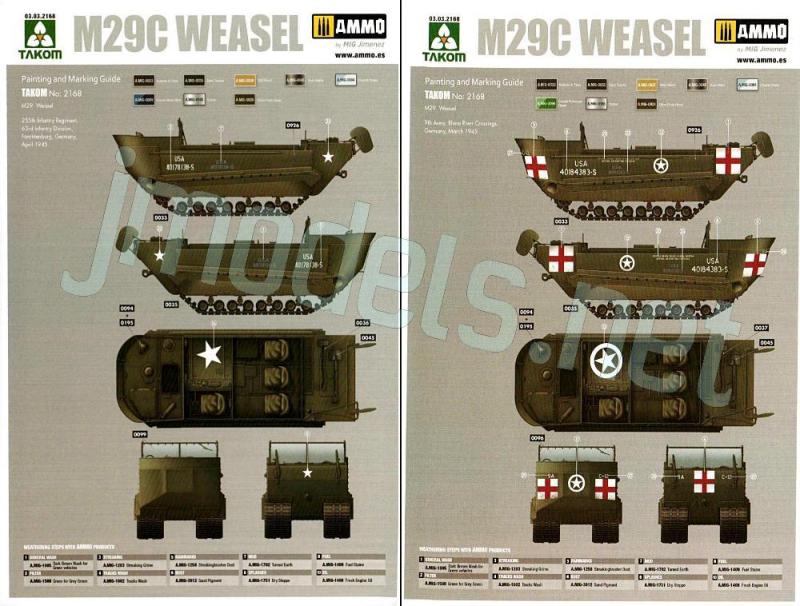
- M29C Weasel. U.S. Army. 63rd Infantry Division. 255th Infantry Regiment. Forchtenburg (Germany). April 1945.
- M29C Weasel. U.S. Army. 9th Army. Rhine River Crossing. Germany. March 1945.
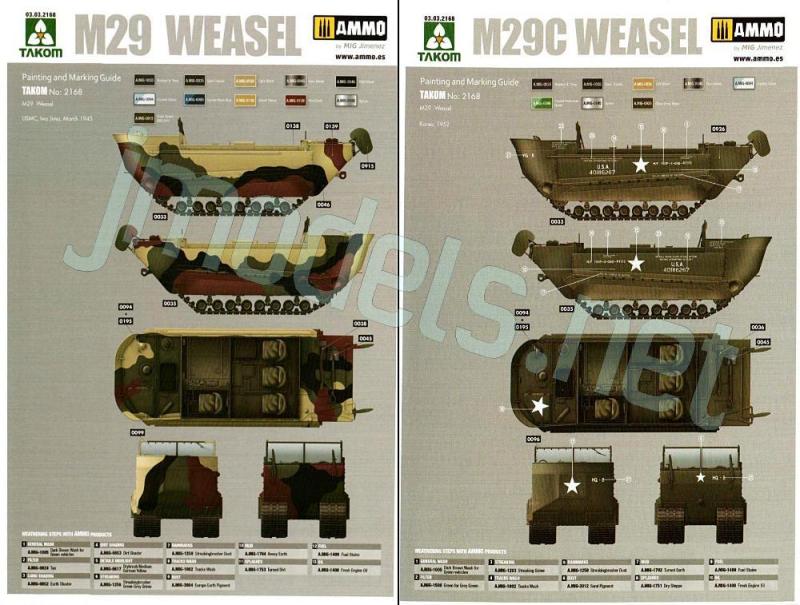
- M29C Weasel. U.S. Army. USMC. Iwo Jima (Japan). March 1945.
- M29C Weasel. U.S. Army. Korea. 1952.
INSTRUCCIONES – INSTRUCTIONS:
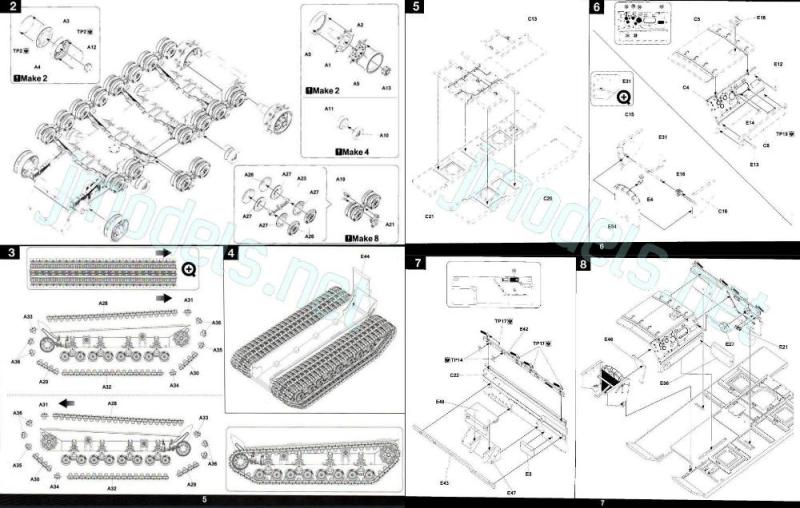
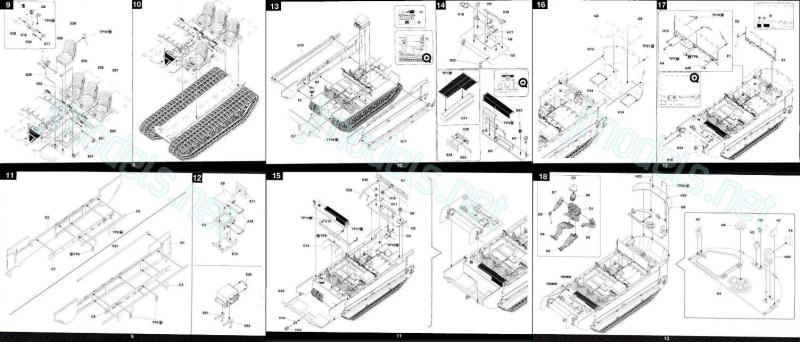
- Folleto apaisado de 20 páginas impreso en blanco y negro. Contiene un sumario histórico, un plano numerado de piezas, una lista de pinturas de Ammo Mig, 18 capítulos de montaje y 4 páginas de perfiles en color.
- 20-page landscape booklet printed in black and white. It shows a historical summary, a numbered parts plan, a list of Ammo Mig paints, 18 assembly chapters and 4 pages of profiles.
LO MEJOR – THE BEST:
- Limpieza del molde. Notable y acertado detalle general.
- Clean tool. Outstanding and accurate overall detail.
LO PEOR – THE WORST:
- Carece de motor. Tamaño de las instrucciones.
- Lack of an engine. Size of the instructions.
VALORACIÓN – CONCLUSION:
- Ya se puede jubilar el viejo Weasel de Monogram con la certera reproducción que Takom ha hecho de este vehículo. Para modelistas de nivel de experiencia medio en adelante.
- The old Monogram Weasel can now be retired thanks to Takom’s accurate rendition of this vehicle. For modelers with intermediate skills and above.

La maqueta
El M29 Weasel en la escala 1/35 se ha prodigado relativamente durante mucho tiempo tanto en plástico como en resina. La maqueta de Monogram, que data de finales de los años 50, fue durante décadas la única de plástico del Weasel.
Hace algunos años, por fin un fabricante se decidió a actualizar este vehículo con un molde más acorde a los tiempos, y no fue otro que Takom. La casa china hizo tres cajas de su cosecha: la primera fue este M29C, modelo anfibio con barcaza suplementaria; el segundo lanzamiento reproduce un M29 sin ella; y el tercero representa un modelo con el habitáculo cubierto empleado en expediciones polares por el Ejército norteamericano. Las dos primeras ediciones incluyen la figura del conductor, no así la tercera. Los fabricantes de calcas, que siempre andan al quite, permiten al modelista reproducir también este vehículo con marcas francesas y británicas en diferentes escenarios.
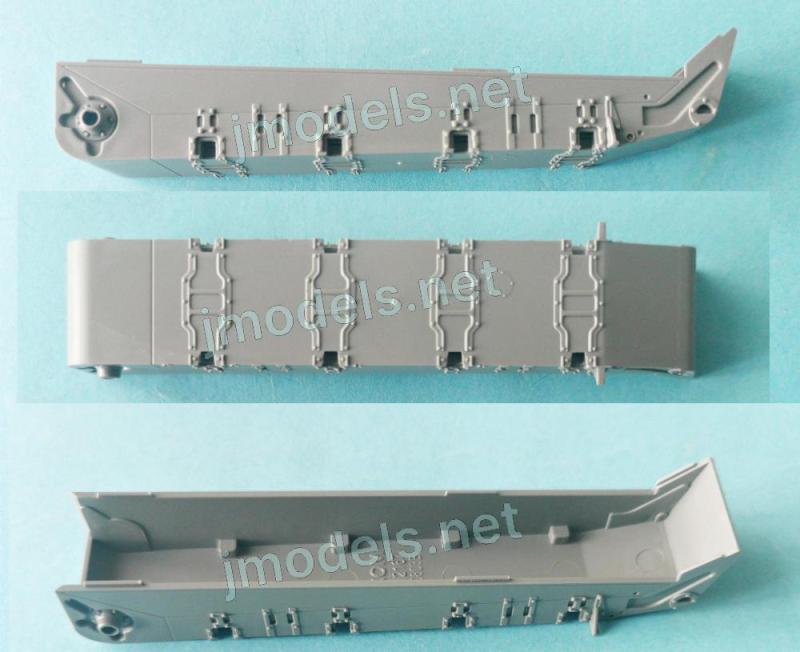
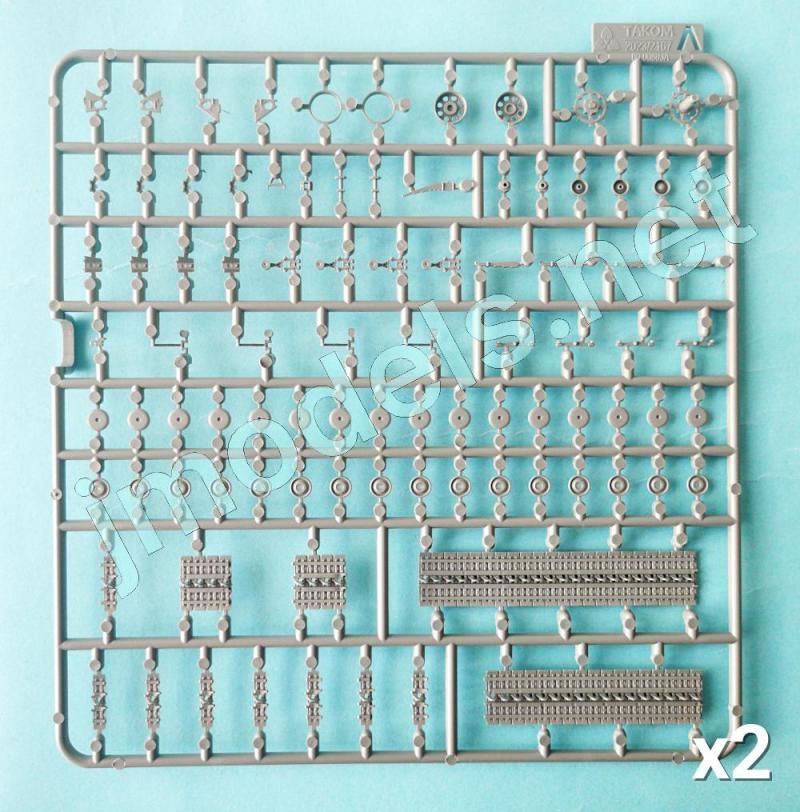
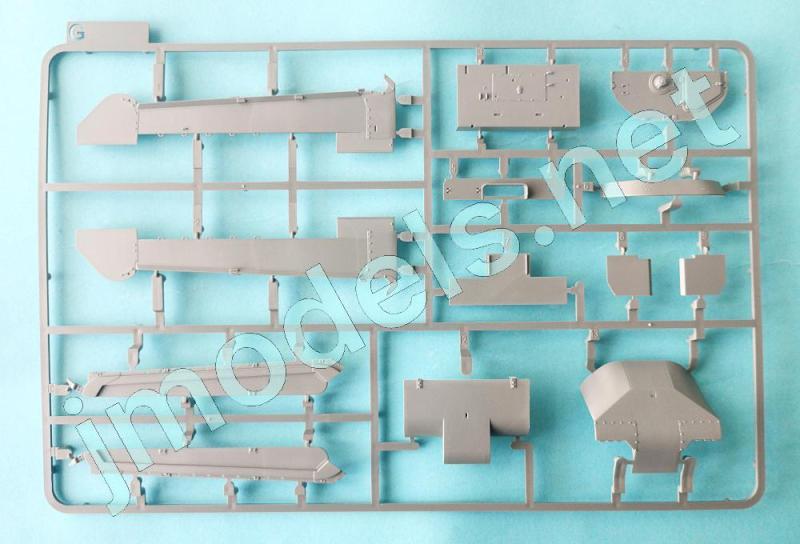
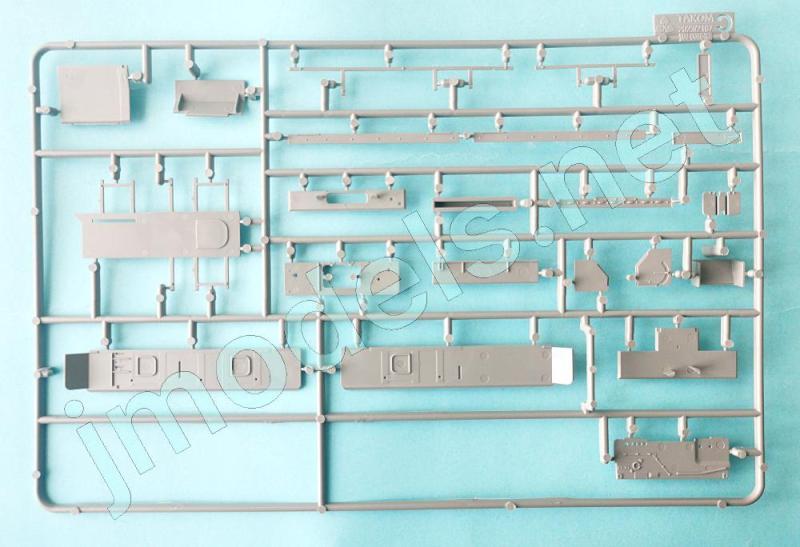
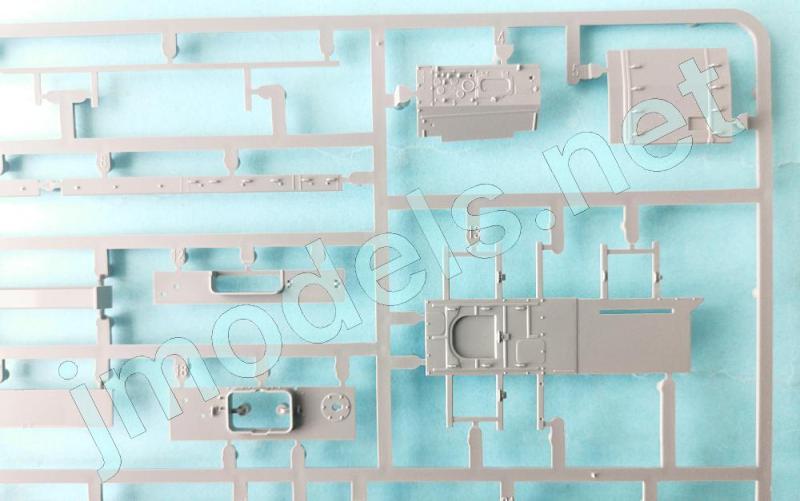
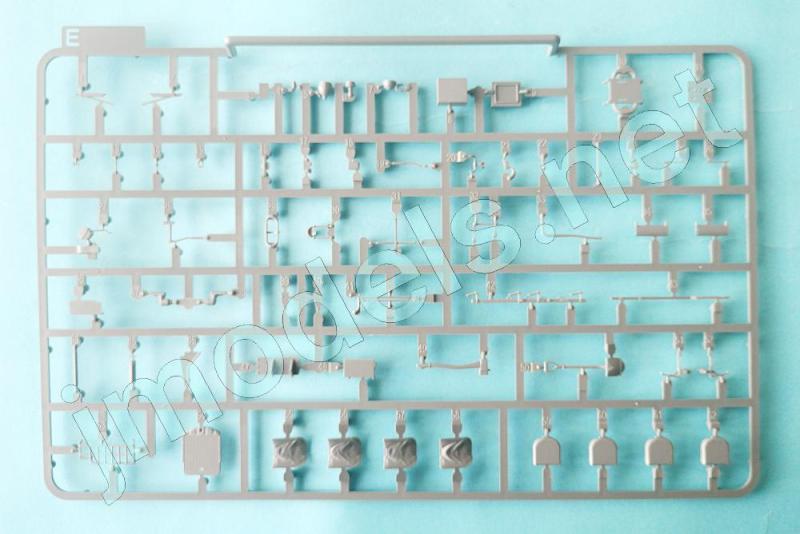
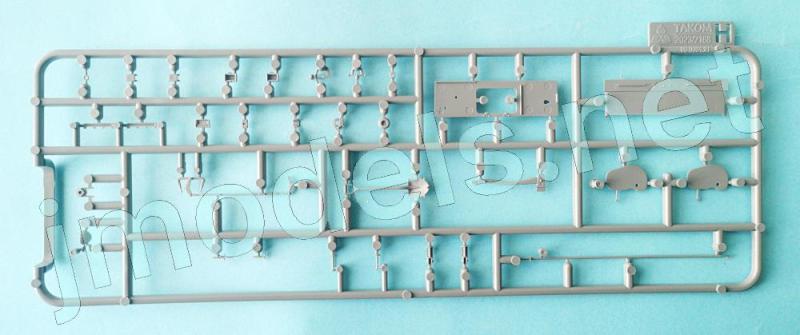
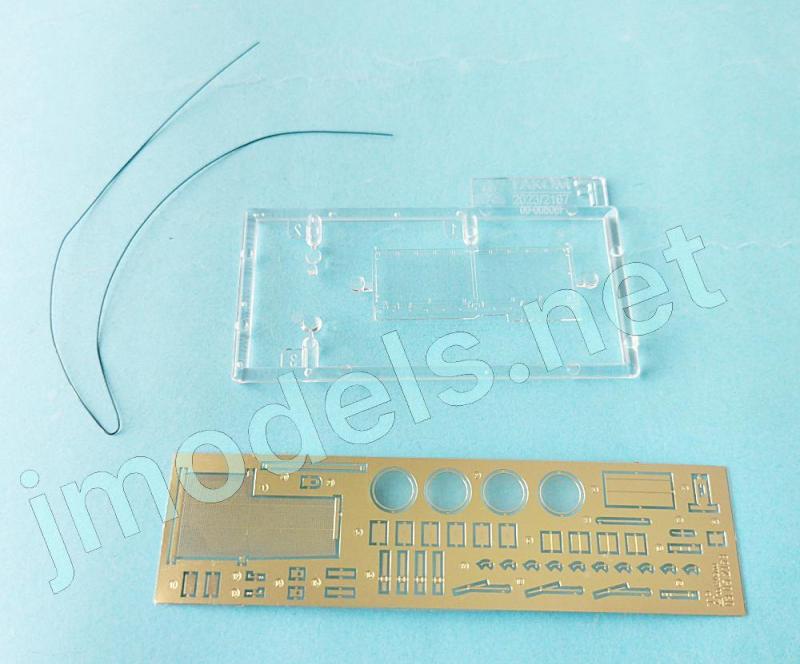
La caja contiene la parte inferior del casco separada; ocho bastidores de piezas, dos de ellos repetidos, otro transparente y un tercero que incluye las piezas de la figura; una plancha de fotograbados; un tramo de hilo; la hoja de calcas y las instrucciones. Todo esto arroja un total de más de 300 piezas, pero ya se sabe que las cadenas y las ruedas del tren de rodaje siempre se llevan su parte de la cuenta. El moldeado de las piezas es muy límpio y nítido, sin marcas de eyector donde no deben aparecer y nódulos en pocas de ellas.
Las instrucciones apenas contienen alternativas de montaje y los acabados muestran tres vehículos pintados en el ubícuo olive drab, uno de ellos con marcas sanitarias, más otro Weasel con un interesante camuflaje empleado en Iwo Jima.
Reseña
La construcción del modelo comienza pegando los topes de las ballestas de la suspensión, los soportes de los bogies y los ejes de las ruedas tensoras (delanteras) a la mitad inferior del casco separada. Comparada con los planos a escala 1/35 del libro de Tankograd Technical Manual Series Nº 6020, esta pieza tiene unas dimensiones casi exactas, siendo su plancha delantera un punto menos inclinada y corta, nada realmente apreciable a este tamaño.
A continuación se añaden las ballestas, todas bien definidas, tanto a la suspensión de los bogies como las delanteras, colocadas de forma longitudinal al casco. Antes de colocar las ruedas tensoras, hay que pegar un pequeño amortiguador horizontal situado tras ellas. La posición y tamaño de este amortiguador parece indicar que este es un vehículo de producción inicial, sin embargo veremos otros detalles que lo contradicen.
Los rodillos de retorno tienen ruedas dobles montadas sobre un eje moldeado en una de ellas. Los bogies contienen cuatro ruedas, separadas a su vez en dos mitades con una fina ranura en medio como las reales, pegadas sobre un brazo que contiene los ejes y el soporte del bogie. Cada bogue consta de dos mitades pegadas a ambos lados del eje. Las ruedas de rodillos y bogies tienen las llantas correctas y bien definidas.
Las ruedas tensoras son dobles y llevan finos aros de fotograbado sobre los bordes para afinar el detalle. Los cubos poseen la cubierta separada con las tuercas definidas y los ocho huecos para aligerar peso. Las tractoras las forman cuatro piezas, con las dos ruedas dentadas emplazadas entre dos externas lisas. La tapa del eje de la transmisión viene también aparte y con un detalle aún mejor que en la anterior. Los cubos de estas ruedas reproducen muy bien la forma peculiar de los huecos, y los dientes, aunque diminutos, son nítidos.
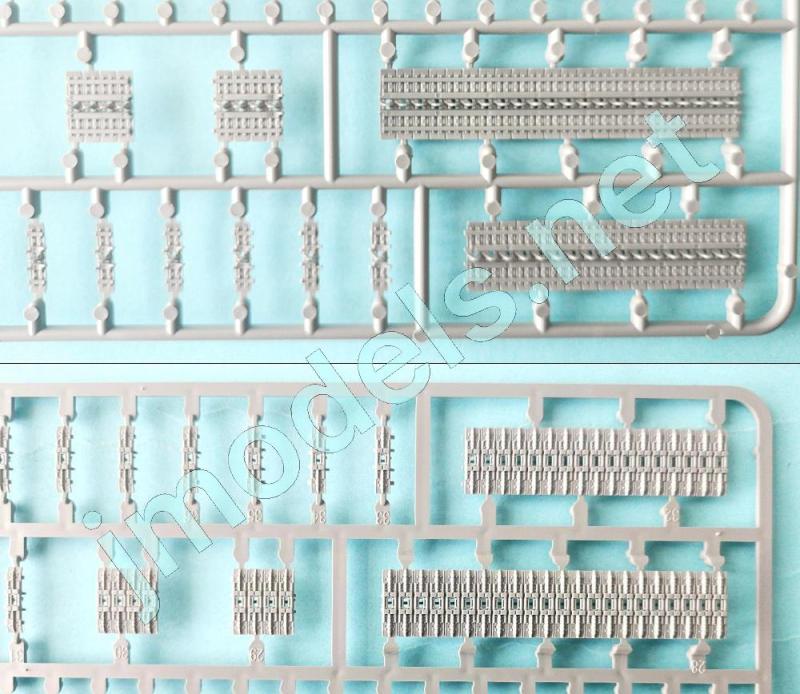
Las cadenas se montan mediante tramos y eslabones, ambos con un detalle muy notable. Los dientes aparecen correctamente ahuecados y los conectores de cada eslabón llevan extensiones parecidas a las denominadas duckbill de carros de combate como el Sherman. Hay un tramo en la parte superior y tres en la inferior, más varios eslabones sueltos sobre el contorno de las ruedas principales. La disposición de estas ruedas permite que las cadenas tengan la característica inclinación hacia adelante del Weasel. Los tramos de las cadenas muestran marcas de eyector muy pequeñas y superficiales, tan próximas a los dientes que no se apreciarán tras colocar el tren de rodaje.
Terminados el tren de rodaje y las cadenas, se procede a montar el interior del vehículo. La base del habitáculo la forman tres planchas longitudinales, de las cuales la central va superpuesta parcialmente a las demás. En la parte delantera está el radiador de una pieza con el conducto de llenado separado junto con dos paneles laterales detallados con un eje transversal y el filtro de combustible en un lado. Tras el radiador tenemos la cubierta del motor. Esta tiene grabados los dos paneles con sus pequeñas asas sólidas que acaso Takom no hizo de fotograbado por su tamaño. También hay una pieza exenta para el hueco de soporte de la camilla en caso de llevarla.
El panel de instrumentos, dispuesto a un lado del compartimento del motor, es más parecido al del modelo de serie final, con cuatro indicadores más el velocímetro, faltándo el voltímetro del modelo inicial. Los indicadores y una placa lateral están realzados con calcas. El panel tiene algunos pequeños botones añadidos, además del asa de la guantera, que está muy bien definida. Por debajo del panel hay otro suplementario con el control de salida de calor aparte.
El puesto de conducción tiene las palancas muy bien reproducidas, pero falta el pequeño control del cabrestante en el lado derecho. Además de las palancas de marcha, hay otras dos menores para gobernar el eje y la transmisión. La palanca de control derecha tiene una alternativa que muestra la mano del conductor asida a ella para darle más realismo a la figura. El asiento tiene el respaldo moldeado con una textura muy realista y, aunque el perfil superior era ligeramente más plano y ancho, se puede dar por bueno a esta escala. Los asientos del Weasel contaban inicialmente con cinturones, que posteriormente se dejaron de instalar. La maqueta no los trae. El estrecho panel delantero del conductor lo lleva la pieza del parabrisas.
El parabrisas es una pieza transparente que incluye el marco y los paneles estrechos situados por debajo. La pieza posee un grosor bastante razonable. Los limpiaparabrisas son de fotograbado y sus motores también son independientes. El panel delantero del conductor está detallado con algunas placas de calca y el timón de las aletas de navegación.
Por delante del conductor hay un panel fino con los pedales moldeados aparte con su eje y la polea del ventilador del radiador. En la parte superior tenemos la plancha horizontal con el amplio hueco de entrada de aire del radiador que lleva la toma de combustible y el extintor. Bajo el hueco interno frontal hay que añadir un panel extra con el protector de la polea del cabrestante.
Separando al motor y al conductor de la zona trasera hay un mamparo transversal con varios amarres de literas de fotograbado y una caja de respeto con soporte en el lado trasero. Los asientos traseros son iguales a los del conductor, con la base y el respado separado y sobre este una textura convincente y distinta en cada uno para mayor realismo. De los varios modelos de radios que podía llevar el Weasel, la de la maqueta parece una SCR-510, con los paneles lateral y frontal bien detallados e identificables, más un par de placas de calca.
Los paneles laterales del casco desmontable están representados por dos piezas a cada lado. La inferior va parcialmente superpuesta a la superior y muestra los agujeros de evacuación de agua, los pestillos de sujeción para el montaje, los deflectores de navegación laterales con los escalones de acceso y los faldones del tren de rodaje en la pieza. Las caras internas están detalladas con marcos de refuerzo y un perfil superior con asas. El bichero viene aparte estibado a babor.
La proa del vehículo la forman una pieza con dos paneles internos y el ojal de remolque de fotograbado en la parte central exterior. El espacio interno de la proa está cubierto por una plancha horizontal más una borda frontal. La plancha lleva sobre ella un acceso con cierre y bisagras bien reproducidas, más el cabrestante, el faro con la lente transparente y su protector de fotograbado, la luz de conducción nocturna y dos amarres.
Detrás de los asientos traseros hay un panel estrecho que contiene el tubo de escape con el protector de fotograbado, la base de la antena y la luz posterior. Un mamparo transversal cierra el vehículo por su parte trasera. La popa de la barcaza consta de dos lados que forman parte de los paneles laterales del vehículo, una pieza inferior con el gancho de remolque y una cubierta superior donde tenemos las herramientas (pala y hacha) y los dos soportes de camillas separados e idénticos al de la proa.
Los timones van pegados sobre sus bisagras de fotograbado y conectados por una fina barra transversal. Los cables de control son de hilo, pero el mecanismo de giro no está explícito en las instrucciones. Los timones aparecen elevados, posición para circular en tierra.
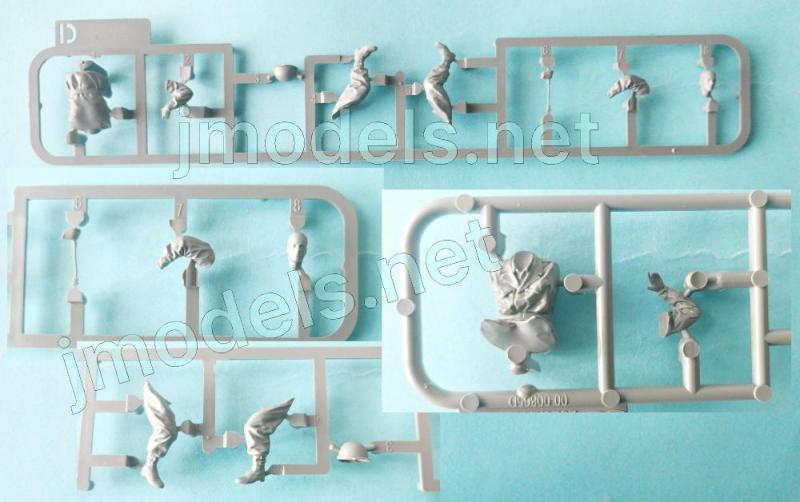
La figura del conductor consta de ocho piezas que corresponden al casco, brazos, torso, piernas unidas a las caderas, más una mano sujeta a uno de los controles del vehículo. El modelado me parece bastante bueno gracias a la reproducción nítida de las botas, bolsillos, correa y botones del uniforme. El casco viene separado con el hueco en apariencia suficiente para adaptarlo a la cabeza, que tiene el cráneo completo. Los rasgos faciales son inexpresivos, pero están bien reproducidos.
Las calcas proporcionan insignias norteamericanas, números de serie, marcas sanitarias, instrumentos y algunos estarcidos. Tienen un aspecto fino y brillante, buena saturación de color y registro correcto. No hay exceso de soporte.
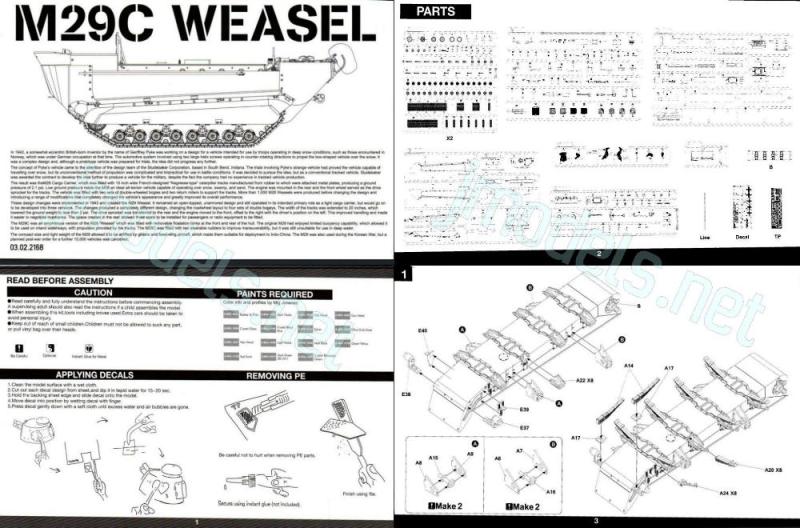
Las instrucciones están impresas en blanco y negro en un folleto apaisado de veinte páginas. Contiene una introducción histórica sobre el M29, un plano numerado de piezas, una lista de pinturas de Ammo Mig, 18 capítulos de montaje con vistas de detalle a mayor tamaño en algunas de ellas y cuatro páginas de perfiles en color.
Como en otras ocasiones, Takom sigue fallando en el tamaño de las instrucciones, que resulta un tanto pequeño, aunque lo peor es que las piezas únicamente están numeradas a un tamaño microscópico en el plano de las instrucciones y resulta difícil su localización en ciertos casos.
Las terminaciones de la maqueta tienen cierta variedad, gracias a las marcas sanitarias y el camuflaje de dos de ellas.
Valoración
Sin duda los modelistas de esta escala y tema están de enhorabuena, tras tanto tiempo esperando un nuevo Weasel que jubilase al eterno de Monogram, única posibilidad en plástico hasta el momento.
Gracias a su acierto en la reproducción de los detalles, Takom ha hecho una gran maqueta de este vehículo tan especial y realmente sólo le ha faltado el motor y parte del radiador para redondearla plenamente. Desgraciadamente, las instrucciones no salen tan bien paradas por culpa de su tamaño y están por debajo del resto del contenido de esta notable edición.◊


The kit
The M29 Weasel in the 1/35 scale has been relatively common through the years, both in plastic and resin, but the Monogram kit, dating from the late 1950s, has been the only plastic alternative for decades.
A few years ago, a manufacturer finally decided to update this vehicle with a more modern tooling, and that manufacturer was none other than Takom. The Chinese company released three boxings: the first was this M29C, an amphibious variant with an additional hull assembly; the second release reproduces an M29 without it; and the third represents a model with an enclosed cab used in polar expeditions by the US Army. The first two releases include the driver figure, but it is missing in the third one. Decal manufacturers, always on the ball, allow modelers to reproduce this vehicle with French and British markings in different settings.
The box contains a separate lower hull section; eight sprues of parts, two of which are duplicates, one clear, and a third that includes the figure parts; a photo-etched fret; a length of thread, the decal sheet, and the instructions. All of this adds up to more than 300 pieces, but as we know, the tracks and running gear wheels always take their toll. The molding of the parts is very clean and crisp, with no ejector marks where they shouldn’t appear and a few nodules on some parts.
The instructions offer hardly any assembly alternatives, and paint finishes show three vehicles painted in the ubiquitous olive drab, one of them with medical markings, plus another Weasel with an interesting camouflage pattern used on Iwo Jima.
Review
Construction of the model begins by gluing the suspension bumper brackets stops, bogie spring yokes, and idler wheel axles to the separate lower hull half. Compared to the 1/35 scale plans published in the Tankograd Technical Manual Series No. 6020, the lower hull piece matches almost spot on, with the front plate being fractionally less steep and shorter, a barely noticeable difference at this size.
Next, the leaf springs are added, all clearly defined, both for the bogie suspension and the front springs, positioned longitudinally along the vehicle. Before attaching the idler wheels, a small horizontal shock absorber located behind them is glued in place. This feature seems to confirm this an early production vehicle, but other details of the kit contradict this, as we will see.
The return rollers have double wheels attached to an axle molded on one of them. The bogies contain four wheels, each separated into two halves with a thin groove between them, just like real ones. These are glued to an arm holding the axles and the yokes for each bogie. The bogies come in halves, each one attached to either side of the axle.. The roller wheels and bogies have correct and well-defined rims.
The idler wheels are double and have fine photo-etched rings along their edges for added detail. The hubs have separate covers with clearly defined nuts and the correct eight holes to reduce weight. The sprockets consist of four pieces, with the two sprockets positioned between two smooth outer wheels. The transmission axle cover is also separate and even more detailed than the previous one. The hubs of these wheels accurately reproduce the distinctive shape of the holes, and the teeth, though tiny, are sharp.
The tracks are assembled by means of lengths and links, both with remarkable detail. The teeth are accurately hollowed out, and the connectors of each link have duckbill extensions. There is one length at the top and three at the bottom, plus several loose links around the contour of the main wheels. The arrangement of these wheels allows the tracks to have the Weasel’s characteristic forward tilt. Several tiny and shallow marks are evident next to the teeth on the track lengths, but I think they will be hidden once the roller wheels are in place.
Once the running gear and tracks are in place, construction continues with the interior of the vehicle. The base of the compartment consists of three longitudinal planks, the central one partially overlapping the others. At the front is the one-piece radiator with a separate filler neck and cap, along with two detailed side panels featuring a crossbar and the fuel filter on one side. Behind the radiator is the engine cover. This has two panels engraved with small, solid handles, which Takom perhaps didn’t provide in photo-etched parts due to their size. There is also a separate piece for the stretcher foot pockets, in case one was carried.
The instrument panel, located to one side of the engine compartment, is more similar to that of a final production vehicle, with four gauges plus the speedometer, lacking the voltmeter of the early batches. The gauges and a side panel are enhanced with decals. The panel has some small separate buttons, in addition to the PE glove box handle. Below the panel is another supplementary piece with the separate heat outlet control.
The driver’s seat has very thin levers, but the small capstan clutch control on the right side is missing. In addition to the gear levers, there are two smaller ones to control the axle and transmission. The right lever has an alternative version showing the driver’s hand gripping it to add realism to the figure. The seat has a backrest with a very realistic raised texture. The upper profile was slightly flatter and wider, but they seem acceptable at this scale anyway. The early Weasel seats had seatbelts, which were later discontinued. They are not included in the kit. The narrow driver’s front panel is molded with the windshield.
The windshield is a clear piece that including the frame and the narrow panels below it. The piece has a reasonable thickness. The windshield wipers are photo-etched, and their motors are also separate. The driver’s front panel is detailed with several decal plates and the tiller.
In front of the driver is a thin panel with the separate pedals and axle plus the radiator fan pulley. Above this is a horizontal plate with the large radiator air duct, detailed with the fuel filler and a fire extinguisher. An extra panel with the winch pulley guard is attached below the front internal gap.
Separating the engine and driver from the rear is a bulkhead with several photo-etched litter brackets and a box of spares with a tray on the rear side. The rear seats are identical to the driver’s, with separate bases and backrests, each featuring a convincing and distinct texture for added realism. Of the various radio sets the Weasel could carry, the one in the kit appears to be an SCR-510, with well-detailed and identifiable side and front panels, plus a couple of decal plates.
The side panels of the detachable hull are represented by two pieces on each side. The lower piece partially overlaps the upper one and shows the drainage holes, the fasteners, the side deflectors with step plates, and running gear aprons. The inner sides are detailed with structural frames and a top profile with handles. The boat hook is stowed separately on the left side.
The bow assembly consists of a single piece with two internal panels and a photo-etched towing eye on the outer side. The interior is covered by a horizontal plate and a front surf guard. The plate features a nice hinged access panel, as well as the capstan, the headlight with a clear lens and photo-etched guard, the black-out light, and two tie-downs.
Behind the rear seats is a narrow panel containing the exhaust pipe with a photo-etched guard, an antenna base, and the taillight. A transverse bulkhead closes off the rear of the vehicle. The stern assembly comprises two sides molded with the hull side panels, a lower piece with a separate pintle hook, and an upper deck with the tools (shovel and axe) and two separate stretcher foot pockets.
The rudders are glued on photo-etched hinges and joined by a thin cross bar. The control cables are made of thread, but the control linkage is not explicitly shown in the instructions. The rudders are represented in the raised position for land operation.
The driver figure consists of eight pieces: helmet, arms, torso, legs attached to the hips, plus a hand holding one of the vehicle’s control levers. Sculpting looks fine thanks to the crisp reproduction of the boots, pockets, belt, and buttons of the uniform. The helmet comes separately with a seemingly large gap to fit the head, which has a complete skull. The facial features are expressionless, but well reproduced.
The decals provide American insignia, serial numbers, medical markings, instruments, and some stencils. They have a fine, glossy appearance, good color saturation, and correct register. There is no excess of carrier film.
The instructions are printed in black and white in a 20-page landscape booklet. It contains a historical summary, a numbered parts diagram, a list of Ammo Mig paints, 18 assembly chapters with detail views in some of them, and four pages of color profiles.
As on other occasions, Takom continue to fall short in the size of the instructions, which are rather small. Even worse, pieces are only numbered at a microscopic size on the instruction sheet, making them difficult to locate them in the sprues in some cases.
Paint finishes offer some variety, thanks to the sanitary markings and the camouflage of two M29Cs.
Conclusion
Modelers of this scale and topic are surely in luck, after so long waiting for a new Weasel to replace the old Monogram kit, the only plastic option available until now.
Thanks to their excellent attention to detail, Takom have released a fantastic kit of this very special vehicle, and it really only lacks the engine and part of the radiator to be truly complete. Unfortunately, the instructions are not as good due to their size and are inferior to the rest of the contents of this remarkable release.◊
Publicado – Published: 7 / 2026
©www.jmodels.net


Debe estar conectado para enviar un comentario.