
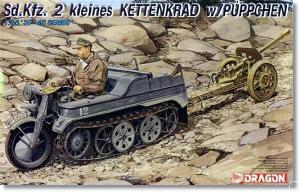
De un vistazo – Quick look
MATERIAL Y PIEZAS
MEDIA & PARTS:
- Plástico inyectado (280 piezas). Incluye una figura (7 piezas).
- Injected plastic (280 parts). One figure included (7 parts).
CALCAS – DECALS:
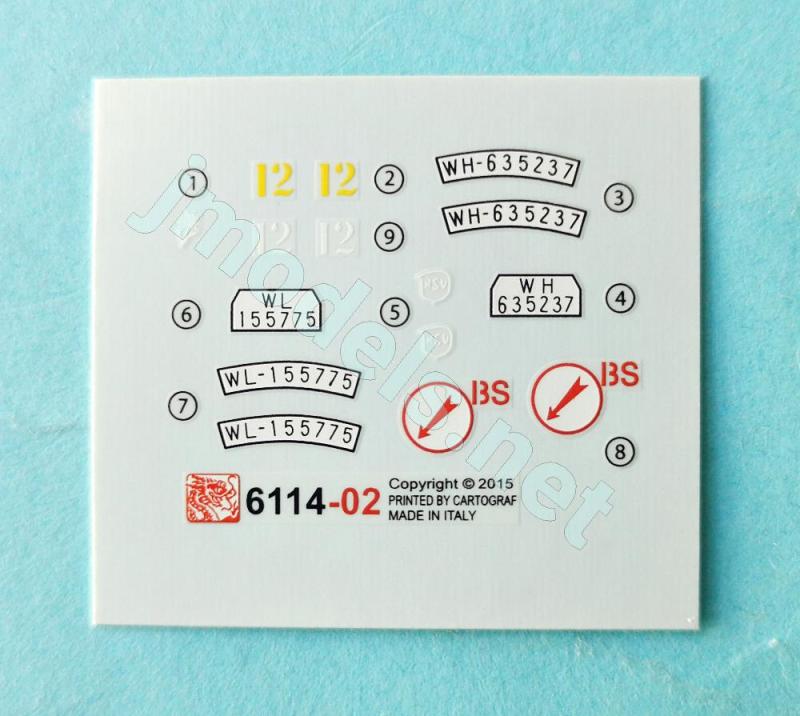
- Impresas por Cartograf. Matrículas, marcas de unidad y numerales. Finas y mates. Nítidas, sin soporte excedente.
- Printed by Cartograf. Plates, unit badges and numbers. Thin and matte finish. Sharp, with no surplus carrier.
OPCIONES – OPTIONS:
- Sd.Kfz. 2. German Army. Fallschirmjäger-Regiment 7. Tunisia, 1941.
- Sd.Kfz. 2 with 8.8cm Raketenwerfer 43 Puppchen. German Army. 1st Gebirgsjäger Division. Unknown theatre. 1943.
INSTRUCCIONES – INSTRUCTIONS:
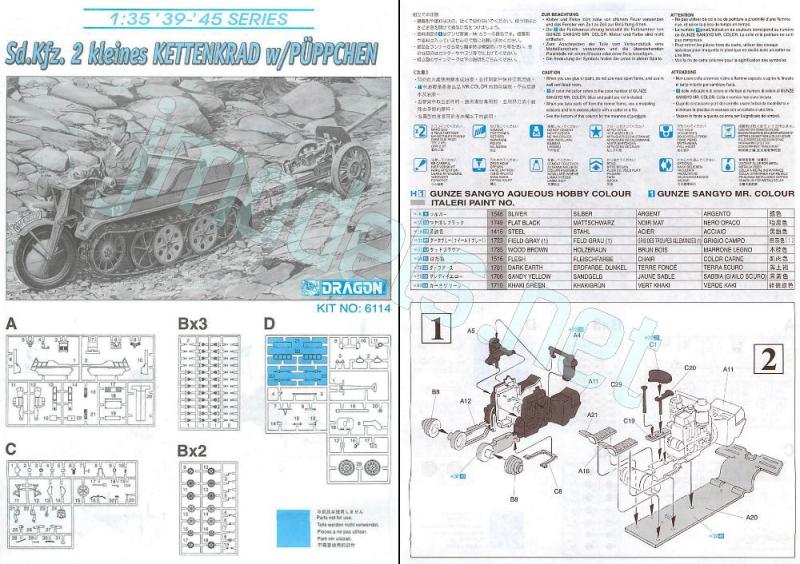
- Folleto doblado de 6 páginas impreso en blanco, negro y azul. Contiene un plano numerado de piezas, una tabla de colores con pinturas equivalentes de Gunze Sangyo e Italeri, 15 capítulos de montaje y perfiles.
- 6-page folded brochure printed in black, white and blue. It contains a numbered parts diagram, a color chart with Gunze Sangyo and Italeri paint matches, 15 assembly chapters and profiles.
LO MEJOR – THE BEST:
- Molde limpio. Notable detalle general. Montaje sencillo. Dirección y cubierta del motor móviles. Incluye figura y cañón, ambos notables.
- Clean tooling. Nice overall detail. Ease of assembly. Steerable front wheel and openable engine cover. Figures and cannon included, both outstanding.
LO PEOR – THE WORST:
- Motor. Faro sin lente transparente. Ausencia de calcas para el salpicadero. Guardabarros seccionado en mitades.
- Engine. No clear lens for the headlight. Lack of a decal for the dashboard. Front mudguard molded in halves.
VALORACIÓN – CONCLUSION:
- A falta de pequeñas particularidades por redondear, es una maqueta notable y mucho mejor que la antigua de Tamiya. El cañón y la figura acrecientan su atractivo.
- Aside from a few minor details to refine, it is an outstanding kit, far superior to the old Tamiya Kettenkrad. The gun and the figure add to its appeal.

La maqueta
Hasta que Dragón lanzó esta caja a inicios de este siglo, la maqueta de Tamiya era la más a mano para montar una motocicleta Kettenkrad en la escala 1/35. De esta última ya he dado cuenta en estas páginas (Sd.kfz2 Kleines Kettenkraftrad, referencia 35029). Tras este lanzamiento, que representa un modelo final, Dragón continuó la serie con otras tres ediciones en años posteriores combinando el vehículo con diferentes figuras y tren remolcado (Sd.Kfz. 2/2 kleines Kettenkrad w/sch. Feldkable, Kettenkrad Late Production & 3.7cm PaK 36 w/crew, Sd.Kfz.2 Kettenkrad Early Production w/Infanteriekarren). La última mencionada, como indica su título, incorpora piezas nuevas para el modelo inicial.
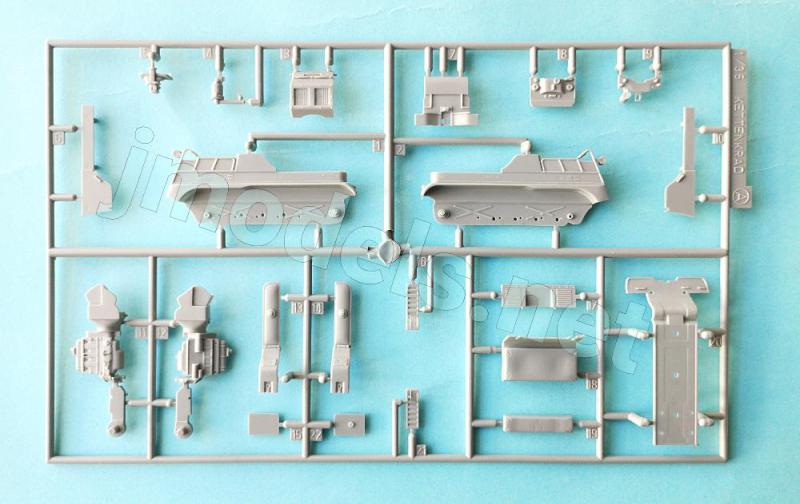
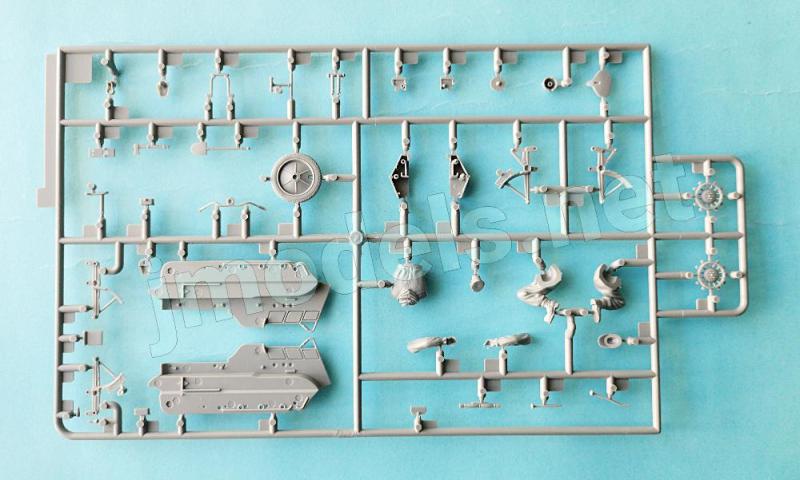
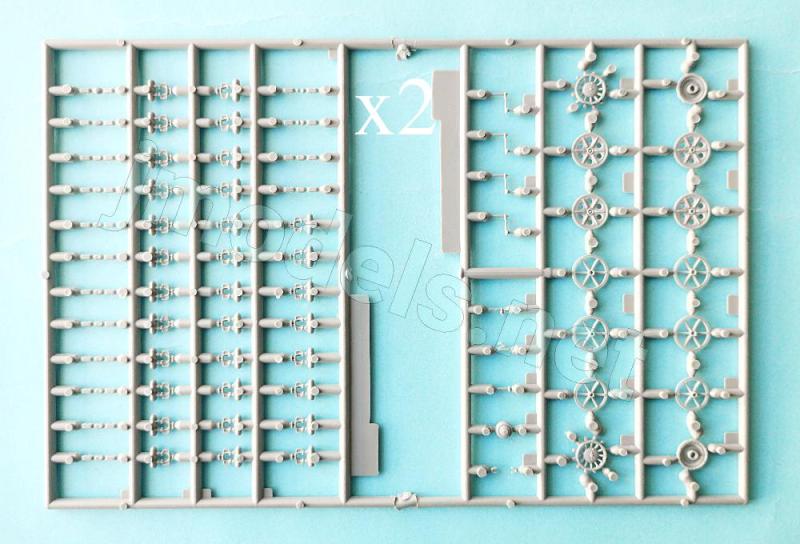
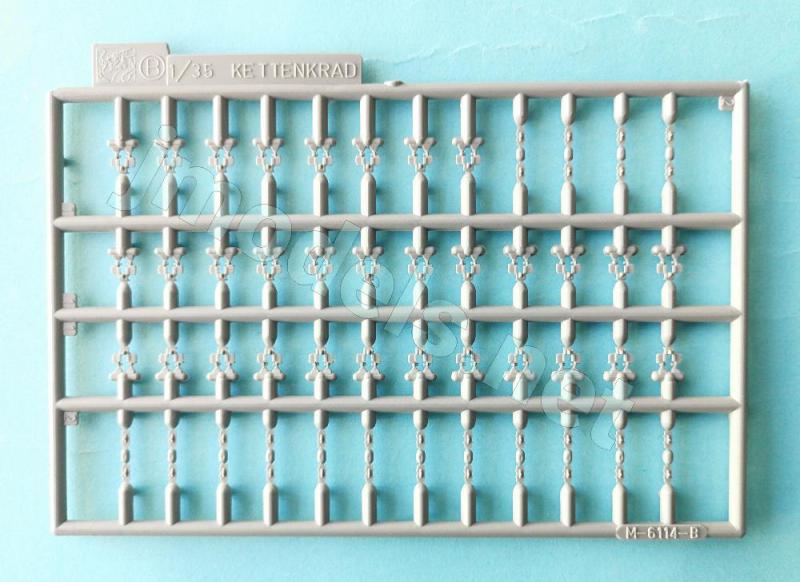
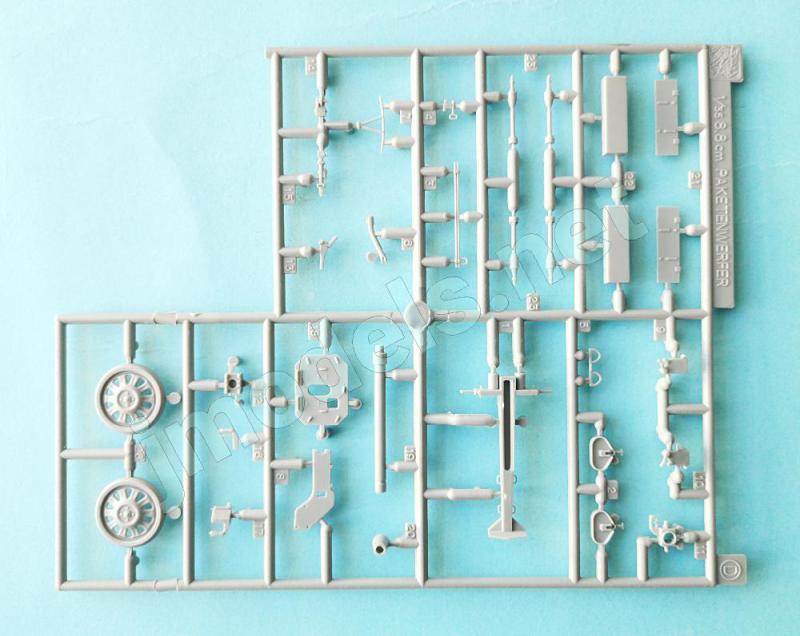
La caja contiene ocho bastidores, cinco de ellos para el tren de rodaje y las cadenas, una hoja de calcas pequeña y las instrucciones. El bastidor D es el que distingue a esta edición porque contiene el lanzacohetes Raketenwerfer 43 Puppchen, que consta de 31 partes.
Las piezas presentan un moldeado excelente, pese a que encontramos alguna rebaba marginal en la figura, cilindros de eyector en ciertas piezas, mínimas líneas de molde en las ruedas y marcas de eyector al parecer no evidentes en los lados internos de varios elementos. Todos estos sobrantes se pueden limpiar con facilidad sin dedicarles mucho tiempo.
El montaje de los tres componentes de la caja (motocicleta, cañón y figura) no presenta problemas de montaje a primera vista, y lo mismo ocurre con la pintura si seguimos las instrucciones, que sólo ofrecen vehículos pintados en gris y el cañón en amarillo arena, como se aprecia en la caja.
Revisión
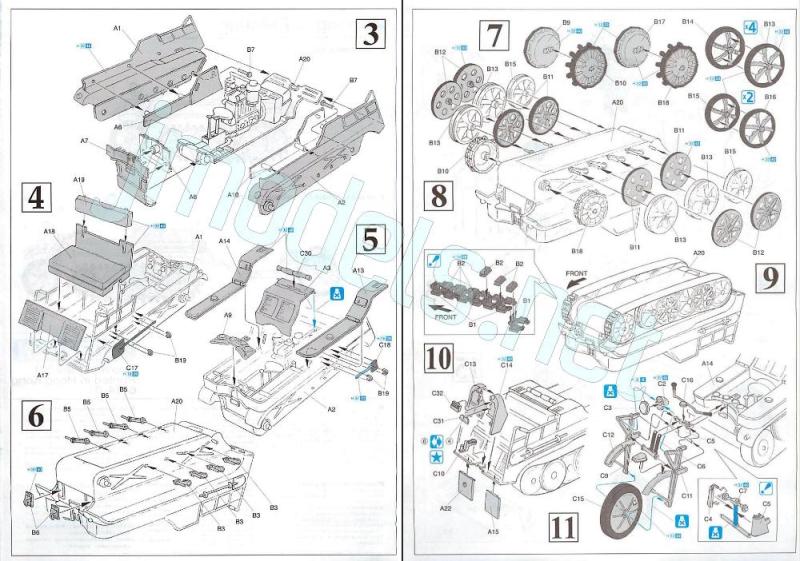
La construcción del modelo empieza por el motor y el chasis, sigue con el tren de rodaje y las cadenas, y por último se monta la horquilla, el manillar y la rueda.
El motor realmente no está muy detallado y podemos salvarlo porque no se va a apreciar a primera vista. El bloque aparece unido a la caja de cambios y también a los diferenciales de las ruedas tractoras. Los pedales vienen en una pieza en forma de U y van pegados por debajo de la caja de cambios. Los únicos elementos separados del motor son el carburador y el filtro de aire, Encima de la caja de cambios tenemos la palanca de la transmisión auxiliar, el sillín y su soporte. Sobre el suelo del vehículo, que viene aparte, se colocan los reposapiés, moldeados con una parte de las cubiertas de los diferenciales.
Ya montado el motor sobre el suelo, se añaden los lados de la carrocería, de los que curiosamente hay cuatro piezas iguales en los bastidores. Estos cuentan con un sutil estampado de las planchas exteriores a la altura del tren de rodaje, unas finas barandillas en la parte trasera, pero con paneles cubriendo los lados como en los vehículos de serie final, y los ejes de las tractoras incluidos en las piezas. Están detallados con una pala y un hacha sujetos con grapas aparte. El eje de las tensoras es un perno introducido por el lado interno de las planchas laterales.
Dos paneles adicionales internos espaciados con cilindros permiten colocar posteriormente otras dos piezas horizontales que muestran los tapones de los depósitos de combustible, más las cubiertas de la batería y compartimento de respeto. La cubierta del motor cuenta con dos pequeños muñones que permiten mostrar el motor y tiene los dos paneles de ventilación con la trama nítida, más un toldo enrollado encima de la pieza. En cualquier caso, las rejillas ganarán en aspecto si se reemplazan por fotograbados.
También se le añaden al suelo los paneles delanteros, igualmente espaciados para colocar el tablero de instrumentos sobre ellos, y dotados de dos ganchos de remolque separados. La maqueta no incluye calcas para los instrumentos, desgraciadamente.
El montaje sigue en la parte trasera, con la adición del asiento y el respaldo, ambos con un texturizado realista, y el panel trasero con rejillas bien reproducidas. Los lados de la carrocería no tienen los soportes para llevar fusiles como los del modelo incial. Entre los puestos traseros está el soporte de las luces dividido en mitades, las luces traseras y de convoy, además de la placa de matrícula. Esta es un tanto gruesa por ser de plástico y cabe mejorarla. Finalmente, se añaden el gancho de remolque y los faldones guardabarros, que llevan el catadióptrico bien definido.
Hay seis ruedas a cada lado, más la rueda tensora y tractora. Las ruedas de carretera son realmente destacables, tienen el estampado de las superfiecies nítido y los agujeros para aligerar peso perfectamente definidos. Los ejes vienen separados. Las ruedas internas y externas son simples, mientras que las intermedias, tractoras y tensoras son dobles. Las tractoras poseen los dientes definidos y notable detalle en la llanta y los radios, lo mismo que las tensoras.
Las cadenas se componen de eslabones sueltos engarzados cada uno en el siguiente y cogidos con las zapatas exentas que permiten hacer las cadenas articulables. Los eslabones parecen un tanto tediosos de montar, aunque los tramos no tienen gran longitud. Las instrucciones no indican el número de eslabones por lado, sólo su orientación.
El detalle de la dirección delantera consta de nada menos que once piezas, contando la rueda. La horquilla está dividida por la mitad e incluye el guardabarros seccionado con cada pieza. La placa de matrícula también está moldeada en uno de los lados y el faro Notek viene aparte. El manillar es bastante fino y cuenta con un soporte con el freno hidráulico reproducido en mitades. El faro tiene la lente separada, pero no es transparente ni la lente está estriada. La amortiguación va situada entre la horquilla, aunque si se comparan los muelles con los reales, parecen demasiado finos. La rueda está representada con gran realismo tanto en el neumático como en las cubiertas de los radios. El neumático tiene la banda de rodadura levemente texturizada y las cubiertas muestrran un estampado nítido en los paneles y el hueco de la válvula de llenado, que incluso llega a apreciarse dentro de él. Si pegamos la horquilla a la carrocería con cuidado, podemos hacerla movible.
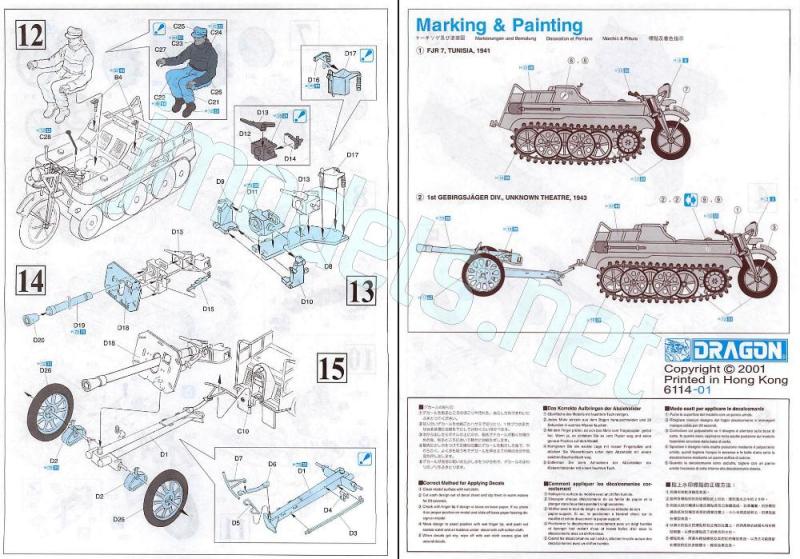
El Raketenwerfer 43 viene perfectamente detallado. Su montaje comienza por la recámara, que tiene el bloque, la placa de cierre y las palancas separados sobre una base con el afuste dividido en mitades. Tras pegar este ensamblaje al escudo, se puede añadir el tubo del cañón y la boca, también exenta y muy buen definida en su interior.
Las gualderas vienen en posición de transporte (cerradas) con sus barras de tracción aparte. En el eje moldeado en las gualderas se introducen las dos cubiertas laterales para pegar después las ruedas. Estas son de una pieza con los neumáticos, radios y llantas de notable reproducción. Junto con este arma, tambien encontramos cuatro granadas RPzB. Gr. 4312 y dos cajas de munición. Las instrucciones señalan que no son aplicables a la maqueta.
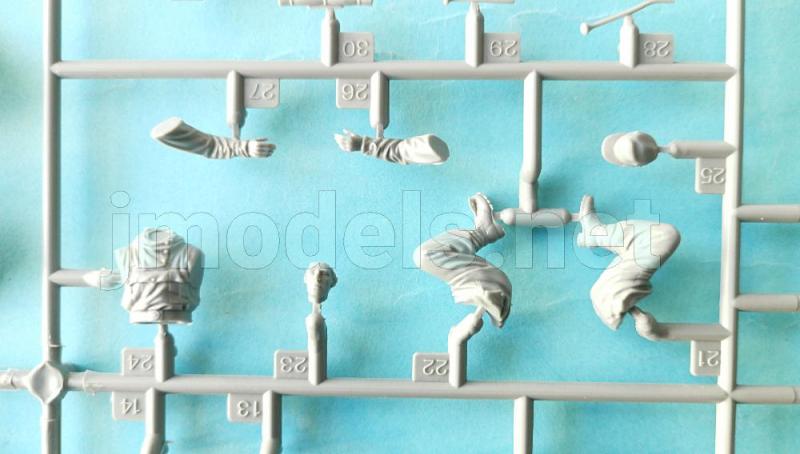
La figura del conductor consta de brazos, piernas, torso, cabeza y gorra de campaña por separado. Viste botas y pantalones de uniforme estándar y una blusa reversible con capucha, más apropiada para tropas de montaña que para el norte de África. Los detalles de la blusa y el cinturón, así como las arrugas del uniforme están muy bien conseguidos. La cabeza y las manos tienen rasgos bien moldeados y nítidos.
La pequeña hoja de calcas está impresa por Cartograf y proporciona placas de matrícula, marcas de unidad y numerales. Presentan un aspecto fino y mate, con motivos nítidos y ausencia de soporte sobrante.
Las instrucciones están impresas en blanco, negro y azul en un folleto doblado formando seis páginas que muestra un plano numerado de piezas, una tabla de colores con pinturas equivalentes de Gunze Sangyo e Italeri, quince capítulos de montaje y perfiles. Los perfiles muestran un vehículo del 7º Regimiento Fallschirmjäger de la División Hermann Göring en Túnez y otro de la 1ª División de Tropas de Montaña en ubicación desconocida, ambos pintados de gris.
Las instrucciones del fabricante son ya famosas por sus errores, en ocasiones de bulto. En este caso sólo hay uno leve en la pieza C32, las luces de convoy, que es en realidad la C38 en el bastidor.
Valoración
Para el punto de detalle que tienen ahora muchas maquetas de esta escala, a la Kettenkrad de Dragón le faltan pocos elementos por mejorar, pero indudablemente el molde es muy notable y sobrepasa a la antigua contraparte de Tamiya.
El montaje sólo me parece un poco más delicado en la dirección delantera, donde hay varios elementos que debemos pegar a un tiempo. El añadido de un excelente lanzacohetes y la figura es una gran idea, que además acrecienta el atractivo de esta maqueta.◊

The kit
Until Dragon released this kit at the beginning of this century, Tamiya’s offer was the most readily available for building a 1/35 Kettenkrad. I’ve already reviewed this kit on these pages (Sd.Kfz.2 Kleines Kettenkraftrad, reference 35029). Following this release, which represents a late production motorcycle, Dragon continued the series with three more boxings in subsequent years, combining the vehicle with different figures and a towed gun or trailer (Sd.Kfz. 2/2 kleines Kettenkrad w/sch. Feldkable, Kettenkrad Late Production & 3.7cm PaK 36 w/crew, Sd.Kfz.2 Kettenkrad Early Production w/Infanteriekarren). The last one mentioned, as the title reads, had new parts for an early vehicle.
The box contains eight sprues, five of them for the running gear and tracks, a small decal sheet, and the instructions. Sprue D is the distinct feature in this release because it contains the Raketenwerfer 43 Puppchen rocket launcher, which consists of 23 parts.
The pieces have excellent molding, although we find some marginal flash on the figure, ejector nodules on certain parts, minimal seam lines on the tires, and seemingly invisible ejector marks on the inner sides of several elements. All of them can be easily cleaned up without much effort. Assembling the three main elements in the box (motorcycle, launcher, and figure) looks straightforward, and the same is true for painting if you follow the instructions, which only provide vehicles in gray and the launcher in sand yellow, as shown on the box.
Review
Construction begins with the engine and chassis, proceeds to the running gear and tracks, and finishes with the fork, handlebar, and wheel.
The engine lacks significant detail, though we can choose to overlook this since it will not be visible. The engine block is molded with the gearbox and the final drive. The pedals come as a single U-shaped piece that is attached under the gearbox. The only separate engine parts are the carburetor and air filter. Positioned on the gearbox are the auxiliary transmission lever, the seat, and its base. The footrests, which come with part of the differential housings, are attached to the vehicle floor, which is a separate part.
Once the engine is glued onto the floor, the body sides are added; interestingly, the sprues contain four identical pieces for these. They have subtle stamped detail on the lower plates and thin rear handrails, while also molded with the side panels, characteristic of late-production vehicles,and the drive sprocket axles. They are detailed with a shovel and an axe with separate clamps. The idler wheel axle consists of a pin inserted from the inner side of the side plates.
Two additional inner panels, spaced by cylinders, allow for the subsequent attachment of two horizontal pieces featuring fuel tank caps, as well as the battery and spare parts compartment covers. The engine intake screens are crisp and there is also a rolled-up canvas on top. The screens can be much improved with PE replacements for a better appearance.
At this stage, the front panels are also attached to the floor; they are evenly spaced to support the instrument panel and feature two separate towing hooks. Unfortunately, the kit does not include decals for the instruments.
Assembly continues at the rear with the addition of the seat and backrest, both having realistic texture, and the rear panel, which has well-reproduced grilles. The hull sides lack the rifle racks found on the early model. Between the rear seats is the light housing split in halves, the tail and convoy lights, and the license plate. The plate is somewhat thick due to the plastic molding and could be improved. Finally, the pintle hook and mudflaps are attached; the latter show well-defined reflectors.
There are six road wheels on each side, plus the idler and drive sprocket. The road wheels are truly nice, featuring crisp surface detail and perfectly defined lightening holes. The inner and outer wheels are single, while the intermediate wheels, drive sprockets, and idlers are double. The drive sprockets feature well-defined teeth and remarkable detail on the rim and spokes, as do the idlers.
The tracks consist of individual links with separate pads and are fully workable. Assembly may be a bit tedious, although the runs are not long. The instructions do not specify the number of links per side, only their orientation.
The front-end assembly consists of no fewer than eleven parts, including the wheel. The fork is split down the middle, with the fenders molded on each half. The license plate is also molded on one side, while the Notek headlight is a separate part. The handlebars are quite thin and feature a mount with the hydraulic brake reproduced in halves. The headlight has a separate lens, though it is neither clear nor ribbed. The suspension unit sits between the fork legs, although the springs look too thin when compared to the real thing. The wheel is beautifully rendered in both the tire and the wheel covers; the tire has a lightly textured tread, while the covers display crisp detail on the panels and a clearly visible valve stem recess. If we attach the fork to the body carefully, we can make it steerable.
The Raketenwerfer 43 is perfectly detailed. Assembly begins with the breech, which has the block, breech plate, and levers separated and arranged on a base with the mount divided in half. After gluing this assembly to the shield, the barrel and muzzle can be added; the muzzle is also separate and very well defined inside. We also find four RPzB. Gr. 4312 grenades and two boxes. The instructions show them as not applicable to this kit.
The trails come in transport position (closed) with the drawbar separate. The two side covers are inserted into the axle molded in the sideplates, and the wheels are then glued on. These are one-piece, with tires, spokes, and rims of remarkable detail.
The driver figure consists of separate arms, legs, torso, head, and field cap. He wears standard uniform boots and trousers, and a reversible hooded smock, more appropriate for mountain troops than for North Africa. The details of the shirt and belt, as well as the wrinkles in the uniform are very well done. The head and hands have well-molded and sharp features.
The small decal sheet provides license plates, unit markings, and numbers. They have a fine, matte finish, are crisp and show no excess carrier.
The instructions are printed in black, white, and blue on a six-page folded brochure including a numbered parts diagram, a color chart with equivalent paints from Gunze Sangyo and Italeri, fifteen assembly chapters, and profiles. The profiles show a vehicle from the 7th Fallschirmjäger Regiment of the Hermann Göring Division in Tunisia and another from the 1st Mountain Troops Division in an unknown location, both painted gray.
The manufacturer’s instructions are famous for their mistakes, sometimes glaring. In this case, there is only a minor one in part C32, the convoy lights, which is actually C38 on the sprue.
Conclusion
For the level of detail many kits of this scale now have, this Kettenkrad still needs a few refinements to be really rounded off, but undoubtedly the mold is very good and surpasses the old Tamiya kit in all aspects we wish to consider.
Assembly only seems a little more delicate in the front steering, where there are several elements we need to glue at the same time. The addition of the excellent rocket launcher and the figure is a great bonus, which also increases the appeal of this kit.◊
Publicado – Published: 9 / 2026
©www.jmodels.net


Debe estar conectado para enviar un comentario.