
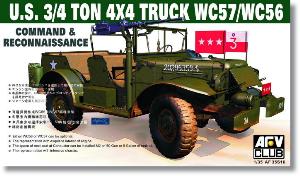
De un vistazo – Quick look
MATERIAL Y PIEZAS
MEDIA & PARTS:
- Plástico inyectado (206 piezas), plástico transparente (6 piezas), rodamientos de plástico (6 piezas), hilo (1 tramo).
- Injected plastic (26 parts), clear plastic (6 parts), plastic polycaps (6 parts), thread (1 length).
CALCAS – DECALS:
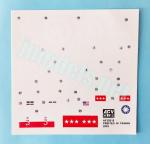
- Insignias norteamericanas y chinas nacionalistas, matrículas e insignias para los banderines de mando. Aspecto muy fino y brillante. Bien impresas.
- US and Nationalist Chinese markings, registers and flags for the pennant holders. Thin and glossy appearance. Well printed.
OPCIONES – OPTIONS:
- WC56. U.S. Army. U.S.A. 20916487 S. Europa 1945.
- WC57. U.S. Army. U.S.A. 2043477. 82ª División Aerotransportada. 1945.
- WC57. U.S. Army. U.S.A. 20295359 S. 3º Ejército. Vehículo de mando del General Patton.
- WC56. U.S. Army. U.S.A. 20916487 S. Europe 1945.
- WC57. U.S. Army. U.S.A. 2043477. 82nd Airborne Division. 1945.
- WC57. U.S. Army. U.S.A. 20295359 S. 3rd Army. General Patton’s command car.
INSTRUCCIONES – INSTRUCTIONS:
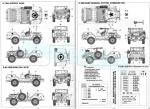
- Folleto A4 de 12 páginas impreso en blanco y negro. Contiene una introducción histórica sobre el vehículo, una tabla de colores con equivalencias en varias marcas de pintura, 18 secuencias de montaje y 2 páginas de perfiles. Claras.
- 12-page A4 booklet printed in black and white. It shows a historical introduction about the vehicle, a color chart with matches in several paint ranges, 18 construction chapters and 2 pages of profiles. Clear.
LO MEJOR – THE BEST:
- Gran detalle interno y externo. Opciones de montaje.
- Outstanding overall detail. Assembly choices.
LO PEOR – THE WORST:
- Nada destacable a simple vista.
- Nothing to note without construction.
VALORACIÓN – CONCLUSION:
- Excelente maqueta con muy buen detalle y montaje adecuado para el modelista medio.
- Excellent kit with a nice overall detail and suitable assembly for the average modeller.

La maqueta
Es una reedición de una buena maqueta anterior de Skybow, marca que ha dejado también su sello en otras referencias de AFV Club como el jeep M38 y el carro de combate M41. Igualmente comparte molde y muchas piezas con el camión WC63 Big Shot (AF35S18) revisado en estas páginas anteriormente. Sin embargo, dado que los dos vehículos muestran algunas diferencias, no me saltaré nada en esta entrega, pese a que pueda repetir lo ya publicado sobre el WC63.
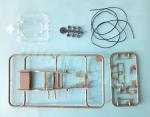
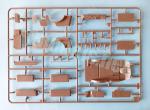
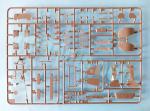
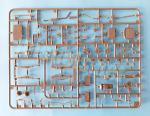
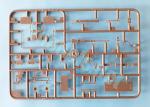
La caja contiene siete bastidores de piezas, un bastidor transparente, un trozo de hilo trenzado, seis rodamientos de plástico, la hoja de calcas y las instrucciones. Las piezas carecen de defectos del molde y únicamente encuentro marcas bajo los guardabarros, aunque son leves y se pueden disimular con facilidad. El detalle general es muy bueno, destacando el estampado sobre el suelo de la carrocería y la definición que muestran gran parte de las piezas del motor, el panel de herramientas e incluso la ametralladora que se ofrece como opción.
La maqueta ofrece variadas alternativas de montaje y no sólo en el cabrestante frontal, diferencia más evidente entre el WC56 y 57, sino también porque uno de los acabados es un vehículo con algunos elementos personalizados para el General Patton. De este modo, se puede afirmar que en realidad la edición tiene hasta tres vehículos con ciertas diferencias en la misma caja.
Motor y transmisión
El motor y la caja de cambios constan de más de 20 piezas en las que se puede apreciar el bloque separado en mitades, la tapa de balancines, el cárter, las poleas y el ventilador, el colector de escape, el filtro de aire y el de aceite entre otras. La caja de cambios tiene dos opciones, con un componente auxiliar añadido para el WC57. La batería y el tubo de escape vienen aparte, pegados al bastidor una vez que el motor se ha colocado en su lugar. Lo mismo ocurre con el radiador, que viene separado en mitades con la malla frontal bien texturizada y un manguito aparte.
El WC57 lleva el paragolpes separado en dos secciones con la bobina de remolque entre ellas, detallada con hilo trenzado simulando el cable de acero y el cabrestante por debajo, con un eje conectado con la caja de cambios.
La transmisión consta de una caja de transferencia colocada en la mitad del bastidor del chasis y dos ejes de transmisión con las juntas cardan bien definidas. Los ejes incluyen los diferenciales y están detallados con las bridas de las ballestas. El eje delantero tiene la barra estabilizadora separada.
Chasis, suspensión y ruedas
El bastidor del chasis es una sola pieza con todos los travesaños, excepto el paragolpes delantero, que tiene alternativas con y sin cabrestante y está detallado con ganchos de remolque y una sirena en el vehículo de Patton, y los traseros, que también son diferentes en el vehículo del general porque soportan la tapa del panel de herramientas trasero, que no queda expuesto como en los vehículos de serie. El travesaño posterior lleva un panel adicional con el gancho de remolque y las luces. También hay que añadir en la parte posterior la cara superior del depósito de combustible, detallada con la toma y las cinchas.
El bastidor cuenta con soportes para pegar los estribos laterales sobre ellos. También se puede añadir el soporte de la rueda de repuesto, ya que el lado de la carrocería tiene una muesca que lo salva al pegarlo.
La suspensión se compone de cuatro ballestas bien perfiladas que incluyen las abrazaderas y los ojos en los extremos. Las delanteras se pegan a una plancha adicional superpuesta al bastidor. Las piezas están detalladas con pequeños y finos brazos de torsión.
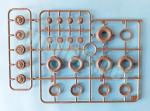
Aunque las instrucciones señalan el montaje de seis ruedas, en realidad encontramos las cinco de rigor, contando la de repuesto. Las llantas vienen en mitades con un rodamiento plástico entre ellas y el tambor de freno separado y pegado al eje. El detalle externo en las llantas es bastante nítido. Los neumáticos se han moldeado de una pieza con los talones de las llantas separados. El detalle de la banda de rodadura está bien definido, pero muestra finas líneas de molde que limpiar.
Cabina y carrocería
El suelo del habitáculo es una sola pieza que muestra un excelente estampado en la zona central y trasera de la plancha e incluye los pasos de las ruedas traseras. La parte delantera muestra los pedales y diversas palancas además del panel cortafuegos, la columna de la dirección y el volante separados. Los asientos y respaldos están detallados con bastidores de soporte. El respaldo anterior cuenta con un panel trasero detallado con un contenedor portamapas.
Una vez pegadas casi todas las piezas internas del habitáculo, el montaje pasa a los lados de la carrocería moldeados a partir del motor más el panel trasero aparte. La carrocería tiene algunas pequeñas diferencias en el vehículo de mando del General Patton, como la posición de los catadióptricos laterales y la tapa del panel de herramientas, que se puede mostrar abierta o cerrada gracias a los brazos de plegado moldeados en las dos posiciones. El vehículo tiene uno de los contenedores de combustible pegado al lado trasero de la carrocería para dejar espacio al soporte de la ametralladora calibre 50, que tienen un detalle excelente en el afuste y el propio arma. El asiento trasero también cuenta con un asidero frente a él en forma de barra para sostenerse de pie en el interior del vehículo.
Un de los lados tiene un soporte para la base de la antena de radio y el conducto de llenado del depósito de combustible. Los estribos están detallados con contenedores de combustible en ambas bandas y una caja de respeto. El panel posterior es doble con una plancha para estibar las herramientas en piezas separadas. Un fino perfil cubre el hueco superior del panel trasero y sobre él aparece el toldo plegado y recogido con cinchas.
El morro del vehículo comprende varias piezas. El parabrisas está formado por el marco, los cristales y las escobillas de los limpiaparabrisas separados. Los lados muestran las rejillas de ventilación con nitidez, mientras que las dos alas del capó vienen separadas y permiten mostrar el motor. Estén bien detalladas con cierres y enganches. El panel situado por delante del parabrisas sirve para colocar en su interior el salpicadero, muy bien reproducido con instrumentos en relieve y calcas para distintos indicadores. La pieza delantera del morro posee el tapón de llenado del radiador aparte. La parrilla frontal es muy fina y tiene doble opción según el modelo. El vehículo de Patton lleva una plancha protectora adicional por delante y una placa con estrellas de rango.
Los guardabarros delanteros son finos y están detallados con soportes situados bajo ellos. Encima llevan varios tipos de faros y luces, los principales dotados de lentes transparentes. El vehículo de Patton posee además un claxon de viento formado por dos trompetas y los banderines de rango y ejército, detallados con calcas.
Calcas
La hoja tiene una buena impresión y las calcas reproducen insignias norteamericanas y chinas nacionalistas, matrículas e insignias para los banderines de mando. Su aspecto es muy fino y brillante.
Instrucciones
El folleto tiene un formato A4 y doce páginas impresas en blanco y negro que muestran una introducción histórica sobre el vehículo, una tabla de colores con equivalencias en pinturas de Gunze Sangyo, Revell, Humbrol y Life Color, 18 secuencias de montaje y dos páginas de perfiles. Las secuencias de armado son muy claras.
Los perfiles muestran vehículos acabados en dos tipos opcionales de Olive Drab, uno de tono verdoso oscuro y otro amarronado, sin más variedad que las calcas.
Valoración
Este es un vehículo tan importante como muy conocido que merecía una maqueta que lo retratase adecuadamente, como hizo Skybow en su momento y ahora AFV Club. El detalle general me parece excelente y muy afinado en su mayor parte. Así mismo, el montaje no parece ofrecer dificultades especiales para el modelista medio, aunque no es lo más ideal para principiantes.
La posibilidad de montar el WC57 del General Patton es un acierto, ya que añade variedad e interés al tratarse de un vehículo en cierta medida personalizado y diferente al resto.◊

The kit
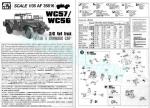
This is a rebox of a very good Skybow kit released about two decades back. AFV Club catalogue also has other previous Skybow kits, such as the M38 jeep or the M41 tank. This one shares the tooling and many parts with the WC63 Big Shot (AF35S18) reviewed here a while ago. However, since the two vehicles have some differences, I will not skip anything in this review, even though I may repeat what I said about the WC63.
The box contains seven sprues of parts, a clear sprue, a length of thread, six plastic polycaps, the decal sheet and the instructions. Parts have no blemishes and I only find marks under the mudguards, although they are shallow and can be easily filled. The standard of moulding and overall detail is quite good., specially on the stamped cab floor, the engine, the rear panel tools and the machine gun that is included as an option. The kit offers several assembly alternatives, not only for the front winch, the most obvious difference between the WC56 and 57, but also because you have the choice to build General Patton’s customed WC57, which has some different parts. So we can say the release actually comprises up to three vehicles within the same box.
Engine and transmission
The engine and gearbox consist of over 20 parts, including the engine block separated into halves, the rocker cover, the crankcase, the pulleys and fan, the exhaust manifold plus the air and oil filters, among others. The gearbox has two options, with an extra part for the WC57. The battery and the exhaust pipe come separately and are glued to the frame once the engine has been attached. The same goes for the radiator, which comes separated into halves with the front mesh nicely textured and a separate upper hose.
The WC57 has the bumper separated into two pieces with the drum between them detailed with thread simulating the steel cable and the winch below, with a shaft connected to the gearbox.
The transmission consists of a transfer case placed in the middle of the chassis frame and two drive shafts with well-defined universal joints. The axles include the differentials and are detailed with the leaf spring clamps. The front axle has a separate anti-roll bar.
Chassis, suspension and wheels
The chassis frame is a single piece moulded with all the cross members except the front bumper, which features the tow hooks, a siren for Patton’s vehicle and an alternative winch attachment. The rear bumpers are also different on the general’s WC57 because they hold the cover of the rear tool panel, which is not exposed as in the standard vehicles. The rear cross member has an additional panel with the tow hitch and the rear lights. Added to the frame rear is also the upper half of the fuel tank, detailed with the filler and straps.
The frame has side brackets to glue the side steps. The spare wheel support can also be added at this point since the body side has a gap that allows to attach it.
The suspension consists of four sharp leaf springs that include the clamps and eyes. The front springs are glued to an additional plate overlying the frame. The parts are detailed with small, thin torque arms.
Although the instructions call for six wheels, we actually find the standard five, counting the spare. The wheels come in halves with a plastic polycap between them and the brake drums separated and glued to the axles. External detail on the hubs is quite nice. The tires are moulded in one piece with the rims apart. The treads are nicely rendered but show thin seam lines that need cleanup.
Cab and body
The cab floor is a single piece showing excellent stamped plates and includes the rear wheel arches. The front section shows the pedals and several levers plus a separate firewall panel, steering column and wheel. The seats and backrests are detailed with frames. The front backrest has a rear panel provided with a map case, or so it seems.
Once most of the internal cab parts are in place, assembly moves on to the body sides, which span from the engine to the vehicle rear and have a separate rear side. The body shows some minor differences for General Patton’s command vehicle, such as the position of the side reflectors and the tool panel cover, which can be shown open or closed thanks to the folding arms moulded in the two positions. The vehicle has one of the jerrycans attached to the rear body to make room for the .50-caliber machine gun mount, which has outstanding detail. The rear seat also features a grab bar in front of it to stand up inside the vehicle.
One side has a rack for the antenna base and the fuel tank filler. The running boards are detailed with jerrycans on both sides and a storage box. The rear panel is double with a rack for the separate tools. A thin profile covers the upper gap left by rear panel and there is also a folded tarp moulded with straps.
The nose of the vehicle is made up of several parts. The windscreen consists of the frame, windows and wipers. The sides show defined side vents, while the two hood halves are separated and allow the engine to be seen. They halves are detailed with raised locks and hooks. The panel in front of the windscreen is used to attach the dashboard, nicely reproduced with raised instruments and decals for a few gauges. The front nose piece has a separate radiator filler cap. The front grill is very thin and has two options depending on the version you wish to build. Patton’s vehicle has an additional armour plate in front of the grill and a plaque with rank stars.
The front fenders are thin and detailed with brackets under the surfaces. They are provided with several types of lights with the headlight lenses reproduced in clear pieces. Patton’s vehicle also has an air horn plus the rank and army pennants. These are detailed with decals.
Decals
The sheet is well printed with decals for US Army and Chinese Nationalist markings, serial numbers and command vehicle pennants. They have a very thin and glossy appearance.
Instructions
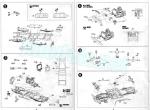
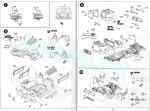
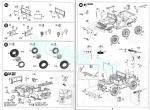
The booklet comes in A4 format and has twelve pages printed in black and white showing a historical introduction to the vehicle, a colour chart with matches in Gunze Sangyo, Revell, Humbrol and Life Color paints, 18 assembly chapters with clear exploded views and two pages of profiles.
The profiles show vehicles finished in two optional types of Olive Drab, one dark greenish and the other brownish, with no other difference but the decals.
Conclusion
This is an important and well-known vehicle that deserved a kit to render it properly as Skybow did at the time and we are lucky to have it around again from time to time thanks to AFV Club. Oveall detail is excellent and refined for the most part. Construction does not seem to have any special difficulties for the average modeller although it is not a wise choice for beginners.
The possibility to build General Patton’s WC57 showing customized detail is an asset added to this attractive kit.◊
Publicado – Published: 9 / 2024
©www.jmodels.net
 jmodels.net
Debe estar conectado para enviar un comentario.