
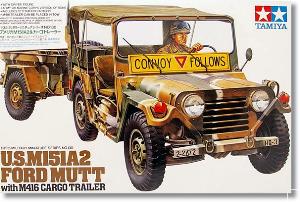
De un vistazo – Quick look
MATERIAL Y PIEZAS
MEDIA & PARTS:
- M151A2: Plástico inyectado (83 piezas), acetato transparente (2 piezas). Incluye una figura (6 piezas).
- Tráiler M416: Plástico inyectado (40 piezas), cartulina (1 hoja).
- M151A2: Injected plastic (83 parts), clear acetate (2 parts), carton (1 sheet). One figure included (6 parts).
- M416 trailer: Injected plastic (40 parts), cardboard (1 sheet).
CALCAS – DECALS:
- Matrículas, marcas tácticas, instrumentos del salpicadero, números de serie y placa de convoy. Aspecto fino y mate, saturadas, sin exceso de soporte.
- Plates, tactical markings, dashboard instruments, serial numbers and convoy markings. Thin and matte finish, saturated, without too much carrier film.
OPCIONES – OPTIONS:
- U.S. Army. 2nd Infantry Division. Korea.
- U.S. Army. 3rd Armoured Division (Europe).
- U:S. Marine Corps. Camp Fuji (Japan).
INSTRUCCIONES – INSTRUCTIONS:
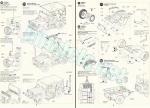
- Folleto doblado de 8 páginas impreso en blanco y negro. Contiene un sumario histórico sobre el vehículo, 12 pasos de montaje y 2 páginas de perfiles.
- 8-page folded brochure printed in black and white. It shows a historical summary about the vehicle, 12 assembly steps and 2 pages of profiles.
LO MEJOR – THE BEST:
- Buen detalle general. Sencillez de montaje. Opciones de montaje. Tráiler con carga.
- Nicely detailed overall. Ease of assembly. Construction choices. Includes a load for the trailer.
LO PEOR – THE WORST:
- Faros no transparentes. Carece de motor y pedales.
- Headlights are not clear parts. No engine and pedals included.
VALORACIÓN – CONCLUSION:
- Pierde en ciertos detalles lo que gana en montaje. En general es una buena representación del vehículo con la acertada adición del toldo y el tráiler M416, que multiplican las opciones de acabado. Apta para modelistas que lleven bien la aplicación de camuflajes.
- The kit loses in detail what it gets in ease of construction. It is an overall nice rendition of the vehicle with the nice addition of the tarp and M414 trailer, which multiplies the choices to finish the model. Suitable for modellers with some experience in applying camo patterns.

La maqueta
Es una reedición de la maqueta M151A2 w/ TOW Missile Launcher (referencia 35125) que he analizado anteriormente en este blog. En esta ocasión Tamiya presenta una edición básica del vehículo y por ello le añadió más opciones de acabado, como la posibilidad de montar el toldo, una ametralladora M60 en su afuste sobre la parte trasera y la adición del tráiler M416 con su carga. La maqueta incluye igualmente versiones del Ejército norteamericano y los Marines.
Como seguramente el lector ya sabe, Academy también ha retratado el Ford Mutt en casi las mismas versiones que Tamiya. Pese al parecido entre ambos moldes y cajas, lo cierto es que son completamente diferentes, como ya indiqué en mi primera revisión. En esta segunda entrega, por llamarla así, pondré el foco en las diferencias con la primera maqueta ya publicada.
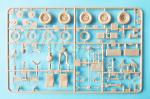
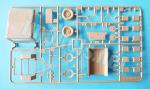
La caja trae tres bastidores, una lámina de acetato transparente, una hoja de cartulina de 16 x 10 cm aproximadamente, las calcas y las instrucciones, que vienen repetidas en japonés. Los bastidores A y B son iguales a las del resto de ediciones y el bastidor C, nuevo en esta caja, incluye las piezas para montar el toldo y el tráiler.
Las piezas muestran buena calidad en el moldeado, como es habitual en Tamiya, y rebabas muy visibles tan sólo en los neumáticos. Las marcas de eyector no son profusas ni evidentes. El toldo tiene algunas en la parte interna y la caja del tráiler en su lado inferior, todas ellas muy leves.
Respecto a la maqueta con lanzamisiles TOW, las opciones de montaje se amplían grandemente, ya que podemos terminar el vehículo descubierto, con o sin ametralladora y radio, o con toldo. El equipo de vadeo es otra alternativa aplicable al vehículo de los Marines.
Chasis, transmisión, suspensión y ruedas
El análisis de estas partes del vehículo puede consultarse en la revisión de la referencia 35125.
Cabina
El montaje de la cabina incluye en esta maqueta el asiento del acompañante, suprimido en la versión con lanzamisiles TOW, e idéntico al del conductor. También una de las calcas del salpicadero es diferente y aplicable únicamente a la versión del Ejército.
Por delante del parabrisas se puede instalar una señal de vehículo líder de convoy compuesta de una pieza de acetato detallada con una calca.
Carrocería y toldo
La parte trasera del vehículo contiene un asiento separado en dos piezas y opcionalmente también se puede añadir la radio sobre el guadabarros derecho y una ametralladora M60 con el afuste situado tras los asientos delanteros. El equipo de radio es el mismo de otras cajas y posee la opción de instalar una base de la antena sencilla en la parte exterior derecha de la carrocería o bien en la zona posterior derecha de la misma, en este caso con un montaje y base diferentes. La antena debe fabricarla el modelista de plástico estirado.
La M60 no es extraordinaria, pero puede pasar. Viene en una pieza unida al trípode delantero. El afuste y la caja de munición son piezas aparte. Las instrucciones advierten que la configuración del todoterreno con radio y ametralladora no es muy usual. Esta versión lleva también una barra cortacables sobre el paragolpes delantero.
Otra diferencia con la maqueta 35125 es la situación de la rueda de repuesto en la parte posterior y para la versión de los Marines la adición del equipo de vadeo, consistente en un tubo de entrada de aire al motor pegado en uno de los lados del capó y la salida extendida del tubo de escape en la parte trasera.
El toldo es otra de las opciones de montaje y es válido para las dos versiones (Marines y Ejército). Está moldeado en una pieza no excesivamente fina, pero texturizada por fuera y con algunas marcas en el lado interno del techo, como he dicho. La pieza tiene la ventana posterior abierta, obviamente sin el plástico transparente que la cubre. Las varillas de plegado vienen separadas, aunque Tamiya no incluye el travesaño central que sí ha marcado con realismo en la superficie externa. Evidentemente la opción de colocar el toldo es alternativa a la de instalar la ametralladora.
Tráiler M416
Como el toldo, el tráiler M416 viene en el nuevo bastidor C de la maqueta. Tiene parecido con el real, pero cuando se consideran detalles concretos, se le ven ciertas carencias y simplificaciones.
El chasis viene unido a los guardabarros en una sola pieza. Inexplicablemente, tiene tres travesaños en lugar de dos y los guardabarros poseen formas externas más o menos correctas, pero son demasiado gruesos en su interior y carecen de nitidez en el borde externo doblado de la chapa metálica. La suspensión la componen dos amortiguadores y dos ballestas y el eje de las ruedas viene separado. Las ruedas son idénticas y se montan igual que las del M151 y, como ellas, tienen líneas de molde sobre los neumáticos. La llanta no sería mala si no fuera porque las tuercas están descentradas y los agujeros en su contorno no vienen abiertos, o al menos con más profundidad.
La parte delantera del chasis muestra el ojal de enganche abierto en su parte anterior para ajustarlo a presión en el del vehículo de remolque. También tenemos el pie de apoyo, que puede pegarse abierto si el tráiler está desenganchado y el freno de mano en una pieza aparte. Para darle más realismo el modelista puede añadir los cables eléctricos y las cadenas de seguridad del pie.
La caja de transporte solamente tiene la cara trasera separada. Aunque las molduras del fondo están bien reproducidas, las de los lados internos y externos está representadas justo al revés, ya que deberían ser negativas por dentro y positivas por fuera. Faltan las asas de las esquinas de la caja y el gancho posterior para sujetar el toldo junto con los pequeños enganches laterales. Sin embargo, los faros no están mal y los reflectantes vienen separados a los lados y también moldeados con la cara trasera de la caja.
Afortunadamente, Tamiya se acordó de incluir una carga adecuada para el tráiler y proporciona seis latas y doce cajas de raciones recortables en una hoja de cartulina. Los rótulos externos de las cajas no tienen definición por su tamaño, pero al menos están ahí.
Figura
Es la misma incluida en la maqueta 35125.
Calcas
La hoja contiene matrículas, marcas tácticas, instrumentos del salpicadero, números de serie y una placa de convoy. Su aspecto es fino y mate, tienen buena saturación de color y carecen de exceso de soporte.
Instrucciones
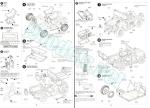
La maqueta tiene dos folletos de instrucciones idénticos en inglés y japonés. Cada uno de ellos tiene ocho páginas impresas en blanco y negro y contiene un sumario histórico sobre el vehículo, doce pasos de montaje y dos páginas de perfiles. Las referencias de color pertenecen a la gama de pinturas acrílicas del fabricante, como de costumbre. Las vistas explosionadas son muy claras y muestran información adicional sobre el montaje o la pintura en la zona izquierda de cada página.
Las dos versiones están pintadas en igual camuflaje MERDC de cuatro colores, aunque el tráiler de los Marines aparece en tonos diferentes. Ignoro si es correcto, pero le da cierta variación al acabado.
Valoración
La maqueta ofrece facilidad de montaje a cambio de sacrificar ciertos detalles muy evidentes, como la ausencia de motor y pedales, más los faros no transparentes. En general, tanto el vehículo como el tráiler están decentemente reproducidos, aunque el modelista experto tiene margen para refinar o añadir lo que Tamiya no acabó de redondear.
A mi juicio, lo mejor de esta reedición son las múltiples configuraciones en las que podemos terminar el vehículo. La ametralladora M60, la radio y el equipo de vadeo vienen de serie en el molde, pero el añadido del toldo y el tráiler M416, que también es mejorable, son un acierto y ofrecen mucha más variedad en el acabado y presentación del modelo.
Salvo por la pintura del nada sencillo camuflaje MERDC, este M151A2 me parece adecuado para modelistas de cualquier nivel de experiencia.◊






The kit
This is a rebox of the M151A2 w/ TOW Missile Launcher kit (reference 35125), which I have already reviewed on this blog. This time, Tamiya presents a basic version of the vehicle and has added more finishing options, such as the possibility of adding a tarp, an M60 machine gun mounted on the rear, and the addition of the M416 trailer with a load. The kit also includes US Army and Marine Corps versions.
As the reader surely knows, Academy has also produced the Ford Mutt in almost the same versions as Tamiya. Despite the similarity between the kits, they are completely different toolings, as I said in my first review. In this second installment I will focus on the differences with the previous release reviewed here.
The box comes with three sprues, a transparent acetate sheet, a sheet of cardboard measuring approximately 16 x 10 cm, the decals, and the instructions, which are also provided in Japanese. Sprues A and B are the same as other boxings, and the new frame C includes pieces to assemble the tarp and trailer.
Parts show good moulding quality, as is typical for Tamiya, with visible flash only on the tires. The ejector marks are neither profuse nor evident. The tarp has some marks on the inside, and the trailer bed on the underside, all of them very shallow.
With respect to the kit with a TOW missile launcher, assembly options are greatly expanded, as we have a choice for using a tarp plus including or not a a machine gun and the radio. Wading equipment is another option applicable to the Marine vehicle.
Chassis, transmission, suspension and wheels
These are the same as the Tamiya kit 35125 reviewed here before.
Cab
Cab assembly includes the passenger seat, which is removed from the TOW missile launcher version and identical to the driver’s seat. One of the dashboard decals is also different and is only applicable to the U.S. Army version.
A convoy lead vehicle sign, consisting of an acetate piece detailed with a decal, can be added in front of the windshield.
Body and tarp
The vehicle contains a rear two-piece seat, and optionally, a radio on the right fender plus an M60 machine gun mounted behind the front seats. The radio equipment is the same as in other kits, and there is the option of installing a simple antenna base on the right outer body or at the rear, in this case with a different fitting and base. The antenna is built by the modeller from stretched plastic.
The M60 is not extraordinary, but it can be used. It comes in one piece attached to the front tripod. The mount and ammo box are separate parts. The instructions say that the configuration with a radio and machine gun is not very common. This version also has a wire catcher on the front bumper. Another difference with the 35125 kit is the location of the spare tire at the rear, and for the Marines version, the addition of wading equipment, consisting of an engine air intake tube attached to the hood and an extended exhaust outlet.
The tarp is applicable to both the Marine and U.S. Army vehicle. It is moulded in a single thin piece textured on the outside and showing a few pin marks on the roof lower side, as mentioned. There is an open rear window, obviously without the clear plastic cover. The folding rods are separate, although Tamiya does not include the center crossbar, which has been realistically moulded on the outer surface. The choice for the tarp is alternative to installing the machine gun.
M416 trailer
Like the tarp, the M416 trailer is included on the new C sprue. It bears a resemblance to the real thing, but when looking at specific details, some shortcomings and simplifications become apparent.
The chassis is attached to the fenders in a single piece. Inexplicably, it has three crossmembers instead of two, and the fenders have more or less correct external shapes, but are too thick on the inside and lack definition along the folded outer edge of the sheet metal. The suspension consists of two shock absorbers and two leaf springs with a separate wheel axle. The wheels are identical to the ones provided for the Mutt and show similar seam lines on the tires. The rims would not be bad if it weren’t for the off-centered lug nuts and the shallow holes around them, which could have been open or at least deeper.
The front shows an open towing eye to be pressed-fitted onto the vehicle’s hitch. We also have the landing leg, which can be glued extended if the trailer is uncoupled, and the handbrake is a separate part. For more realism, the modeller can add the electric cables and safety chains.
The cargo trailer has a separate rear side. Although the bottom mouldings are correct, those on the inner and outer sides are rendered exactly the opposite, as they should come negative on the inside and positive on the outside. The handles on the corners, the rear hook for securing the tarp and the small side hooks are missing. However, the headlights are not bad, and the reflectors come separate on the sides and moulded with the rear face of the trailer.
Fortunately, Tamiya didn’t forget to include suitable cargo for the trailer and provides six jerrycans and twelve cut-out ration boxes printed on a thin cardboard sheet. The external labels on the boxes are blurred due to their size, but at least they are there.
Figure
It is the same driver figure included in kit 35135.
Decals
The sheet contains license plates, tactical markings, dashboard instruments, serial numbers, and a convoy plate. They look thin and matte, with good color saturation and no excess carrier.
Instructions
The kit includes two identical instruction brochures in English and Japanese. Each one has eight pages printed in black and white and contains a historical summary of the vehicle, twelve assembly steps, and two pages of profiles. Color references are from the manufacturer’s range of acrylic paints, as usual. The exploded views are very clear and show additional assembly or painting information on the left side of each page.
Both versions are painted in the same four-color MERDC camouflage, although the Marines’ trailer appears in different shades. I don’t know if this is correct, but it adds some variation to the finish.
Conclusion
The kit offers ease of assembly at the expense of some very obvious details, such as the absence of an engine and pedals, as well as the solid headlights. Overall, both the vehicle and the trailer are decently reproduced, although the experienced modeller has room to refine or add anything Tamiya didn’t quite round off.
In my opinion, the best thing about this rebox is the multiple configurations in which the vehicle can be finished. The M60 machine gun, radio, and wading equipment were already present in previous boxings, but the addition of the tarp and the M416 trailer, which can also be improved, are nice assets and offer much more variety to finish the kit.
Except for the not-so-simple MERDC camouflage paint, I think this M151A2 is suitable for modellers of any experience level.◊
Publicado – Published: 6 / 2025
©www.jmodels.net
 jmodels.net
Debe estar conectado para enviar un comentario.