
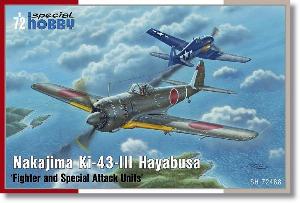
De un vistazo – Quick look
MATERIAL Y PIEZAS
MEDIA & PARTS:
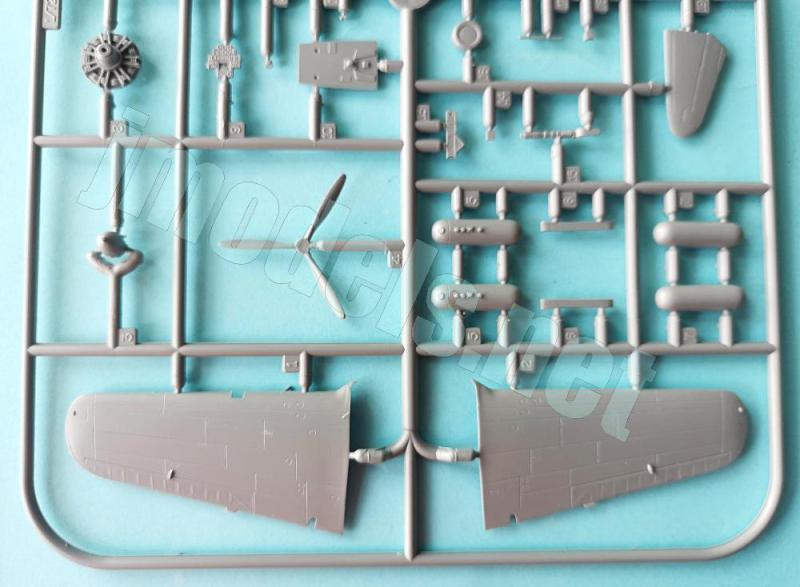
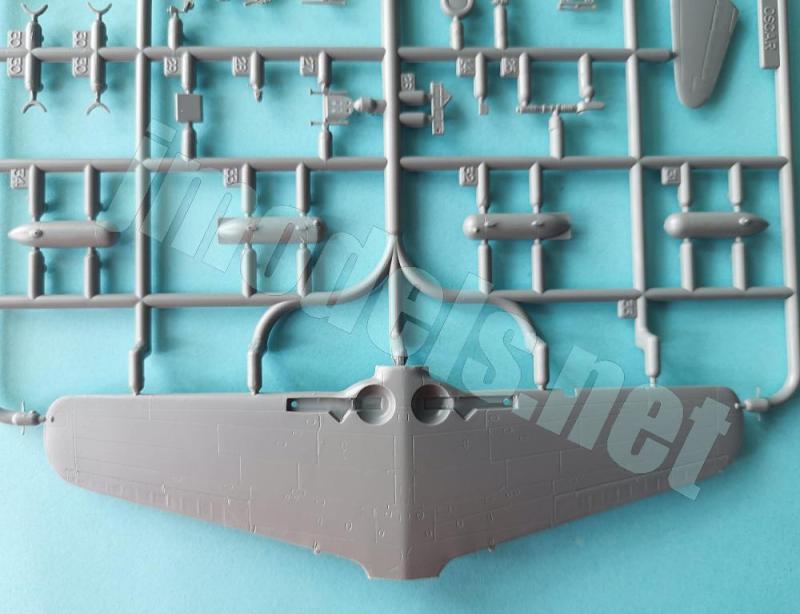
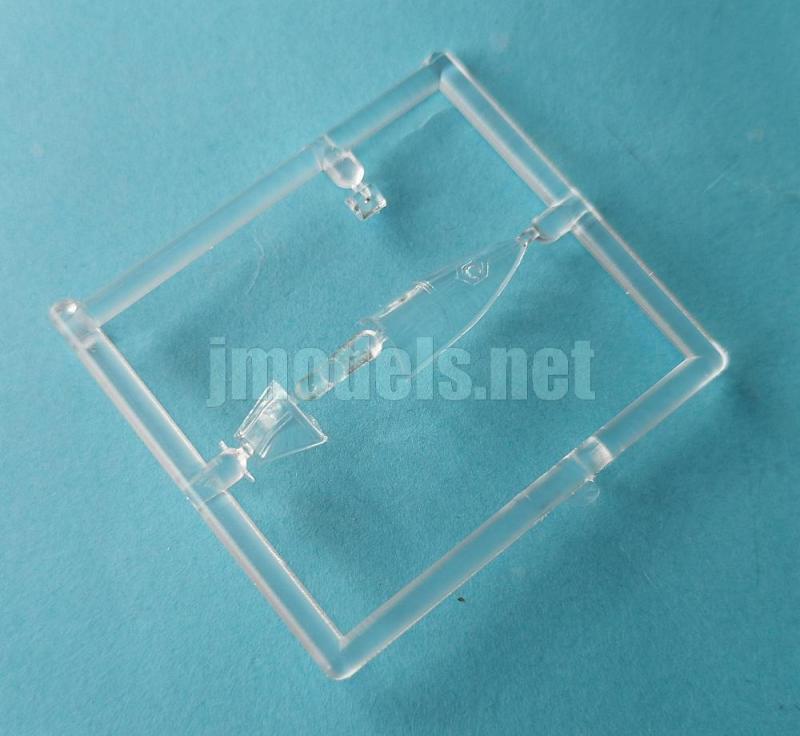
- Plástico inyectado (52 piezas), plástico transparente (3 piezas).
- Injected plastic (52 parts), clear plastic (3 parts).
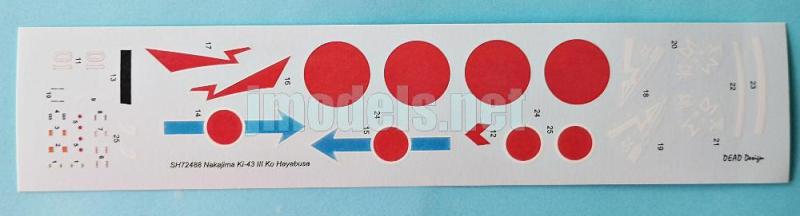
CALCAS – DECALS:
- Impresas por Dead Design. Hinomarus, marcas de unidad, numerales y algunos estarcidos. Aspecto brillante y no demasiado fino. Buen registro y saturación de color. Leve exceso de película soporte.
- Printed by Dead Design. Hinomarus, unit markings, numbers and some stencils. Glossy and not very thin finish. Good register and color saturation. A bit excess carrier.
OPCIONES – OPTIONS:
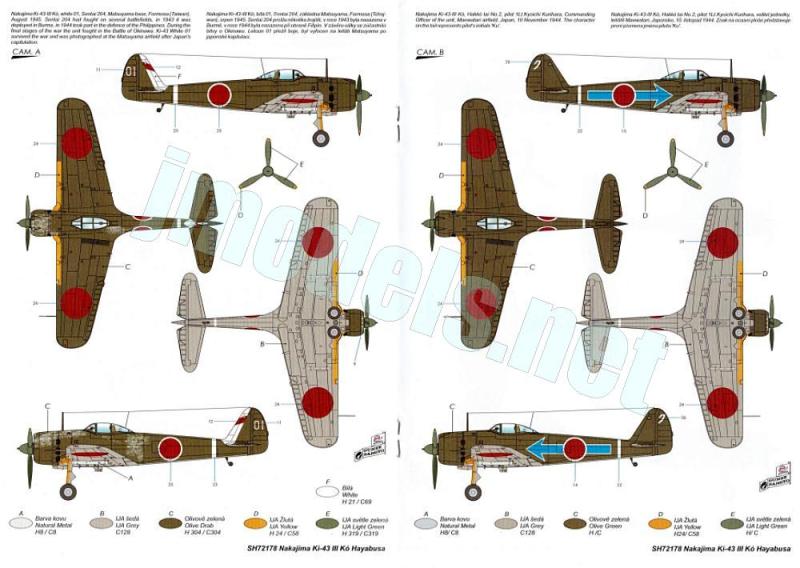
- Ki-43-III Kō. Blanco 01. 204º Sentai. Base Matsuyama (Formosa). Agosto de 1945.
- Ki-43-III Kō. Hakkō Tai N.º 2. Campo de vuelo Maewatari (Japón). 10 de noviembre de 1944. Pilotado por el Primer Tte. Kyoichi Kurihara.
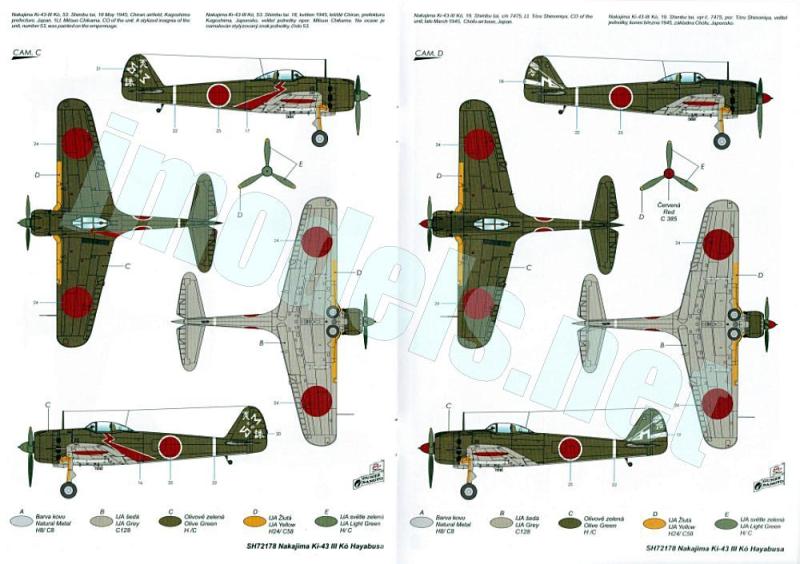
- Ki-43-III Kō. 53º Shimbu Tai. Campo de vuelo Chiran (Kagoshima, Japón). Pilotado por el Primer Tte. Mitsuo Chikama.
- Ki-43-III Kō. c/n 7475. 19º Shimbu Tai. Base Chofu (Japón). Finales de marzo de 1945. Pilotado por el Tte. Toru Shinomiya.
INSTRUCCIONES – INSTRUCTIONS:
- Folleto A5 de 12 páginas impreso en color sobre papel satinado. Contiene una introducción histórica con datos técnicos, un plano numerado de piezas, una lista de colores con equivalencias de Gunze Sangyo, 9 pasos de montaje y 5 páginas de perfiles.
- 12-page A5 booklet printed in color on glossy paper. It shows a historical introduction with technical data, a list of colors with matches in Gunze Sangyo paints, 9 assembly steps and 5 pages of profiles.
LO MEJOR – THE BEST:
- Buen detalle general. Aparente sencillez de montaje.
- Nice overall detail. Apparent ease of assembly.
LO PEOR – THE WORST:
- Las calcas podrían estar mejor impresas.
- Decals could have been better printed.
VALORACIÓN – CONCLUSION:
- Special Hobby ha seguido de cerca el despiece y algunos detalles de maquetas muy anteriores de Fujimi y Hasegawa para su propio molde. La maqueta refleja bien las características particulares de esta variante del Hayabusa. No debe ofrecer problemas al modelista de nivel medio.
- Special Hobby have closely followed the parts breakdown and some details of much earlier Fujimi and Hasegawa kits for their own mold. The kit accurately reflects the particular characteristics of this Hayabusa variant. It should pose no problems for the intermediate modeler.

La maqueta
Esta edición es por el momento la última de un molde nuevo lanzado por Special Hobby (SH) en 2009 que es común para las versiones Ki-43-II y III. La caja está dedicada a unidades de caza del Ejército japonés y también a las denominadas eufemísticamente “unidades de ataque especial”, léase “suicidas”.
La caja contiene cuatro bastidores de piezas, uno de ellos transparente, la hoja de calcas y las instrucciones. Las mitades del fuselaje están moldeadas en su propio bastidor separado, lo mismo que las piezas correspondientes al capó y los escapes. Estos dos bastidores son los únicos diferentes entre las versiones II y III del molde de SH. Las piezas muestran buen moldeado y carecen de defectos y rebabas. Las marcas de eyector se ciñen a los lados internos del fuselaje por detrás de la carlinga, por tanto no son visibles. Hay otras dos marcas en la cara interna de la deriva que acaso haya que eliminar para unir el fuselaje.
El detalle externo recuerda mucho a las maquetas de Hasegawa y Fujimi en el grabado muy fino de los distintos paneles y accesos. Sin duda, SH ha debido tomar buena nota de dichos fabricantes, aunque naturalmente se trata de una influencia y no de una copia directa.
Quienes no gusten de andar trasteando con piezas de otros materiales están de enhorabuena, ya que la edición no cuenta con extras como en otras ocasiones, aunque las instrucciones anuncian varias mejoras de fotograbado y de resina para detallar aún más el modelo. Esto hace que, previsiblemente, la maqueta sea más sencilla de construir de caja para el modelista promedio.
Reseña
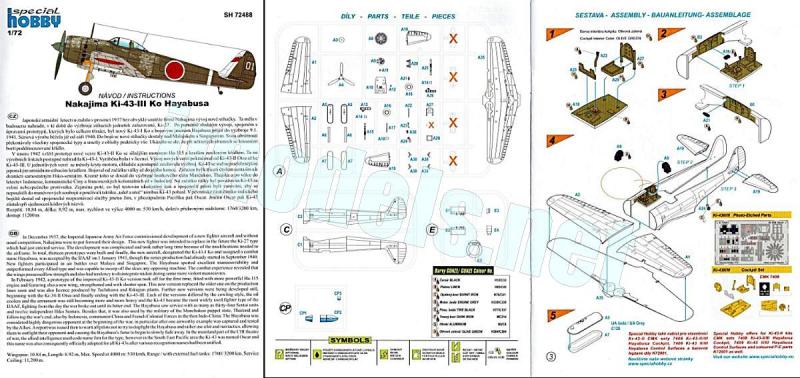
El detalle de la carlinga es bastante parecido al de otras maquetas de fabricantes orientales en esta escala, excepto en la reproducción de la estructura interna y los instrumentos de vuelo moldeados en las mitades del fuselaje. El interior comprende el suelo, el asiento, los pedales, la palanca de control, el panel de instrumentos y la mira. El asiento tiene la base y el respaldo horadado aparte. El panel lleva los instrumentos en relieve fino y no hay calcas para representarlos. La posición de la mira no está indicada con claridad en las instrucciones, pero debe entenderse que va pegada encima del panel de instrumentos.
La cubierta transparente trae la sección trasera separada. El grosor, aunque no muy fino, es razonable y el parabrisas está bien representado. Antes de pegar las piezas hay que añadir el reposacabezas del piloto y la diminuta boquilla de llenado del depósito de agua/metanol.
Las mitades del fuselaje incluyen una parte de las raíces de las alas, pero no el motor. En el exterior tenemos el mástil de la antena y la toma de aire inferior aparte, añadida después del capó. El capó está separado en dos lados unidos a los pequeños escapes laterales del modelo III Kō más el anillo frontal y la parte superior en una tercera pieza que muestra las salidas de las ametralladoras y la toma de aire superior. El motor es un simple disco con los cilindros y la caja de engranajes de la hélice bien definidos. No está mal, pero parece algo simplón para tratarse de SH. La hélice tiene el buje separado con el trinquete de arranque representado con nitidez. Las palas son finas y el eje para insertarla en el motor demasiado corto.
Las alas tienen las mitades superiores separadas. En general, los paneles y accesos están grabados con finura, destacando el moldeado de los pozos y la reproducción suave del entelado de los alerones. Otros elementos bien definidos son las luces de navegación, las bisagras de los flaps (estas más simples) y las aletas de compensación en los bordes de fuga. El faro de aterrizaje lleva una cubierta transparente y el delgado tubo Pitot viene aparte.
Bajo las alas tenemos el pequeño tubo del refrigerador de combustible y dos depósitos auxiliares con las tomas y las entradas de los conductos en la parte superior. Los soportes y los brazos de sujeción son elementos aparte.
Los estabilizadores están bien grabados, lo mismo que las superficies verticales de la cola. Las superficies del timón y los elevadores muestran un relieve sutil, aunque más convincente en el timón. Las luces de navegación son nítidas.
La rueda de cola viene unida a su soporte. Cada pata del tren de aterrizaje muestra la amortiguación nítida y una cubierta algo gruesa y detallada por dentro. Las ruedas son de una pieza con las llantas marcadas y los neumáticos lisos. Una fina línea de molde recorre su contorno.
La hoja de calcas corre a cargo de Dead Design. Contiene hinomarus, marcas de unidad, numerales y algunos estarcidos, todos ellos de aspecto brillante y no demasiado finos. Poseen buen registro y saturación de color con un leve exceso de soporte. Comparada esta hoja con las que suele ofrecer SH, deja un poco que desear.
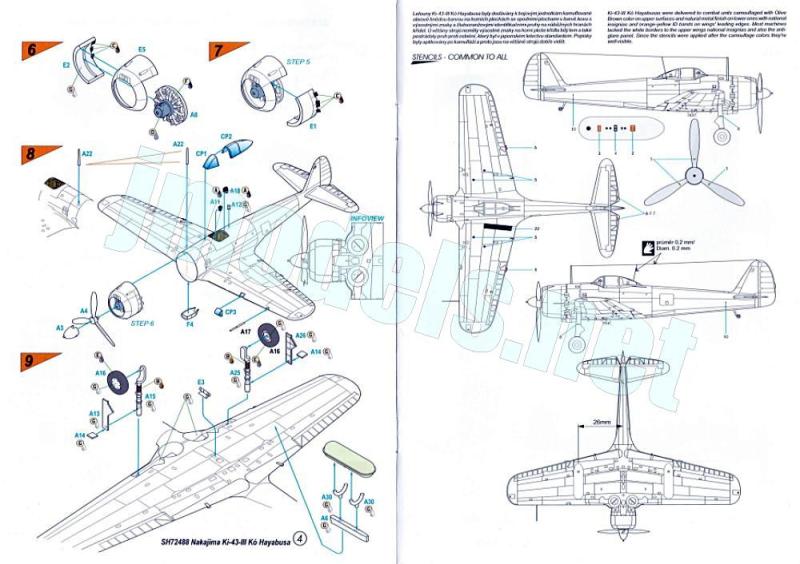
El manual de instrucciones está impreso en un folleto A5 de doce páginas en color sobre papel satinado. Contiene una introducción histórica con datos técnicos, un plano numerado de piezas, una lista de colores con equivalencias de Gunze Sangyo, nueve pasos de montaje y cinco páginas de perfiles.
Las libreas de los cuatro aviones que se proponen como alternativas en las instrucciones sólo poseen diferencias en las marcas de unidad. Tres de las alternativas ya aparecieron hace años en las maquetas de AML (Nakajima Ki 43-III Ko «Hayabusa/Oscar», referencias 72030 y 72033), pero pintadas de color marrón oscuro por arriba, en lugar del Olive Green que indica SH.
Valoración
A quienes conozcan las maquetas anteriores de Hasegawa (Ki-43-II) y Fujimi (Ki-43-I) en la escala 1/72, el Hayabusa de SH les va a sonar bastante, sobre todo por el despiece y el panelado, aunque desde luego la maqueta no es idéntica y resulta incluso mejor en el detalle general de la carlinga y acaso también en el motor. Los elementos diferenciales del modelo III Kō, tales como el capó y los escapes, o la toma de líquido refrigerante por detrás del reposacabezas están correctamente plasmados en la maqueta.
De caja, el montaje debe ser ágil, sin las dificultades de manipular piezas de resina o fotograbado, lo cual es una buena noticia para el modelista del común.◊

The kit
This box is for the moment the last of a new tool launched by Special Hobby (SH) in 2009 that is common to the Ki-43-II and III variants. The box is dedicated to fighter units of the Imperial Japanese Army and also to those euphemistically called “special attack units”, read “suicides”.
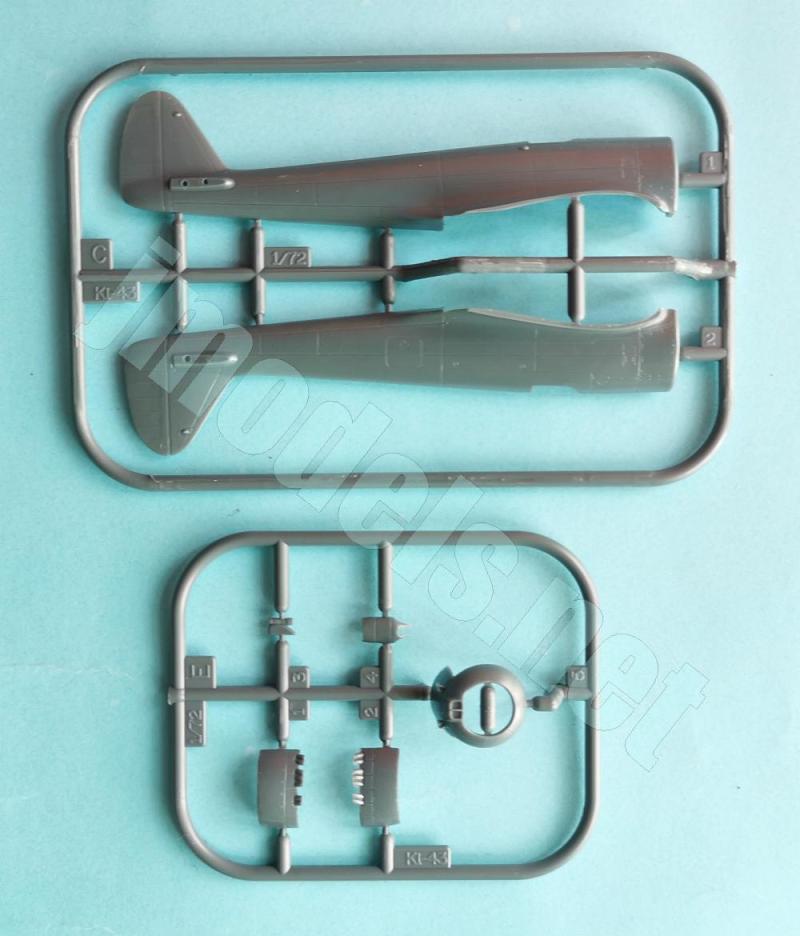
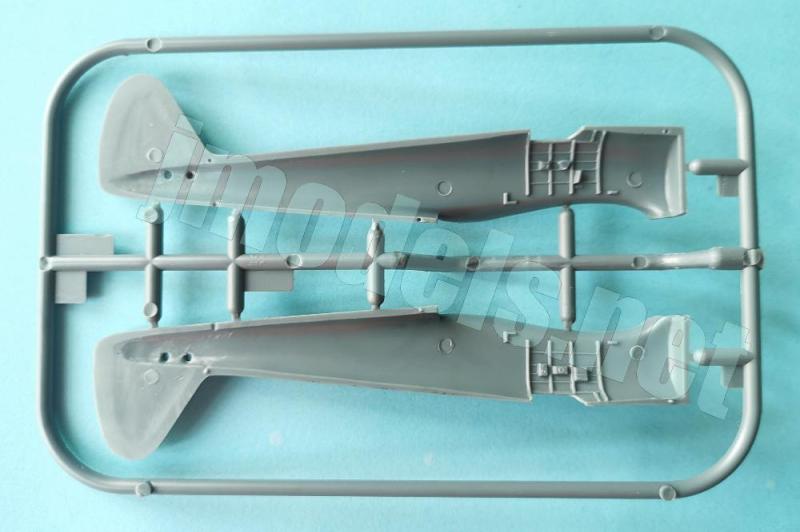
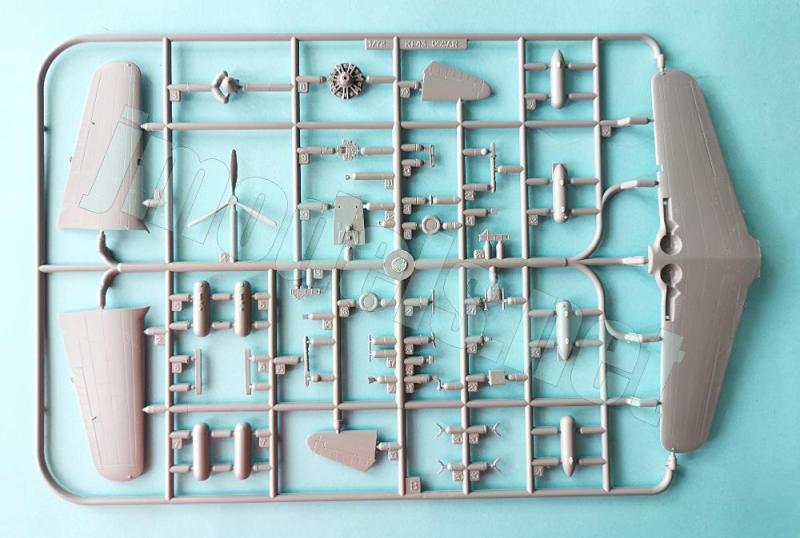
The box contains four sprues of parts, one of them clear, the decal sheet and the instructions. The fuselage halves come in a separate frame, as are the cowl and exhausts parts. These two sprues are different between Ki-43-II and III versions in the SH kits. Pieces have a good standard of molding and are free from blemishes or flash. There are pin marks on the fuselage sidewalls, but located behind the cockpit, so they are not visible with the fuselage closed. There are two other marks on the inner fin sides that may need to be removed to attach the fuselage.
Parts breakup and external detail is very reminiscent of the 1/72 Hasegawa and Fujimi kits in the very fine engraving of the panels and accesses. Unquestionably, SH must have taken good note of these manufacturers, although naturally this similarity is an influence and not a direct copy.
Those who don’t like to mess around with PE or resin pieces are lucky this time, since the kit doesn’t include them as on other occasions. This predictably makes the kit easier for the average modeler to build out of the box. The instructions advertise several photo-etched and resin sets for those wishing to further detail the kit.
Review
Cockpit detail is also quite similar to other kits from Eastern manufacturers, except for the reproduction of the internal structure and the flight instruments molded on the fuselage halves. The cockpit interior is detailed with a floor, the seat, the pedals, the control stick, the instrument panel and the sight. The seat has a separate backrest and base. The panel shows raised instruments without decals. The position of the sight is not clearly indicated in the instructions, but it should be understood that it is attached above the instrument panel.
The canopy brings the rear section separate. Though not very thin, it has a reasonable thickness and the windshield is well rendered. Before gluing the pieces you have to add the pilot’s headrest and the water/methanol filler spout behind it.
The fuselage halves include a section of the wing roots, but not the cowling. On the outside we have the antenna mast and the separate lower air intake, added once the cowling is in place. This is separated in two sides molded with the small exhausts of the Model III Kō plus the front ring and the cowling top in a third piece showing the machine gun ports and the upper air intake. The engine is a simple disc with well-defined cylinders and propeller gearbox. It’s not bad, but looks a bit simple for SH. The propeller has a separate hub with the starter pawl clearly defined. The blades are thin but the shaft is too short.
The upper and lower wing halves are separate from the lower side. Overall, panel lines and inspection hatches are finely engraved; the molding of the wheel wells and the subtle rendering of the fabric effect on the ailerons are particularly nice. Other well-defined features comprise the navigation lights, flap hinges (though these are simpler in design), and trim tabs on the trailing edges. The landing light has a clear cover, and the Pitot tube is a separate part.
Under the wings, there is a small fuel cooler pipe and two auxiliary fuel tanks, these featuring fuel filler caps and ducts. The pylons and sway braces are separate parts.
The stabilizers show crisp engraved lines, as do the vertical tail surfaces. The rudder and elevator surfaces have subtle detail, which looks better on the rudder. The navigation lights are sharply molded.
The tailwheel is molded with the strut. The main landing gear legs are molded with defined shock-absorbers, but the covers are a bit on the thick side and show interior raised detail. The wheels are single pieces with sharp engraved rims and smooth tires with a fine seam line running around their treads.
The decal sheet is produced by Dead Design. It includes hinomarus, unit markings, numbers, and some stencils; all have a glossy finish and are a bit thick. They feature good register and color saturation, though there is a slight excess of carrier film. Compared to the sheets usually provided by SH, this one leaves a bit to be desired.
The instruction manual is a twelve-page, full-color A5 booklet printed on glossy paper. It includes a historical introduction with technical data, a numbered parts plan, a color list with Gunze Sangyo paint matches, nine assembly steps, and five pages of profiles.
The four aircraft shown in the instructions only differ in most of the decals. Three of them were also chosen by AML for their Ki-43-III kits years ago (Nakajima Ki-43-III Ko «Hayabusa/Oscar», references 72030 and 72033), though those were painted dark brown on the upper surfaces rather than the Olive Green specified by SH.
Conclusion
Those who have built earlier 1/72 kits from Hasegawa (Ki-43-II) and Fujimi (Ki-43-I) will feel quite familiar with this one, particularly regarding parts breakdown and panel lines, though the kit is certainly not identical; it actually shows better overall detail in the cockpit and, maybe, the engine as well. Distinctive features of the Model III Kō, such as the cowling, exhausts, and the filler spout behind the headrest, are accurately rendered in the kit.
Out of the box, assembly should be straightforward, avoiding the challenges of handling resin or photo-etched parts, and this is good news for the less skilled modeler.
Publicado – Published: 9 / 2026
©www.jmodels.net

 jmodels.net
Debe estar conectado para enviar un comentario.