
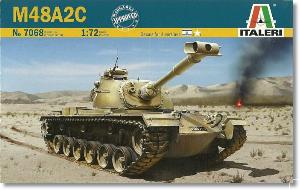
De un vistazo – Quick look
MATERIAL Y PIEZAS
MEDIA & PARTS:
- Plástico inyectado (140 piezas), acetato transparente (1 pieza).
- Injected plastic (140 parts), clear acetate (1 part).
CALCAS – DECALS:
- Impresas por Zanchetti. Registros, numerales, marcas israelíes y norteamericanas. Finas y brillantes, con buena saturación y nitidez. Sin exceso de soporte.
- Printed by Zanchetti. Hull registrations, numbers, Israeli and US markings. Thin and glossy finish, with good saturation and sharpness. No excess carrier film.
OPCIONES – OPTIONS:
- Fuerzas de Defensa Israelíes. 7ª Brigada Blindada. 79º Batallón de Carros. Compañía A. Carro Gimel. Sinaí, 1967.
- Fuerzas de Defensa Israelíes. Unidad desconocida. Compañía C. Carro 2 Alef . 1967.
- Fuerzas de Defensa Israelíes. Unidad desconocida. Compañía B. Carro 1 Beth. 1967.
- Ejército norteamericano. 69º Regimiento Blindado. 1er Batallón. Vietnam, 1968.
- Israeli Defence Force. 7th Armored Brigade. 79th Tank Battalion. A Company, Gimel tank. Sinai, 1967.
- Israeli Defence Force. Unknown unit. C Company. Alef 2 tank. 1967.
- Israeli Defence Force. Unknown unit. B Company. Beth tank. 1967.
- U.S. Army. 69th Armor Regiment. 1st Battalion. Vietnam, 1968.
INSTRUCCIONES – INSTRUCTIONS:
- Folleto doblado de formato A5 componiendo 8 páginas impresas en blanco y negro. Contiene una introducción histórica sobre el carro, un diagrama de piezas numerado, 7 secuencias de montaje, una lista de colores con equivalencias en código Federal Standard y pinturas acrílicas de Italeri, y perfiles. La cara trasera de la caja muestra tres acabados en color y una relación de las mismas pinturas del fabricante.
- 8-page A5 folded booklet printed in black and white. It contains a historical introduction about the tank, a numbered parts diagram, 7 assembly chapters, a list of colors with Federal Standard codes and Italeri acrylics matches and profiles. The back side of the box shows three paint finishes in color with paint chips of Italeri paints.
LO MEJOR – THE BEST:
- Montaje sencillo. Buen detalle en general con algunas salvedades.
- Ease of assembly. Overall nicely detail with a few exceptions.
LO PEOR – THE WORST:
- Simplificaciones en el tren de rodaje y cadenas. Escotillas cerradas.
- Detail on running gear and tracks. Hatches molded closed.
VALORACIÓN – CONCLUSION:
- Resiste con cierta decencia el paso del tiempo, es económica y fácil de montar. Corrigiendo los errores del molde, puede lograrse una buena reproducción de este importante carro.
- It holds up reasonably well over time, is inexpensive and easy to assemble. By correcting the mold’s flaws, can be turned into a nice rendition of this important tank.

La maqueta
Hace un puñado de años tuve la oportunidad de revisar la maqueta anterior a esta, aparecida en 2003 [M-48 A2/A3 Patton, referencia 7015]. También escribí un artículo sobre el montaje y la pintura del modelo [M48A3 US Marines (Italeri 1/72)]. Acaso ambas páginas puedan orientar al lector de este artículo nuevo sobre un tema viejo.
Esta caja es la segunda reedición de la antigua maqueta de ESCI, esta vez con la data en 2013. Italeri sólo actualizó la caja, las instrucciones y las calcas, pero en realidad los bastidores son los mismos, y el montaje únicamente difiere en la cúpula, más algunos detalles de la torre del modelo A3 que no aparecen aquí. Respecto a la maqueta del fabricante original, Italeri solamente añadió una lámina de acetato para simular el cristal del foco de visión nocturna que la maqueta de ESCI obviaba.
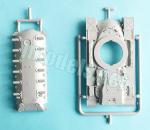
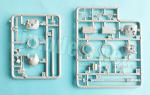
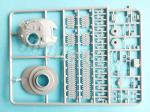
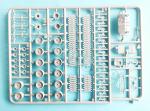
Las piezas están bien moldeadas, sólo hay que limpiar algunas líneas del molde no muy importantes. No se aprecian marcas de eyector visibles y sólo hay un par de ligeros rechupes por rellenar en las cajas de respeto.
Italeri puso el acento en diversos carros de las Fuerzas de Defensa Israelíes con el añadido de un vehículo norteamericano de la Guerra de Vietnam. En la caja anterior ocurría exactamente lo contrario en cuanto a posibilidades de terminar la maqueta.
La maqueta del M48A2C en su versión israelí corresponde al carro Magach 2, caracterizado por los tres rodillos de retorno, la cúpula M1 y un cañón de 90 mm. Al inicio de la Guerra de los Seis Días de 1967, Israel sólo pudo tener listos dos batallones de estos carros y sólo una compañía de carros Magach 3, otra modificación equivalente al M48A3, pero con variados cambios en el motor, transmisión y el cañón británico L7 de 105 mm.
Reseña
El casco viene separado en mitades que encajan bastante bien. Este modelo sólo lleva tres rodillos de retorno, por tanto no hay que hacer modificación alguna en ellos como pasa con el modelo A3. Una de las alternativas de montaje ofrece la posibilidad de colocar una rueda tensora auxiliar con su brazo separado junto a la rueda tractora. Esta característica es más propia de un M48A1 y por ello no procede emplearla en la maqueta. Sin embargo, habría que eliminar la base del brazo auxiliar moldeada en el casco. La rueda adolece del mismo problema que el resto del tren de rodaje.
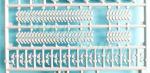
El despiece del tren de rodaje es el mismo de la primera maqueta y lleva varios pequeños amortiguadores separados. Todas las ruedas del tren, que deberían ser dobles, vienen en una pieza, salvo las tractoras, bien detalladas y cuyos dientes encajan adecuadamente en las cadenas. Es una pena, porque las llantas muestran muy buen detalle. Las cadenas están divididas en tramos y eslabones para contornear las ruedas tractoras y tensoras. Están limpias de marcas, pero carecen de dientes y se ven muy planas e irreales en la cara interna.
El casco lleva los mismos elementos de la primera maqueta, con un buen detalle en todos los elementos moldeados en la superficie (visores, rejillas del motor) y los separados (cajas de respeto, trinquete de transporte del cañón, ganchos de remolque, etc.). La novedad son los faros frontales, más pequeños y diferentes del modelo A3, a los que les falta la guarda. En el glacis también faltan los dos ganchos laterales de izado y sobre los guardabarros, los cables de remolque. Tanto las guardas, los cables como los ganchos (también faltan en la torre) pueden ser añadidos por el modelista sin mucha dificultad. Desgraciadamente, la escotilla del conductor viene cerrada.
La torre viene cortada en dos piezas y no requiere masilla. El mantelete del cañón no tiene el protector de tela en esta maqueta y los ganchos vienen cegados, por ello conviene reemplazarlos si es que el modelista no desea replicar la tela protectora del mantelete y la base del cañón, lo que sería un buen detalle que añadir. Desgraciadamente el hueco para insertar el cañón tiene un desvío de entre 1 y 2 mm. a la derecha, con lo cual el cañón también sufre idéntico desvío. Es importante considerar esto antes de empezar el montaje porque el error sólo es evidente cuando pegamos el mantelete a la torre. Italeri sigue proporcionando dos cañones, aunque los carros de esta edición no llevan el fuelle protector en la base, que es la diferencia entre ellos.
El foco también es el mismo, con su lente de acetato que recortamos de una plantilla a escala real que proporcionan las instrucciones. Los M48 israelíes no solían llevarlo, aunque se puede colocar en el carro empleado en Vietnam. Sin el foco, tampoco va a hacer falta la guarda de la ametralladora de la cúpula.
La cesta trasera de estiba sigue siendo algo grande para la escala, pero al menos las barandillas de la torre tienen los puntos de unión marcados de forma muy tenue. Los salientes blindados del telémetro (las famosas “orejas”) y la cubierta del ventilador son elementos aparte. La maqueta incluye dos tipos de cúpulas. La que emplearemos aquí consta de un anillo, el cuerpo de la cúpula y el mantelete unido al cañón de la ametralladora. Las escotillas del comandante y el cargador vienen cerradas.
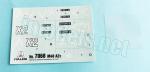
Las calcas están impresas por Zanchetti. La hoja muestra registros, numerales, marcas israelíes y norteamericanas. Son finas y brillantes, con buena saturación y nitidez. No tienen exceso de soporte.
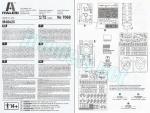
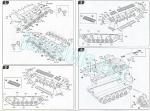
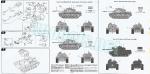
Las instrucciones vienen en un folleto doblado de formato A5 de ocho páginas impresas en blanco y negro. Contiene una introducción histórica sobre el carro, un diagrama de piezas numerado, siete secuencias de montaje, una lista de colores con equivalencias en el código Federal Standard y pinturas acrílicas de Italeri, además de perfiles. Algunos capítulos del montaje contienen errores leves en la localización de las piezas. Por ejemplo, se dice que los faros delanteros están en el bastidor E, cuando en realidad los contiene el F.
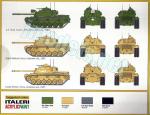
La cara trasera de la caja muestra tres acabados en color y una relación de las mismas pinturas del fabricante. Los acabados de pintura son simples, ya que sólo comprenden vehículos pintados en color arena o bien en olive drab. El carro israelí de la 7ª Brigada Acorazada y el norteamericano de la 69º Regimiento Blindado aparecen también en la maqueta del M48 A2/A3.
Según Wikipedia, el carro norteamericano del 69º Regimiento Blindado en Vietnam no fue un M48A2C, sino un A3, que la unidad empleó durante toda la guerra a partir de 1966. De los carros israelíes, la opción con las marcas 2 Alef, que Italeri da por desconocida, perteneció en realidad al 46º Batallón de Carros, Compañía C. Esta unidad fue la primera en entrar en combate contra los carros egipcios al sur de la franja de Gaza al inicio de la Guerra de 1967.
Valoración
Como no puede ser de otra manera, esta reedición hereda lo bueno y lo malo de la anterior, aunque hoy disponemos de algunas mejoras en el mercado para corregir las simplificaciones del tren de rodaje y las cadenas. Con estas mejoras, más lo bueno que la maqueta lleva de suyo (y no es poco), además de algún detalle que el modelista quiera añadir o modificar, puede convertirse en una réplica más que aceptable en esta escala pequeña.
Continuamos sin haber otra maqueta de este carro realizada por una marca importante tras todo el tiempo que ha pasado desde la aparición del primer M48 de Italeri, porque las aparentes alternativas de Revell tienen el mismo origen en ESCI.◊

The kit
A few years back, I had the opportunity to review the previous kit, released in 2003 [M-48 A2/A3 Patton, reference 7015]. I also wrote an article about the assembly and painting of the kit [M48A3 US Marines (Italeri 1/72)]. Perhaps both of those articles can guide the reader of this new article on an old topic.
This kit is the second reissue of the old ESCI kit, this time dated 2013. Italeri only updated the box, instructions, and decals, but the sprues are essentially the same, and the assembly differs only in the turret cupola, plus some details of the A3 kit turret that are not included here. Compared to the original manufacturer’s kit, Italeri only added an acetate sheet to simulate the spotlight lens, which the ESCI kit omitted.
Parts are well molded; you just need to clean up a few minor seam lines. No ejector marks are visible, and there are only a couple of minor sinks to fill in the stowage boxes.
Italeri focused on various tanks of the Israeli Defense Forces, with the addition of an American vehicle from the Vietnam War. The previous kit included exactly the opposite versions to finish it.
The M48A2C model in its Israeli version corresponds to the Magach 2 tank, characterized by its three return rollers, M1 cupola, and 90mm gun. At the start of the Six-Day War in 1967, Israel was only able to field two battalions of these tanks and one company of Magach 3 tanks, another modification equivalent to the M48A3, but with several changes to the engine, transmission, and the British 105mm L7 gun.
Review
The hull comes in two halves that fit together quite well. This A2C only has three return rollers, so no modifications are necessary, unlike with the A3 variant. One of the assembly options allows for the addition of an auxiliary track tension idler with its separate arm next to the drive wheel. This feature is more typical of an M48A1 and therefore not suitable for this kit. However, the base of the auxiliary arm molded on the hull piece needs to be removed. The wheel suffers from the same problem as the rest of the running gear.
The running gear breakdown is the same as the first kit and includes several small, separate shock absorbers. All the wheels, which should be double, come as one piece, except for the sprockets, which are well-detailed and whose teeth fit properly into the tracks. This is a shame, because the rims show excellent detail. The tracks are divided into lengths and links to contour the sprockets and idlers. They are clean from marks, but lack the teeth and look very flat and unrealistic on the inner surface.
The hull has the same elements as the previous release, with good detail on all the molded surface elements (visors, engine grilles) and the separate ones (stowage boxes, gun travel lock, towing hooks, etc.). The new feature is the front headlights, which are smaller and different from the A3, but the guards are missing. Also missing are the towing cables and the two side lifting eyes from the glacis plate. These parts, plus the missing lifting eyes on the turret, can be added by the modeler without much difficulty. Unfortunately, the driver’s hatch is molded closed.
The turret comes cut in two pieces and needs no putty. The gun mantlet lacks the cover in this kit, and the hooks are molded solid. So, it’s advisable to replace them if the modeler doesn’t wish to replicate the mantlet cover, which would be a nice detail to add. Unfortunately, the barrel slot is offset by 1-2 mm to the right, which means the barrel also suffers from the same offset. It’s important to consider this before starting assembly because the mistake is only apparent when the mantlet is glued to the turret. Italeri still provides two guns, although the tanks in this box do not have the protective bellows at the base, which is the difference between them.
The searchlight is also the same, with its acetate lens that we cut from a full-scale template provided in the instructions. Israeli M48s didn’t usually have it, although it can be fitted to the tank used in Vietnam. Without the searchlight, the machine gun guard on the cupola is also unnecessary.
The rear stowage basket is somewhat large for the scale, but at least the turret railings have very faintly marked attachment points. The armored rangefinder bulges (the famous «ears») and the fan cover are separate parts. The kit includes two types of cupolas. The one we will use here consists of a ring, the cupola, and the mantlet attached to the machine gun barrel. The commander’s and loader’s hatches are also molded closed.
The decals are printed by Zanchetti. The sheet shows registrations, numbers, and Israeli and American markings. They are thin and glossy, with good saturation and sharpness. They do not have too much carrier.
The instructions come in a folded, eight-page A5 booklet printed in black and white. It contains a historical introduction to the tank, a numbered parts diagram, seven assembly sequences, a color list with equivalents in the Federal Standard code and Italeri acrylic paints, as well as profiles. Some assembly chapters contain minor mistake in parts location. For example, the headlights are identified on frame E, when in fact they are on frame F.
The back of the box shows three finishes in color and a list of the corresponding paints from the manufacturer. Paint finishes are simple, as they only include vehicles painted in overall sand or olive drab. The Israeli tank of the 7th Armored Brigade and the American tank of the 69th Armor Regiment are also offered in the M48 A2/A3 kit.
According to Wikipedia, the American tank of the 69th Armor Regiment in Vietnam was not an M48A2C, but an A3, which the unit used throughout the war from 1966 onwards. Of the Israeli tanks, the option marked 2 Alef, which Italeri lists as unknown, actually belonged to the 46th Tank Battalion, Company C. This unit was the first to engage the Egyptian tanks south of the Gaza Strip at the start of the 1967 war.
Conclusion
As expected, this reissue inherits both the strengths and weaknesses of the previous one, although there are now some replacement parts available on the market to correct the simplifications of the running gear and tracks. With these parts, plus the inherent strengths of the kit (and there are many), and any additional or modified details the modeler may wish to add, the model can be turned into a more than acceptable replica in this small scale.
We still haven’t seen another kit of this tank produced by a major manufacturer after all this time since the appearance of the first Italeri M48, because the apparent alternatives from Revell all have the same origin in ESCI.◊
Publicado – Published: 5 / 2025
©www.jmodels.net


Debe estar conectado para enviar un comentario.